
Reviewed · DELFT
Delft: Entrance Ticket for the Old and New Churches
Delft’s Old and New Churches are a smart way to see how the Netherlands changed over time, from medieval devotion to royal power. I love starting in the New Church, where the burial story ties directly to the Dutch royal family and William of Orange.
I also like the Old Church for its famous Leaning John tower, which tilts about two meters, plus the chance to see the graves of Johannes Vermeer, Piet Hein, and Antoni van Leeuwenhoek.
The main consideration is timing. There is a strict closing cutoff, with no new visitors admitted within 15 minutes of closing, and the tower shuts one hour earlier than the churches.
Key takeaways before you go
- One ticket, two churches: see both the Old and New Church without buying separate admissions
- Royal burial power in the New Church: the House of Orange memorials center on William of Orange
- Leaning John in the Old Church: a tower leaning about two meters is the headline photo
- Vermeer and Dutch science legends: Johannes Vermeer, Piet Hein, and Antoni van Leeuwenhoek are all connected to these walls
- Self-guided route details: you can pick up a plan, and the mausoleum area has strong multimedia-style storytelling
- Plan for the tower hours: you may need to choose between the tower and slower church browsing
One Ticket, Two Church Worlds in Delft
This is one of those Delft experiences that feels efficient without feeling rushed. You get the medieval atmosphere of the Old Church, then you step into the New Church, where grandeur and royal burials take center stage. Together, they give you a clear story of how Dutch identity evolved.
You are not just looking at architecture here. You are walking through memorial space tied to major people: members of the Dutch Royal Family, William of Orange, and key Dutch figures like Johannes Vermeer. The fact that it is self-paced is a plus. You can stop where your interest pulls you, instead of waiting for a group rhythm.
The pacing tends to work well for a first-time Delft visit, especially if you also plan to do a canal stroll afterward. The duration is about 1.5 hours, so you can fit this in even on a busy sightseeing day.
More of Delft:
- From Amsterdam: Rotterdam, Delft & The Hague Guided Day Tour
★ 4.2 · 2,065 reviews - Rotterdam, Delft and The Hague Day Trip from Amsterdam
★ 4.0 · 892 reviews - Rotterdam, Delft and The Hague Small Group Tour from Amsterdam
★ 4.5 · 599 reviews
Start in the New Church: royal burials and a big interior presence
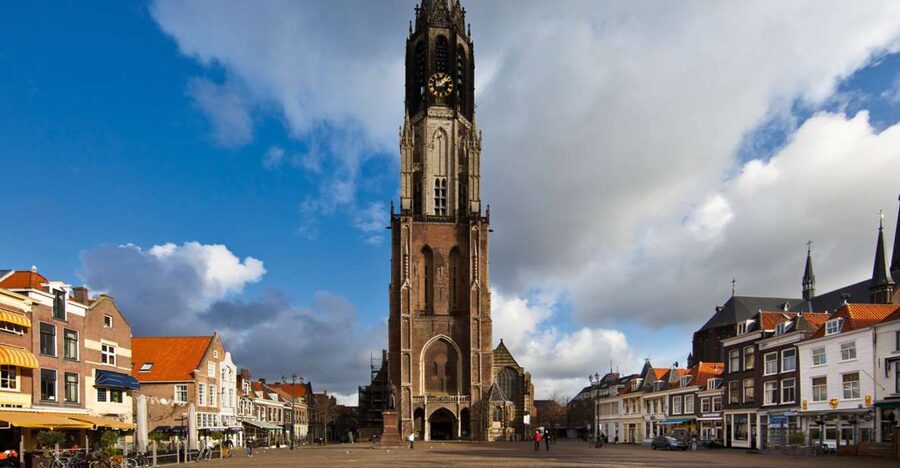
Start at the New Church first. It matters, because you exchange your voucher at the ticket counter there, and entry flow follows that order. From the moment you walk in, the space reads as formal and public, not small and private.
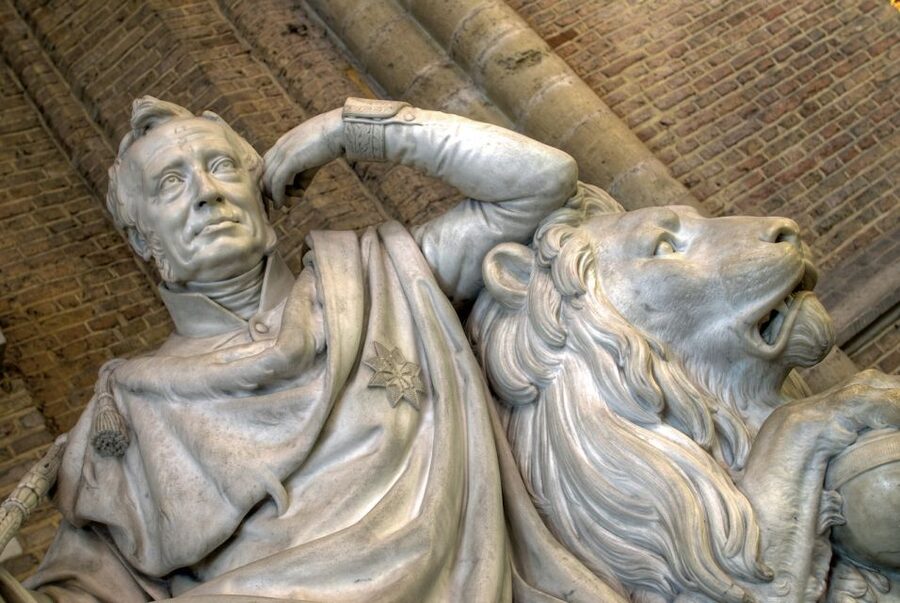
The New Church was completed in 1655, and that helps explain why it feels more official than the older medieval buildings in town. It is also the resting place for the Dutch Royal Family. If you remember just one name before you go, make it William of Orange. He was interred here in 1584, and the monumentality around him makes the history easy to connect to the present.
What you will notice right away
The New Church experience has a few layers, and I like that it does not rely on one single highlight. The mausoleum of William of Orange is the gravitational center, but the rest of the building keeps supporting the mood.
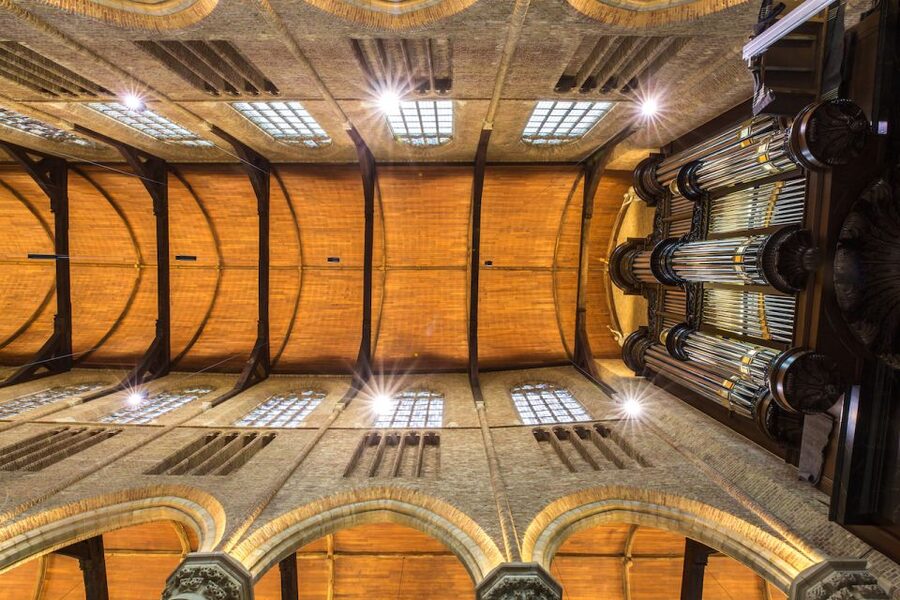
- The organ dominates the sound and presence of the interior. Even if you are not timing it to a specific performance, the space is clearly designed for that kind of ceremonial weight.
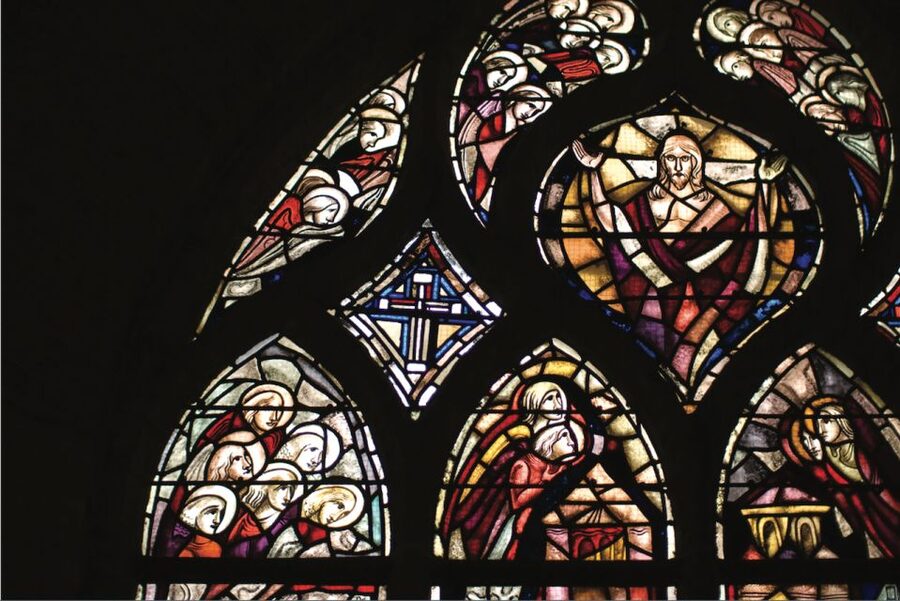
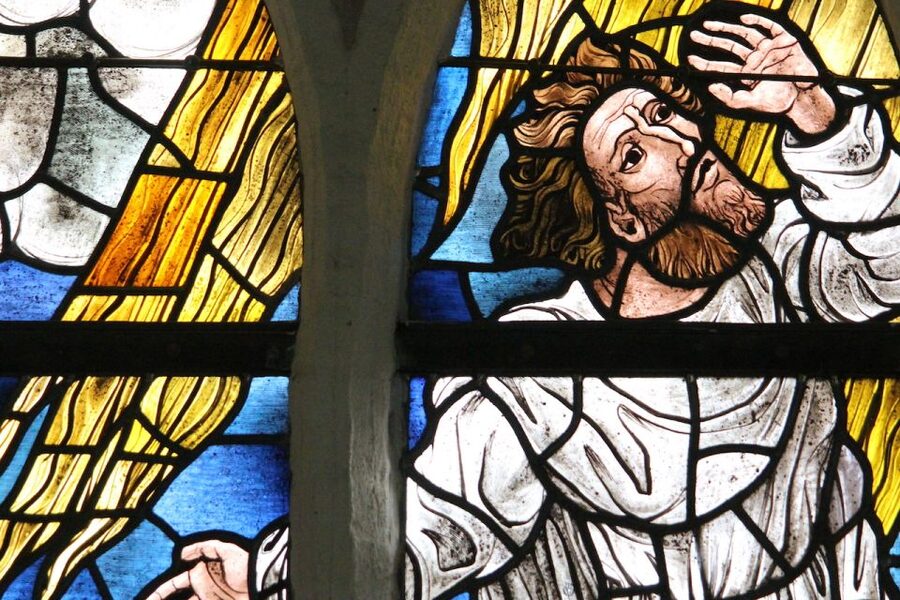
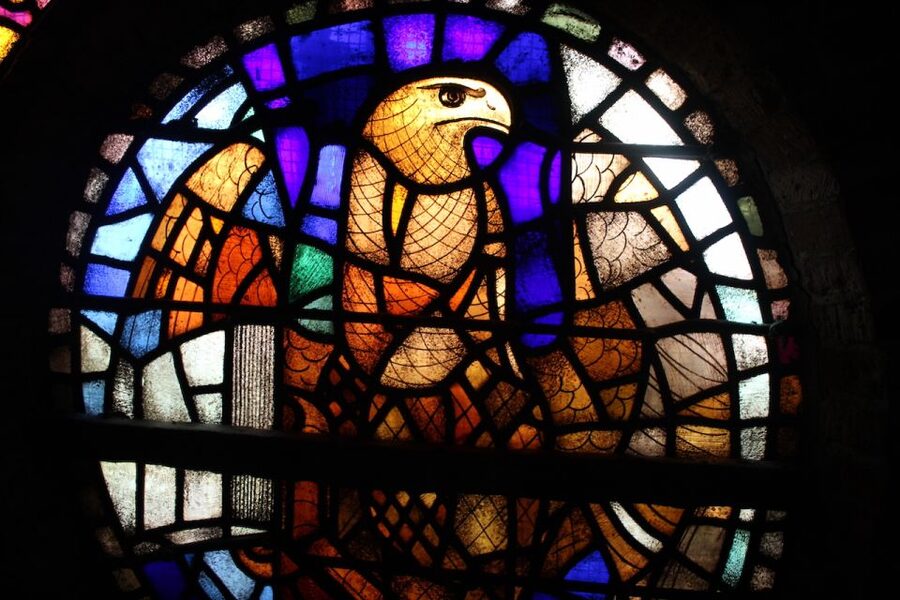
- Modern stained-glass windows add color over older stone. That mix of old and newer design makes the visit feel less like a frozen time capsule.
The mausoleum of William of Orange: the best storytelling moment
If you care about history that has a physical anchor, this is the star. The mausoleum of William of Orange is the kind of monument that makes you slow down without anyone telling you to. It is also one of the easiest places to understand why people come in groups and linger.
What I particularly like is how the area is supported with clear interpretation. You can follow a self-guided route around the monument, and it uses video screens and written historical timelines to put names and dates in context. There is also a model of the burial chamber area, which makes the structure easier to visualize.
That combination is practical. You get a quick orientation, then you can focus on the actual monuments with less guesswork. If you prefer learning by looking first, you can do that too, then circle back to the explanations when you are ready.
A few other ways to fill a day in Delft
- Delft: Vermeer Centrum Delft Museum Entry Ticket
★ 4.6 · 189 reviews - Royal Delft: Delftblue Factory and Museum Admission Ticket
★ 4.5 · 145 reviews - Vermeer Centrum Delft Museum Admission Ticket
★ 4.0 · 45 reviews - Delft: Canal House Museum ‘Paul Tetar van Elven’ Ticket
★ 4.5 · 6 reviews
A small practical tip
Give yourself a little breathing room near the mausoleum. If you speed through it, you miss the whole point of the interpretation design. This is the place where you get the most meaning per minute.
How the New Church connects to Dutch identity
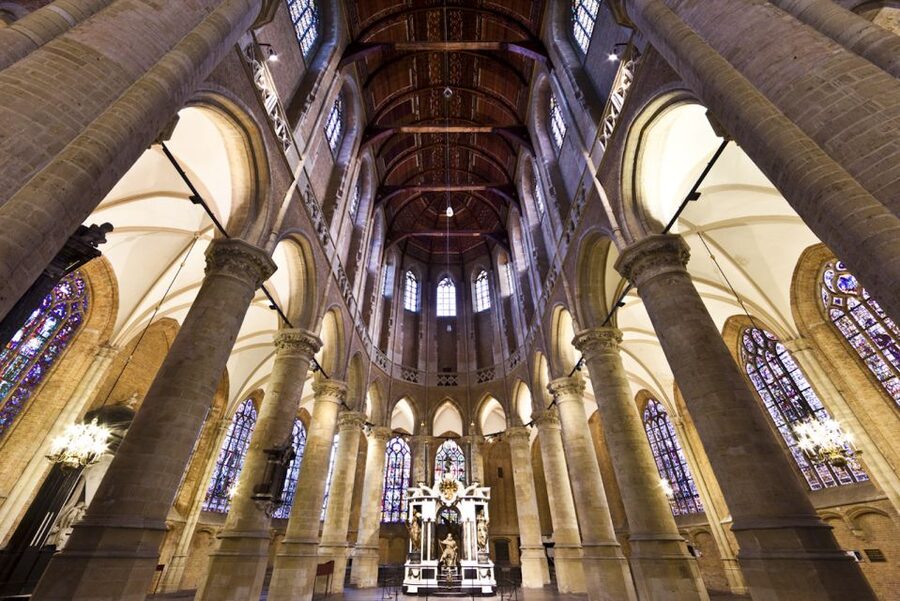
The New Church is more than a royal cemetery. It is where the Netherlands shows you how it wanted to remember leadership. The House of Orange memorials turn history into something you can walk around.
That matters because Delft is not just a pretty city. It became a major cultural and civic center, and these churches reflect that shift. When you compare the New Church mood with what you will see in the Old Church, you get a clearer sense of how values moved over centuries: from communal faith and medieval craftsmanship to a more formal, state-like display of legacy.
So even if monuments are not your usual thing, this is still worth it because the visitor experience is set up to help you connect the dots fast.
Entering the Old Church: medieval roots and the Leaning John tower
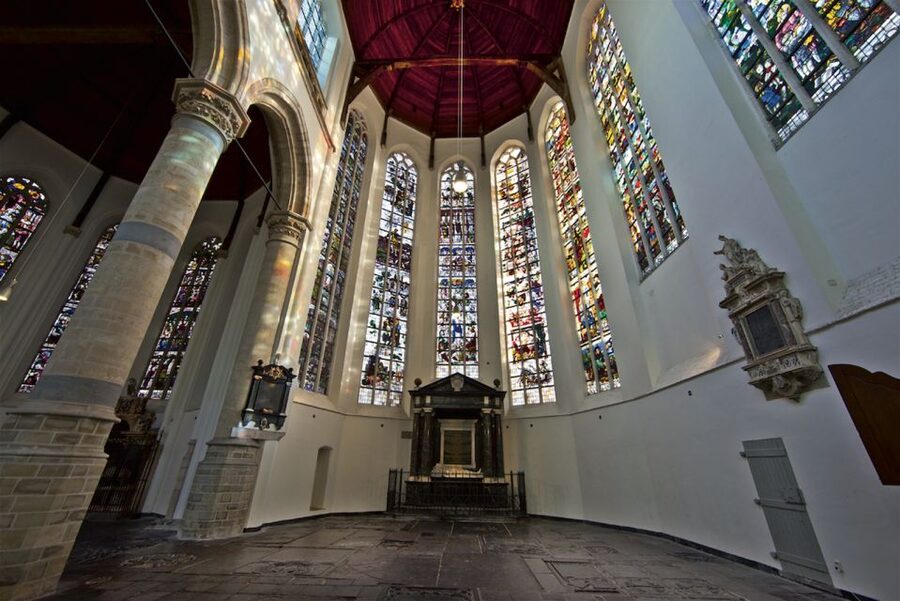
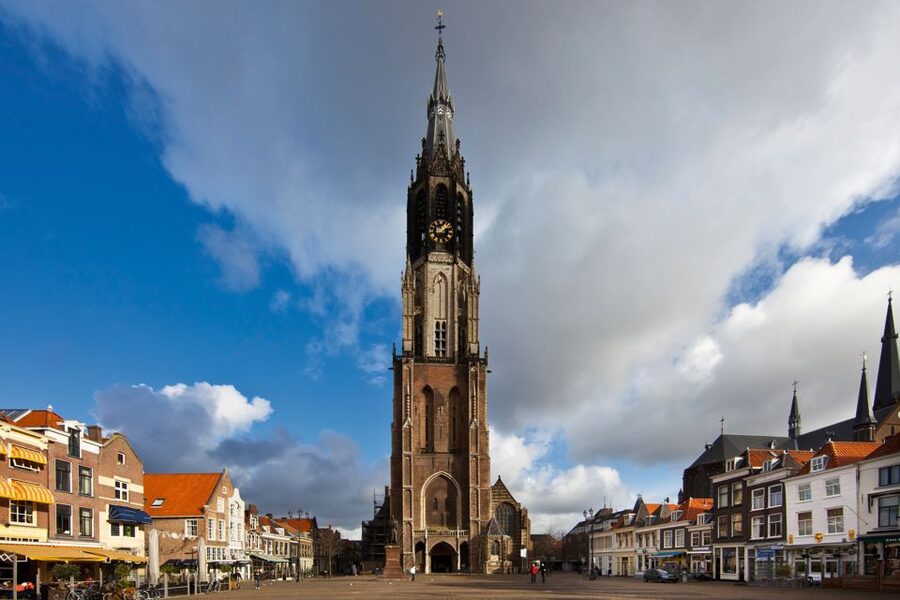
After the New Church, head to the Old Church. This is where the atmosphere changes. The Old Church has been standing in the heart of Delft since 1246, and it shows.
The headline here is the tower, famously called Leaning John. The tower leans about two meters off-center. That detail is not just a fun fact, it is a visual statement. You feel the building’s age and personality at the same time.
The Old Church also becomes personal fast because of who is buried here.
Graves you will want to look for
Take a moment to locate the memorials for these major figures:
- Johannes Vermeer, tied to Delft light and art
- Piet Hein, a name connected to Dutch naval history
- Antoni van Leeuwenhoek, known for early scientific discoveries
Seeing these names in the church context does something different from reading about them in a book. You are looking at memory placed inside a sacred space, which is a reminder that culture and leadership were often intertwined in the past.
The tower and stained glass: what changes depending on timing
One reason to pay attention to timing is that the tower closes earlier than the churches. The tower shuts one hour before the rest of the visit areas, and weather can also affect tower access.
That means your plan should include a simple choice:
- If the Leaning John tower is your top priority, aim to do it first when you arrive at the Old Church.
- If you want more quiet time with the stained-glass windows and monument spaces, do the rest first, then treat the tower as a bonus if it is open.
The Old Church also has notable stained-glass windows, and they add brightness in a way that fits the medieval feel. Again, it is not about one photo. It is about how the light shifts as you move.
The self-guided flow: what works well without a guide
This experience is admission only. No guide is included, which sounds limiting until you realize the churches themselves do a lot of the teaching. The interpretation you are likely to encounter includes maps or a plan for orientation, and the royal mausoleum area is supported with multimedia-style storytelling and written timelines.
I like self-guided visits when the setting is complex. These churches can be emotionally overwhelming if you only see monuments without context. Here, the information is placed where you need it, so you can take it in at your own speed.
Also, the layout approach helps you get your bearings fast. You can scan the plan, spot the areas that match your interests, then build your own route. It is a relief compared to experiences where you must follow every step whether you care or not.
Duration and pacing: how to finish in 1.5 hours
The ticket duration is about 1.5 hours, but your real time depends on how much you linger at each highlight.
A pacing approach that usually feels right:
- New Church first, focusing on the mausoleum and the main interpretive areas.
- Old Church second, focusing on Leaning John and then the memorials for Vermeer, Piet Hein, and van Leeuwenhoek.
- Leave yourself enough buffer that you are not sprinting to the tower cutoff.
Remember the rule about entry near closing. No new visitors are admitted within 15 minutes of closing time. If you show up late, you risk losing time in the building you paid for. That is not a “maybe” situation. Plan to arrive early enough to enjoy it, not just to survive it.
Price and value: is about $11 worth it?
At around $11 per person, this is strong value if you like church interiors, memorial art, and Dutch cultural history. Two admissions in one visit matters, especially in cities where paid-entry attractions can stack up quickly.
Here is why it feels like good value:
- You get two big sites that each take time to appreciate.
- The highlights are not vague. You can connect specific famous names to specific spaces.
- The interpretation in the mausoleum area helps you understand what you are looking at, so you are not paying just for entry. You are paying for a guided-by-design experience, even without a live guide.
It is less ideal if you mainly want views of Delft’s city streets and you are not interested in monuments. In that case, Delft has plenty of other quick sights. But for anyone who likes history you can see and touch, this ticket earns its price.
Accessibility and comfort: plan for uneven floors
Both churches are wheelchair accessible, which is great. Still, expect uneven or bumpy floors. That matters for comfort and for moving between spaces, especially if you need a smoother path.
If you are visiting with mobility needs, give yourself extra time and be ready for small route adjustments inside the buildings. Also note that the tower can be closed due to weather conditions.
When construction or special closures happen
Churches in active European cities are not always static. You might encounter periods when parts of the buildings are under maintenance. That can affect your routes or your sightlines, especially around major areas.
The good news is that you still have access to the core spaces. The better strategy is to plan your day with a little flexibility, and check any adjusted opening hours if your travel dates overlap with known events.
Who should book this experience
I would book this if you fit at least two of these:
- You like Dutch history, especially the people behind it
- You want a clear, two-church narrative instead of scattered sights
- You care about art culture, from Johannes Vermeer connections to memorial craftsmanship
- You appreciate interpretation that helps you understand monuments fast
- You are on a time budget and want high signal for the hours you spend
It is also a good choice for couples and solo visitors because it is easy to do at your own pace. Families can enjoy it too, as long as the focus on memorials and monuments matches what your kids are willing to sit through.
Final call: should you book this Delft churches ticket?
If you like architecture with real names attached to it, book it. The New Church gives you the royal burial connection, and the Old Church gives you medieval depth plus Leaning John and major Dutch figures like Johannes Vermeer, Piet Hein, and Antoni van Leeuwenhoek. With the ticket covering both churches, you get a compact history lesson that still feels like sightseeing.
If you only want quick photos and minimal reading, you might find it slower than a canal cruise. But if you are even moderately curious about what shaped the Netherlands, this is one of Delft’s best value admissions.
FAQ
What is included in the Delft Old and New Churches ticket?
The ticket includes admission to both the Old Church and the New Church.
How long should I plan for this visit?
Plan for about 1.5 hours.
Where do I need to go first?
Visit the New Church before the Old Church, and exchange your voucher at the ticket counter.
What is the rule about entering near closing time?
No new visitors are admitted within 15 minutes before closing time.
Does the tower close at the same time as the churches?
No. The tower closes one hour earlier than the churches.
Can the tower be closed even if the churches are open?
Yes. The tower may be closed due to weather conditions.
Are there any restrictions on food and drinks?
Food and drinks are not allowed.
Are the churches wheelchair accessible?
Yes, both churches are wheelchair accessible, but floors may be uneven or bumpy.
Will I have a guide with the ticket?
No guide is included.
Is there a cancellation option if my plans change?
Yes, you can cancel up to 24 hours in advance for a full refund.
Latest Delft reviews
- Get the best out of Delft by creating memories during our private walking tour!★ 5.0 · 15 reviews
- Kinderdijk Windmills and Delft Small-Group Tour from Amsterdam★ 5.0 · 21 reviews
- Private Day Tour: Rotterdam, Delft & The Hague From Amsterdam★ 5.0 · 22 reviews
- e-Scavenger hunt Delft: Explore the city at your own pace★ 4.5 · 26 reviews
- Private Walking Tour of Delft: Dive into the Dutch Golden Age★ 5.0 · 33 reviews
- Rotterdam, The Hague, Delft Private Tour from Amsterdam★ 5.0 · 44 reviews
- Rotterdam, Delft and the Hague Day Trip from Amsterdam★ 4.5 · 55 reviews
- Visit the Girl with the Pearl Earring, The Hague & Delft City★ 5.0 · 63 reviews
Delft, compared.

Rotterdam, Delft and The Hague Day Trip from Amsterdam
Read our review →
Rotterdam, Delft and The Hague Small Group Tour from Amsterdam
Read our review →

The Hague, Delft and Rotterdam Small-Group Tour (Max. 8 People)
Read our review →
Rotterdam, Delft, The Hague Day Tour Incl. Madurodam/Royal Delft
Read our review →
Browse the lists this tour appears in