
Reviewed · SECOND WORLD WAR HISTORY
Rotterdam: WWII Walking Tour
This is one of those Rotterdam experiences that hits hard and then shows you what the city built afterward. You get to walk the WWII aftermath on foot, and you also get the payoff view from the Het Witte Huis rooftop. I also really like the Markthal snack in the middle of all that history, because it keeps the tour tied to what Rotterdam looks like today.
The main thing to plan for is the walking. It is not set up for wheelchair users, so wear comfy shoes and expect a solid chunk of time on foot.
Key highlights you’ll feel right away
- WWII destruction made walkable with a clear story about May 14, 1940, occupation, liberation, and capitulation
- Fire zone borders and scars you can trace in the streets, not just read about
- Reconstruction monuments showing what Rotterdam built after being completely bombed
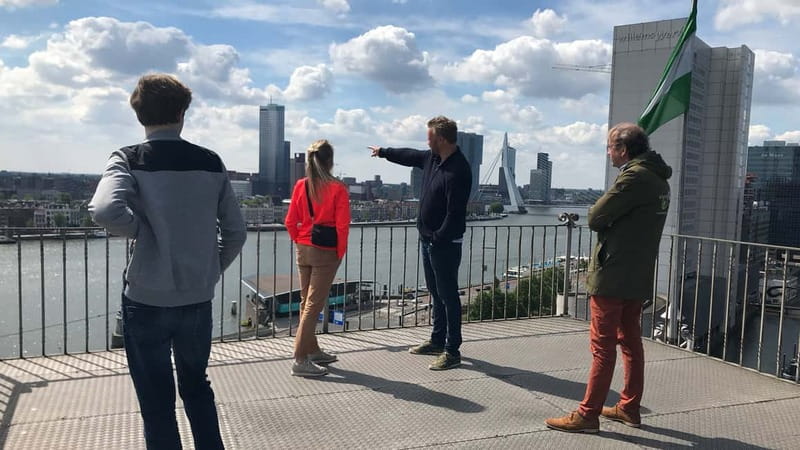
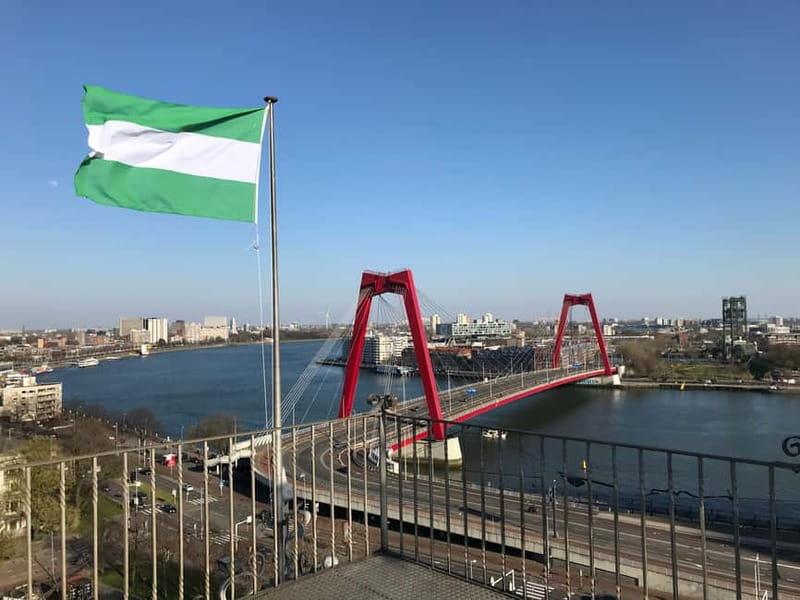
- Het Witte Huis rooftop access for an impressive 360º overview of the city
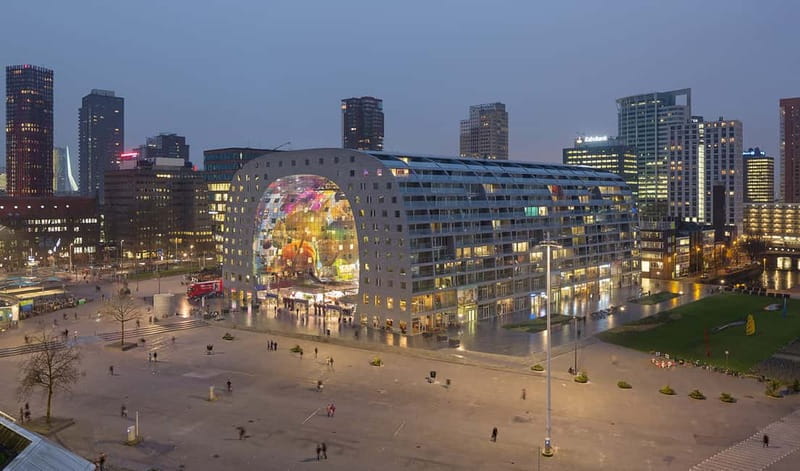
- Markthal food stop that gives you a quick break in a modern architectural icon
- Extras that add value, like an Ossip van Duivenbode postcard and a 50% discount for the Cube Houses
Rotterdam WWII on Foot, from Wijnhaven to the rooftop view
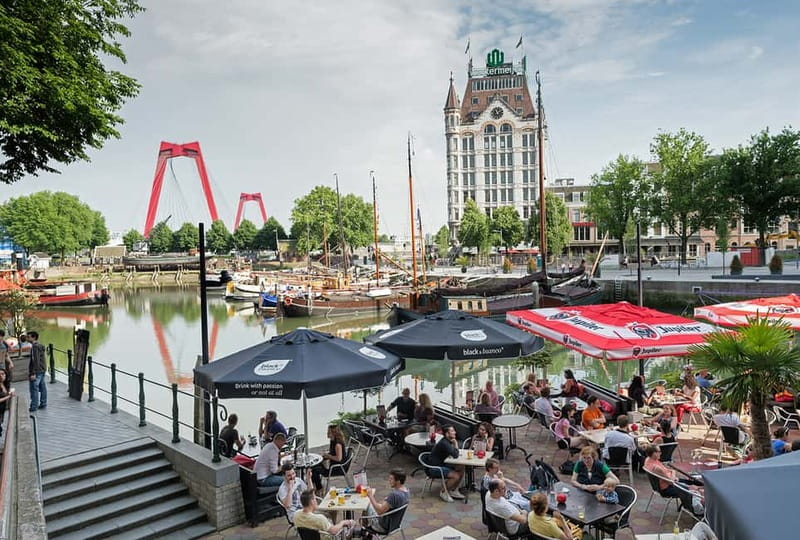
You start outside Wijnhaven 3, and the tour moves at a guided walking pace, not a bus-style lecture. Arrive about 10 minutes early, because the group leaves promptly. The route is long enough that comfort matters, and in practice you can expect around 6.8 km of walking.
What I like about this format is the way it turns Rotterdam into a living timeline. You’re not stuck inside a museum. Instead, you walk through the city’s layers, from the wartime damage to the monuments and architecture that followed.
This is also a private group setup, which often means you can ask more direct questions when something in the story feels unclear. That said, you still share the main route idea with the group, so don’t plan on skipping parts of the walk.
More Walking Tours in Rotterdam
- Rotterdam: Architectural Highlights Guided Walking Tour
★ 4.8 · 215 reviews - Rotterdam: Highlights, Gems, Architecture & History Walk
★ 5.0 · 191 reviews - Rotterdam Walk: Hilights, Gems, Architecture & WWII | 2 or 3hrs
★ 5.0 · 149 reviews
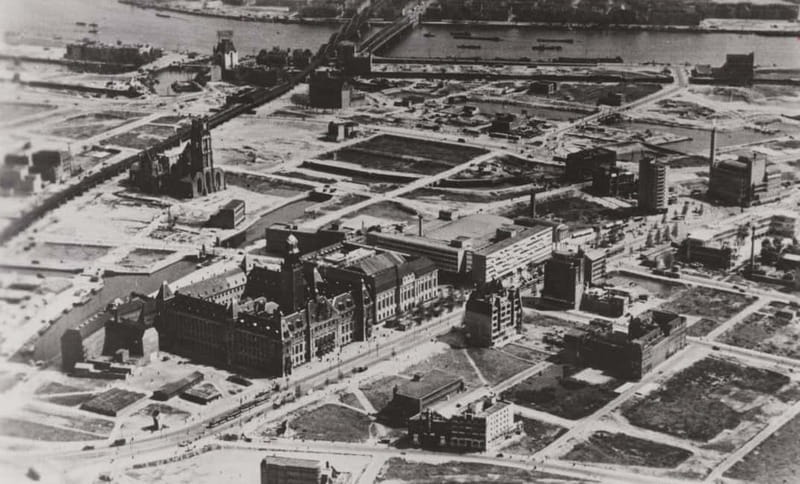
May 14, 1940: the bombing, occupation, and liberation story in context
The heart of the tour is the impact of WWII on Rotterdam, starting with the bombing on May 14, 1940. The guide leads you through what happened, then carries the story through occupation and liberation. The goal is to connect events to place, so you understand why certain areas matter when you see them on the ground.
You’ll follow the borders of the fire zone, which is a smart way to visualize scale. It’s one thing to hear that the city was devastated, and another to trace the edges of what burned. This tour focuses on the transition from destruction to survival, and it keeps the story tied to what you can still recognize today.
If you like WWII history that’s explained in clear, human terms, this works well. If you’re hoping for heavy, technical details about the conflict itself, you might still find it worthwhile, but you may want to confirm the guide’s emphasis ahead of time, since different guides can lean more toward city history versus WWII specifics.
Tracing the fire-zone borders and reading the city’s remaining scars
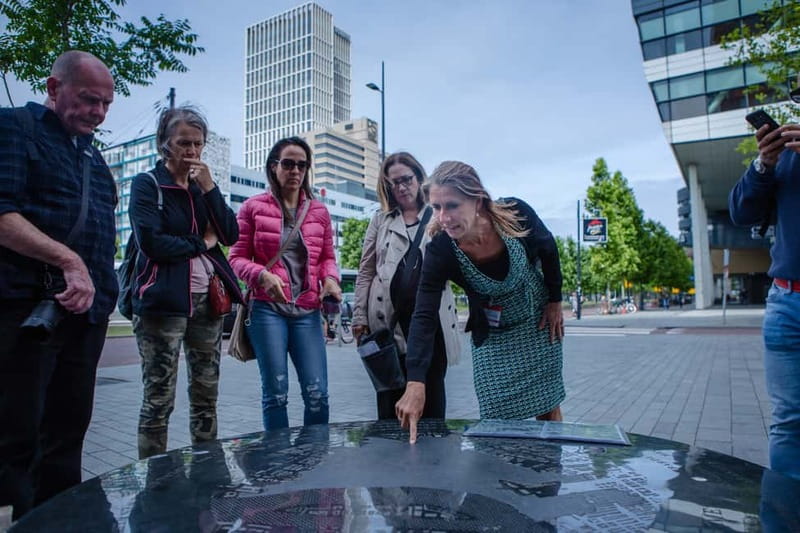
One of the most practical parts of this tour is how it teaches you to look. Instead of treating Rotterdam as a modern city you pass through, you learn to spot reminders of the war and understand what you’re seeing. Following the fire-zone borders helps you connect street-level layout to wartime reality.
The tour includes time for the surviving scars left on the city, then shifts into the reconstruction period. That sequence matters. You start with the trauma, then you move into why Rotterdam rebuilt with such determination. It’s a better emotional arc than going straight to shiny postwar architecture.
A nice bonus is that you’re not just staring at buildings. You’re listening for why particular monuments were built where they are, and how the reconstruction choices reflect priorities and resilience. That lens is what makes the walking feel more than sightseeing.
Reconstruction monuments and Rotterdam’s resilient “can do” mentality
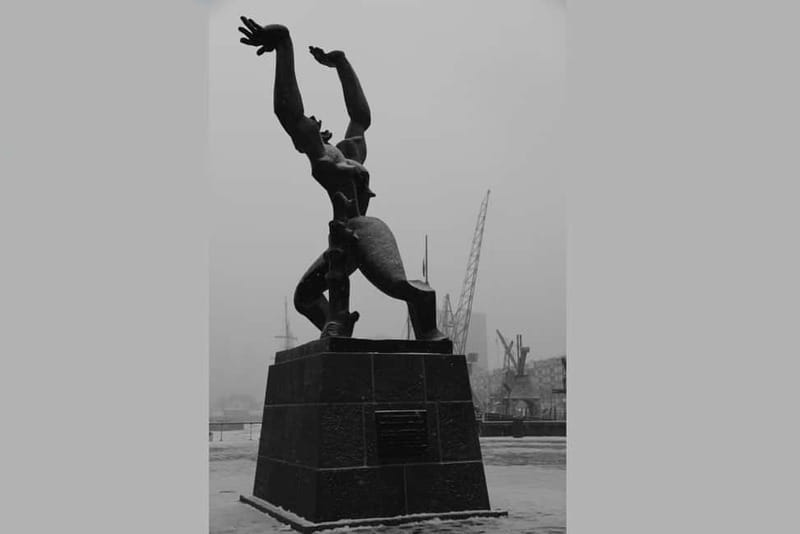
After the wartime sections, the tour turns toward rebuilding, showing monuments built since reconstruction. This is where Rotterdam’s reputation makes sense. The city’s story isn’t only loss, it’s momentum after loss.
I like the way the guide points out what reconstruction changed, because it gives you a reason to care about the skyline. You’ll see the modern city as a response, not just an aesthetic upgrade. And if you pay attention, the tour helps you notice themes that show up across architecture and public space.
One review noted how some guides might spend more time on today’s buildings than on WWII details, so if that’s your priority, keep an ear out early in the tour. A good guide should keep returning to the wartime cause-and-effect, not drift too far into general architecture talk.
Not the right fit? Rotterdam also runs these:
- Rotterdam: Harbor Sightseeing Cruise
★ 4.3 · 7,599 reviews - Rotterdam: 1-Hour Sightseeing Splash Tour
★ 4.5 · 3,299 reviews - Rotterdam: Rotterdam Zoo Blijdorp Entry Ticket
★ 4.6 · 2,754 reviews - Rotterdam: “Remastered” Digital Art Audiovisual Experience
★ 4.3 · 2,240 reviews
Het Witte Huis rooftop: your 360º Rotterdam “map”
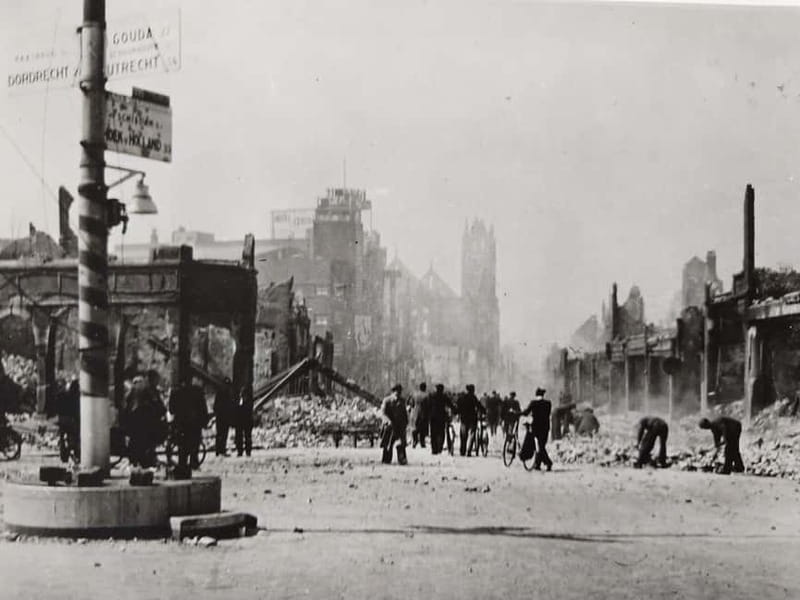
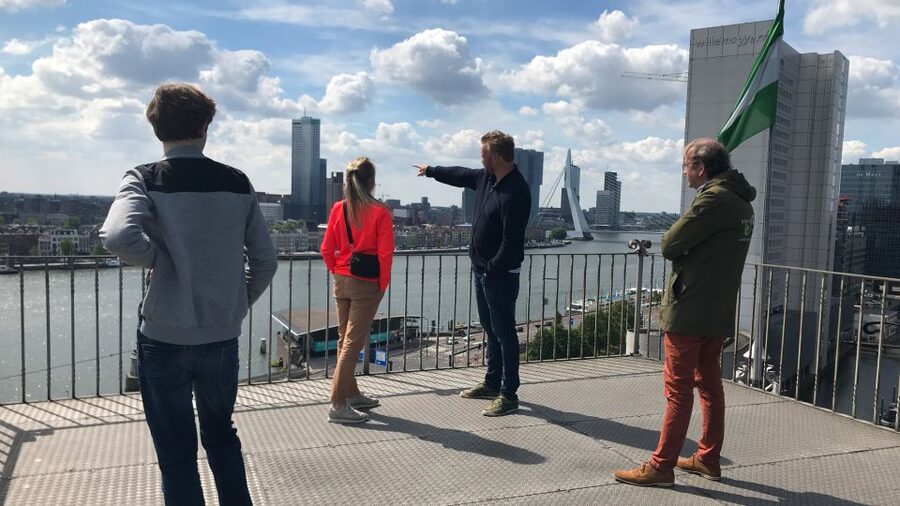
The rooftop stop at Het Witte Huis is the big visual reward, and it’s included. You’ll get an impressive 360º view over the city, which is exactly what you want after walking and learning. From up there, the streets and neighborhoods start to line up in your head.
What makes this work is sequencing. The tour doesn’t send you up for a quick photo and then leave you confused. It uses the rooftop view to make the city’s shape and reconstruction clearer. In one experience, the guide Willem is specifically praised for starting with the rooftop explanation, using that view to make the rest of the story click.
If you’re the type who likes to understand the “why” behind the layout, you’ll appreciate this stop. Even if you’re not an architecture nerd, the rooftop helps you orient quickly, and orientation turns a walk into something memorable.
Bring your camera instincts, but also slow down. Look for the parts you walked past, then link what you saw to what the guide says. That’s where the value shows.
Markthal snack, Ossip van Duivenbode postcard, and the Cube Houses discount
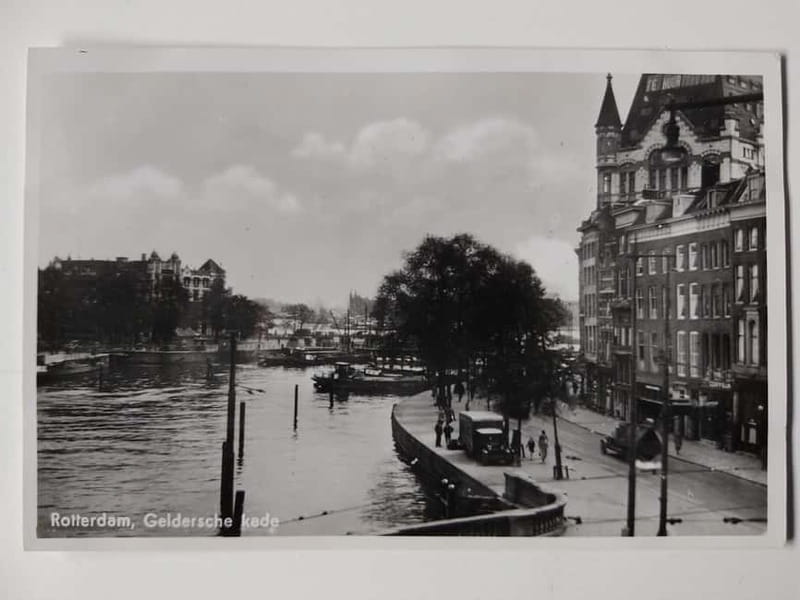
You’ll enjoy a tasty bite in the Markthal, a modern architectural icon. This is more than a break. The tour is designed so you eat in a place that represents how Rotterdam has evolved since the war.
What’s also included is a postcard by Rotterdam architectural photographer Ossip van Duivenbode. That’s a small thing, but it’s the kind of souvenir that feels connected to the city’s visual story, not random shop stock.
Plus, you get a 50% discount entrance to the Cube Houses. It’s not an automatic add-on in the tour description, but it gives you a practical way to keep the architecture theme going if you want to spend extra time after the walk.
When you plan your day, treat Markthal as your reset point. You’ll have been listening for a couple of hours by then, so the food stop helps you absorb the lessons rather than just power through them.
Price and what $494 per group buys you in real terms
This tour is priced at $494 per group up to 4, lasting about 2.5 hours. In other words, it’s not a budget single-person ticket model. The value depends on how you share it.
If you book with a group of four, you’re effectively dividing the group price by four, which can make the tour feel much more reasonable. If it’s only you or two people, the cost is higher per person, so you’ll want to be sure you’ll fully use the included rooftop entrance, the Markthal snack, and the guided WWII storytelling.
The inclusions matter here:
- Expert local and professional guide
- Het Witte Huis rooftop entrance
- A snack in the Markthal
- Ossip van Duivenbode postcard
- 50% discount entrance to the Cube Houses
- Discount at one of the stalls in the Markthal
That mix is why this doesn’t feel like a pure history tour. You get history plus a viewpoint plus built-in architecture time. If that combination is exactly your style, the price starts to make sense fast.
Language, guide styles, and how weather can affect your experience
The tour runs with live guides in Dutch, English, and German. That flexibility is a real plus if Rotterdam logistics are easier in your language. Still, guide quality can vary, and one earlier experience mentioned that the English could be poor and that the guide spoke more about themselves than about the WWII events. Another experience praised the guide as fun and engaged, so it really can swing.
What you can do to protect your experience is simple: at booking time, confirm your language and set your expectation that you want a WWII focus, not just general city buildings. If a guide is strong, you’ll get both, and the WWII thread should keep pulling you back to the meaning of what you see.
Weather is another practical factor. One review specifically mentioned appreciation for adjustments due to weather. That tells you it’s worth dressing for walking outdoors, and being flexible if the route or timing shifts slightly to keep everyone comfortable.
Should you book the Rotterdam WWII Walking Tour?
Book it if you want WWII history tied to real streets, a rooftop city view, and a food break that reflects modern Rotterdam. The combination of the bombing and occupation story, followed by reconstruction monuments, is a strong match for people who learn best by walking and seeing.
Skip it or think twice if wheelchair access is a must, or if you only want extremely detailed military WWII history rather than a city-based explanation. Also, because guide styles can differ, if WWII specifics are your top priority, it’s worth aligning your expectations with the language and emphasis you’re booking.
For me, the decision comes down to this: the tour gives you a coherent story arc, and it ends with a view that helps you understand what you just learned. If that sounds like your kind of travel, it’s an easy yes.
FAQ
What topics does the Rotterdam WWII walking tour cover?
The tour covers the devastation of Rotterdam during WWII, including the bombing on May 14, 1940, the occupation, liberation, and capitulation. You also follow the borders of the fire zone and see remaining scars and monuments from the reconstruction period.
How long is the tour?
The walking tour lasts about 2.5 hours.
What is included in the tour price?
You get an expert guide, entrance to the Het Witte Huis rooftop, a snack in the Markthal, and a postcard by architectural photographer Ossip van Duivenbode. You also receive a 50% discount entrance to the Cube Houses and a discount at one of the Markthal stalls.
Where do I meet the guide?
The guide meets you outside the front entrance of Wijnhaven 3. Aim to arrive 10 minutes before the start time, since the tour leaves promptly.
Do I need to bring anything?
Wear comfortable walking clothes, and bring a face mask or protective covering.
Is the tour wheelchair accessible?
No, the tour is not suitable for wheelchair users.
What languages are offered?
The live guide is available in Dutch, English, and German.
Can I cancel for a refund?
Yes. Free cancellation is available up to 24 hours in advance for a full refund.
Latest Rotterdam reviews
- Private Rotterdam Walking tour with expert local guide★ 5.0 · 3 reviews
- Rotterdam & Delft Private Offshore Daily Walking Tour★ 5.0 · 3 reviews
- Rotterdam: Capture the most Photogenic Spots with a Local★ 5.0 · 3 reviews
- Keukenhof – spring garden from Rotterdam, Delf & The Hague★ 4.5 · 3 reviews
- Private tour from Rotterdam to Windmills of Kinderdijk & Gouda Cheese Experience★ 5.0 · 3 reviews
- Schiller Water Bike Rental in Maritime District Rotterdam★ 3.7 · 3 reviews
- Discover Rotterdam’s most Photogenic Spots with a Local★ 5.0 · 3 reviews
- Rotterdam: 2.5-Hour Leckers Boat Cruise and Buffet★ 3.2 · 3 reviews