
Reviewed · SECOND WORLD WAR HISTORY
Oosterbeek: Airborne Museum Hartenstein Entry Ticket
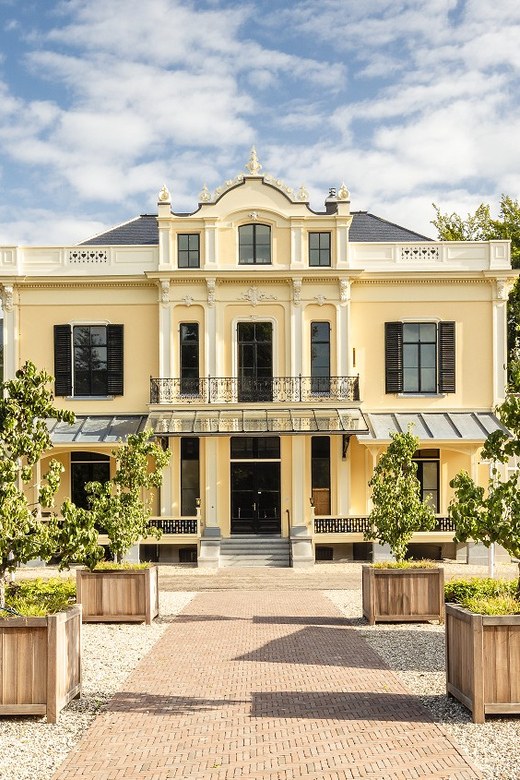
If you care about World War II history that feels personal, this is one of the best places in the Netherlands to go. Airborne Museum Hartenstein sits in Villa Hartenstein, once the British HQ during September 1944, and it turns the Battle of Arnhem into something you can follow step by step.
I especially like two things. First, the museum focuses on people, not just dates, with moving stories of British, Polish, and German soldiers plus eyewitness accounts, including what it felt like to experience the war as a child. Second, the underground Airborne Experience is a real change of pace from the rooms above, so you do not just read panels all day.
One consideration: the subject matter is heavy. If you want light and breezy, or you are visiting very young kids who struggle with intense topics, plan your pacing carefully and be ready for some emotionally tough moments.
Key things you will remember from Hartenstein
- Villa Hartenstein as a former British HQ from September 1944, giving the whole visit a strong sense of place
- Stories across sides (British, Polish, German soldiers) so the Battle of Arnhem doesn’t feel one-note
- Eyewitness accounts, including child experiences, which makes the war feel immediate rather than distant
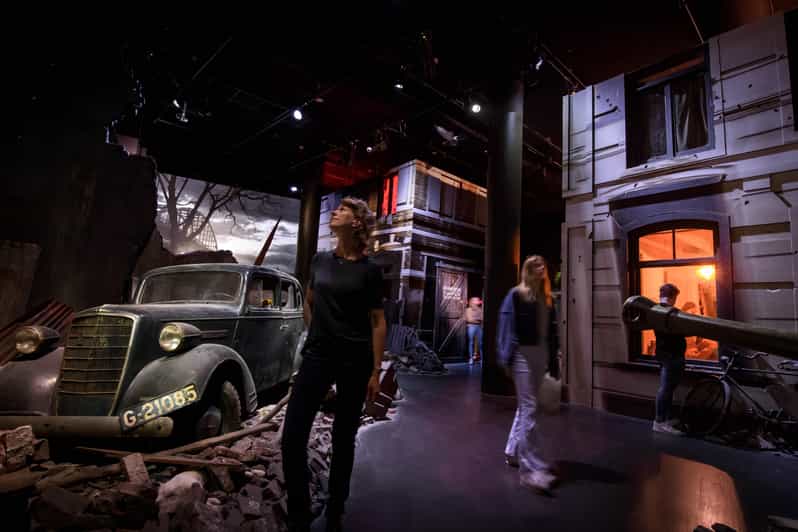
- The underground Airborne Experience, a hands-on-feeling stop that adds variety to the museum walk
- A children’s interactive audio tour with Soldier Tommy, which can turn the visit into a mission for younger listeners
Getting to the right place: Oosterbeek and Villa Hartenstein
Oosterbeek is in Gelderland, and the museum’s setting is the first reason it works. You are not in a generic exhibition hall. You are in a villa that once served as the headquarters for British General Urquhart in September 1944. That matters because the Battle of Arnhem is not just a story that happened somewhere else. It is tied to walls, rooms, and the kind of space where decisions were made.
Even if you only know a few basics about Arnhem, you can walk in and get oriented fast. The museum is designed to take you through the Battle of Arnhem step by step, which helps if your knowledge is patchy or if you want a clear narrative thread.
More museums in Arnhem:
- Amsterdam: Van Gogh Museum Ticket
★ 4.7 · 52,054 reviews - Moco Museum Amsterdam Entrance Tickets with Banksy & More
★ 4.4 · 10,088 reviews - Amsterdam: Red Light Secrets Museum Entry Ticket
★ 4.2 · 5,722 reviews
What you actually get for your ticket price
At about $19 per person for a one-day entry, this is priced like a museum that expects you to slow down. You are not only paying for a quick room-and-label visit.
Your ticket includes:
- Entrance to the Airborne Museum Hartenstein
- Visit to the underground Airborne Experience
- Visit to the temporary exhibition
- A free audio tour in Dutch, English, German, and Polish
That bundle is the value. The audio tour is not a small add-on. It is a big part of how you experience the museum content at your own pace, and it’s available in the major language options listed for this experience. Also, you are not forced into a strict guided group format based on what’s provided here. You can plan your tempo around your energy level.
Practical tip: because the museum covers difficult material, I’d rather build in breathing time than cram everything back to back.
The museum story: British, Polish, and German viewpoints
The core of the visit is the museum walk through the Battle of Arnhem. What I like here is the balanced focus on multiple sides. You meet British, Polish, and German soldiers, and the story is shaped around their experiences rather than only military strategy.
This approach changes how you read the events. Instead of seeing the battle as a straight line of operations, you start noticing how people were pulled into chaos from different angles. That makes the Battle of Arnhem feel more like lived history.
Eyewitnesses and the war as a child
One of the most striking elements is the role of citizens and eyewitnesses. They tell you what it was like to experience the war as a child. That’s a rare framing in many WWII exhibits. It adds a human-scale layer that history books often skip.
If you are the kind of visitor who likes to understand how ordinary life gets disrupted, this is a strong section. Even if you have seen other WWII museums, the child viewpoint tends to hit differently because it is often less about heroics and more about fear, uncertainty, and daily survival.
“The Battle of Arnhem” in an order you can follow
The museum is designed to help you move through events step by step. That sounds basic, but in practice it is huge. When your information is arranged logically, you spend less time trying to figure out what you are looking at and more time absorbing what it means.
As you go, keep an eye out for how the exhibits connect the battle to the present. The museum frames the Battle of Arnhem as something with long-term consequences for World War II and for the formation of current Europe. You do not need to memorize every detail. The point is to understand that this was not only local fighting, it helped shape what came next.
Inside the underground Airborne Experience
The Airborne Experience is one of the best reasons to pick this museum. It’s included in your ticket, and it shifts you from the typical museum rhythm.
Underground experiences are often used for storytelling, sound, and atmosphere, and that is exactly the kind of setup you should expect here based on what’s described: you experience the Battle of Arnhem in the underground Airborne Experience.
Why this stop is worth your time
If you go to too many museums in one trip, you might get tired of the same pattern: read, look, repeat. The underground format gives you a different way to process the story. It also helps with pacing. After the more traditional museum sections, you’ll be ready for a change of tone.
I suggest you treat this as a centerpiece stop, not a filler. Give it the time you’d give a guided segment at another attraction.
The temporary exhibition, including the basement angle
Your ticket also includes a temporary exhibition. One review specifically mentioned the extra exhibition in the basement (kelder) connected to BIDKL, and that gives you a useful clue: the museum may include content that goes beyond the main story rooms, sometimes in lower-level spaces.
Since temporary exhibitions change, the exact topic could differ depending on when you visit. Still, the concept is consistent: it’s a separate layer that can add extra context or zoom in on specific parts of the Arnhem story.
How to get the most out of a temporary show
If you have limited time, I’d focus on whatever the temporary exhibition is emphasizing that day, then come back to the main museum story only if you feel gaps. The temporary exhibition is part of the value here, so don’t treat it like optional homework.
The children’s mission: Soldier Tommy and an interactive audio tour
This is not just for adults. The museum offers an interactive audio tour for children with Soldier Tommy. Kids go on a mission during the audio experience.
Even if you do not have children, this is still a helpful detail because it tells you something about the museum’s design. It uses audio to guide attention and make the story approachable. If you’re traveling with family, this can turn museum time into something more game-like.
A smart way to handle serious history with kids
The content can be intense, so use the children’s mission as a pacing tool. Let the audio guide keep them focused while you decide which sections to linger in and which sections to skip. You are in control of your tempo because the audio tour is part of what you’re given.
Audio tour languages: a practical feature that really helps
The audio tour is included and offered in Dutch, English, German, and Polish. That matters because it affects how much you can understand without friction.
I like museums where audio does not feel like a crutch. Here, it is designed to help you experience the story at your own speed, and that’s especially useful when you encounter heavy material. You can pause, replay, or move on without needing to keep up with a group.
Practical advice: if multiple languages are available, pick the one you can listen to comfortably for long stretches. WWII history is not the time to test your listening skills.
Timing, pacing, and how to make it a full one-day visit
This experience is valid for one day, and starting times depend on availability. That means you should think of your visit as a museum day, not a quick stop.
A good pacing approach:
- Start with the main museum story so you understand the timeline and the viewpoints
- Plan time for the underground Airborne Experience as a centerpiece
- Leave room for the temporary exhibition so it doesn’t feel rushed
- Use the children’s interactive audio tour if it fits your group
Because the museum includes eyewitness material and stories that can be emotionally hard, I would build in a slower pace rather than trying to “get through it.” The point is comprehension, not checkmarks.
Who this is best for (and who should think twice)
This museum is best for you if you want WWII history grounded in real people and real testimonies. The emphasis on British, Polish, and German soldiers, plus eyewitness accounts (including what children experienced), makes it a strong fit for visitors who value perspective and human-scale storytelling.
It also works for families who can handle serious topics, especially if you like the idea of a children’s audio mission with Soldier Tommy.
Think twice if you are looking for light entertainment or if you know you get overwhelmed by intense historical narratives. In that case, you can still visit, but treat it like a planned emotional experience with breaks, not a casual outing.
Booking: should you pick Airborne Museum Hartenstein in Oosterbeek?
If your goal is a meaningful, well-paced day that connects the Battle of Arnhem to the place where it unfolded, I’d book this. For roughly $19, you get the main museum story, the underground Airborne Experience, a temporary exhibition, and a free audio tour in multiple languages. That’s a lot of content for one ticket, especially when the emotional and historical framing is clearly part of the design.
One more deciding thought: the best experiences here are the ones where you slow down. If you are willing to give it that time, you will likely leave with a clearer understanding of Arnhem, not just a stack of facts.
FAQ
What is the price of the Oosterbeek Airborne Museum Hartenstein ticket?
The ticket price is listed as $19 per person.
How long should I plan to spend at the museum?
The experience duration is listed as 1 day.
What is included with the ticket?
The ticket includes entrance to Airborne Museum Hartenstein, the Airborne Experience, the temporary exhibition, and a free audio tour.
What languages are available for the audio tour?
The audio tour is available in Dutch, English, German, and Polish.
Is the Airborne Experience included in the entry ticket?
Yes. The ticket includes a visit to the Airborne Experience.
Is there a temporary exhibition?
Yes. Your ticket includes a visit to the temporary exhibition.
Is the museum wheelchair accessible?
Yes, the experience is listed as wheelchair accessible.
Can I cancel for a full refund?
Yes. Free cancellation is offered up to 24 hours in advance for a full refund.
Can I reserve now and pay later?
Yes. The option is listed as reserve now & pay later, where you pay nothing today.
Are there different starting times?
Yes. The ticket is valid for 1 day, and you should check availability to see starting times.
Latest Arnhem reviews
- e-Scavenger hunt Arnhem: Explore the city at your own pace★ 4.0 · 19 reviews
- 2,5 hour Battle of Arnhem Tour with Private Guide★ 5.0 · 16 reviews
- Arnhem: Burgers’ Zoo Entry Ticket★ 4.7 · 88 reviews