
Reviewed · ROTTERDAM ARCHITECTURE
Rotterdam Must Do Tour: Highlights, History, WW2 and Architecture
Rotterdam is interesting because so much of what you see today is shaped by rebuilding, not just centuries-old continuity. This 2-hour walk gives you the story behind the city’s bold architecture, with a local guide tying WW2 recovery to what stands on the streets now.
I like two things right away: the tour is priced at just $29.41 and it packs big-name sights into a manageable time window, and the group stays small (max 15), which makes it easier to ask questions and actually hear the guide. One thing to keep in mind, though, is that many stops are quick, so if you want long looks inside every place, you will likely need extra time on your own afterward.
Key Highlights to Look For
- Small group, max 15: better pace control and more room for questions
- WW2-to-architecture storyline: you connect what you see to what happened to the city
- Markthal inside the horseshoe: a market hall with restaurants and an artwork of enlarged fruit, fish, flowers, seeds, insects
- Luchtsingel pedestrian bridge: a 390-meter wooden walkway connecting Rotterdam North to the center
- Free entry points: several landmark stops include admission at no extra cost
- Rotterdam Centraal meeting: you start with the city’s architecture right away
Why Rotterdam’s Rebuild Is the Real Star of This Walk
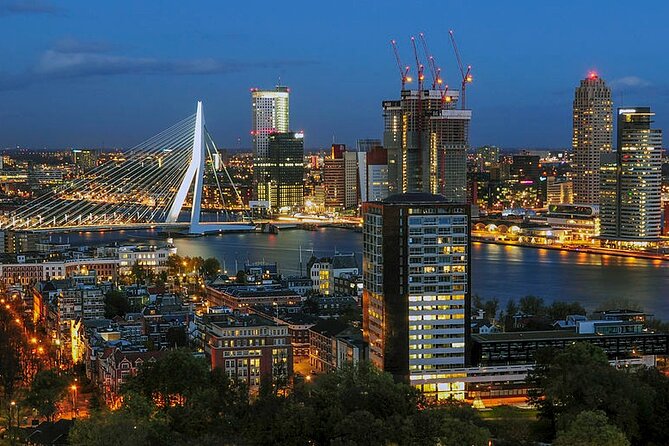
If you think Rotterdam is a modern city, you are not wrong. What makes it more than just sleek buildings is the reason for that modern look, especially after Rotterdam was heavily damaged in the Second World War. This tour threads that connection for you as you walk, so you are not just snapping photos. You are understanding why certain streets, buildings, and public spaces feel the way they do.
You also get a practical style of sightseeing. It is a 2-hour route, built around a line of major landmarks, with a local guide giving context at each stop. That means you can fit it into an arrival day, a cruise day, or a tight itinerary, without burning half your time on transportation.
The guide skill matters here, and the reviews give you strong clues. Several guests praise guides like Mr. Ed, Michel, Susan, John, Edwin, Stephan, and Tony for turning architecture and history into something you can actually picture. You get the sense that good guides in this format keep things conversational, not lecture-like, and they point out smaller details you would miss alone.
The one potential downside is pace. Even though the tour is thoughtful, the itinerary is packed. Expect short stop times. You will see a lot, but you might not slow down enough for your own deep reading at each location.
More Historical Tours in Rotterdam
- Rotterdam: Kinderdijk UNESCO World Heritage Entry Ticket
★ 4.6 · 1,477 reviews - Rotterdam: Highlights, Gems, Architecture & History Walk
★ 5.0 · 191 reviews - Rotterdam: Maritime Museum and historic museum harbor ticket
★ 3.9 · 92 reviews
Getting Oriented: Stationsplein Start and a Clean Way to Begin
You meet at Stationsplein 10, 3013 AJ Rotterdam, and the tour ends back at the same meeting point. The big advantage of this starting setup is simple: it anchors you at a central hub where you can orient yourself quickly. If you are arriving by train or planning to explore more after the tour, this makes the day easier.
Your guide also starts by introducing themselves, then immediately sets the architectural context of the city near Rotterdam Centraal Station. That first connection is helpful because it gives you a framework before you start moving through the rebuilt center.
You also get a mobile ticket, which is low-friction. No paper hunt, no complicated printout. If you are traveling light or moving between transit and sights, this kind of ticket format is just less hassle.
Rotterdam Centraal and the City’s Architecture Story
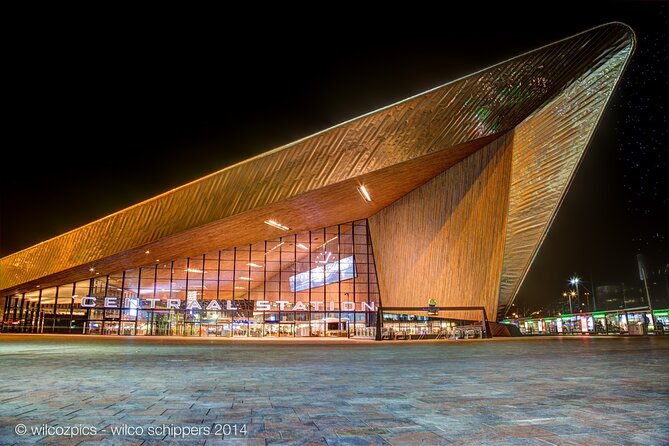
At the central station stop, you are not lingering. You are getting your bearings, plus a guide’s quick explanation of the city’s architecture approach. This matters more than it sounds.
Rotterdam is famous for modern design, but the guide helps you see it as part of a larger plan, shaped by reconstruction and urban renewal. Once you understand that, the rest of the route becomes easier to read. You stop treating buildings like isolated landmarks and start recognizing patterns.
In practical terms, this also reduces wasted time. If you have only a small window in Rotterdam, you do not want to wander hoping you will stumble into understanding.
Groot Handelsgebouw: One of the First Big Post-WW2 Statements
Next up is Groot Handelsgebouw, completed in 1953. The key point here is timing: it is one of the first major buildings built after Rotterdam’s bombing in the Second World War.
Even with just ten minutes on the stop, you can make this moment land. Think of it as a marker on a timeline. The city is moving from destruction toward a rebuilt identity, and the skyline begins to reflect that decision.
If you enjoy seeing how a city rebuilds not only physically but also stylistically, you will likely appreciate this stop. It is the bridge between the tragedy you hear about and the modern structures you will walk past immediately afterward.
More modern architecture walks in Rotterdam:
- Rotterdam Walk: Hilights, Gems, Architecture & WWII | 2 or 3hrs
★ 5.0 · 149 reviews - Rotterdam: De Rotterdam, Cube Houses, Watertaxi and Markthal
★ 4.7 · 112 reviews - Rotterdam Architecture Highlights Walking Tour
★ 5.0 · 66 reviews - Rotterdam: Markthal Tour, Meet & Taste, and Het Witte Huis
★ 4.3 · 36 reviews
Shopping Streets Built Into the Rebuilt Center
From there, the tour shifts into streets and pedestrian zones that show how the city re-planned daily life after the bomb. You visit the shopping area including West-Kruiskade and Kruiskade, plus Lijnbaan.
Here is why those stops are worth your time. Shopping streets sound like generic sightseeing until you learn the dates and the purpose. According to the tour description, parts of these shopping districts were destroyed during the bombing, then replaced in the postwar rebuilding era.
West-Kruiskade and Kruiskade: a quick look at the center’s retail core
You get about ten minutes at Shopping District – West-Kruiskade. The guide uses this brief window to show how the center reorganized itself.
Even a short stop helps because you start noticing the relationship between streets, pedestrian flow, and where landmark architecture appears.
Lijnbaan: pedestrian planning dating to 1953
The Lijnbaan segment is another ten-minute stop, but it has a clear story. It opened in 1953 as the main pedestrian street in the new shopping district, after the old shopping district had been destroyed.
So instead of only seeing places to shop, you are seeing a design choice for movement. Pedestrian-first streets can feel like a modern habit, but here you learn it was part of the postwar rebuilding direction.
Luchtsingel Bridge: A Wooden Walk That Connects Two Worlds
Then you get one of the more memorable segments: Luchtsingel, a 390-meter wooden pedestrian bridge connecting Rotterdam North with Rotterdam Center.
The tour description focuses on impact. This bridge brings new life to an area that had been abandoned for years, dominated by vacancy and neglect. That theme matters because it turns a bridge from a photo-op into a small case study of urban renewal.
Ten minutes on the bridge may not sound like much, but the value is that you experience a physical connection between areas. Even if you do not plan to explore North Rotterdam afterward, you will understand the city’s logic about making connections and reactivating underused spaces.
If you like walking that feels different from street-level sidewalks, you will likely enjoy this stop.
Nieuwe Delftse Poort and Sint-Laurenskerk: Traces of the Old City
After modern reconstruction and pedestrian zones, the tour swings back toward older Rotterdam through two landmarks that work like bookends: a rebuilt city gate in steel and the last medieval remnant in a church.
Nieuwe Delftse Poort (Delftsche Poort): 1764 origins, steel reconstruction
Nieuwe Delftse Poort is linked to the Delftse Poort city gate. The last of these gates was built in 1764, and then a steel reconstruction was erected on the original site area of the Delft gate on Pompenburg. The design is credited to artist Cor Kraat.
This stop is fascinating because it is not pretending the past survived unchanged. It shows how cities can preserve a sense of place through reconstruction. Ten minutes is enough to get the story and appreciate the idea.
Grote of Sint-Laurenskerk: the medieval remnant you can enter for free
Then you reach Sint-Laurenskerk, a Protestant church in Rotterdam. The tour description says it is the only remnant of the medieval city of Rotterdam, and you can go inside for free.
This is one of the stops I would not rush mentally. The reason is that the tour is loaded with postwar structure and planning. A medieval remnant gives you a time anchor and a sense of continuity, even if it is only one preserved piece.
If you care about atmosphere and you like looking at interiors when they are open, plan to spend a little extra focus here. The stop is listed as about ten minutes, and the ability to enter without paying is a meaningful bonus.
Markthal: Horseshoe Architecture and a Food Market in One Place
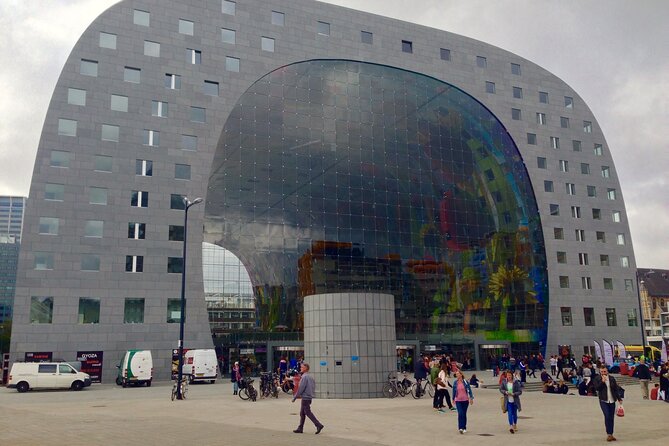
The Markthal stop is your longer architectural pause, about 30 minutes. It is designed by the architectural firm MVRDV.
The tour describes the building as grey nature stone with an archwise horseshoe structure. Inside, there are restaurants and a standout artwork featuring strongly enlarged fruits, vegetables, seeds, fish, flowers, and insects.
This stop is valuable because you see how Rotterdam mixes design and everyday life in the same envelope. You are not just looking at a building skin from the outside. You are entering a functional market space, with art integrated into the experience.
A practical tip for you: treat Markthal as a place to slow down slightly. Even if you only have 30 minutes, it is one of the few stops where you can balance architecture viewing with food-market energy. And since admission is free as part of the tour, you are not forced into a shopping requirement to justify the time.
Balanced note: in one case, a guest felt the guide did not fully highlight Markthal’s artistic impact around where the group met. If you are the type who really wants to understand what to look for, bring your curiosity and ask the guide what to focus on as you approach the interior artwork.
Oude Haven: Old Harbour Energy, plus the Cube Houses Connection
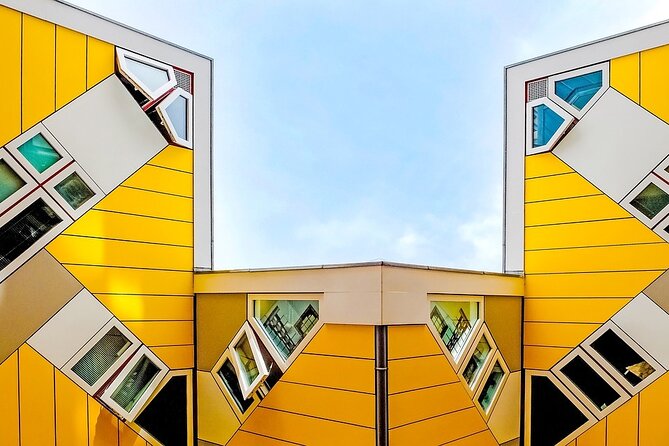
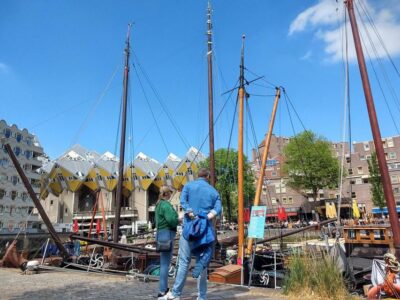
The last major stop is Oude Haven (Old Harbour), about 20 minutes. The tour frames it as the historical hotspot of the city center, developed into a vibrant area at the north of the Maas river. It also says you will find the Cube Houses here.
Oude Haven matters because it is where Rotterdam’s past and present share the same pocket of city life. Earlier stops emphasize reconstruction and new planning. Here, you get the feel of a classic Rotterdam favorite area, with distinctive architecture sitting in the middle of that harbor-side energy.
If you want photos, this is typically where you will relax into it. You have already gotten the WW2 and planning context, so now you can enjoy the visible results.
The Cube Houses are the kind of landmark that makes you stop without needing much explanation. Still, the guide’s earlier framework can help you see them as part of Rotterdam’s bigger design identity, not just as odd-looking houses.
Price and Value: Why $29.41 Can Be a Fair Deal for 2 Hours
At $29.41 per person for about 2 hours, this tour is priced like a good “first-look” experience. The value is not just that you walk by famous sights. It is that you get a local guide linking them together with the WW2 rebuilding thread and architectural logic.
You also get practical extras built in:
- A group capped at 15 travelers, so the guide can keep a conversational pace
- Free admission at the listed stops, which removes a hidden cost barrier
- Different tour times offered, so it can fit a schedule
- English-speaking guide
What you do not get is also clear: food and drinks are not included. That is normal for a walking tour, but it means you should plan a snack or meal outside the tour window. Since the route is packed, having at least water sorted can make the pace feel easier.
Who This Tour Fits Best (And Who Might Need a Plan B)
This is a great match if you:
- Have limited time and want major Rotterdam landmarks without map-chasing
- Like architecture that comes with a reason behind it, especially post-WW2 rebuilding
- Prefer a small group and a guide who can answer follow-up questions
- Want a structured way to see both modern design and older traces like Sint-Laurenskerk
You might want a different style of tour if you:
- Like long stays inside buildings and markets
- Want a quieter pace with fewer stops per hour
That is not a flaw. It is just that the tour is intentionally compact. It aims to get you informed and oriented quickly, then you can explore on your own.
Tips That Make the Tour Feel Easier
A few small moves can improve your experience:
- Wear shoes you like for walking, since the tour is a continuous walking loop with multiple short segments
- Have a snack plan, since food is not included
- Come ready to look closely, especially at Markthal’s horseshoe interior artwork and Luchtsingel’s connection theme
- If your schedule is tight, pick a time that lets you continue exploring after the tour, because you will likely want extra time at at least one highlight
So, Should You Book This Rotterdam Must Do Tour?
I would book it if you want a smart, well-paced introduction to Rotterdam that connects WW2 recovery to the architecture you see today. The guide quality seems to be the strongest asset, with multiple praised guides like Susan, Michel, Edwin, John, and Mr. Ed bringing the city to life through stories and practical explanations.
If you hate rushing or you need lots of downtime between stops, consider booking a different tour with a slower rhythm. But if your goal is to see the key sights, understand why the city looks the way it does, and get inspired to explore more, this one is a solid choice.
FAQ
How long is the Rotterdam Must Do Tour?
It runs for about 2 hours.
Where do I meet the guide?
You meet at Stationsplein 10, 3013 AJ Rotterdam, Netherlands, and the tour ends back at the same meeting point.
Is the tour offered in English?
Yes, it is offered in English.
How many people are in the group?
The tour has a maximum of 15 travelers.
What is included in the price?
A local guide is included. The listed stops are listed with admission ticket free.
Are food and drinks included?
No, food and drinks are not included.
Can I get a full refund if I cancel?
Yes. You can cancel for a full refund if you cancel at least 24 hours before the experience start time.
Latest Rotterdam reviews
- Rotterdam Private Walking Tour with a Local★ 5.0 · 15 reviews
- Private Walking Food Tour of Rotterdam★ 4.5 · 15 reviews
- Rotterdam: Guided Food Tour★ 4.4 · 16 reviews
- Kinderdijk Area Cycling Tour★ 5.0 · 17 reviews
- Rotterdam: Architecture Highlights Tour including the Depot★ 4.6 · 17 reviews
- Skip the Line: SS Rotterdam Steam Ship Entrance Ticket★ 4.5 · 18 reviews
- Rotterdam: Summer Cocktail Cruise★ 4.7 · 18 reviews
- Rotterdam: Pub Cruise with Drinks and Bites★ 4.0 · 19 reviews
Rotterdam Architecture, compared.
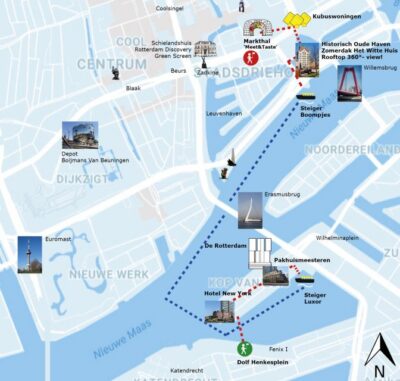
De Rotterdam, Cube Houses, Watertaxi and Markthal
Read our review →
Markthal Tour, Meet & Taste, and Het Witte Huis
Read our review →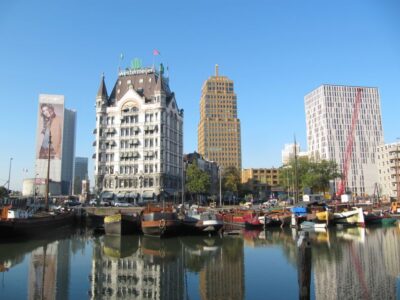
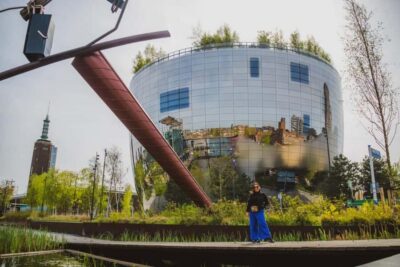
Architecture Highlights Tour including the Depot
Read our review →
Walking Tour about Golden Age Architecture, private local guide
Read our review →
Architecture Museum Het Schip Entry Ticket & Tour
Read our review →Browse the lists this tour appears in