
Reviewed · MAASTRICHT TOURS
Maastricht Hidden Gems Tour Uncover the Unexpected
Maastricht is one of those cities where the big timeline is still visible on the street. This 2-hour walk connects Roman Maas crossings to medieval power, so you start with the past and end with a feel for local life in Maastricht-Centrum.
I especially like two things. First, the way the tour anchors the story at Mosa Trajectum, the Roman crossing point idea around 50 AD. Second, you get the social side at Vrijthof Square and the local mindset behind Mestreechter Geis.
One thing to consider: it is a walking tour for two hours, so if you want long museum-style stops and ticketed interiors, you’ll need extra time and budgeting beyond this experience.
Key highlights to look for
- Roman crossing stories at the Maas River connection, with Mosa Trajectum as your timeline anchor
- Medieval architecture focus around the Basilica of Our Lady
- Defense and city planning clues at Helpoort and the city wall by the Jeker
- Side-street atmosphere in the Jekerkwartier area and narrow historic lanes
- Local spirit, not just monuments through Mestreechter Geis and the vibe of Vrijthof
Entering Maastricht-Centrum from the start: why the route makes sense
This tour is built for a quick but satisfying read of Maastricht. You start in Maastricht-Centrum with pickup at your hotel if you’re staying within the city. Then you move stop by stop through layers of the city, not in a straight line of random photos, but in a sequence that helps you understand how the place worked.
You’ll be on foot for about two hours, so plan to wear shoes that handle old stones and turns. The pacing is meant to keep you moving, but the guide also gives you time at each photo stop and pauses to explain what to notice.
I like that it’s a private group. That matters, because the tour can shift to what you care about, and it’s easier to ask questions without feeling like you’re competing for attention.
A few other ways to fill a day in Maastricht
- Maastricht: Highlights Tour with a local Guide
★ 4.6 · 208 reviews - Valkenburg: Cave Biking Underground Bike Tour
★ 4.6 · 132 reviews - Highlight Running Tour
★ 5.0 · 118 reviews
Sint Servaasbrug photo stop: getting your bearings fast
The walk opens at Sint Servaasbrug, with a photo stop and guided explanation as you get your bearings. This is a smart early move. Bridges in Maastricht are not just views, they’re part of the city’s logic, especially in how people crossed the river and moved goods.
What you should pay attention to here is direction and flow. As the guide talks, you’ll start linking later stops to this first vantage point. That makes the rest of the walk feel like a story with chapters, instead of a list of sights.
If you’re the type who likes to orient yourself quickly, this is a good start. If you hate waiting at photo stops, know that there are planned pauses, and they are part of how the guide builds your timeline.
De Mestreechter Geis: the local spirit lesson you feel, not just hear
One of the tour’s best ideas is that it introduces Mestreechter Geis early on. It’s not treated as a slogan. You’re guided to understand it as a local spirit tied to warmth, friendliness, and the way people live around cafés, markets, and festivals.
This helps you in the practical way. When you later reach places like Vrijthof, you’ll have a mindset for what you’re seeing. You won’t just notice crowds, you’ll understand why people gather there and how the city’s personality comes across in daily life.
A small note: if you prefer only buildings and dates, you might wish the cultural part was lighter. But the guide blends it in as a guide to interpreting the city, not as a separate theme.
Op de Thermen: a stop that connects place names to the past
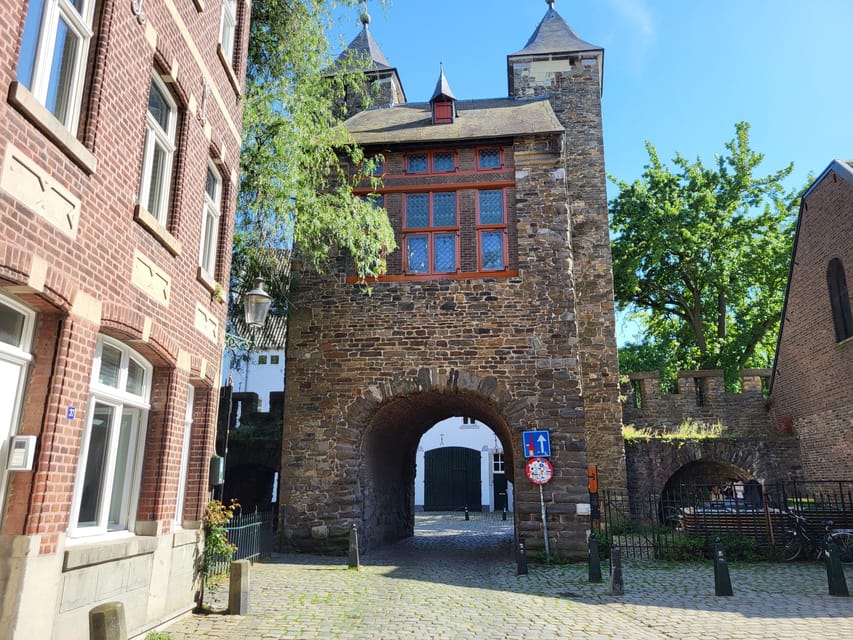
Next is Op de Thermen, another photo stop with guided walking. The name itself points you toward Roman-era ideas, and this is where the tour begins tightening the timeline toward Maastricht’s earliest story.
This is a good moment to practice a helpful habit: listen for how the guide uses place names and location to connect you to the city’s older roots. You’re not just learning facts, you’re learning how to read the city.
Because the tour is only two hours, you won’t get a museum-style presentation at every stop. If you love long, deep explanations, you might want to pick one theme to follow up after the walk.
Not the right fit? Maastricht also runs these:
- e-Scavenger hunt Maastricht: Explore the city at your own pace
★ 4.5 · 110 reviews - Maastricht: Museum of Illusions Entry Ticket
★ 4.2 · 82 reviews - Maastricht Privat Sightseeing City Walk
★ 5.0 · 76 reviews - Maastricht 2-Hour Walking Tour | Discover The City With A Local
★ 4.5 · 57 reviews
From Roman origins to Maastricht’s crossing: Mosa Trajectum in context
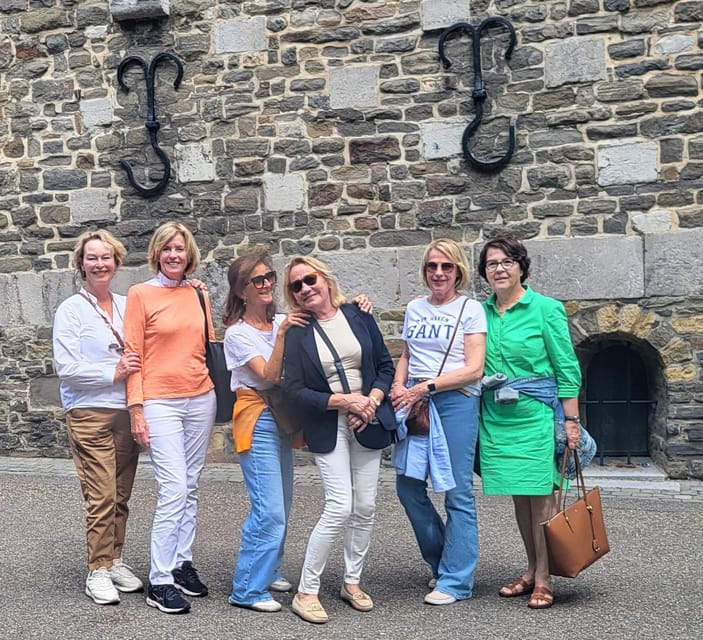
The tour’s core origin story centers on Mosa Trajectum, described as the Roman crossing point over the Maas River around 50 AD. This is where the experience clicks: Maastricht isn’t just old, it was useful.
What you’ll take from this part is how a strategic crossing can shape a city. Trade and defense needs make places grow. Over time, those practical reasons become permanent. Streets, institutions, and even how people cluster in squares can trace back to early movement patterns.
As you walk and the guide connects Mosa Trajectum to later medieval power, you’ll start noticing that many cities share a similar age. Maastricht’s difference is the specific crossing logic and the way religious and political roles were later layered onto the same ground.
Basilica of Our Lady: medieval architecture you can actually see
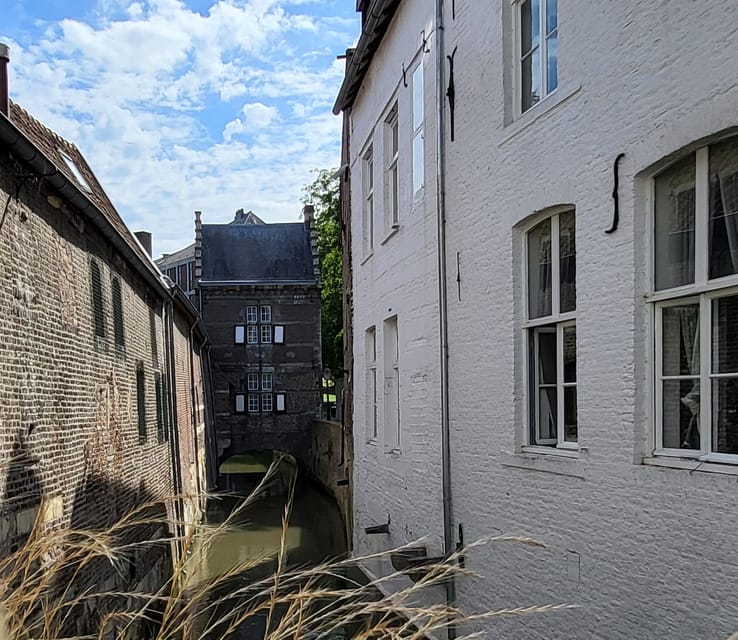
Then you reach the Basilica of Our Lady, Maastricht. Here the tour shifts from origins to form. The guide helps you “read” medieval architecture by pointing out what stands out visually and how the building fits into the city’s story.
Even if you don’t plan to go inside (museum tickets are not included), you’ll still gain value from the exterior and the guided framing. The difference is in understanding what you are looking at. Instead of seeing a church as one big shape, you start seeing time and purpose in the details.
One practical tip from a walking tour perspective: keep your phone handy, but also look up and scan slowly. The guide’s explanations are timed to what you can see in front of you.
Bisschopsmolen: everyday infrastructure with historical weight
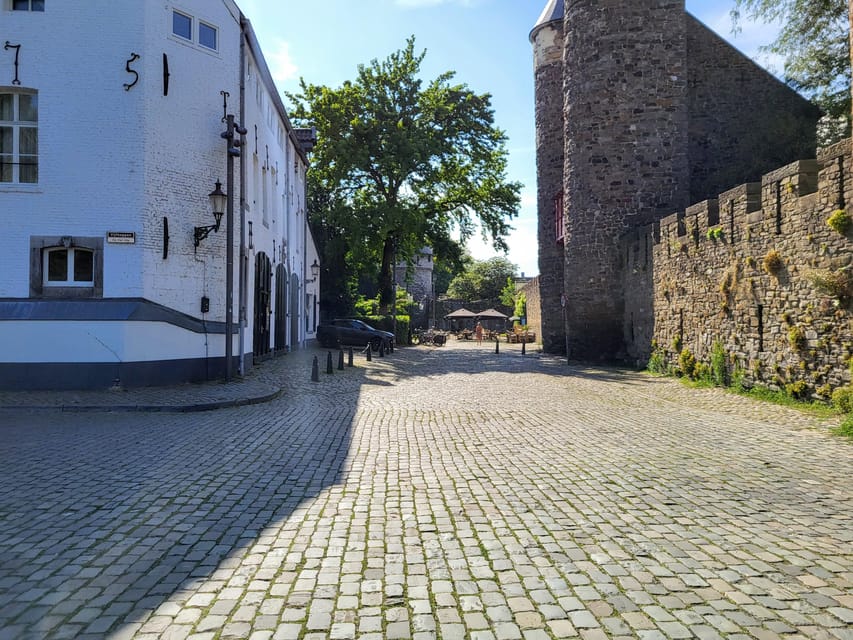
At Bisschopsmolen, you get a reminder that history isn’t only about grand monuments. This stop is tied to the way the city developed under overlapping influence, including the Bishop of Liège and the Duke of Brabant roles referenced in the tour narrative.
If you like history that feels grounded, you’ll appreciate how this kind of stop connects governance, economy, and how people used water and buildings over time. It turns the city into something functional instead of just decorative.
You might find this section especially enjoyable if you enjoy “how it worked” stories, not only “what happened” stories.
Helpoort: a defensive gate with a built-in story
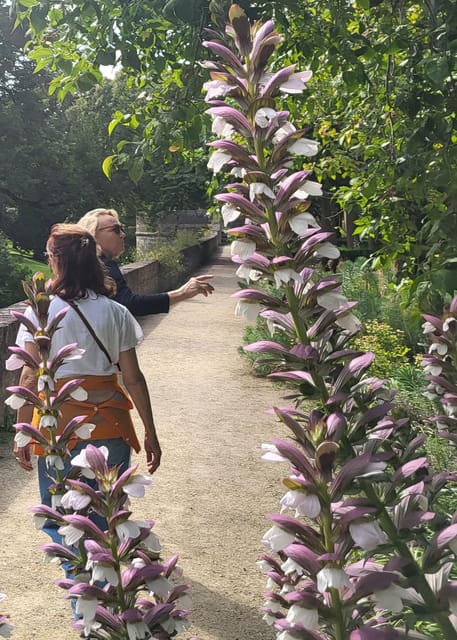
Next is Helpoort, Maastricht, another photo stop with guided walking. City gates are always useful teaching tools. They make defense visible, and they show how cities controlled access.
As the guide explains, focus on the idea of edges. Gates and walls mark boundaries, and those boundaries shaped where people built homes, markets, and routes. In a compact two hours, Helpoort gives you a quick but clear mental model for how the city protected itself and managed movement.
If you’re traveling with kids or you enjoy strong visual spots, Helpoort is a great pause. It’s easy to frame in photos, but it’s also strong as a story point.
Jekerkwartier and the city wall by the river: where the street pattern matters
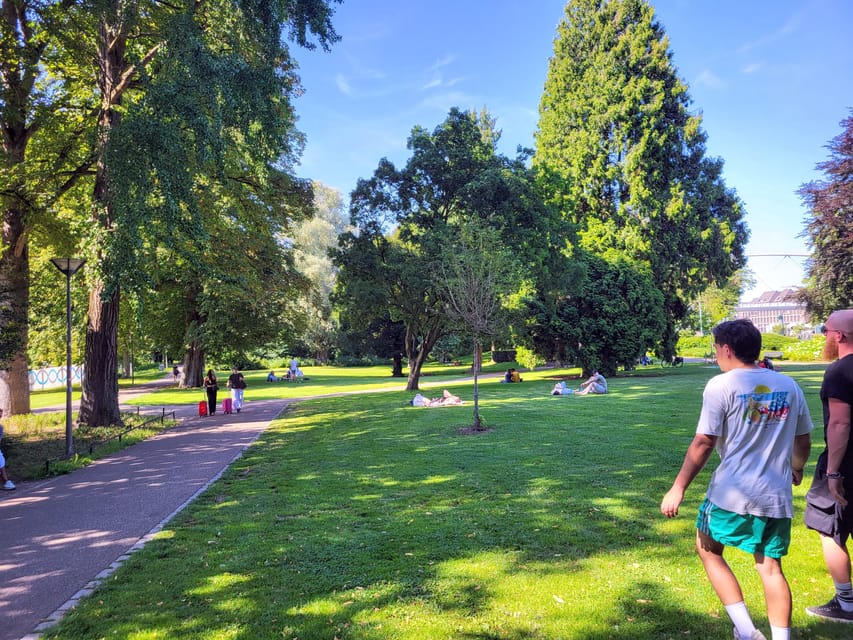
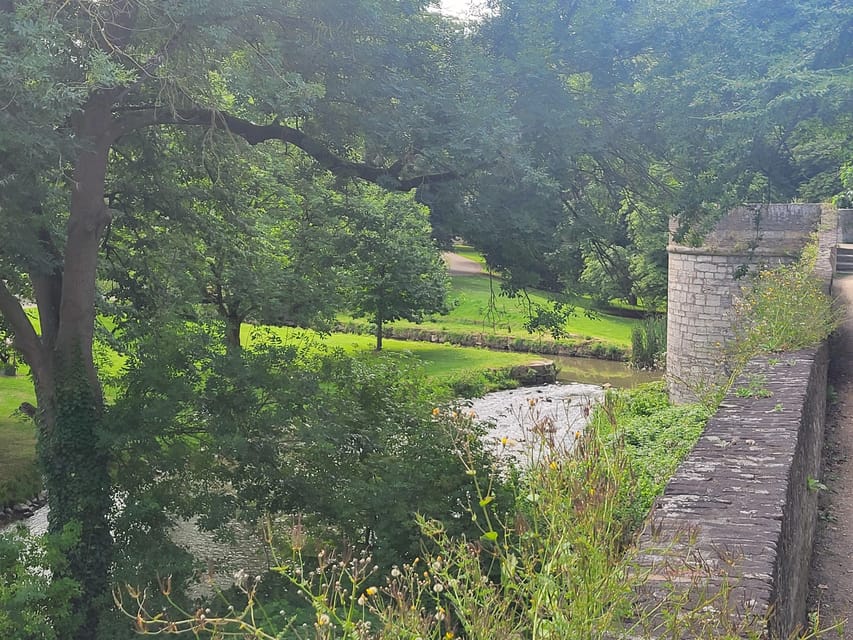
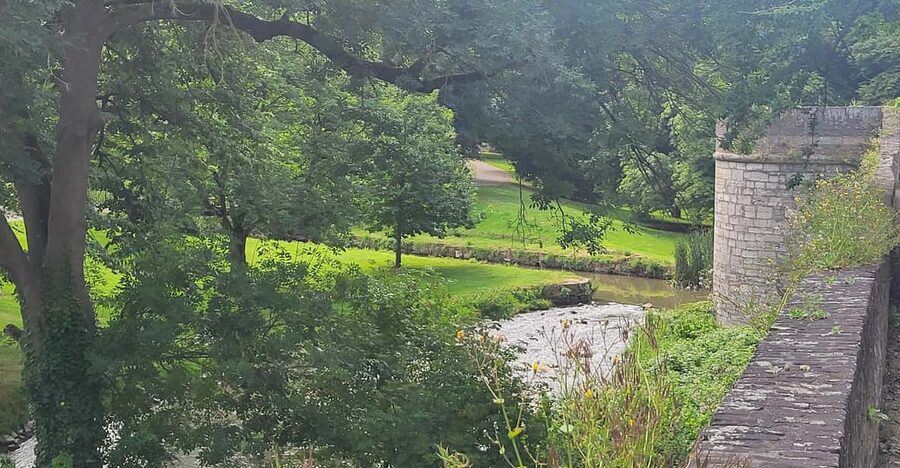
After Helpoort you enter Jekerkwartier, Maastricht, then you move to the City Wall at river Jeker. This stretch is valuable because it links architecture to geography, and geography to daily life.
Here’s what I think helps you most: look for how the river shapes the quarter. Even if you know little about Maastricht, you can tell when a city developed along water. Buildings cluster differently, and paths tend to follow practical lines.
The city wall stop matters because it keeps repeating the theme you heard earlier at Helpoort. The city had boundaries, and those boundaries shaped what you see later: narrow ways, older structures, and places where people still like to linger.
Drawback to keep in mind: this is still a walking tour, so the guide has to keep each stop moving. If you want long, quiet wandering along the wall, save that for a solo stroll after.
Het Vagevuur: a named place that sparks questions
Then you arrive at Het Vagevuur. This stop works because named places carry stories. Even without a museum ticket, you get the guided context that turns a spot into a clue.
What you’ll likely appreciate here is how the tour connects smaller locations to bigger eras. It’s not only “Roman then medieval.” The guide threads themes through the city so you feel continuity.
If you’re someone who loves folklore-like naming traditions and the idea that the city’s language grew from older beliefs, this is a nice moment. If you want strictly Roman content, it may feel like a detour, but it still reinforces how Maastricht’s later life layered itself onto earlier foundations.
Vrijthof: where the guide turns architecture into social life
Finally, you reach Vrijthof, Maastricht, one of the most central squares in the city. This is where the tour stops being only about what’s old, and starts showing what’s alive in the present.
The guide ties this to Mestreechter Geis, the local spirit. You’ll notice that squares like this are where daily social life happens. People meet, cafés fill up, and festivals bring the city’s personality into focus.
I like this payoff because it answers a common question: what good is a history lesson if you can’t connect it to how people live now? Vrijthof does that. It gives you a place to stand and understand the city’s rhythm.
Practical note: squares mean wind and open sky. If weather is chilly or rainy, plan a quick layer and be ready for exposed walking.
Dominicanerkerkstraat: finishing with the feeling of hidden lanes
You wrap up at Dominicanerkerkstraat, photo stop and guided walk, then you return to Maastricht-Centrum. This final lane gives you a sense of how the city’s narrow historic streets still hold character.
This is also a smart ending from a value standpoint. After you’ve built your timeline, the last part helps you “see” what you couldn’t notice at the start. Streets stop being random and start looking intentional.
If you want to keep exploring after the tour ends, this is a good launching point. The walk ends where you can continue on your own, without needing to figure out the best directions from scratch.
Price and logistics: $235 per group, so do the math for your crew
The price is $235 per group, for a private group up to 14 people, lasting about 2 hours. Because it’s priced per group, your value depends on how many people are actually in your party.
Here’s the practical reality:
- If you’re near a full group of 14, the per-person cost is roughly $17.
- If you’re just a couple, it can feel closer to $117 per person.
That doesn’t make it automatically “expensive” or “cheap.” It makes it sensitive to your travel style. For couples, this is best if you really want a guided interpretation and you plan to get answers, not just photos. For families or friends, it can be a very strong deal because the guide’s time is spread across multiple people.
What you get included is the guide, a walking tour through the city, and hotel pickup within the city. What’s not included is food and drinks, and museum tickets. So you should plan a meal separately, and if you want any interior access that requires tickets, you’ll pay extra.
Languages and group feel: Dutch, German, English and a calmer pace
The guide is available in Dutch, German, and English, and the tour is private group. The guide’s style also matters for comfort. From what you can expect, Fons Bollen stays calm and keeps explanations accessible, including when you ask questions or if the group energy runs high.
That is not a small detail. On a compact two-hour walk, the best tours are the ones where you feel comfortable steering what you want to learn. You’re not just being marched through. You’re being invited to connect the city story to your own interests.
The tour is also described as flexible, with room to tailor toward what you care about, whether that’s history, arts, or local cuisine. Even if you don’t go far into food on the walk, that flexibility usually makes the explanations more relevant.
Practical tips before you go (so you enjoy the full two hours)
A few easy habits help you get the most from this route:
- Wear comfortable walking shoes. The city’s streets and sidewalks can be uneven.
- Bring a light layer. You’ll spend time outdoors between stops, including open areas like Vrijthof.
- Have your questions ready. This tour is built for interaction, and the guide is approachable.
- Think about your follow-up plan. Since museum tickets are not included, decide in advance if you want extra time afterward for interiors.
And if you’re sensitive to pacing, tell the guide what you prefer early on. Because it’s private, you’re not stuck with a fixed group rhythm.
Who should book this tour, and who might want a different format
This tour is a strong fit if you:
- Want a quick, guided way to understand Maastricht’s early origin story and why it grew where it did
- Like architecture with explanation, not just sightseeing
- Enjoy the idea of local spirit, not only monuments
You might look at other options if you:
- Want a museum-heavy day with long interior time and ticketed sites
- Prefer a car-based tour or a minimal-walking plan
Wheelchair accessibility is noted, which is a big plus. Still, any walking route includes some uneven terrain, so it’s smart to think about what your mobility needs are.
Should you book it? My honest take on value
If your goal is to understand Maastricht in a compact time window, this tour is easy to recommend. You get Roman origin framing at Mosa Trajectum, medieval architecture context at the Basilica of Our Lady, and the city’s defensive and riverside shape through Helpoort and the City Wall by the Jeker. Then you finish with a social anchor at Vrijthof and the mindset of Mestreechter Geis.
The value is best when you can spread the group price across more people. But even for a smaller private group, it can still be worth it because the guide work matters in a city like Maastricht, where the details are what make the story believable.
If you book, I suggest you go in with one simple mindset: don’t only look at what’s there. Look for why it’s there. This tour is built to teach you that.
FAQ
How long is the Maastricht walk tour?
It lasts about 2 hours.
Where does the tour start and does it include pickup?
Pickup is available in Maastricht-Centrum, and hotel pickup is included for hotels in the city.
What is included in the price?
You get a guide, a walking tour through the city, and hotel pickup in the city.
What is not included?
Food and drinks are not included, and museum tickets are also not included.
What languages are offered?
The live guide speaks Dutch, German, and English.
Is there a cancellation policy and can I pay later?
Free cancellation is available up to 24 hours in advance for a full refund. You can also reserve now and pay later.
Latest Maastricht reviews
- Discover Maastricht with a Smile! Culture, History and People★ 5.0 · 16 reviews
- e-Scavenger hunt Valkenburg: Explore the city at your own pace★ 4.5 · 20 reviews
- Maastricht: North Caves Guided Tour★ 4.5 · 23 reviews
- Kerkrade: Discovery Museum Entry Ticket★ 4.6 · 25 reviews
- Maastricht Medieval Mystery: Interactive City Game & Tour★ 4.0 · 25 reviews
- Hoensbroek: Entry Ticket to Hoensbroek Castle★ 4.5 · 37 reviews
- Maastricht: Museum of Illusions Entry Ticket★ 4.2 · 82 reviews
- e-Scavenger hunt Maastricht: Explore the city at your own pace★ 4.5 · 110 reviews
Maastricht Tours, compared.



e-Scavenger hunt Maastricht: Explore the city at your own pace
Read our review →

Maastricht Privat Sightseeing City Walk
Read our review →
Maastricht 2-Hour Walking Tour | Discover The City With A Local
Read our review →
Browse the lists this tour appears in