
Reviewed · WALKING TOURS
Maastricht Private Walking Tour With A Professional Guide
Maastricht is one of those Dutch cities where the past is built right into the streets, so it pays to have a local guide connecting the dots for you. I like that this is a private walking tour with a real person leading your group, not a rushed, one-size-fits-all bus stop. I also like the customizable setup, so you can steer toward medieval buildings, 20th-century history, or the European Union story.
The main drawback to consider is simple: it’s about 2 hours of walking, and it stays a walking format. If your schedule includes lots of museum time or you prefer long sit-down breaks, plan those around this tour instead of stacking it back-to-back.
Key things I’d watch for before you go
- A guide with your group only means less waiting, more questions, and a smoother pace.
- A route that covers big eras from Romans to the Maastricht Treaty and the Euro.
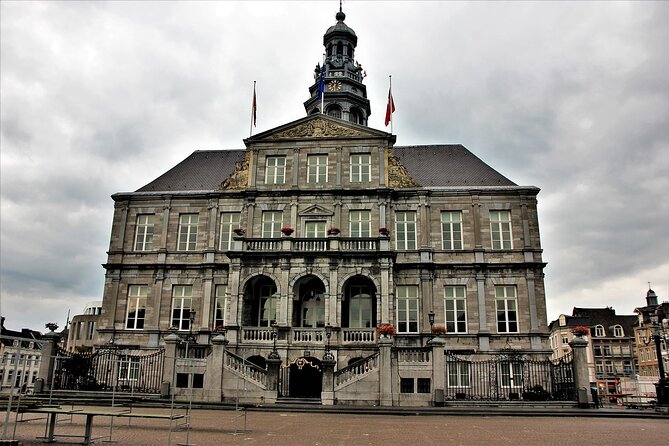
- Landmarks you can recognize on your own later like Stadhuis, Helpoort, and the Sint Servaasbrug.
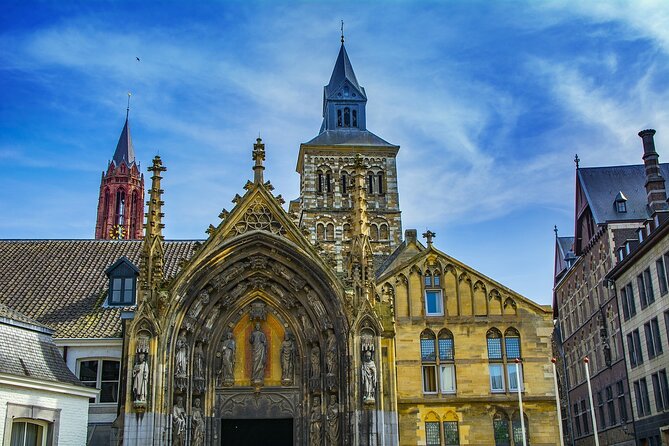
- Church stops that explain the city’s power across centuries of conflict and change.
- A walking plan that fits orientation travel since the tour ends back where it starts.
Maastricht in two hours: what this private walk is really for
This tour is designed for the moment when you arrive in Maastricht and think, Okay, I see pretty buildings, but what am I actually looking at? Instead of treating the city like a checklist, your guide turns the streets into a timeline. You get a guided story that runs from Roman origins through the Middle Ages, major European power shifts, and all the way to the modern EU and the Euro.
The private setup matters. With your group only, you can ask practical questions as you go: Why was Maastricht fought over? How did it change economically? What does the city’s role in Europe look like up close? And if your group wants extra time at a specific spot, you can usually adjust on the spot.
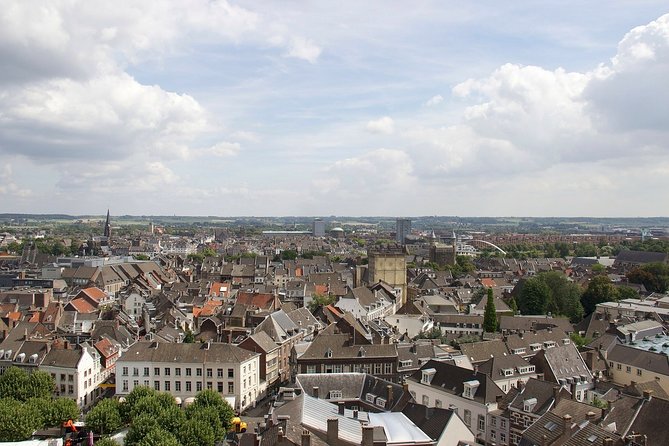
Because it is a walking tour, it is also a smart way to get your bearings fast. After two hours, you’ll know where the key buildings are and how the center connects. That makes the rest of your day easier, whether you plan to wander the street market area again or pick a café near the places you just saw.
More Walking Tours in Maastricht
- Maastricht Privat Sightseeing City Walk
★ 5.0 · 76 reviews - Maastricht 2-Hour Walking Tour | Discover The City With A Local
★ 4.5 · 57 reviews - Best of Maastricht: Private Walking Tour with a Local
★ 5.0 · 10 reviews
Start at Markt 52, end back there, and why that helps
The meeting point is Markt 52, 6211 CK Maastricht. The tour ends back at the same spot, which is a small detail, but it’s useful. You’re not left figuring out where you are once the tour finishes, and you can more easily transition into lunch or an afternoon plan without backtracking across town.
You should also plan around the walking style. This is an approximately 2-hour route, and it focuses on seeing multiple key sites rather than lingering at one museum. If you want deep museum time, treat this as the scene-setting part of your day, then choose one place to go deeper after.
And yes, it uses a mobile ticket. That’s one less thing to manage when you’re already juggling bags, weather, and your phone battery.
The Romans to the Maastricht Treaty storyline your guide connects
What makes this tour feel satisfying is the scope. You start with the earliest origins, then move forward through medieval rule and religious conflict, then through industrial and Napoleonic-era change. After that, the tour continues into the Kingdom of the Netherlands, and into the 20th century with World War I and World War II, then lands on the Maastricht Treaty and the foundation of the European Union and the Euro.
In other words, your guide isn’t just pointing out old walls. You’re learning why Maastricht mattered at different moments in European history, and how that importance shows up in buildings, street layouts, and the city’s civic identity.
A practical tip
As the timeline moves forward, ask your guide to translate the eras into what you can see. For example, you can request a simple summary linking one building to the period you just heard about. That keeps the tour from becoming a lecture and makes the history stick.
Not the right fit? Maastricht also runs these:
- Maastricht: Highlights Tour with a local Guide
★ 4.6 · 208 reviews - Valkenburg: Cave Biking Underground Bike Tour
★ 4.6 · 132 reviews - Highlight Running Tour
★ 5.0 · 118 reviews - e-Scavenger hunt Maastricht: Explore the city at your own pace
★ 4.5 · 110 reviews
Stadhuis and the street market area: city power you can feel
The tour includes Maastricht City Hall, the Stadhuis, plus a stop at the street market area. This is a good place to begin because civic spaces tell you how a city organized itself. City Hall is where governance becomes visible, and the market is where daily life and commerce show up.
I like starting here because you immediately understand the contrast between Maastricht as a historical stage and Maastricht as a working town. Even if you only glance at the buildings while you’re walking, your guide can connect them to the city’s economic turnaround later on. That connection is exactly what helps you stop feeling lost.
If your group enjoys food culture or people-watching, the market stop is also a natural moment to ask what local life is like and how the center functions today, not just in the past.
Dominikanerkerk and St. Servatius Church: faith, authority, and legend
Two major church stops anchor the medieval and religious side of Maastricht: the Dominicans Church (Dominikanerkerk) and St. Servatius Church. The tour also includes the legend of Saint Servatius, which ties strongly to why this place gained meaning over time.
Religious sites in cities like Maastricht often worked as more than places of worship. They were tied to influence, wealth, and the social order, especially when religious wars shaped the region during the 16th and 17th centuries. Your guide’s job here is to explain the why, not just to point out architecture.
St. Servatius Church is also a logical stop for the guide to connect to the legendary roots of Maastricht identity. If you enjoy stories that blend faith traditions with local history, this is one of the better sections of the route.
What to watch for
Take a moment to look up and around rather than only ahead. Your guide will likely frame what you’re seeing in terms of era and purpose, and that makes the details easier to notice.
Museum Aan Het Vrijthof: a smart pause point for context
You’ll pass by Museum Aan Het Vrijthof. This isn’t listed as an entrance requirement, but it’s a strong marker for understanding how the city presents itself to visitors. A museum name like that also helps your guide explain why certain parts of town stay tourist-friendly while still feeling local.
Think of this stop as a context anchor. Your guide can build the thread between medieval Maastricht and later political shifts without forcing you into a long indoor break. That keeps the pacing good for most people, especially since the tour is only around two hours.
If you do want museum time later, this is the point where you’ll know whether it sounds worth it based on the story you just heard.
Sint-Janskerk and Onze-Lieve-Vrouwekerk: more than pretty facades
The itinerary includes St. John Church (Sint-Janskerk) and Church of Our Lady (Onze-Lieve-Vrouwekerk). Adding more than one church stop is a smart move, because it lets your guide compare different church roles and eras without repeating the same explanation.
This is also where the tour can get especially useful if you’re worried you’ll miss the bigger picture. Churches are visible symbols, but the meaning changes depending on the political and religious climate. Your guide covers religious wars of the 16th and 17th centuries, and the story of how Maastricht changed over time is easier to grasp when you can physically stand near multiple landmarks.
If your group includes architecture lovers, you’ll likely enjoy how your guide explains what you’re looking at in plain language. It can be tempting to just snap photos, but listening for the connections is what makes this section worth your time.
Hendrik van Veldeke: cultural memory in a walking route
The tour includes a stop connected to Hendrik van Veldeke. Even if you’re not a specialist in Dutch literature, a stop like this matters because it adds human scale. History isn’t only treaties and wars. It’s also language, culture, and what people created while living through change.
This kind of stop also prevents the tour from becoming a straight line of conflict history. It adds breathing room, and it helps you understand Maastricht as a place where people lived, wrote, and shaped identity.
I’d treat it as your mental reset in the middle of a big timeline.
Helpoort and the Pieke oet de Stokstraot moment: old defenses and local character
Two of the most visually memorable items on the route are Helpoort and Pieke oet de Stokstraot. Helpoort is a defensive structure, and the name alone signals that your guide will talk about protection and passage, not just stonework.
Pieke oet de Stokstraot is one of those local landmarks that also hints at how Maastricht feels to walk around. You get a sense of the city’s character through the streets themselves, not just through major buildings.
This is where you usually start noticing the “shape” of Maastricht, how streets connect and how fortifications influenced movement. It’s also an easy section for your guide to connect medieval power and later conflict, including the wars that transformed the region.
A small comfort tip
Since you are walking, wear shoes you trust. Even if the route is described as easy, you will still spend two hours on your feet, and steep or uneven areas can add up.
Sint Servaasbrug: the viewpoint that ties the whole story together
The Sint Servaasbrug is included, and this is a classic place for a guide to give you the big picture. Bridges are practical in daily life, but they also represent how a city links sides, controls movement, and defines connections.
In Maastricht, the bridge becomes a natural place to summarize the timeline you’ve heard. Your guide will talk through major shifts, including the industrial revolution’s economic turnaround, the Napoleonic era, and later the Kingdom of the Netherlands with the hard integration of the city. Then you move into the 20th century, with World War I as a haven for refugees and World War II German occupation, and finally the post-war story and the Maastricht Treaty.
Standing near the bridge while you hear that sequence works well because it reinforces the idea of continuity. Maastricht changes, but it also keeps connecting its identity across centuries.
Customizable and private: how to get the most from your guide
Because this is customizable, you’re not stuck with one rigid narrative. If you care most about European institutions, ask your guide to emphasize how Maastricht Treaty groundwork shows up in today’s city feel. If you’re more into medieval architecture and religious history, steer the conversation toward the churches and how conflicts shaped the city.
The private format also makes questions easier. If something sounds confusing, you can stop and ask. If you want a quick clarification on an era, you can get it right there, while the landmark is still in front of you.
In terms of pacing, the tour is built to be easy walking for most people. The goal is to cover the highlights and the story without rushing so hard that you can’t process what you’re hearing.
Also, your guide stays with your group only. That tends to make the experience feel personal instead of mechanical.
Price and value for groups up to 15
The price is $275.65 per group, up to 15 people. That pricing model can be a great value if you are traveling with friends or family and you can fill the group size. If you hit the top end of 15 people, the effective per-person cost drops dramatically, making it one of the smarter ways to buy a high-quality guide-led experience in a central European city.
If you’re just a couple, it will cost more per person compared to splitting a group cost. But even then, you may find it’s still worth it because you’re buying a focused two-hour guide, the private format, and the ability to ask questions rather than following a script.
Two extra points help judge value:
- The tour duration is short enough that it fits tightly into an itinerary.
- Entrance fees are not included, so you can decide later whether you want to add museum or church ticket time based on what the guide recommends.
As a planning note, this tour is commonly booked about 14 days in advance. If your travel dates are fixed, I’d lock it in sooner rather than later, especially in peak season.
When this tour is the best fit, and when to skip it
This tour is a strong match if you want:
- An easy way to get oriented quickly in Maastricht
- A guide to connect the city’s Roman roots, medieval turning points, and modern EU story
- A private format that lets you ask lots of questions
- A walking plan that fits first-time visitor expectations
It may be less ideal if you:
- Prefer long museum hours over outdoor walking
- Want a deep architectural study that requires extended time inside multiple buildings
- Have mobility limits that make two hours on foot difficult
If you are flexible and can focus for a couple hours, this tour usually hits the sweet spot between “I want to learn” and “I still want to enjoy my day.”
One thing to know from real-world hiccups
One booking issue came up where a guide was not present because of a cancellation mix-up on the same day. The provider responded with an apology and explanation that the guide had another cancellation and mixed up the schedule for that day.
This doesn’t mean you should avoid booking, but it does suggest a smart habit: stay reachable, have your meeting address handy, and double-check the confirmation you receive so you’re not hunting for the guide at the start time.
Should you book this Maastricht private walking tour?
Book it if you want a guided, well-paced introduction to Maastricht that connects big European themes to real street-level landmarks. The Stadhuis, Dominikanerkerk, St. Servatius Church, Helpoort, and Sint Servaasbrug are the kinds of stops that make photos meaningful, because you’ll understand what they represent.
Skip it or reconsider if you hate walking, already know Maastricht deeply, or you want mainly museum time. This tour is built to cover the essentials plus the timeline, not to replace a full day of indoor exploring.
If your group can share the cost and you value a private, question-friendly guide, this is likely a good value way to start your time in Maastricht.
FAQ
Where does the Maastricht private walking tour start?
The tour starts at Markt 52, 6211 CK Maastricht, Netherlands.
How long is the walking tour?
It lasts about 2 hours.
Is this tour private?
Yes. It is a private tour, and only your group participates.
What is the maximum group size?
The price is per group up to 15 people.
Can the tour be customized to my interests?
Yes. Customizing is possible on the spot with your local guide.
Are entrance fees included?
No. Entrance fees are not included.
Do I get a mobile ticket?
Yes, the tour uses a mobile ticket.
Is the meeting point near public transportation?
Yes, it is near public transportation.
Can I bring a service animal?
Yes, service animals are allowed.
Is there free cancellation?
Yes. You can cancel up to 24 hours in advance for a full refund.
Latest Maastricht reviews
- MetropolisGo: The Betrayal of Maastricht★ 3.5 · 3 reviews
- Guided Tour of Zonneberg Caves in Maastricht★ 5.0 · 3 reviews
- Maastricht: Day trip from Amsterdam with 3 country point★ 5.0 · 4 reviews
- Maastricht: 2-Hour Walking Tour with Local Historian★ 5.0 · 4 reviews
- Maastricht: Fort St Pieter Guided Tour★ 3.7 · 4 reviews
- Maastricht Highlights 2 hours Private Walking Tour +Local Tasting★ 4.0 · 5 reviews
- Maastricht Heritage and Nature Tour★ 5.0 · 6 reviews
- Maastricht Self Guided Sherlock Holmes Murder Mystery Game★ 3.5 · 6 reviews
Walking Tours, compared.

Absolutely Amsterdam – the Essential Introductory Walking Tour
Read our review →
Amsterdam Highlights Walking Tour: Small Group Experience
Read our review →

Browse the lists this tour appears in