
Reviewed · SAFARI
Zeeland Zeehonden strand safari NL/DE
This Zeeland beach safari is a fun way to study seals and the North Sea shoreline up close, without turning it into a classroom lecture. I like that it mixes real beach action with simple tools, like binoculars and hands-on search kits.
I also like the format for families, because you get to actively look, identify, and compare what you find along the edge of the sea. The only real drawback to plan for is that the beach can be cold, and in summer you may go into the water depending on the edition and conditions.
Key things that make this safari worth your time
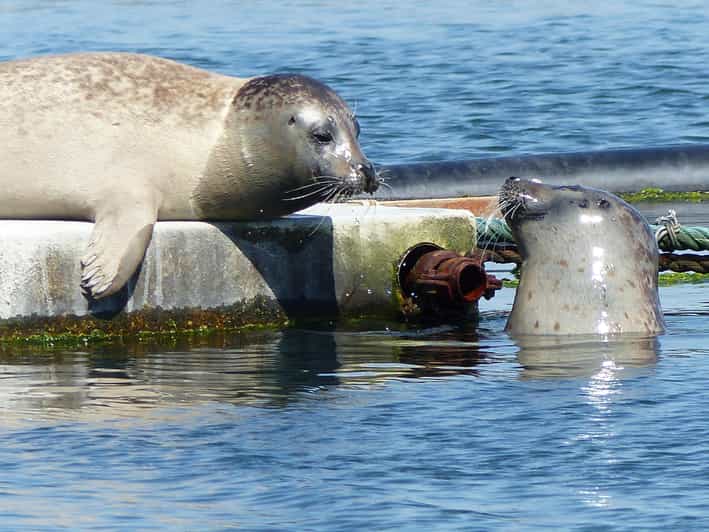
- Seals without guessing, you use binoculars for watching and then learn how to spot what matters
- Two different “sea challenge” modes, summer trawl net, spring or autumn crab rods
- Hands-on shoreline exploring, magnifying jars plus identification cards
- A guide who keeps it moving, with Dutch and German storytelling that works for kids and adults
- You look, then you reset, the focus is on observation and respectful handling of what you find
- It fits a short visit, about 2 hours on the beach near Neeltje Jans
Zeeland Zeehonden Strand Safari: what it really feels like on the beach
If you picture a North Sea beach as just sand and wind, this tour gently changes that. You step into a living coastline, where the animals are small, fast, and easy to miss. The point is not to rush to a single photo moment. The point is to slow down and learn how to notice.
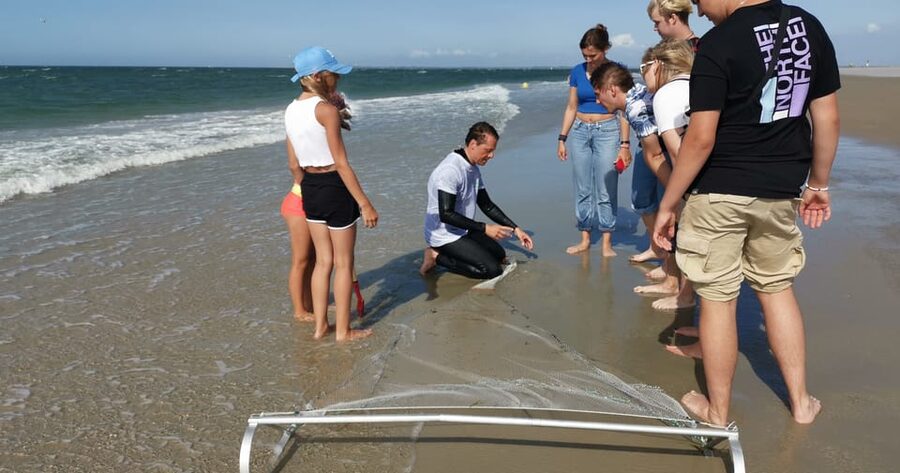
The tour is built around a guided beach walk with interactive tools. You get a chance to look for seals, then you switch gears to shoreline life using equipment like a large trawl net (summer edition) or crab rods (spring and autumn editions). Along the way, your guide shares practical nature facts about what you see, including fun comparisons like how people can tell different seal types apart.
It’s also a very approachable experience. Whether you have kids who want something hands-on or you just want fresh air plus a little education, this tour gives you a reason to keep your eyes up.
Other Netherlands outings people put beside this one:
- Zeeland Strand safari met visnet NL/DE
★ 4.9 · 45 reviews - Amsterdam: Historic Walking Tour
★ 4.7 · 16 reviews - From Haamstede to Burgh: guided Walking Tour
★ 4.5 · 5 reviews
Meeting at Beachbar Atlantis and the Neeltje Jans setup
You meet in front of Beachbar Atlantis. It’s easy to find if you plug it into Google Maps as Beachbar Atlantis, since the address is listed without a specific street number.
Parking is at Parking beach Neeltje Jans, and it’s free. You walk about 10 minutes to reach the meeting spot. That matters because you are going to be moving and standing on sand, and a short walk from parking keeps things simple.
Timing is short and focused, with a total duration of about 2 hours, and the tour runs at available starting times. This is the kind of activity that fits well into a day already planned around Zeeland, without requiring a full morning or a full afternoon.
One small practical note: the beach is usually colder than you expect. Even in better weather, you’ll feel the wind, so dress for it.
The guided beach walk: finding seals first, then shore life
The core of the safari is a guided walk along the shore with a mission: spot seals and learn what’s happening around the waterline.
Seal watching with binoculars
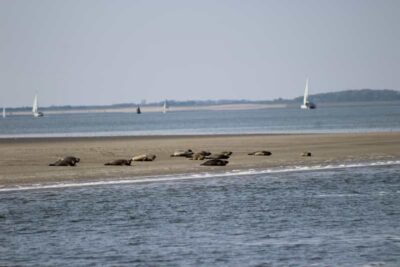
At the start, you use binoculars for seal watching. That’s a smart approach because seals are often far enough away that you would otherwise be staring at the wrong spot for a long time. With binoculars, you can actually follow movement and notice details.
Then the guide connects what you are seeing to how to interpret it. You’ll learn about seals in the North Sea, and the tour includes guidance on how to tell a common seal from a grey seal, plus how to recognize a male crab during the searching activities.
If you want the best results, keep your eyes moving and follow the guide’s cues. This is one of those tours where the “skill” is mostly attention, not special expertise.
Learning by doing with search kits
The shoreline part is where the tour becomes more than watching. You also get loop jars or search cards (magnifying jars and identification cards are part of the kit). That combination matters because:
- magnifying jars let you look closely at smaller catches
- identification cards help you match what you find to the right species
It turns a random pile of shells and little creatures into an actual “what is this?” moment.
Summer edition: using the big trawl net in shallow water
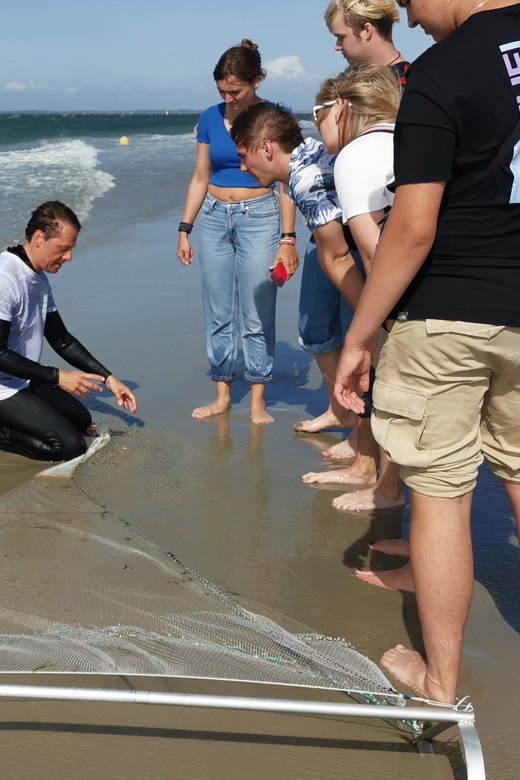
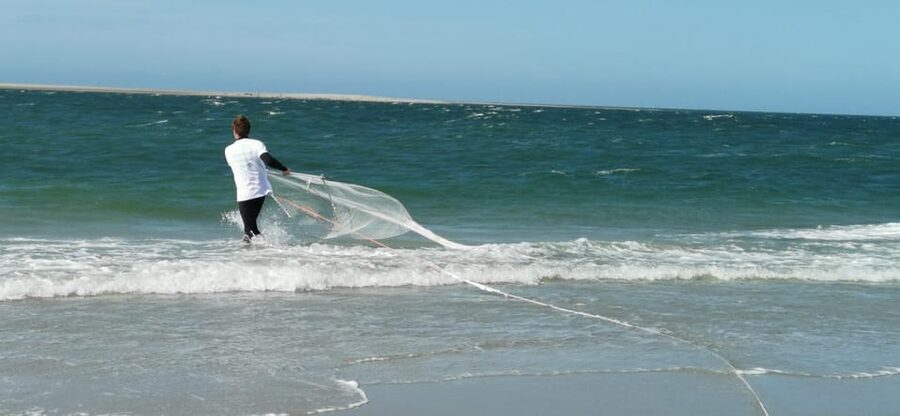
In July and August, the tour runs a summer edition. The big difference is that the guide uses a large trawl net in shallow water along the coastline.
Here’s why that’s valuable. The North Sea life near the shore can be hard to see from land. When you trawl through shallow water, you change the odds. You’re more likely to catch a wider mix of marine life, which gives you more chances to identify animals, plants, and shells.
Important practical detail: it is allowed to go in the water with the guide in summer, so swimwear is recommended. You’ll also want a change of clothes ready, along with a towel.
What you’re doing is observation with respect. The tour is designed so that you don’t just take, you learn, look closely, and then handle nature carefully, returning animals and plants back to their natural environment after observation.
Spring and autumn edition: crab rods and the “biggest crab” hunt
In spring and autumn, the safari switches to crab rods. The idea is simple and fun: challenge the sea for the biggest crab you can find.
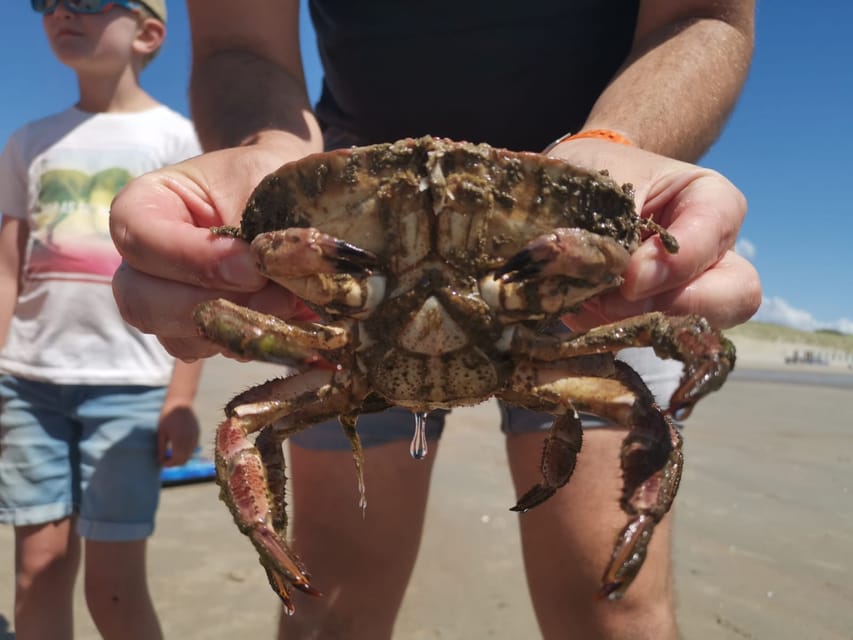
This is a great format if you like a game feel. Crab hunting is active, and it helps kids stay interested without needing constant “sit still” reminders. It also gives you a chance to see how different crabs look, from smaller shore crabs to larger North Sea crabs.
The tour also ties this to identification. You’ll learn how to identify a male crab, which is exactly the kind of detail that makes the outing stick in your memory.
Even if you are not a “fishing person,” this part works because it is short, guided, and tied to learning. You’re not just trying to win, you’re building recognition skills for what’s living near the shore.
What you might see: animals, shells, and shore surprises
The safari is designed around common North Sea shoreline encounters, and you may spot several of these:
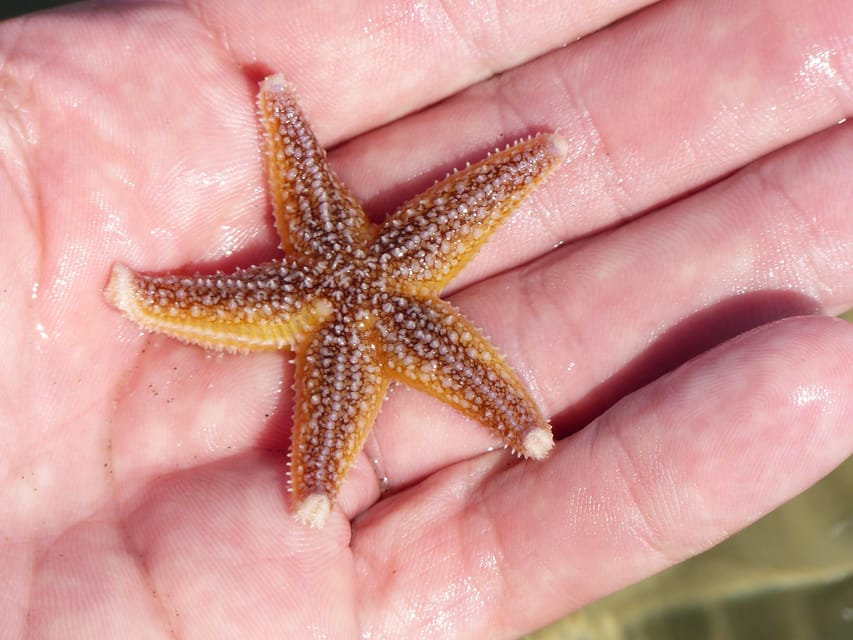
- Starfish in different shapes and sizes. You might learn fun details like how a starfish can regenerate a lost arm.
- Crabs, including varieties from small shore types to larger North Sea crabs.
- Shrimps that often hide under rocks or in the sand.
- Small fish close to shore, such as sand eels.
- Shells that wash up on the beach, with a chance to identify different species.
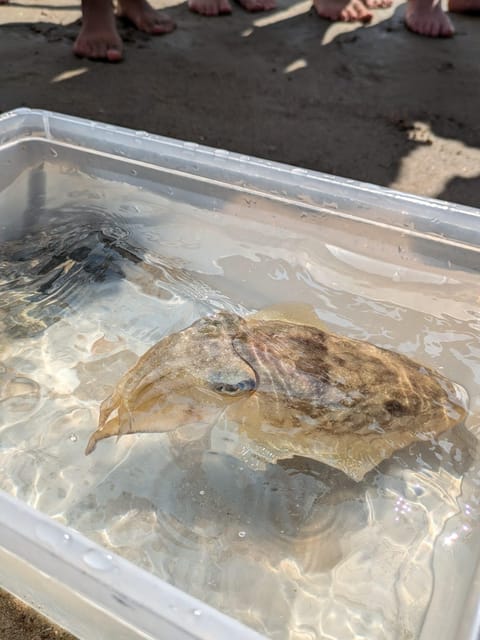
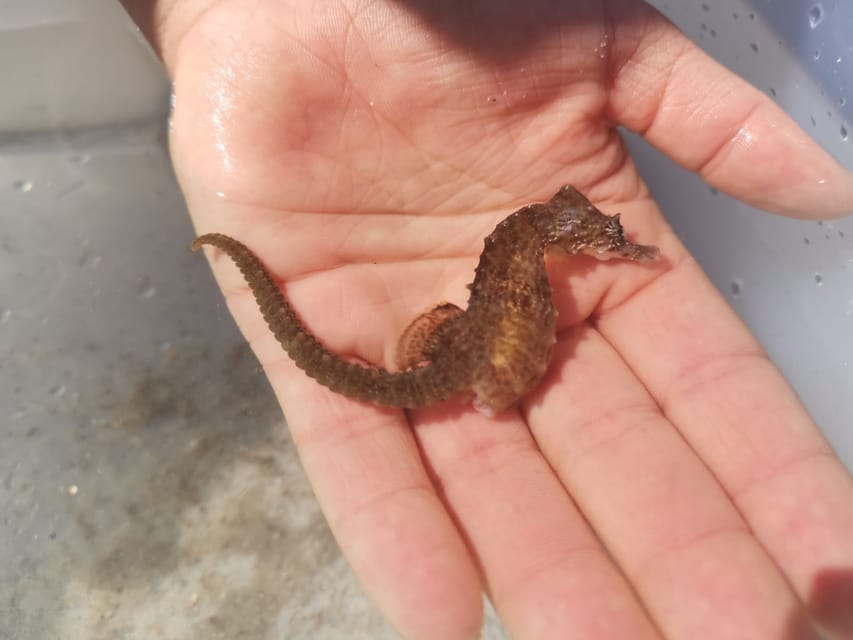
- Other marine life you might encounter, depending on conditions, like seahorses, cuttlefish, and jellyfish.
You should treat this as a “learn the ecosystem” outing, not a guaranteed checklist. The real win is that you practice noticing and identification. Even if the day’s catches are lighter, the guide’s teaching can still make the beach feel alive.
Tools that turn curiosity into real identification
This tour doesn’t rely on you guessing. It provides tools that help you see better and label what you see.
Binoculars help with seal watching from a safer distance. Then magnifying jars let you examine smaller creatures up close without rushing. The identification cards are the bridge between “I think this is something” and “now I can name it.”
This matters for value. At $19 per person for about 2 hours, you are paying for more than scenery. You’re paying for an organized learning experience that gives you the means to look closely and understand what you are seeing.
Guide style and what you’ll get from the stories
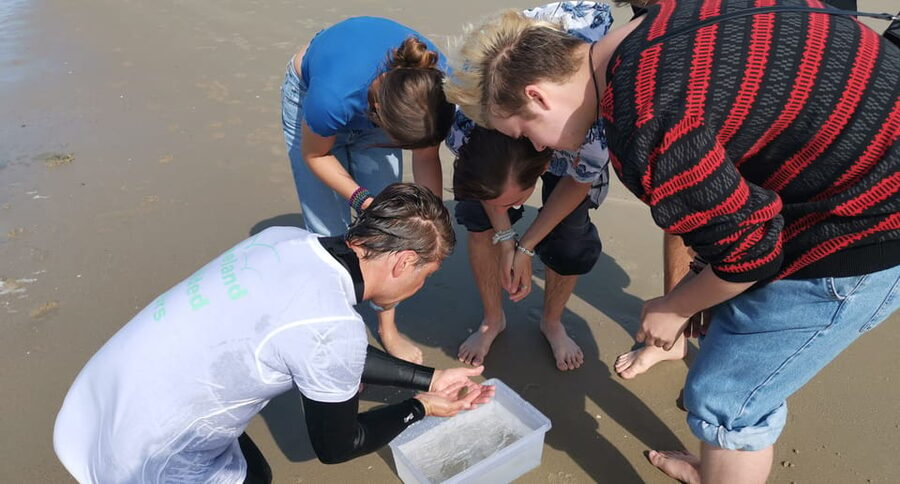
A big part of why this safari works is the way the guide explains things. In the feedback I’ve seen, people call out guides as especially friendly and strong with kids. One name that came up was Mark, and the general theme is that the explanation stays upbeat and keeps children engaged while adults still get useful details.
You’ll hear fun facts like:
- why crabs can walk sideways (related to leg structure)
- how to identify male crabs
- differences between seal types
- quick natural history notes about what you spot
This isn’t just entertainment. These little facts act like labels in your head. After the tour, when you see a shell or a small creature on the strand, you’ll recognize it faster.
Weather and backup plans: what happens when the beach isn’t cooperating
Bad weather can change the plan. If conditions are rough, the tour can be canceled or switched to a forest or dune safari instead.
That’s a useful heads-up for planning. If you’re traveling with a tight schedule, pick a day with some flexibility, or be ready for a different setting if wind and rain are strong.
What to bring: your personal “beach success kit”
This is the part that makes or breaks comfort. The tour explicitly suggests packing warm clothing because it is always colder on the beach, plus bringing what you need for both wet and dry moments.
Bring:
- Warm clothing (windproof helps)
- Swimwear (especially for summer edition)
- Change of clothes
- Towel
- Camera
- Sunscreen, plus biodegradable sunscreen
- Beachwear
- Cash
- Binoculars (recommended, even though you also use them during the tour)
Practical tip: if you think you’ll only be on land, you’ll be surprised by how quickly the sand, wind, and sea air cool you down. Dress like you plan to be outside for a while, because you are.
Price and value: how $19 stacks up for a 2-hour family-friendly outing
At about $19 per person for a 2-hour tour, this is priced like a straightforward local nature activity, not a premium experience. That can be a good thing. You should expect a friendly, guided structure, but not luxury.
The value comes from three things you don’t usually get on your own:
- a guide who explains what you’re looking at (not just where to stand)
- equipment like trawl nets and crab rods depending on the edition
- identification support with jars and cards
Also, it’s short enough that you won’t lose a whole day to logistics. For families, short durations lower the stress level, and for adults, it stays focused.
One note to consider: the tour price is the same for everyone, even small children, and that may not feel ideal for families with toddlers. Still, the tour is built to be active and engaging for different ages, and people specifically mention it as a good experience for kids and adults.
Who this tour fits best (and who might rethink it)
This safari is a strong match if you:
- like beaches but want more than just walking
- want a nature activity you can do with kids
- enjoy learning how to identify animals and shells
- want a short guided experience near Neeltje Jans
It is not suitable for wheelchair users, since the tour involves beach walking and getting into shallow water in summer edition conditions.
If you hate cold weather, you might still enjoy it if you dress well, but you should treat the wind chill as real.
Should you book the Zeeland Zeehonden Strand Safari?
Book it if you want a hands-on, guided North Sea beach experience in Zeeland that focuses on seals and shore life, with practical identification and a guide who keeps things lively. It’s especially worth it if you like family-friendly activities that feel real, not staged.
Hold off or plan carefully if:
- you are not comfortable with cold beach conditions
- you do not want any chance of going into shallow water in the summer edition
- you need wheelchair accessibility
If you have a day near Neeltje Jans and you want an outing that turns “walking on the sand” into a guided nature lesson with real activities, this is one of the better ways to spend 2 hours.
FAQ
What is the duration of the Zeeland Zeehonden strand safari?
The tour lasts about 2 hours.
Where do we meet for the tour?
You meet in front of Beachbar Atlantis. The best way to find it is to use Google Maps for Beachbar Atlantis.
Is parking available near the meeting point?
Yes. Parking is available at Parking beach Neeltje Jans, and it is free. It is about a 10 minute walk to Beachbar Atlantis.
What gear does the tour provide for seal watching and exploring?
The experience includes binoculars for seal watching, plus loop jars or search cards and identification cards for recognizing animals, plants, and shells. In summer you also use a large trawl net, and in spring or autumn you use crab rods.
Do we go into the water?
In July and August (the summer edition), it is allowed to go in the water with the guide, so swimwear is recommended. In other seasons the format uses the crab rods.
What should I bring to stay comfortable?
Bring warm clothing, swimwear (for summer), a change of clothes, a towel, camera, sunscreen including biodegradable sunscreen, beachwear, cash, and binoculars.
What happens if the weather is bad?
If the weather is bad, the tour may be canceled or transferred to a forest or dune safari.
Latest Netherlands reviews
- Zeeland Strand safari met visnet NL/DE★ 4.9 · 45 reviews
- From Haamstede to Burgh: guided Walking Tour★ 4.5 · 5 reviews
- Amsterdam: Historic Walking Tour★ 4.7 · 16 reviews
Safari, compared.
Seal Safari at UNESCO Site Waddensea from Amsterdam
Read our review →
Browse the lists this tour appears in