
Reviewed · SELF-GUIDED TOURS
Breda Fun Puzzle Quest: True Lord Self-Guided Tour
If you like exploring by following a light story, this Breda puzzle walk is a smart way to see a lot without a group schedule. It strings together major sights and a few quieter corners, with the navigation handled through the Questo app on your phone.
Two things I like about it are the free stops at each location, and the choice of places that mix city views, architecture, and Breda’s fortified past. The route also stays short, with segments that let you pause when something catches your eye.
One caution: the puzzle side can feel like it stays more in the background than an actual escape-room style challenge. If you’re craving heavy problem solving, you may want to treat it more like an outdoor scavenger hunt with story flavor than a full-on game.
Quick highlights before you start
- 11 stops across central Breda, from Willemsbrug to De Rode Brug, with time for lingering
- Admission marked as free at each stop, so you are not stacking entry tickets
- Questo app navigation with clue solving, best done with a charged phone
- Big sights plus small mood-shifts, like courtyards and fortified spots
- Private by group, so you are not sharing the route logic with strangers
- English language support, plus a long daily window (8:00 AM to 8:00 PM)
Breda in one hour: why this puzzle walk fits tight schedules

This is a self-guided walk designed to feel like a quest, not a museum day. The full experience runs about 47 minutes to 1 hour 17 minutes, which is ideal if you have just a small gap in your plans or want something active but not exhausting.
The route covers a compact slice of Breda, with stops that naturally break up the walking. You’ll move from bridge views to old walls, then to courtyards and churches, and finally into the castle and fortress story. That mix keeps it from turning into “one long street.”
If you are visiting from Rotterdam, this can also work well as a change of pace. Breda feels calmer than a big city day, and the self-guided format helps you steer the pace.
More self-guided routes in Rotterdam:
- Rotterdam: Steamship Rotterdam Audio Tour Entry Ticket
★ 4.5 · 325 reviews - Rotterdam: City Walk Audio Guide in 7 Languages on your Phone
★ 3.5 · 6 reviews - Delfshaven Self-Guided Tour: A Guide to Rotterdam’s Old Town
★ 5.0 · 4 reviews
Price and practical value of a $5.90 self-guided quest
At $5.90 per person, the value here comes from the format, not fancy add-ons. You are paying for a guided-by-clues experience: the app tells you where to go next and what to do while you are there.
The best budget perk is that each stop is listed with admission ticket free. Some of your stops will be outdoors or in spaces you can typically view without paying anyway, but the key point is that you are not planning around ticket costs as you move.
Two other cost-related notes: the listing includes group discounts, and the tour is private for your group only. If you are traveling with friends or family, that privacy can make the quest feel more like your own mission.
Using the Questo app, phone battery, and how the clues work
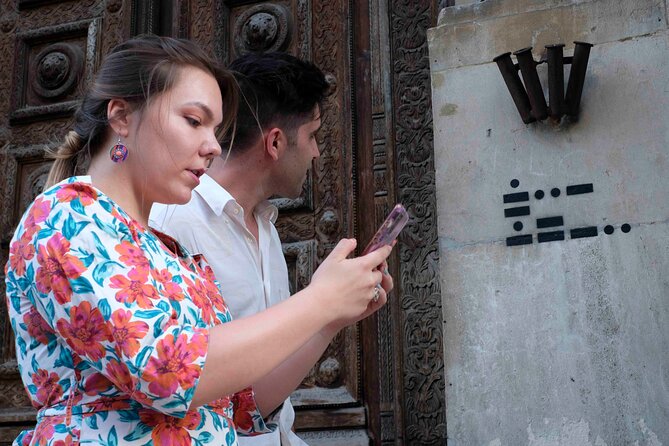
The whole experience depends on your phone. You’ll need to download the Questo app, create an account using the same email you used to purchase, and follow the in-app instructions.
Bring a charged phone. The route assumes you will check directions and clue prompts on the spot, and you will be walking between locations. If your battery is low, you risk turning a fun quest into frustrating wandering.
The app also controls the flow. Each stop shows a time window (for example, around 7 minutes per location), but you can spend as much time as you want at a stop before you follow the next directions. That “pause as needed” feature is useful, because churches, courtyards, and castle grounds are the kind of places where you may want an extra minute to look closely.
Willemsbrug start: getting your bearings at the bridge that anchors the route
Your journey begins at Willemsbrug, Academiesingel 4811 ET Breda. It’s a good starter choice because bridges are natural landmarks. You immediately know you are oriented, and you can take a quick look at the water and traffic flow before you start solving.
Also, it’s a city-connector. The bridge is described as an iconic landmark and an important transportation link, so it sets the tone: you are not just walking for walking’s sake, you’re tracing how Breda connects its neighborhoods.
Practical tip: use your first minutes to take one photo and look for the next direction in the app. That way you start the quest with less backtracking.
A few other ways to fill a day in Rotterdam
- Rotterdam: Harbor Sightseeing Cruise
★ 4.3 · 7,599 reviews - Rotterdam: 1-Hour Sightseeing Splash Tour
★ 4.5 · 3,299 reviews - Rotterdam: Rotterdam Zoo Blijdorp Entry Ticket
★ 4.6 · 2,754 reviews - Rotterdam: “Remastered” Digital Art Audiovisual Experience
★ 4.3 · 2,240 reviews
Tracing Breda’s old fortifications at Catharinastraat 81-27
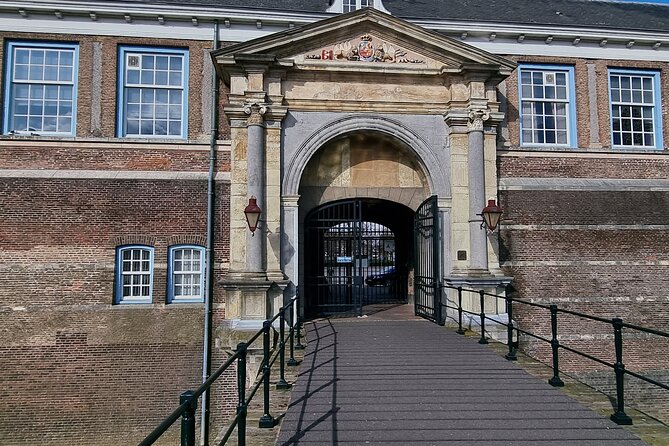
Stop two takes you to Catharinastraat 81-27, where you’ll find remnants of the Old City Wall. This is where the route shifts from scenic and easy to historically grounded.
Even if you know nothing about Breda’s siege-era story, the old wall remnants are readable in the street. You’re looking at the physical leftovers of how cities defended themselves, and that makes the later stops (fortress and castle) feel less random.
What to do here: slow down and actually look at the wall fragments and their placement. These remnants make more sense once you have walked past a few streets and realized the city used to be a defensive unit.
Begijnhof at Catharinastraat 23: a calm courtyard break in the middle of the walk

Next comes Begijnhof at Catharinastraat 23. This stop is built for a different mood: a courtyard experience. Instead of broad views, you get a small space that encourages quieter looking.
The wording around this stop makes it clear why it’s included: Begijnhof is described as a “tranquil escape” and a chance to see Breda’s past in a human-scaled setting. It’s a classic type of place that works well mid-walk, because it gives your legs a breather and your brain a chance to reset.
This is also one of the stops where the puzzle mechanic matters less than the setting. If your phone battery is dropping or the clue feels unclear, this location still pays off simply as a place to pause.
Sint Annastraat 12: the street where shopping and architecture meet
At Sint Annastraat 12, you move into a street with a story you can see. The route calls it a lively street with historical character, plus shops and architectural details like Dutch facades and intricate gables.
This is the kind of stop that works for different styles of visitors. If you like browsing, you’ll enjoy it as a pedestrian street. If you prefer architecture, you’ll enjoy it because the building details give you “easy targets” for looking.
Time-wise, you can keep moving or slow down. The instructions allow you to linger, so if you spot a facade detail you want to photograph, you won’t be forced to rush.
De Nieuwe Veste: culture stop with flexible time
Stop five is De Nieuwe Veste, described as a cultural center and a hub for art, culture, and education. The tour notes it may include activities like exhibitions, theater, music concerts, dance shows, and literary events.
Here’s the practical value: even if you don’t catch a scheduled event, this stop is a useful contrast to the older stone and fortifications elsewhere on the route. It reminds you that a city is alive, not just preserved.
The itinerary also gives you flexibility. You can spend as much time as you want before the app routes you on. If something is happening inside during your visit window, you can choose to take advantage. If not, you still get a meaningful pause stop.
The Former Monastery at Nieuwstraat 23: history you can view at your own speed
At Nieuwstraat 23, you’ll find the Former Monastery. The tour describes it as an impressive historical building with ancient architecture and heritage tied to religious history.
This stop is a good example of why the self-guided format works. Some buildings are visually striking but hard to “digest” unless you can take your time. Here, you can pause, look at the structure, and let the place sink in without worrying about joining a timed group.
If you are the kind of person who likes to understand buildings through direct observation, you’ll probably enjoy this stop more than the typical quick photo stop.
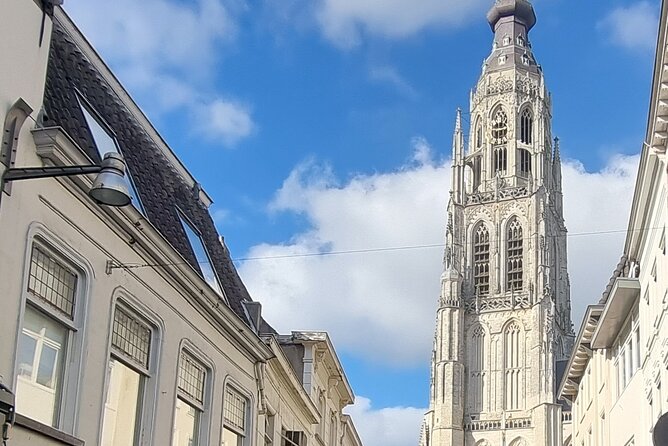
Onze-Lieve-Vrouwekerk on Torenstraat 19 and Torenstraat 27: Gothic you see from different angles
Stops seven and eight both connect to the Church of Our Lady (Onze-Lieve-Vrouwekerk), positioned at Torenstraat 19 and Torenstraat 27.
Even though it’s the same church theme, the route treats it like more than one look. One stop focuses on the church as a Gothic landmark with religious heritage. The other stop adds the idea of using the architecture to appreciate past generations’ artistic achievements and to connect with the city’s spiritual and cultural background.
Practical approach: treat these as two “passes” on the same landmark. The second visit gives you a chance to notice details you may have missed the first time. If you only did one quick glance, you might miss how the building tells its story through shape, stonework, and facade design.
Het Spanjaardsgat and the 1590 siege story you can place on the map
Stop nine is Het Spanjaardsgat, described as a historic fortress and an iconic landmark. This is where the narrative turns dramatic.
The tour explains that the fortress played a significant role during the Spanish siege of Breda in 1590, when the city was captured by Dutch forces led by Maurice of Nassau. It also frames this as a turning point, marking the end of Spanish rule over Breda.
Even if you are not a history person, this stop becomes easier to understand because you are physically standing at the location described in the story. You can connect the abstract idea of siege warfare to the actual defensive structure.
What to do: slow down and read the setting like a map. Fortresses are designed for control, so look for how the land and angles might have helped defenders and attackers.
Kasteel van Breda: castle courtyard views to close the story arc
At stop ten, you reach the Castle of Breda (Kasteel van Breda). The tour positions it as one of Breda’s most iconic landmarks, representing centuries of history and serving as a symbol of the city’s heritage.
The practical reason this stop works at the end of your “big history” stretch is that it offers space to decompress. The route notes a picturesque setting with a courtyard and surrounding gardens, which makes it a good place to stretch your legs and take in wider views.
If your phone clue pacing made you feel rushed earlier, this castle stop gives you permission to slow down. You can also use it as a final mental checkpoint: you’ve covered the walls, the fortress, and now the castle, so the city’s defensive logic feels complete.
De Rode Brug at 4811: finish by the water, not in the middle of traffic
Your final stop is De Rode Brug at 4811. The tour describes it as a charming pedestrian bridge that adds color and gives you a place to cross the water and enjoy the scenery.
Finishing here is smart. Walking quests often end on a random corner. This ending gives you an easy “wrap-up moment,” plus a natural visual payoff to match the water-and-stone rhythm of the route.
If you still have time before your next plan, this is the sort of spot where a casual last photo and a quick stroll can feel satisfying, because you’ve reached a visual destination, not just an address.
The main drawback to plan around: a light puzzle feel
The tour is called a fun puzzle quest, but the actual “escape room” intensity may be lighter than some people hope. One critical comment pointed out that the story around it can feel thin, and that an experience with more interactive tasks would likely land better.
So here’s how to set expectations in a useful way: treat this as a self-guided walking quest with clue solving, not as a high-stakes, room-scale escape challenge. If you’re okay with that, the payoff is the route itself. If you want heavy puzzle design, you might find the game elements feel secondary to the scenery and landmarks.
Who this self-guided quest is for, and who should skip it
This works especially well if you like:
- A short, walkable route through central Breda
- Combining architecture stops with small history context
- Using your phone for navigation and story prompts
- Travel days where you want flexibility, not strict timing
It may not be the best match if:
- You specifically want complex puzzle mechanics
- You prefer a guided explanation from a person rather than clues in an app
- You don’t like walking between close but distinct stops (though the durations are short)
Also, since it’s private for your group only, it can feel good for couples, small friend groups, or families who want a shared activity that still lets each person pause when they want.
Should you book the Breda Fun Puzzle Quest?
I’d book it if you want a low-cost, low-commitment way to see Breda in about an hour to a little more, with free-entry stops and a route that mixes big landmarks with calmer courtyard moments.
Skip it if your main goal is a deep escape-room style challenge. The strongest reason to choose this tour is the walk and the sights, with the puzzles adding a light layer.
One final check before you go: make sure you’re comfortable using the Questo app. Bring a charged phone, and you’ll get a smooth experience. If your phone battery is unreliable, consider this a “bring a power solution” trip.
FAQ
How long does the Breda Fun Puzzle Quest take?
The experience runs approximately 47 minutes to 1 hour 17 minutes. Each stop is timed in the route, but you can spend as much time as you wish at a location before following the next directions.
What language is the tour available in?
It is offered in English.
Where do I start and where does the tour end?
You start at Willemsbrug, Academiesingel, 4811 ET Breda, Netherlands. The tour ends at HQRH+WC9, Breda, Netherlands, and you’ll reach the final stop by following directions in the app.
Do I need to pay for tickets at the sights?
No. Each listed stop shows Admission Ticket Free.
What do I need on my phone to do the tour?
You need to download the Questo app, create an account, and follow the instructions in the app. You should also bring a charged phone. You must use the same email you used when purchasing.
Is this tour private or shared?
This is a private tour/activity, meaning only your group participates.
Is it okay to visit with a service animal?
Yes. Service animals are allowed.
Can I get a refund if I cancel?
Yes. You can cancel for a full refund up to 24 hours in advance of the experience start time. If you cancel less than 24 hours before, the amount paid is not refunded.
Latest Rotterdam reviews
- Private Rotterdam Walking tour with expert local guide★ 5.0 · 3 reviews
- Rotterdam & Delft Private Offshore Daily Walking Tour★ 5.0 · 3 reviews
- Rotterdam: Capture the most Photogenic Spots with a Local★ 5.0 · 3 reviews
- Keukenhof – spring garden from Rotterdam, Delf & The Hague★ 4.5 · 3 reviews
- Private tour from Rotterdam to Windmills of Kinderdijk & Gouda Cheese Experience★ 5.0 · 3 reviews
- Schiller Water Bike Rental in Maritime District Rotterdam★ 3.7 · 3 reviews
- Discover Rotterdam’s most Photogenic Spots with a Local★ 5.0 · 3 reviews
- Rotterdam: 2.5-Hour Leckers Boat Cruise and Buffet★ 3.2 · 3 reviews
Self-Guided Tours, compared.
75 Minute City Canal Cruise with Audio Guide
Read our review →
Amsterdam Sightseeing Canal Cruise with Audio Guide
Read our review →

Amsterdam Van Gogh Museum with Audio or Guided Tour
Read our review →
Van Gogh Museum Skip the Queue with Audio Guide
Read our review →
Amsterdam 1h Canal Cruise by Semi-Open Boat with Audio Guide
Read our review →
Browse the lists this tour appears in