
Reviewed · WALKING TOURS
Private Walking Tour in Utrecht
Utrecht works its magic when you slow down. This private walking tour is a good way to get oriented fast, then go deeper than the quick photo stops you can manage on your own. You get a guide who can shape the route around what you care about, whether that is canals, architecture, or everyday life.
What I like most is the combination of clear commentary through headsets and the calm pace. One guide I met through this experience, Lucy, came across as friendly, personable, and really tuned into explaining how the city works. The biggest thing to watch is simple: at certain times (especially market days) you may encounter crowds around the center, so wear comfortable shoes and expect a bit of jostling.
Key highlights worth aiming for
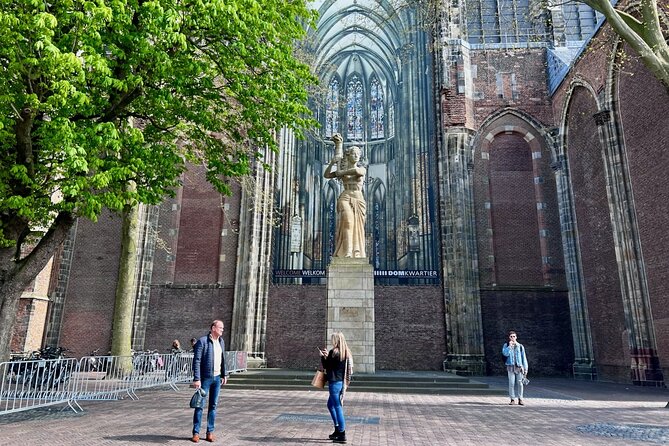
- Vredenburgplein start, right where the city’s energy shows up, including market stalls on select days
- Oudegracht and Maartensbrug, plus the long story of Utrecht’s wharf cellars and canal-side terraces
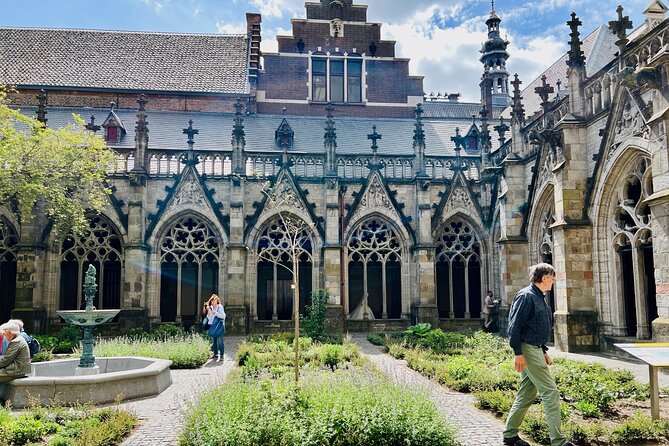
- Pandhof monastery garden, a quiet pocket with herbs and dye and medicinal plants
- A square that literally comes from swampy ground, once a market space and even a site of executions
- Dom Tower, the Netherlands’ tallest church tower and a symbol of Utrecht’s older roots
- Optional Oudaen beer tasting, if you want a final, local-style finish with three beers
A small-group Utrecht walk that feels personal, not scripted
Utrecht is the kind of Dutch city that rewards attention. You will see it in layers: Roman-era traces near bridges, medieval street patterns, and later city life that still shows up along the water. The private format matters because your guide can steer toward what you want, instead of running the same “tick-box” route for everyone.
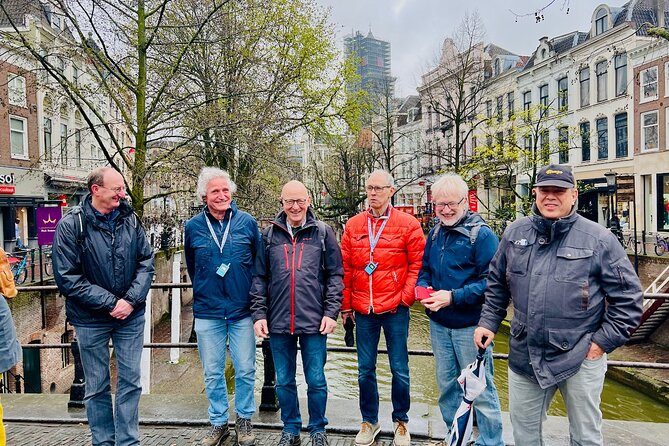
The price is set per group, up to eight people, and the value comes from what you actually get during the 1.5-hour walk: a guide plus headsets. Headsets sound like a small detail until you try it in a canal city where you are constantly stopping for photos, pointing things out, or wandering a step or two off line. With headsets, you do not have to keep craning your neck to catch every sentence.
The other value is how this tour treats the city like a living place, not a museum. The stops are picked for what they explain: how Utrecht formed, how people used water for trade and storage, and how certain spaces changed roles over centuries.
More Walking Tours in Utrecht
- Utrecht 2-Hour Walking Tour | Discover The City With A Local
★ 5.0 · 138 reviews - Utrecht: Guided Highlights Walking Tour
★ 4.7 · 80 reviews - Utrecht: Guided Lumen Walking
★ 4.6 · 63 reviews
Starting at Manneken Pis on Vredenburgplein (and catching the market if it’s on)
Your tour begins at Vredenburgplein, at the Manneken Pis in the city center. It is a smart starting point because the square is central enough that you get a sense of Utrecht’s rhythm immediately, and it also makes the rest of the walk easy to follow.
If your day matches Wednesday, Friday, or Sunday, the square hosts a market. That is when the stalls can turn a routine “meet your guide” moment into something genuinely local. You will notice fish stands, and you may also see stroopwafels prepared right in front of you. If you want to add this to your tour time, your guide can adjust, since the tour is private.
Even if it is not market day, Vredenburgplein still sets the tone. You get a clean orientation, then you move from open square space into Utrecht’s canal geography.
Practical tip: plan for a slow first stretch. Markets and city centers tend to move in clusters, so arrive with the mindset of “steady and curious,” not “fast and efficient.”
Oudegracht, Maartensbrug, and the wharf cellars that shaped how Utrecht worked
One of my favorite parts of Utrecht is the way the city organizes itself around water. Here, the tour takes you along the Oudegracht, a former moat that runs about 2 kilometers through the city from north to south. It is not just scenic. It explains Utrecht’s logic.
You will cross near Maartensbrug, a bridge associated with the area that existed as far back as Roman times. The bridge is also important for a specific reason: it is described as the oldest still existing bridge, dating to the early 1400s, around 1404. That detail matters because it turns “a bridge” into a time marker. You start seeing structures as evidence, not decoration.
Then comes the story of the 730 wharf cellars. Utrecht had wharf-side storage so goods could be unloaded from ships and stored immediately. The cellars also served later uses, including brewing and marketplace activity. The timeline helps you understand why you see things now that look like storage and trading infrastructure: people built these spaces because water travel was once the big system.
The cellars also went through decline. Around 1900, road freight grew and many of these wharf spaces fell into disuse. After WWII, restoration efforts began, bringing the cellars, wharfs, and quay walls back into functional form.
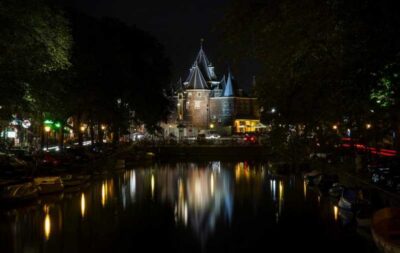
What you will actually feel on the walk is how present-day Utrecht uses the past. Many restaurants sit alongside the canals, working out of the cellars, and using the wharfs as terraces. The atmosphere can be especially good in the evening with the lights reflecting off the water.
Possible drawback to keep in mind: if you hit a busy evening period, canal-side viewpoints and terraces can feel crowded. That is when your guide’s pacing helps, because you can pause in the right spots rather than fighting for a photo angle.
Pandhof: the monastery garden pocket where the pace drops
After canals and trade history, you will step into Pandhof. This place started as a monastery garden in the 15th century, and today it functions as a public space where you can slow your breathing. That is the point of the stop. It gives you a mental reset in the middle of a city walk.
You are not just looking at a courtyard. You are seeing how a space changed jobs over time. In earlier centuries, it could be a fairground, a guard room for soldiers, and even a meat market. Now it leans toward calm again, with a layout that still feels linked to its garden roots.
The tour highlights the plants grown there, including culinary herbs, dye-producing plants, and medicinal plants. That makes the Pandhof stop more than pretty greenery. It is an example of how gardens were once practical, not just ornamental.
There is also a statue associated with reading, referenced as a reading canon (a clergyman). It adds a human, story-based element to the courtyard. When you combine the plants, the quiet space, and that little artistic detail, the Pandhof visit becomes one of those “oh right, Utrecht has room for reflection” moments.
Not the right fit? Utrecht also runs these:
- Utrecht: City Canal Cruise
★ 4.3 · 2,895 reviews - Utrecht: De Haar Castle + Gardens Entry Ticket
★ 4.7 · 1,838 reviews - Utrecht: DOMunder Entry Ticket with Guide
★ 4.4 · 706 reviews - Utrecht: Dom Tower Entry Ticket and Guided Tour
★ 4.6 · 513 reviews
The square that rose from swampy ground, then turned into a café meeting spot
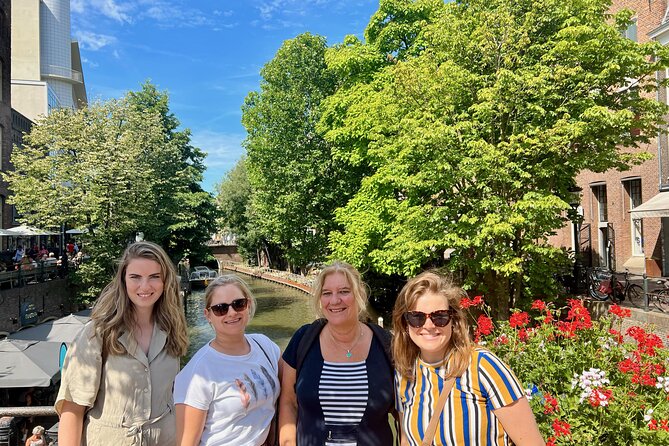
Next you will visit a square whose origin is surprisingly rough. Until the end of the 15th century, the area was swampy ground. The city needed land, so the ground was strengthened and raised using sand, stones, and debris. That kind of engineering turns a flat public space into something far more physical and grounded.
From the 15th through the 19th centuries, the square served as a market square. And yes, executions took place there as well. That is heavy history, and the tour’s value is that it places this space in context so it does not feel random or shocking in isolation.
Later, up until the 1990s, it was used as a parking lot. Then it transformed into a festival square with lots of cafés. The name is tied to the marshy origin, translating to swampy ground, which is one of those facts that makes you look at the city differently. Utrecht did not just grow upward and outward. It also grew by reshaping the ground beneath it.
What I like about this stop is the contrast. You see how the city uses a single location for totally different purposes: survival, commerce, punishment, cars, and community events. That is real city history in compact form.
Dom Tower: the Netherlands’ tallest church tower and a symbol of Utrecht’s early center
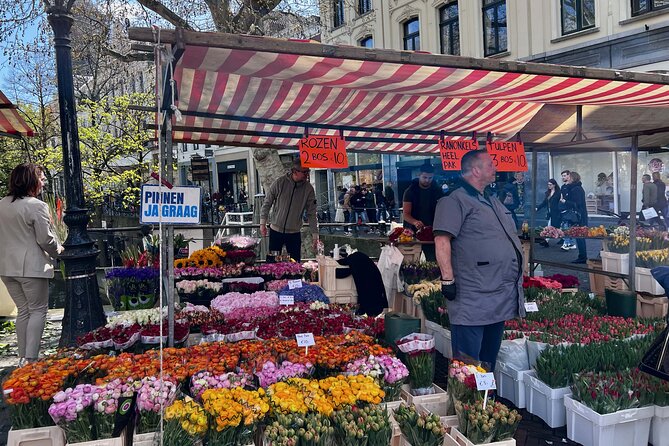
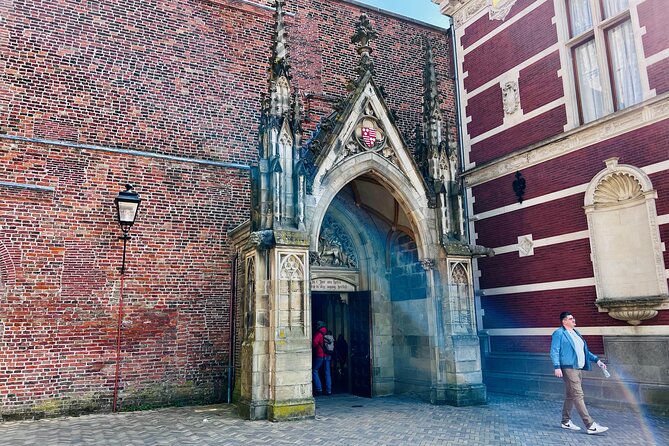
Then you reach one of Utrecht’s big landmarks: the Dom Tower. This is described as the tallest church tower in the Netherlands. It was originally part of the Cathedral of Saint Martin, often called the Dom Church, but the cathedral was never completed due to a lack of money.
That incompletion is not a footnote. It shapes the tower’s identity. After the unfinished nave collapsed in 1674, the tower became a free-standing structure on the spot where Utrecht’s city origin is said to date back nearly 2,000 years.
Even if you do not go inside anywhere, the Dom Tower stop helps you understand Utrecht’s timeline. It is a physical marker that the city grew from long before the tourists arrived with maps and quick itineraries.
Practical consideration: this is a photo magnet. The walk ends soon after, but you may want to linger briefly for shots. Your guide can help you choose angles that reduce crowd blocking, especially if you like wide canal views or tower-centered compositions.
Finishing back at Vredenburgplein, with optional Oudaen beer tasting
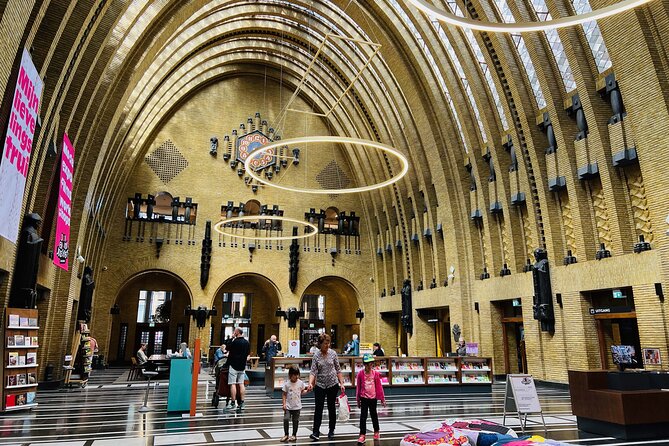
The standard finish is back at Vredenburgplein, close to where you started. The tour is designed to be roughly 1.5 hours including expected and unexpected stops, so you end at a convenient, central spot.
There is also an optional add-on. Your guide can continue with you to city castle Oudaen for a beer tasting, and it is explicitly marked as excluded from the tour price. If you like an easy, local-style finish and you still have energy for one more stop, it can be a nice way to round out the history with something Utrecht-friendly.
Oudaen is described as built in 1276 and one of Utrecht’s important monuments. The tasting is for three different beers. That makes it feel like a curated end, not just a random stop for a drink.
Price and value: $184.05 per group for a guide plus headsets
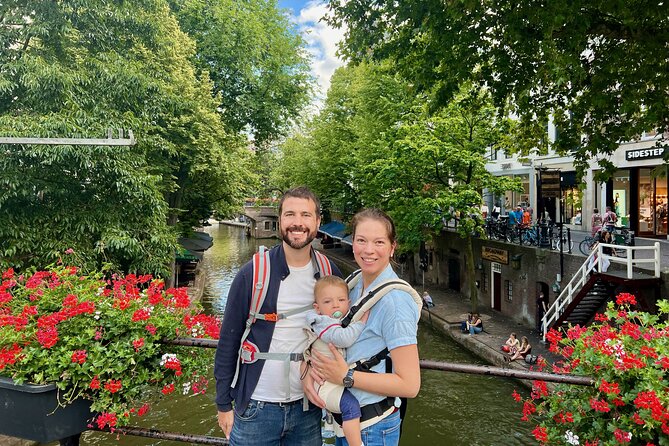
The tour cost is $184.05 per group, up to eight people. Since it is priced per group, the value improves as you travel with friends, family, or a small cluster of people. At maximum group size, you can think of it as roughly $23 per person for a guided 1.5-hour walk with headsets and taxes included.
What you are really paying for is time and attention. A private guide can tailor the flow to you, instead of keeping everyone together at a single pace. Add headsets, and you get flexibility to stop for photos or detours without losing the narrative.
There is also a nice practical layer: this is offered in English, and it includes mobile ticket use, so you are not wrestling with paper in your hands while walking.
If you are traveling solo, the private price can still make sense if you want a calm, fully guided experience, but it is often best if you value personal attention over cost. If you prefer meeting others, the company also offers a public Utrecht walking tour with a smaller maximum group size, but that depends on what kind of trip you want.
What it’s like on the ground: pacing, headsets, and meeting Lucy energy
This is a walking tour, roughly 1 hour 30 minutes total. The exact time can include small pauses and the kind of “wait, look at that” moments that good guides allow. You will be on your feet, but the pace is described as relaxed enough for a first city intro.
Headsets are a big practical win. Utrecht’s streets include places where sound carries unevenly, and the ability to hear clearly from a distance means you can take photos, walk a step ahead to frame a shot, or just look longer at details.
The guide I saw highlighted in feedback, Lucy, is described as very knowledgeable in Utrecht and Netherlands history, plus warm and personable. The useful takeaway for you is not just that she knows facts, it is that she can make the city’s story feel connected. That is what turns a walk into something you remember, especially in a place like Utrecht where the charm is often subtle.
Also worth noting: this is a private tour/activity, and only your group participates.
Who should book this Utrecht private walk?
I think this tour is a strong fit if you want:
- A first-time Utrecht orientation that still feels deeper than a basic overview
- A guide who can adjust the route to your interests
- Clear audio with headsets, so you can wander and photograph without missing the explanation
- A mix of big landmarks and smaller, thoughtful spaces like Pandhof
It is also a good option for people who find Amsterdam overwhelming. Utrecht has a calmer, slower feel, and the tour matches that energy instead of pushing you through at a sprint.
If you are someone who loves city details, this kind of guided storytelling hits well. If you are only interested in a quick highlights loop and you already know Utrecht well, you might skip the private angle. But for most people arriving fresh, this is a smart way to spend a compact chunk of time.
Should you book this private Utrecht walking tour?
Yes, I would book it if you want a confident start in a city that rewards paying attention. The best part is the guide plus headsets pairing, because it keeps the experience comfortable while still letting you stop often for photos and questions. You also get a route that mixes the obvious landmarks with lesser-visited spaces that explain Utrecht’s character, like Pandhof and the story of the wharf cellars.
Skip it only if you already have a very detailed self-planned Utrecht route and you are fine navigating without interpretation. Also consider timing. If you arrive on market days, the center can be busier, but that is usually a plus for atmosphere if you come prepared.
If you do book, plan to reserve ahead. This tour is commonly booked about 14 days in advance, so grabbing your preferred time early helps.
FAQ
How long is the private walking tour?
It runs for about 1 hour 30 minutes, including expected and unexpected stops.
Where does the tour start?
The tour meets at Vredenburgplein, at Manneken Pis, Vredenburg 154, 3511 BG Utrecht.
Where does the tour end?
The tour ends back at the meeting point (Vredenburgplein).
Is this tour private or shared?
This is a private tour/activity. Only your group participates.
What is the group size limit?
The maximum group size is eight travelers (excluding children age twelve). Children under twelve join for free. On request, larger groups may be accommodated.
Is there a headset, and will I be able to hear the guide?
Yes. Headsets are provided so you can hear the guide clearly even from a distance.
What languages is the tour offered in?
The tour is offered in English.
What does the price include?
It includes a private guide, the 1.5-hour private guided walking tour, headsets, and taxes, fees, and handling charges.
Is the Oudaen beer tasting included?
No. The beer tasting at Oudaen is optional and excluded from the tour.
Can I cancel and get a full refund?
Yes. You can cancel up to 24 hours in advance for a full refund. If you cancel less than 24 hours before the start time, the amount paid is not refunded.
Latest Utrecht reviews
- Utrecht Food Tour: 7 food stops and a fantastic local guide★ 4.4 · 15 reviews
- Utrecht: Highlights and Secrets with a Walking Tour★ 5.0 · 17 reviews
- 3 Hours itinerary between Amsterdam & Utrecht: The Heart Of Holland In A Sidecar★ 5.0 · 20 reviews
- Utrecht Guided Highlights Walking Tour★ 5.0 · 22 reviews
- e-Scavenger hunt Utrecht: Explore the city at your own pace★ 4.5 · 28 reviews
- Discover Our Utrecht: Limited Group Size & Optional Extras★ 5.0 · 32 reviews
- Utrecht: Ludwig’s Original Pub Crawl with VIP Club Entry★ 3.3 · 42 reviews
- Utrecht: Museum Speelklok Entry Ticket★ 4.5 · 48 reviews
Walking Tours, compared.
Absolutely Amsterdam – the Essential Introductory Walking Tour
Read our review →
Amsterdam Highlights Walking Tour: Small Group Experience
Read our review →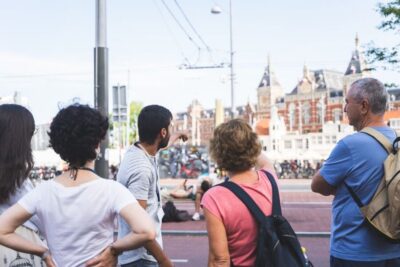

Browse the lists this tour appears in