
Reviewed · HOLOCAUST AND JEWISH HERITAGE
Jewish Amsterdam Private Walking Tour
Amsterdam’s Jewish Quarter hits hard, in a good, human way. What makes this private walk interesting is the pace, the small group size, and the fact that your guide can connect streets and buildings to people, choices, and consequences. I especially like how the tour pairs major WWII memorials with quieter corners you might otherwise speed past.
I also like the private format. With a group capped at 4, you get more than a scripted walk, you get room to ask questions and pause. One review specifically praised a guide named Aleks, for flexible timing and a clear, personal style of explaining what you’re looking at.
One drawback to consider: several of the most sensitive building stops are treated as exterior or photo-based visits because the Hollandsche Schouwburg area is under construction (interiors may not be accessible). If you need inside visits, plan for that reality.
Key highlights worth your time
- Private group up to 4, so you’re not herded with strangers
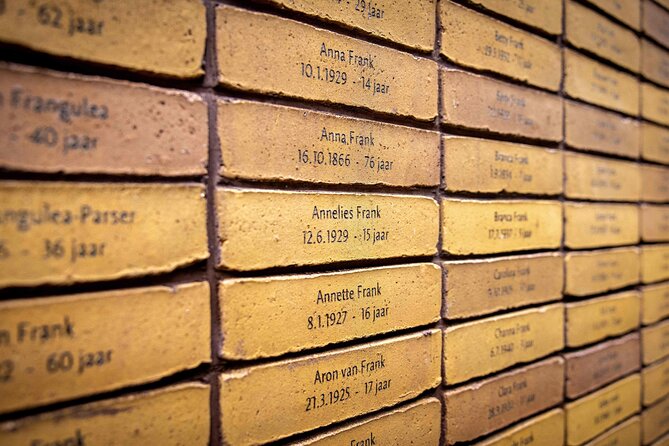
- Holocaust Namenmonument and other memorial stops built for reflection, not a quick photo op
- Hollandsche Schouwburg area explained with context, even if you cannot enter
- Portuguese Synagogue (Esnoga) and Jewish Historical Museum area views tied to living Jewish heritage
- WWII resistance and deportation memorials, connected to Amsterdam’s role and choices
- Anne Frank House is not included, but your guide can help you work out ticket timing and options
Jewish Amsterdam Private Walking Tour: why this route works
If you care about seeing Amsterdam as more than canals and bicycles, this walk is a strong way in. It threads together memorials, synagogues, and key neighborhood landmarks in a logical path through the Jewish Quarter. You’re moving through space that still holds meaning, not just museum facts stacked on a schedule.
The big value here is control. A group of up to 4 means you can slow down when a stop needs it, and you can speed up when you want to keep moving. Your guide can also tailor breaks, which matters on a roughly 3.5-hour walk with uneven sidewalks.
This is also a tour where the guide’s voice matters. In reviews, people singled out the guide as the reason the experience felt personal, not just informative. Aleks (and sometimes listed as Alex) came up as a name attached to scheduling flexibility and helpful follow-through, especially around the end-of-tour Anne Frank House plan.
More Walking Tours in Amsterdam
- Amsterdam Anne Frank: Small-Group Walking Tour & Local Guide
★ 4.8 · 12,789 reviews - Anne Frank’s Story – Guided Walking Tour through Amsterdam
★ 5.0 · 11,619 reviews - Absolutely Amsterdam – the Essential Introductory Walking Tour
★ 5.0 · 3,629 reviews
Price and what you’re really paying for ($540.69 per group)
The price is $540.69 per group, up to 4 people. That sounds steep if you’re comparing it to big group tours, but it usually pencils out better if you’re traveling with family or friends.
Here’s the practical math:
- For 4 people, it’s about $135 per person.
- For 2 people, it’s about $270 per person.
So the value depends on your group size and how much you want a private, no-rush experience. If you’re the type who likes asking questions mid-walk, the price makes more sense. If you just want the highlights with zero conversation, you might prefer a cheaper group tour and spend the savings on museum entry tickets yourself.
Also remember what the price does and does not cover. Many memorial and exterior stops have free admission, but several major museum entrances do not. That’s a key part of the value equation.
Getting there, meeting points, and pacing that won’t crush your day
This tour begins at Passenger Terminal Amsterdam Piet Heinkade 27, 1019 BR Amsterdam. It ends near Westermarkt 20, 1016 GV Amsterdam, by the area associated with the Anne Frank House approach. The meeting point and the end point are both in walkable, central zones, and the tour notes that it’s near public transportation.
What I like about the pacing info is that it’s not vague. The tour takes about 3 hours 30 minutes, and walking speed can be adjusted. The operator also says they can take more frequent breaks every 5 to 10 minutes, if you agree in advance with your guide. That’s the kind of detail that actually helps if your knees, calves, or energy levels are not what they were in your twenties.
If you have limited mobility, this is where you should be honest with yourself. The tour is still a walking-based route, and it states that most people can participate, but those with limited mobility should consider the time on their feet.
Finally, pickup is offered. If pickup matters to you, confirm it when you book, because the supplied info confirms pickup exists but does not spell out exact pickup mechanics.
The itinerary, step by step, and what each stop is really for
This walk is built around memorial geography. Some stops are brief by design, because you’re moving through a chain of meaning, not touring one building for hours.
Not the right fit? Amsterdam also runs these:
- Amsterdam: Van Gogh Museum Ticket
★ 4.7 · 52,054 reviews - Amsterdam: Heineken Experience Ticket including 2 Drinks
★ 4.6 · 36,014 reviews - Amsterdam Classic Saloon Boat Cruise with Drinks and Cheese
★ 5.0 · 31,825 reviews - Amsterdam Luxury Canal Cruise + Unlimited Drinks & Bites option
★ 5.0 · 30,518 reviews
Stop 1: Holocaust Namenmonument, where the numbers have names
You start at the Holocaust Namenmonument, the memorial with the names of 102,000 people who died in Nazi camps of death and were not given a proper burial. The point here is emotional accuracy: you’re not just learning that victims died, you’re seeing how the memorial handles identity.
It’s a short stop at about 15 minutes, and the ticket is free. For me, the sweet spot is using the time to read slowly, not snap photos and move on. If you want to understand what you’re looking at, spend a little longer than you think you need.
Stop 2: Auschwitz Monument, broken glass as a visual warning
Next is the Auschwitz Monument, featuring broken glass and honoring victims of Auschwitz. It’s also free, and it’s around 10 minutes.
Because this stop is quick, treat it like a reset. After Namenmonument, your brain can go numb. A second, different memorial style helps you keep the focus from blending together.
Stop 3: Hollandsche Schouwburg, under construction but still meaningful
Then you reach Hollandsche Schouwburg, described as two related buildings, two Holocaust museums, and multiple monuments that trace a painful story of suffering and genocide, alongside human courage and selflessness.
Here’s the practical reality: the buildings are under construction until 2024. The info is clear that it is not possible to visit the interior. Still, it’s treated as a stop point, and your guide’s personal opinion is that it’s worth hearing the story and facts, helped by the guide’s personal photo collection.
If you were hoping to go inside museum spaces at this point, adjust your expectations. The value of this stop is the context your guide brings to the exterior and the meaning of the site in the Dutch WWII story.
Stop 4 and 5: Jewish Historical Museum area and the Portuguese Synagogue (Esnoga)
After that, you shift into Jewish cultural heritage and community continuity, which is crucial after the heavy memorial sequence.
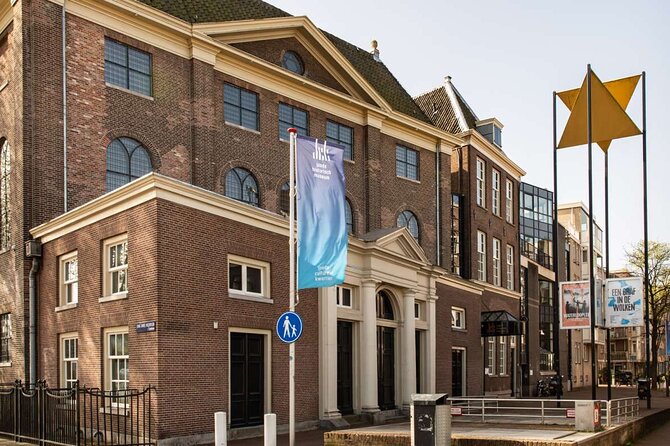
Stop 4 is the Jewish Historical Museum (JHM) and the JHM Children’s Museum, housed in four historical Ashkenazi synagogues. The ticket for the museum is not included. You get about 10 minutes at this stage, which is more of a guided orientation than a full museum day.
Stop 5 is the Portuguese Synagogue, also known as Snoge or Esnoga. It dates to 1675 and is described as one of the oldest Sephardic synagogues in Europe still in use. Like the JHM, the admission is not included.
When you’re planning your time and budget, treat these synagogue stops as “see and understand,” not “fully visit.” If you want to go inside, you’ll need to purchase tickets separately, and the tour’s short timing will make those entrances feel truncated unless you extend your day on your own.
Stop 6: Dokwerker, protest and early deportations in one monument
Next is the Dockworker Statue (Dokwerker), honoring protests by dock workers against Nazi anti-Semitic policies and early deportations of Jews to Mauthausen on February 24, 1941. This one is free and about 10 minutes.
This is a powerful angle because it shifts from victims only to response. It reminds you that action happened, even under terrible constraints.
Stop 7: Spinoza-related site, a turn toward ideas and family life
Then there’s a 19th-century Catholic church area that is noted as a former place of residence for Jewish philosopher Baruch Spinoza and his family. The tour doesn’t list a ticket here, and it appears as a street-level stop in the route.
This part is useful because it broadens the story beyond WWII. Amsterdam’s Jewish identity is not only tragedy, it’s philosophy, daily life, and changing cities.
Stop 8: GASSAN, diamonds with a local workshop angle
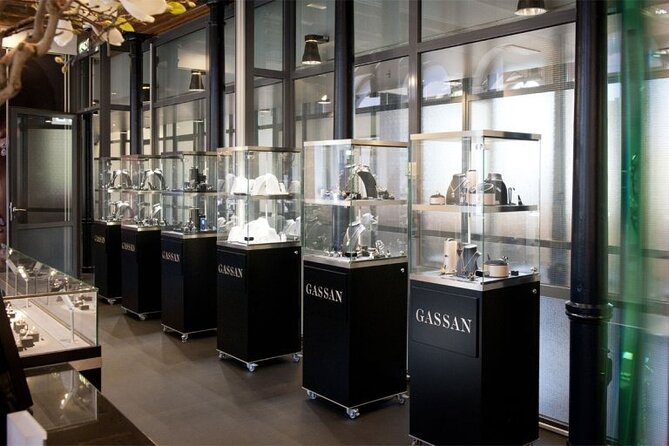
Now you get a break from memorial weight, without leaving the neighborhood story behind. GASSAN is listed as a museum, workshop, and store tied to the famous diamond family company. You have around 20 minutes free of charge to visit tours with a local company guide.
It’s a different tone, and that’s not a flaw. After long stops tied to genocide and loss, you need to breathe. Just keep your expectations realistic: it’s a short look, not a deep museum session.
Stop 9: Uilenburgersjoel synagogue, Rococo-era Ashkenazi roots
Next is Uilenburgersjoel, the historic Rococo-style synagogue built in 1766 for Ashkenazi Jews. It’s free and about 10 minutes.
This is a good stop for architectural appreciation. Even if you only see it from outside, your guide can help you notice features that reflect a community presence that lasted long before WWII.
Stop 10: Huis De Pinto, a doorway to wealthy merchant life
Then you stop at Huis De Pinto, a house built in 1603, once owned by Jewish merchant Isaac de Pinto. Free, about 10 minutes.
This is another reminder that Jewish Amsterdam included commerce, influence, and networks. It’s not just a single storyline.
Stop 11: Rembrandt House Museum, where art connects to Jewish Amsterdam
Stop 11 is Rembrandt House Museum, where Rembrandt van Rijn lived from 1639 until 1658. The info notes his life and work were connected to Amsterdam’s Jewish community in the 17th century.
Time is about 15 minutes, and admission is not included. If you’re an art lover, you’ll likely feel the time limit. Consider returning later for a full visit if you can.
Stop 12: Waterlooplein Market, social life that outlasts centuries
Next is Waterlooplein Market, described as the oldest flea market of Amsterdam and the Netherlands until WWII, and a center of social life for more than 150 years.
This stop is about 15 minutes and is free. It’s not a history lecture, it’s a texture stop. You’re showing how the neighborhood lived, shopped, argued, and traded.
Stop 13: Deaf Memorial, honoring Jewish deaf victims
Then comes the Deaf Memorial, commemorating Jewish deaf victims of the Nazi regime from 1940 to 1945. Free and around 5 minutes.
This one can be emotionally sharp because it focuses on a group that gets less attention in many tours. Use the short time to absorb the intent rather than rushing past it.
Stop 14: Spinoza Monument, philosophy you may not know yet
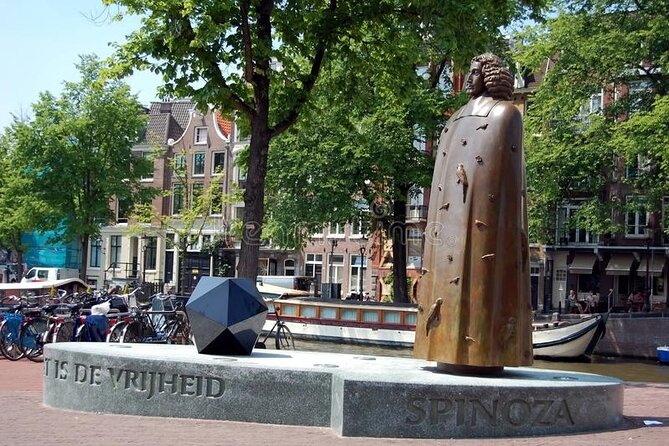
Stop 14 is the Spinoza Monument, honoring Amsterdammer descendant of a prominent Portuguese Jewish family and one of Europe’s major philosophers. It also notes that his ideas were less widely recognized in his lifetime but influenced modern philosophy.
Free and about 10 minutes.
This stop helps you leave with at least one name and one idea to think about after you’re back in your hotel.
Stop 15: Monument vor Joods verzet, resistance as a shared memory
Then you reach Monument vor Joods verzet, the monument for Jewish resistance fighters who died in WWII. Free and about 10 minutes.
This rounds the WWII sequence by reminding you that resistance was real, not just imagined in hindsight.
The end: Anne Frank House is not included, but it’s right there
The tour ends at Anne Frank House. Important: this experience does not include entry to the Anne Frank House Museum.
That said, your guide can assist with availability and ticket fees, and can help you understand options. The supplied info also says the guide cannot obtain the ticket personally, yet multiple real-world reports show the guide may sometimes help practically, depending on circumstances.
My advice: treat Anne Frank House as a separate purchase. If you want to go inside, plan your ticket timing and be ready for the possibility that availability can be tight.
Construction at Hollandsche Schouwburg: plan for outside viewing and photos
The only major “could disappoint you” item in the route is construction at the Hollandsche Schouwburg and Dutch Theater Holocaust Memorial buildings until 2024. The interior may not be accessible, even though the stop is included and tied directly to Holocaust meaning.
The good news is that the guide intends to compensate with storytelling supported by personal photos. That’s not the same as walking museum halls, but it’s still an honest way to connect you to the site.
If you are specifically traveling for museum interiors at these buildings, you should verify current access before you commit. If you’re traveling for a guided walk connecting memorials to Amsterdam’s neighborhood, this construction detail is mostly a format change, not a deal-breaker.
Museums and synagogue entrances: what counts as included vs ticketed
Several major places on the route are not included and you may need to purchase tickets yourself:
- Jewish Historical Museum and Portuguese Synagogue (Esnoga): admission ticket not included
- Rembrandt House Museum: admission ticket not included
- Anne Frank House: visit not included
Meanwhile, many memorial and outside monuments are free:
- Holocaust Namenmonument: free
- Auschwitz Monument: free
- Dokwerker: free
- Uilenburgersjoel: free
- Huis De Pinto: free
- Deaf Memorial: free
- Spinoza Monument: free
- Monument vor Joods verzet: free
This mix matters. If you expect your ticket to cover everything, you may feel surprised. But if you like splitting your day into a guided orientation plus a self-paced museum entry, the structure is actually efficient.
Who this private walking tour suits best
This tour is a strong match if you:
- Want a small, private walk rather than a crowded group shuffle
- Like your history grounded in places, streets, and specific memorials
- Prefer a guide who adjusts the pace and can take breaks
- Want both WWII commemoration and Jewish Amsterdam cultural landmarks
It might be less ideal if you:
- Only want inside museum access at every stop, since some interiors are limited by construction and others have tickets not included
- Have very limited ability to walk for around 3.5 hours, even with possible pace adjustments
Should you book this Jewish Amsterdam Private Walking Tour?
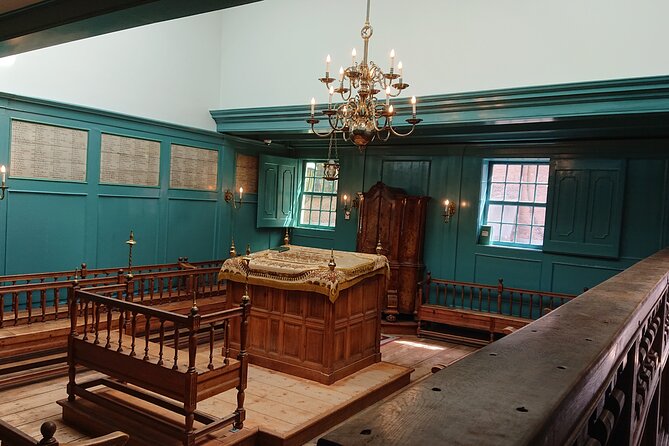
I’d book it if you want a focused Jewish Quarter walk that mixes memorials, synagogues, and neighborhood identity, without the stress of a huge group. The private size, the guided context, and the end near Anne Frank House make it a practical way to structure a meaningful half-day.
I would hesitate only if you know you must do every interior stop during the tour itself. In that case, you might build a hybrid plan: do this walk for context, then return on another day for the specific museum entries you care about most.
If you do book, come with a simple plan for tickets: treat Anne Frank House and the synagogue museums as separate add-ons, and give yourself a little buffer at the end so the day stays enjoyable rather than rushed.
Latest Amsterdam reviews
- Small Group Tulip and Spring Flower Fields Bike Tour★ 4.5 · 14 reviews
- Amsterdam Van Gogh Museum Private Tour for Kids & Families★ 4.0 · 14 reviews
- Zaanse Schans Windmills Private Tour from Amsterdam Airport★ 5.0 · 14 reviews
- Volendam: Volendams Museum Entry Ticket★ 4.4 · 14 reviews
- Bruges Day Trip from Amsterdam★ 4.5 · 14 reviews
- Zaanse Schans Windmills, cheese and clogs and Volendam tour from Amsterdam★ 5.0 · 14 reviews
- Departure from Amsterdam City to Amsterdam Airport AMS by Minivan★ 5.0 · 14 reviews
- Walking Tour about Golden Age Architecture, private local guide★ 5.0 · 15 reviews