
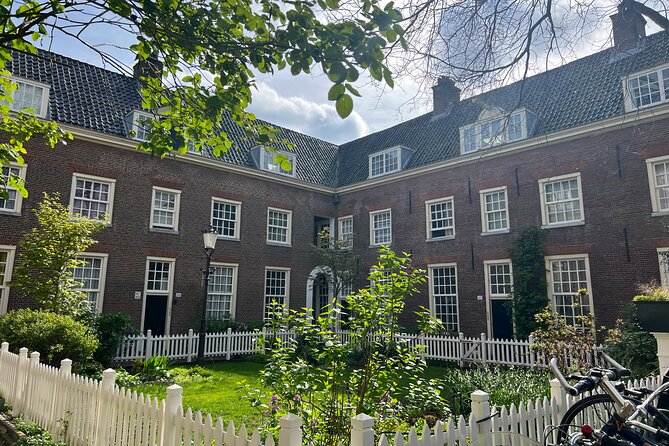
Reviewed · WALKING TOURS
Historical Walking Tour, private with local Dutch guide
This private walking tour is interesting because it gives you Amsterdam’s “why” fast. You start at a medieval watchtower, then walk through the city’s flood-defense past, trade power, and canal-era wealth until you end at Westerkerk.
I love that the guide is a longtime local, with 25 years of life in the city. I also like the focus on areas most first-timers miss, with stops from Zeedijk and the Waag over to the Canal Ring and the Jordaan. The one drawback to plan for is simple, it is about 2 hours of walking and standing, and mobility aids are not available.
Key highlights to expect on this private Amsterdam walk
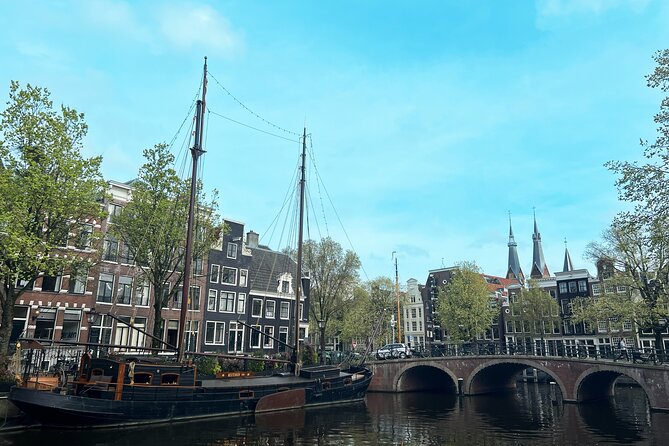
- A 25-year local perspective that connects medieval Amsterdam to today’s neighborhoods
- A tight route built for first timers, from the Weeping Tower to Westerkerk
- Canal Ring and Jordaan focus, not just the usual headline sights
- Free admission at every stop listed in the route, so you keep control of your spending
- Service animals are welcome, and the tour is only for your group
Entering Amsterdam’s story at the Weeping Tower
Your tour starts at Café the Schreiertower, Prins Hendrikkade 95. You’ll meet your guide at this medieval watchtower, one of Amsterdam’s rare remnants from the Middle Ages.
This first stop matters because it sets the frame. Amsterdam did not begin as a canal-ring postcard. It began as a city that had to manage water, trade, and defense, and your guide uses the tower to explain how the city’s geography shaped everything that came later.
If you’re jet-lagged or you feel turned around, this is a good opener. The walk is designed to help you get a mental map, so later on you can look at canals and streets and actually understand what you’re seeing.
More Historical Tours in Amsterdam
- Amsterdam Food and Cultural Tour with Tastings
★ 5.0 · 4,315 reviews - Amsterdam: Historic City Centre Canal Cruise
★ 4.3 · 659 reviews - Amsterdam: Haunted History and Ghost Walking Tour
★ 4.5 · 488 reviews
Meeting point, ending near Anne Frank House, and a practical route close to transit
You’ll finish near Westerkerk at Prinsengracht 279, and the tour ends in the vicinity of both Anne Frank House and Westerkerk church. That’s handy because it lets you keep walking or pivot into a museum visit without backtracking across town.
The route is also described as being near public transportation. That matters when your day has more than one plan, like a morning walk followed by an afternoon museum.
One more practical point, it is a private tour, meaning it’s only your group. If you want to ask questions, adjust pacing, or take a small extra pause, a private format makes that easier.
Stop-by-stop: Weeping Tower, Zeedijk, and the city that had to fight water
Stop 1 is the Weeping Tower. Your guide introduces its medieval origins and gives you a quick sense of why Amsterdam became Amsterdam.
Stop 2 is Zeedijk, one of the city’s oldest streets. Here the story shifts to flood control, since Zeedijk once functioned as a dike with locks that helped protect the city from flooding.
This is more than a cool fact. Once you understand that Amsterdam is a water-managed city, you’ll read canals and bridges differently the rest of your trip. Streets that look ordinary start to feel purposeful, like built tools, not random lines on a map.
At about 5 minutes per stop, you get enough context to move on while the details stay fresh. It’s not a museum queue experience. It’s a walking, storytelling format.
The Waag and defensive walls, where commerce met protection
Next up is Stop 3, the Waag. This medieval city gate used to be part of a defensive wall and mote system.
The gate brings an important theme into focus, Amsterdam’s trade and Amsterdam’s security were linked. Your guide uses the building to explain how controlled entry and protection supported commerce, not just warfare.
If you’re the kind of traveler who likes connections, this part clicks. You start seeing that Amsterdam’s power was not only money and ships. It was systems, rules, and physical infrastructure that helped people move goods safely.
More Walking Tours in Amsterdam
- Amsterdam Anne Frank: Small-Group Walking Tour & Local Guide
★ 4.8 · 12,789 reviews - Anne Frank’s Story – Guided Walking Tour through Amsterdam
★ 5.0 · 11,619 reviews - Absolutely Amsterdam – the Essential Introductory Walking Tour
★ 5.0 · 3,629 reviews - Amsterdam: Anne Frank Guided Walking Tour in DE/EN/IT/ES
★ 4.9 · 3,107 reviews
Oostindisch Huis and the Dutch East India Company behind the modern corporation
Stop 4 is Oostindisch Huis, the former office and warehouse tied to the Dutch East India Company, founded in 1602. This stop is built for anyone who wants trade history that connects to business and ideas, since you learn about the spice trade and the invention of the modern corporation and stock market.
That is a big claim in plain language, and it’s also why this tour is worth doing. Many city walks stay at the level of coats of paint and old brick. This one points to how global trade helped shape finance and corporate structures that still affect your life today.
The pacing here is brief, around 5 minutes. So you’ll want to bring curiosity and let your guide frame the overview. You’ll get a story you can follow later when you read more or visit other sites.
Het Kleinste Huis and Dam Square: tiny scale details and big national moments
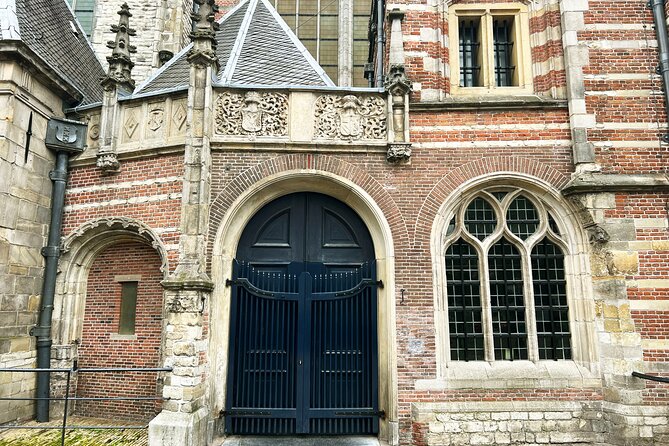
Stop 5 is Het Kleinste Huis van Amsterdam, the smallest house in Amsterdam. It stood next to a gate decorated with the city crest and other symbolic decorations.
Small places can carry big meaning, especially in a city where space and wealth have long been unevenly distributed. Your guide uses it to highlight how Amsterdam’s symbolism showed up in practical spaces.
Stop 6 is Dam Square, the old market square and the heart of the city. Today it’s associated with the Royal Palace and the national Second World War monument.
This is a good reality check stop. You see the everyday market origins, then the modern layers that make Dam Square more than just scenery. It gives you a sense of Amsterdam’s civic identity, not only its merchant-age fame.
Canal Ring (Grachtengordel) and Jordaan: from Golden Age wealth to everyday local life
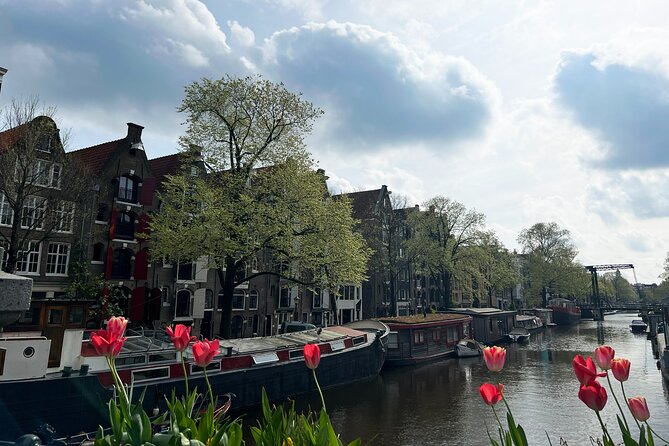
Stop 7 is the Canal Ring, or Grachtengordel. This is the famous ring of canals district built for wealthy merchants during the Golden Age. You’ll see finest canal houses in northern baroque style and a variety of houseboats.
This part is a highlight for first-time orientation. Once you stand in this district, the city’s layout clicks. Canals are not just pretty, they are a planning system for living, moving goods, and displaying status.
Stop 8 is Jordaan, known for charming streets, traditional brown cafes, and unique boutiques. This is where Amsterdam starts to feel like a place you could live, not only a place you could visit.
Also, Jordaan gives you contrast. The Canal Ring is about merchant-era wealth. Jordaan is about character, daily rhythm, and a neighborhood vibe that stays human-scale.
If you like your tours to shift from grand stories to street-level life, this is one of the strongest stretches. You spend about 30 minutes here, long enough to absorb atmosphere without turning it into a long wandering session.
Westerkerk: ending with a landmark locals love
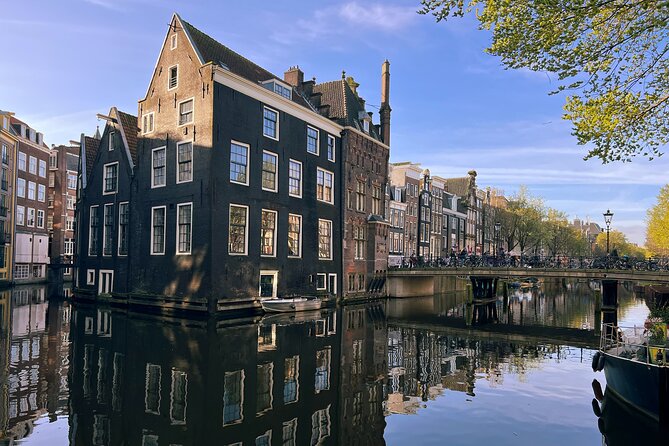
Stop 9 is Westerkerk, a Dutch Protestant church known for its stylish design and iconic spire. It’s described as a landmark most loved by locals, and that local-attached phrasing matters because it frames the site as part of everyday identity, not just tourist fame.
Ending here works well for a walking tour because the church and spire give you a clear point to orient around. From there, you can keep moving toward the Anne Frank House area if you planned to go, or you can simply use the location to stitch your day together.
How much it costs and whether the value makes sense at $96.02 per person
The price is $96.02 per person for about 2 hours. That can feel high or reasonable depending on your travel style, so here is how I’d judge the value.
First, the tour includes all fees and taxes. Second, every listed stop shows admission ticket free, which means you are not paying extra museum or attraction fees just to participate in the story.
Third, you’re paying for a private format with a local guide. In a city with a lot to see, a guided walk can save you from spending your limited time figuring out what matters.
One practical note, bottled water is not included. If you’re doing this on a warm day or you’re a slow sipper, bring your own or plan to buy a bottle near the route.
There is also a booking pattern to consider. The average booking time is around 70 days in advance, so popular days can fill up sooner than you think.
Pacing, guide style, and what a good walk feels like
Even though the structure is set, the tour is still designed to feel flexible. People in the walk reports often mention a pacing that stays on track while still allowing pauses if you want them.
Guide style is part of the appeal here. Reports highlight humor and an easy flow of explanations, plus an ability to handle questions across history, architecture, and culture.
Your guide can also adapt the emphasis based on your interests. One example from a guide name you’ll hear in recent tours is Anna, who is described as personalizing the walk with attention to Jewish history beyond the Anne Frank House, while still keeping the route’s main thread.
If you like your guides to connect dots, this tour aims to do that. You don’t just hear dates. You see how those dates shaped trade routes, city planning, and neighborhood identities.
Who should book this private Amsterdam historical walking tour
This is a great fit if you are in Amsterdam for the first time and you want a clear mental map without spending your whole day on major museums. The route is structured for orientation, and it touches the Canal Ring and Jordaan, which are two places that help you understand how the city works.
It’s also a good choice if you like history with practical connections. The Dutch East India Company stop is not just spices and ships. It links to broader business and finance ideas like corporate structure and stock market concepts.
Service animals are allowed, which is a major plus for travelers who need that reassurance. The tour is also described as near public transportation, so you should have an easier time starting and ending your day.
The big limitation is physical. It is not recommended if you have trouble walking and standing for about 2 hours. Mobility aids are not available, and it is not recommended for participants who use a walker.
Should you book this tour or choose something else?
Book it if you want a tight, private, first-timer friendly walk that connects Amsterdam’s medieval roots to the canal-era boom and then down into neighborhood life. The free admission stops, the all-in fees, and the strong local guide angle make it a sensible value for the time you spend.
Skip it or look for a different format if your body needs a shorter route or if you rely on walking aids that the tour cannot support. Also consider your water needs since bottled water is not included.
If your goal is to understand Amsterdam quickly, then use that understanding for the rest of your trip, this is a strong place to start.
FAQ
How long is the historical walking tour?
The tour lasts about 2 hours.
Is this tour private?
Yes. It’s a private tour, meaning only your group participates.
What language is the tour offered in?
The tour is offered in English.
Where does the tour start?
The meeting point is Café the Schreiertower, Prins Hendrikkade 95, 1012 AE Amsterdam.
Where does the tour end?
The tour ends in the vicinity of Anne Frank House and Westerkerk church, near Westerkerk at Prinsengracht 279, 1016 DL Amsterdam.
Are admission tickets included for the stops?
Yes. The itinerary lists admission ticket free for each stop, and the experience includes all fees and taxes.
Is bottled water included?
No. Bottled water is not included.
Are service animals allowed?
Yes. Service animals are allowed.
Is the tour suitable for people who use a walker or have walking limits?
It is not recommended for participants who have trouble walking and standing for 2 hours, and it is also not recommended for participants who use a walker. Mobility aids are not available.
What is the cancellation policy?
You can cancel for free up to 24 hours in advance for a full refund, based on local time. If you cancel less than 24 hours before the start time, the amount paid will not be refunded.
Latest Amsterdam reviews
- Small Group Tulip and Spring Flower Fields Bike Tour★ 4.5 · 14 reviews
- Amsterdam Van Gogh Museum Private Tour for Kids & Families★ 4.0 · 14 reviews
- Zaanse Schans Windmills Private Tour from Amsterdam Airport★ 5.0 · 14 reviews
- Bruges Day Trip from Amsterdam★ 4.5 · 14 reviews
- Volendam: Volendams Museum Entry Ticket★ 4.4 · 14 reviews
- Zaanse Schans Windmills, cheese and clogs and Volendam tour from Amsterdam★ 5.0 · 14 reviews
- Departure from Amsterdam City to Amsterdam Airport AMS by Minivan★ 5.0 · 14 reviews
- Walking Tour about Golden Age Architecture, private local guide★ 5.0 · 15 reviews
Walking Tours, compared.
Absolutely Amsterdam – the Essential Introductory Walking Tour
Read our review →
Amsterdam Highlights Walking Tour: Small Group Experience
Read our review →

Browse the lists this tour appears in