
Reviewed · HISTORICAL TOURS
Financial History Tour
Money here is not just money. In Amsterdam, it shaped buildings, street life, and even the stories people still tell. This tour is a smart, walkable way to understand how finance helped drive the city’s culture, from the exchange district to the archive basement. I especially like the private, flexible format and the chance to see real financial landmarks up close, plus quick photo moments around the Dam area. One thing to consider: it is about 2.5 hours of walking and standing on city streets, so it helps to have moderate physical fitness.
The tour starts at the Bourse and exchange zone around Dam Square and then shifts into the archive side of Amsterdam’s financial muscle. I also like that the stops are short and focused, around 10 minutes each, which keeps the story moving instead of dragging. If you want a super-fast, sit-down museum day, this may feel a bit more like an active street history chat than a long gallery visit.
If you have even a mild curiosity about how bubbles form, how merchants made money, and why certain buildings still matter, you will get a lot out of it.
Key takeaways before you go
- Private and flexible: only your group goes, so you set the pace.
- Two anchor stops: Beurs van Berlage and Stadsarchief Amsterdam, each about 10 minutes.
- Admissions are clear for the stops: Stadsarchief Amsterdam includes admission; Beurs van Berlage is free.
- Tulip Mania is part of the walk: the story of the first famous economic bubble is tied to the floating flower market setting.
- Good photo timing near the Dam: you get multiple chances to shoot iconic views.
- English mobile ticket: you will use a mobile ticket and get confirmation when booking.
Entering The Financial Heart Near Beurs van Berlage
I love how this tour starts in a place that is instantly recognizable if you are even passingly aware of Amsterdam’s trading past. You meet at Bistro Berlage, Beursplein 1, which places you right in the exchange-building zone built around the Dam. It is an easy mental trick for first-time visitors. You get your bearings fast, then the guide turns those buildings into a timeline.
The first stop is Beurs van Berlage. The time here is short, about 10 minutes, and the admission ticket is free. That is enough time to orient you to what the building represents, and to start connecting Amsterdam’s financial evolution with the physical city. The guide frames it like: money does not live in spreadsheets only, it lives in architecture and public space. Even if you are not an economics person, this approach makes it feel practical.
Photo-wise, this start area is a big win. It is one of the best zones in Amsterdam for strong angles of landmark facades, and you are likely to catch clear shots with the Dam district behind you. If your group likes taking pictures, you will usually get time to step aside briefly without slowing the whole tour.
Potential drawback at this stage: because the stop is brief, you should come ready to pay attention. If you mostly want a quiet, long look at one building, you might prefer a standalone visit. But if you want the story built across several stops, this works well.
More Historical Tours in Amsterdam
- Amsterdam Food and Cultural Tour with Tastings
★ 5.0 · 4,315 reviews - Amsterdam: Historic City Centre Canal Cruise
★ 4.3 · 659 reviews - Amsterdam: Haunted History and Ghost Walking Tour
★ 4.5 · 488 reviews
Stadsarchief Amsterdam, Where the Financial Story Gets Physical
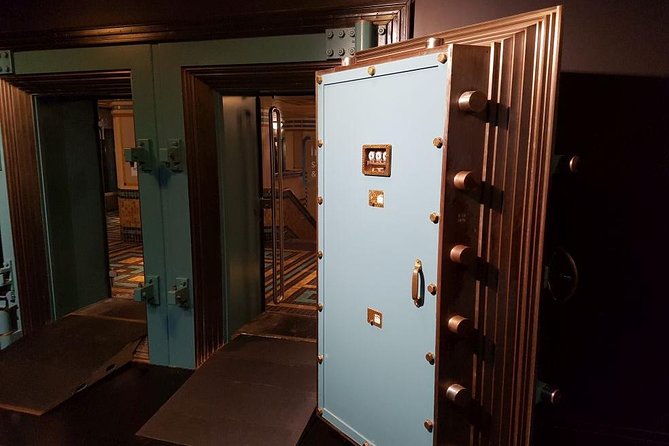
After the exchange district, the tour shifts into something I find more surprising than expected: the archive space. The second stop is Stadsarchief Amsterdam, where you get access to the basement area tied to the city’s records. The stop is about 10 minutes, and admission is included.
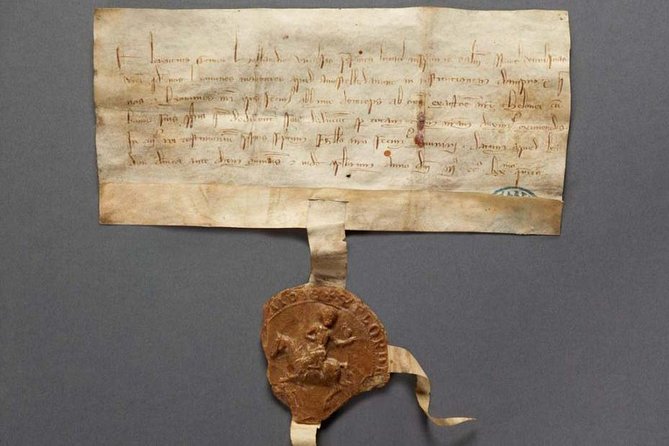
This is where the theme clicks for me. You see the difference between money as an idea and money as documents. The basement reveals the treasury of the city’s archives. That phrasing matters because it changes your mindset. You are no longer just looking at a fancy building. You are seeing that trade, credit, and records are what allow a city to grow, settle disputes, and remember what it did.
This is also a good time for questions. If you have ever wondered how a place keeps track of commerce across decades, this is where you get that answer in a grounded way. You also learn how the city’s past connects to the kinds of people who benefited from the system.
One note for your planning: the tour is 2 hours 30 minutes total, but this specific stop is short. So do not expect a full archive walkthrough. Think of it as a focused stop that adds credibility and texture to the rest of the financial narrative you hear outside.
Tulip Mania and the Myth of Easy Profits
The tour does not treat Amsterdam’s money story like a straight line from trade to prosperity. It includes the darker, risk-heavy side too, including how early bubbles formed. A highlight is learning about Dutch Tulip Mania, tied to the area concept of the Amsterdam floating flower market.
This is a great moment to listen closely, because bubble stories get distorted when they are told as pure comedy. The useful version is the one that explains how people traded expectations, how scarcity was marketed, and how fast sentiment can outrun reality. Even if the term bubble sounds modern, this was one of the first times a large group of ordinary people saw the thrill and threat of rapid price swings.
What I like about including this in an Amsterdam walk is that it is not taught like a textbook chapter. It is tied to a specific setting and time period, and it fits the broader theme: merchants and finance were not background characters in Amsterdam. They were central players.
Also, this is where you may get some of the most satisfying photo moments, because you are moving through iconic areas near the Dam and along Rokin, the end point zone. If your group is photo-forward, this part of the walk often provides the visual payoff for the story you have been learning.
A consideration: if you already know tulip mania basics, you might want to bring a few specific questions, like how speculation changes behavior or how quickly public beliefs shift. The tour format is flexible, so you can steer follow-ups with your guide.
Walking With a Private Guide Who Sets the Pace
The tour is a private tour/activity, meaning only your group participates. That is not a small detail. In a topic like financial history, your guide needs room to adjust to your interests. If you are fascinated by how merchants made money, you can lean into that. If your focus is architecture and public space, you can go that way too. Private format also helps if your group has different walking speeds, or if you want extra minutes for pictures.
It is offered in English, and the tour uses a mobile ticket. You should expect a smooth start if you have your ticket ready on your phone. You also get confirmation at the time of booking.
The time on the ground is about 2 hours 30 minutes. That is long enough to cover multiple stops and connect themes, but not so long that everyone is desperate to escape by the end. It is also listed as near public transportation, so getting there is usually easier than it sounds in a city like Amsterdam.
One practical plus: your meeting and ending points are close. You start at Bistro Berlage and end at Rokin 24HS. The tour ends about 500 meters from the starting point but on the other side of the Dam, so you can keep exploring without backtracking.
About guides: one guide name that comes up in the experience is Tijs de Boer, praised for giving insights and local hints along the way. Even if you do not get the same guide, it is a good sign that the tour prioritizes explanation plus Amsterdam know-how.
More history tours in Amsterdam:
- Amsterdam High-End Dutch Food & History Tour – Up to 8 guests
★ 5.0 · 482 reviews - From Amsterdam: Volendam Heritage & Cheese Half-Day Tour
★ 4.4 · 461 reviews - Amsterdam: Historic City Sightseeing Canal Cruise
★ 4.5 · 444 reviews - Amsterdam: Historical Highlights Walking Tour with Tasting
★ 4.6 · 381 reviews
Price and Value: When $390.50 Makes Sense
This tour costs $390.50 per group, with group size up to 10. That sounds steep if you are thinking per person. But with a group cap, value depends on how you split it.
Here is how I judge it for my own planning: if you are traveling as a small group of friends or family, the private format can make the price feel reasonable. You are paying for a guide who tailors the experience and for admissions that are specifically included where stated, like Stadsarchief Amsterdam. You are also paying for a curated story that connects buildings, archives, and a bubble-era lesson without making you do the research yourself.
If you are solo, this is where you need to think carefully. Paying full group price for a private walkthrough can be hard to justify unless you really want the private experience. In that case, you might compare it to other Amsterdam walking tours that run per person, and then decide if the extra cost buys enough flexibility for your style.
A final value clue: it is commonly booked about 28 days in advance. That tells me planning ahead helps, not last minute. If your dates matter, lock it in early so you do not end up with fewer time slots.
Who Should Book This Financial History Tour?
This one is best for you if you like connections. You want to see how finance shaped real places, and you enjoy learning how stories spread through buildings and records, not just through facts in a book.
You will probably enjoy it most if you:
- are curious about Amsterdam beyond the canals and museum checklist
- like walking tours with a guide who can answer questions on the fly
- enjoy photo stops around recognizable landmarks like the Dam area
- are a small group that wants a private pace
It is also a decent fit if you want something not too strenuous. The requirement is moderate physical fitness, so it helps to wear comfortable walking shoes and be ready for normal city uneven surfaces and street walking.
One possible mismatch: if your idea of a great day is long museum time with lots of quiet reading, this might feel a bit too focused and mobile. It is a walk-and-explain tour, with short, purposeful stops.
Should You Book This Money, Archives, and Tulip Mania Walk?
If you want Amsterdam’s financial story in a compact, human-scaled format, I would book it. The combination of Beurs van Berlage at the start, Stadsarchief Amsterdam adding depth, and the bubble story tied to the tulip era gives you a full arc in about 2.5 hours.
I would especially recommend it if your group wants privacy, flexibility, and a guide who explains rather than just recites. And if you are the kind of person who likes learning why a city looks the way it does, you will walk away with a clearer mental map of Amsterdam’s money trail.
If you are traveling solo and price sensitivity is high, you can still consider it, but do the math first. The value makes the most sense when you can spread the group cost across several people.
FAQ
Where does the tour start?
The tour starts at Bistro Berlage, Beursplein 1, 1012 JW Amsterdam, Netherlands.
Where does the tour end?
The tour ends at Rokin 24HS, 1012 KS Amsterdam, Netherlands, about 500 meters from the starting point on the other side of the Dam.
How long is the Financial History Tour?
It lasts about 2 hours 30 minutes.
Is this a private tour?
Yes. It is a private tour, and only your group will participate.
What language is the tour offered in?
The tour is offered in English.
How much does it cost?
It costs $390.50 per group for up to 10 people.
What is included in the first stop at Beurs van Berlage?
Beurs van Berlage is listed with admission ticket free, and the stop is about 10 minutes.
Is admission included for Stadsarchief Amsterdam?
Yes. Stadsarchief Amsterdam includes admission, and the stop is about 10 minutes.
Do I need to be very mobile to join?
The tour is listed for travelers with moderate physical fitness.
Can I cancel for free?
Yes. Free cancellation is available up to 24 hours in advance for a full refund. If you cancel less than 24 hours before the start time, the amount paid is not refunded.
Latest Amsterdam reviews
- Small Group Tulip and Spring Flower Fields Bike Tour★ 4.5 · 14 reviews
- Amsterdam Van Gogh Museum Private Tour for Kids & Families★ 4.0 · 14 reviews
- Zaanse Schans Windmills Private Tour from Amsterdam Airport★ 5.0 · 14 reviews
- Bruges Day Trip from Amsterdam★ 4.5 · 14 reviews
- Volendam: Volendams Museum Entry Ticket★ 4.4 · 14 reviews
- Departure from Amsterdam City to Amsterdam Airport AMS by Minivan★ 5.0 · 14 reviews
- Zaanse Schans Windmills, cheese and clogs and Volendam tour from Amsterdam★ 5.0 · 14 reviews
- Walking Tour about Golden Age Architecture, private local guide★ 5.0 · 15 reviews
Historical Tours, compared.

Amsterdam Food and Cultural Tour with Tastings
Read our review →
Kinderdijk UNESCO World Heritage Entry Ticket
Read our review →

Amsterdam High-End Dutch Food & History Tour – Up to 8 guests
Read our review →
Cruise through the Historic City Center with Guide
Read our review →Browse the lists this tour appears in