
Reviewed · MUSEUMS
Elburg: Admission to the Zandverhalen Museum
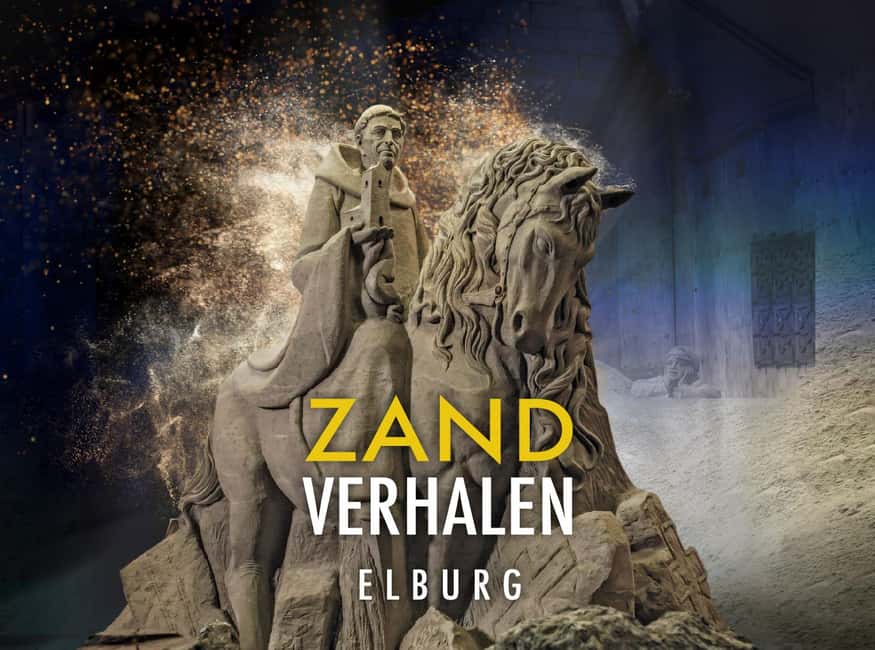
Zandverhalen in Elburg is interesting because it turns big, familiar Bible scenes into something you can actually walk through, using nothing but carefully shaped sand. It is an indoor museum experience built around an astonishing scale, with the world’s largest indoor sand sculpture exhibition feel, and stories that run from Adam and Eve to the Tower of Babel.
I love the sheer size of what you see, from tiny figures about 3 centimeters up to sculptures around 8 meters tall. I also really like the way the museum connects art and meaning, including thoughtful artist explanations that make the whole idea of zandverhalen, sand stories, feel concrete instead of gimmicky.
One practical consideration: the building can be cold in winter, and one common tip is to bring warm layers and even gloves if you run chilly.
Key points to know before you go
- Three large halls spread across about 5,000 m², so you can wander without feeling rushed.
- More than 300 sculptures made from sand, ranging from 3 cm to 8 m.
- About 4,000 m³ of sand sourced from the Markermeer, which adds a real sense of place.
- Bible stories plus cultural details, including historic ships, ancient olive trees, and lock gates.
- Small details matter, with faces and expressions that look surprisingly lifelike.
Zandverhalen Museum in Elburg: why indoor sand art feels so real
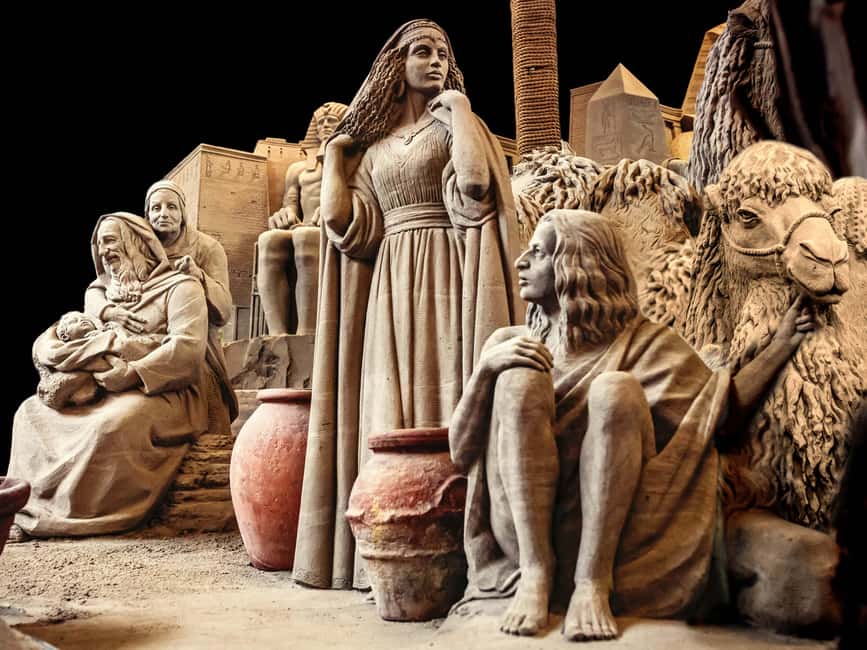
The easiest way to describe Zandverhalen is this: it is not just a room full of sculptures. It is a full, indoor setting where sand becomes architecture, faces, textures, and even story scenes that you can move past slowly.
What makes it work is the contrast. Sand is humble, everywhere, easy to ignore. Here, it is engineered into structures and characters that hold your attention. And because it is indoors, you get that consistent museum light and a controlled setting, which helps when you are trying to notice details.
You also get a mix of tones. The themes are religious and historical, but the delivery is visual and accessible. That is why it tends to be enjoyable across ages, including kids who just want to look, and adults who want to think about what they are seeing.
Three huge halls and 4,000 m3 of Markermeer sand
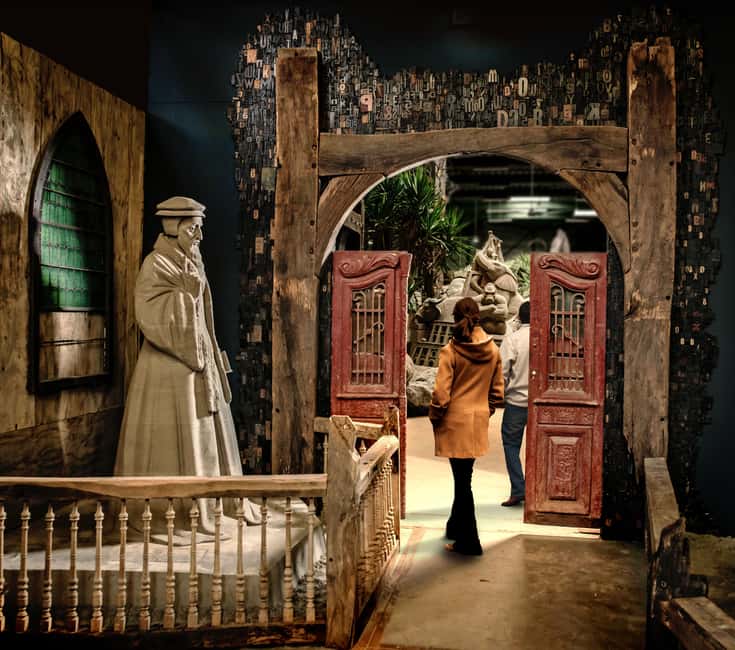
The museum runs through three big halls covering about 5,000 m². That size matters because it keeps the experience from feeling cramped or like you are trying to squeeze past people in one corridor.
Inside, the museum uses an enormous amount of material. You are walking through an exhibition that contains more than 4,000 m³ of sand from the Markermeer. That detail is not just trivia. It helps you understand that the sand is the main ingredient, not an art label.
The sculptures are also a range in scale that changes how you experience them. You will see pieces around 3 centimeters tall, which rewards close looking. Then you shift to scenes that can reach 8 meters, where you feel the structure as space, not just objects on a wall.
And because there are 300+ sand sculptures, your brain keeps getting new focal points. One moment you are scanning for faces or texture lines. The next moment you realize you are standing next to something huge like a set of lock gates.
What biblical stories look like in grains, Adam and Eve to the Tower of Babel
The core theme is Bible stories brought to life through sand. You can follow scenes from Adam and Eve in paradise, through Moses on the mountain, to the Tower of Babel, and more.
Even if you are not strongly focused on religious history, the story format still works. Stories give you a storyline to follow, and sand gives you a “how did they do that” layer. The museum’s design encourages you to connect narrative with visual form.
For example, Adam and Eve in paradise is the kind of scene that can go two ways in art: either symbolic and vague, or surprisingly concrete. Here, the sand approach tends to make it feel tactile and grounded. You are not just reading about it. You are looking at a crafted environment.
Then you move into the mountain and the Babel idea, where scale and structure matter. Sand can look delicate up close, but it can also look solid and architectural in larger group scenes. That makes the dramatic moments feel less like distant myth and more like something you can experience in front of you.
The big “wow” factor: ships, olive trees, and meter-high lock gates
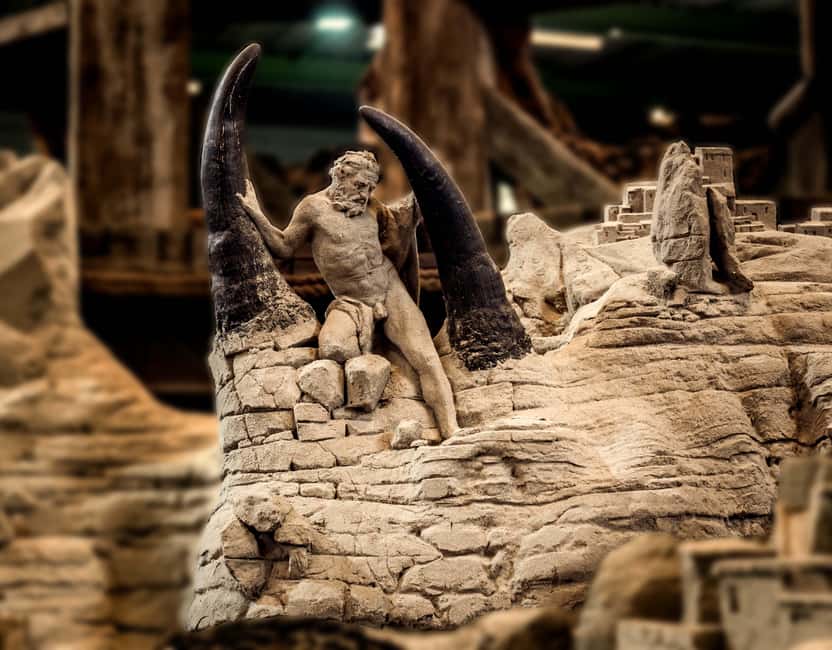
A smart reason to visit is that the exhibition includes standout historical and cultural details beyond the Bible figures. Expect to see things like historic ships, ancient olive trees, and meter-high lock gates.
These elements help the museum reach beyond a single audience. If you love history, you get visual anchors. If you love art, you get craft and realism. If you are visiting with kids, the ships and big structures give instant targets for curiosity.
The lock gates are a great example of why this matters. In the real world, gates are about function and scale. In sand, the museum turns that function into a visual spectacle. You can stand near them and notice how the sculpting translates industrial shapes into something that still reads as engineering.
And ships, olive trees, and other details also give you a rhythm as you walk through the halls. You are not only tracking figures and faces. You are also spotting objects that break up the scene and keep your attention active.
Family-friendly art that still respects adults

One repeated theme in the experience is that it works for young and old alike. That is not automatic with religious or historical subjects, so it is worth noting.
The main reason it tends to succeed is the mix of scales and the level of detail. One moment is easy for kids: big scenes, recognizable shapes, and things like ships or gates. Another moment demands patience, especially when you notice sculpted expressions and the careful look of faces.
Adults often appreciate the way the museum includes artist explanations that encourage reflection. You do not just get “this is art.” You get framing that helps you connect the title idea, sand stories, to what is actually in front of you.
So yes, you can treat it like a visual museum. You can also treat it like a small thinking break. It is one of the few attractions where both approaches feel natural.
How long to plan for a satisfying visit
You are looking at a 1-day activity, and that is the right way to think about it. You can fit it into a Flevoland stop without exhausting your whole day.
The best practical move is to plan for slow looking. With more than 300 sculptures and scenes that range from tiny to towering, rushing turns it into a quick glance instead of a real experience. If you like reading explanations and comparing details, you will want extra time in each hall.
Also, because some content is shown in its original language, you may spend a bit longer on captions. Having a translation app ready can save you from feeling stuck.
Price and value: $17 for an indoor show with major scale

At about $17 per person, this is priced like an attraction, not a luxury museum. The value is strongest when you look at what is included: admission to the indoor sand sculpture exhibition plus free parking.
That parking detail is not small. In places where you have to pay to park, the “ticket value” can quietly evaporate. Here, you keep the overall cost more predictable, which is a real perk for families or groups.
Then there is the scale behind the price. Three halls across 5,000 m², plus more than 4,000 m³ of sand, and 300+ sculptures. That is a lot of physical work and space. Even if you only spend a portion of your time in close-up looking, you are still seeing an exhibition designed to fill a full indoor visit.
Could it be worth it if you only like one theme? It can still be worth it because the exhibition includes both Bible scenes and art object details like ships and lock gates. You are not stuck with one kind of subject matter.
Practical tips for a smooth visit in Elburg and Flevoland
Dress for temperature first. One very specific tip is that it can be as cold indoors as outdoors during winter. Bring warm layers, and if you hate cold hands, consider gloves.
Next, manage expectations about the outside area. There is mention that the park area section can look a bit run-down. That does not describe the exhibition itself, but it can affect your first impression if you judge too quickly.
If you want a simple strategy, do this: give yourself a minute to orient, walk past the outdoor area, then focus on the halls. Once you are inside, the experience becomes the story.
Finally, go with the right mindset for sand art. Sand sculptures are about detail and texture, not just silhouettes. If you approach it like a “look and move on” stop, you might miss why people keep talking about face expressions and the overall craft.
Is this the right experience for you?
Book Zandverhalen Elburg if you want an indoor activity with big visual impact, especially one that mixes art, culture, and Bible stories in a way that stays accessible. It is a strong fit for families because the range of sizes and recognizable objects like ships and gates keep attention from drifting.
It is also a good pick if you are traveling on a flexible schedule. Being an indoor exhibition makes weather less of a problem than open-air attractions.
Skip it, or at least think twice, if you do not enjoy narrative themes at all. The core experience is story-driven, even when the visual craft is the main attraction. Also, if you are extremely sensitive to cold, plan your clothing carefully.
FAQ
FAQ
Where is Zandverhalen in Elburg?
It is in Elburg, in the Flevoland region of the Netherlands.
What does the ticket include?
Your admission ticket includes entry to the indoor sand sculpture exhibition, and it comes with free parking.
How long should I plan for this experience?
It is listed as valid for 1 day, so plan enough time to see the exhibition at a comfortable pace.
How many sculptures and how big are they?
The exhibition has more than 300 sculptures. They range from about 3 centimeters up to around 8 meters tall.
What kind of sand is used in the museum?
The sand comes from the Markermeer, and the exhibition contains more than 4,000 m³ of it.
Is Zandverhalen wheelchair accessible?
Yes, it is wheelchair accessible.
Will I understand everything without speaking the local language?
Some content is shown in its original language, so you may want a translation tool ready.
Can I cancel or change my plans?
You can cancel up to 24 hours in advance for a full refund. It also offers reserve now and pay later, so you can keep plans flexible.
More Museums in Elburg
- Amsterdam: Van Gogh Museum Ticket
★ 4.7 · 52,054 reviews - Moco Museum Amsterdam Entrance Tickets with Banksy & More
★ 4.4 · 10,088 reviews - Amsterdam: Red Light Secrets Museum Entry Ticket
★ 4.2 · 5,722 reviews - Amsterdam’s Weirdest Museum: Ripley’s Believe It or Not!
★ 4.5 · 4,920 reviews
Museums, compared.
Moco Museum Amsterdam Entrance Tickets with Banksy & More
Read our review →
Amsterdam’s Weirdest Museum: Ripley’s Believe It or Not!
Read our review →

Browse the lists this tour appears in