
Reviewed · CITY EXPLORATION GAMES
e-Scavenger hunt Utrecht: Explore the city at your own pace
This self-paced city hunt is interesting because it turns Utrecht into a walking game, with answers that push you toward places you might skip on a normal sightseeing loop. I like the flexible pace and the puzzle-style questions that make landmark-hopping feel purposeful. One possible drawback: some people find the map pins and hint guidance can be a bit off, so allow extra patience if you get stuck.
I like how the route naturally strings together Utrecht icons like the Dom Tower and the canals around the Oudegracht, plus quieter corners like courtyard space and working-class streets. You start at Domplein 20 and finish back at the same spot, so you can plan an unhurried morning or afternoon stroll.
This is a great fit if you enjoy walking, solving, and learning in small chunks. It is also good for mixed-age groups, since the activity is designed to work at different speeds, and it runs as a private experience for up to 6 people.
Key highlights to look forward to

- Self-paced route: walk when you want, pause when you want, and finish when you feel done
- Top Utrecht sights on one trail: Dom Tower, canals, flower market, major churches, and historic civic buildings
- Interactive app questions: the format feels like a city game, not a lecture
- A scoring layer: you can play as teams and see results in the app
- Small-group privacy: only your group participates, up to 6 people
- Useful for hearing accessibility: listed as user-friendly for hearing impaired visitors
Why this Utrecht e-Scavenger hunt feels different from a normal walking tour
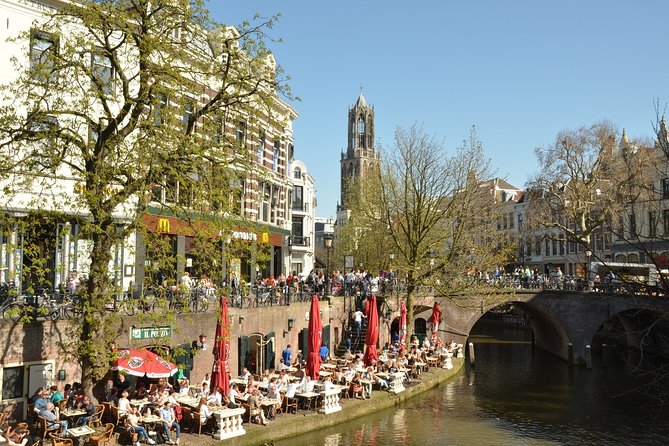
Instead of following a fixed script, you follow the app. That means your day in Utrecht stays yours. Want to linger for photos at the Dom Tower area? Do it. Want to detour toward a canal side terrace for a drink? That’s on you.
I like that the trail mixes big-name Utrecht with some surprises. You do not just get another “walk past pretty buildings” loop. You get prompts tied to what you are seeing, including iconic landmarks like the flower market and the Oudegracht canal, plus thoughtful stops like churches, courtyards, and historic civic buildings.
The learning style is quick and street-level. You get just enough story to make the place make sense, then you keep moving. That is ideal for people who get restless on long museum explanations, but it can also mean you may want to look up more after the fact if you crave deeper detail.
More self-guided city games in Utrecht:
- Discover Utrecht with a self-guided Outside Escape city game tour
★ 4.5 · 51 reviews - e-Scavenger hunt Maastricht: Explore the city at your own pace
★ 4.5 · 110 reviews - e-Scavenger hunt Middelburg: Explore the city at your own pace
★ 4.5 · 55 reviews
Price and value: what $37.21 per group really means
The price is $37.21 per group for up to 6 people. That is the key value lever here. If you travel with a couple of friends, the cost per person stays low. If you are a family of four or a small group of six, this can feel like a bargain compared to per-person guided tours.
You also get a format that works for different travel styles. Some walking tours are best at a brisk pace with no detours. This one is built for slowing down. If you are the type who likes to pause, snack, and revisit streets, you usually get better “time value” out of self-guided activities.
A practical note: you will need your own smartphone and data. The ticket is mobile-based, and the activity runs through an app. If you arrive with a low battery or spotty connection, you can lose time.
Getting started at Domplein 20, then walking your own loop

You begin at Domplein 20, 3512 JD Utrecht, and the activity ends back at that same meeting point. That simple start and finish helps you plan. You can treat it like a half-day activity, and you are not left figuring out how to get back afterward.
The route is listed as available daily, basically from 12:00 AM to 11:59 PM. In real life, that means you can choose lighting and crowd levels that match your vibe, then keep walking until you finish.
This is offered in English, and it is private for your group. Even if you are the kind of traveler who likes company, private format can still be nice because you do not have to coordinate with strangers on pace, photo stops, or bathroom breaks.
Dom Tower: Utrecht’s most recognizable symbol and a church story from 1039
You start with the Dom Tower of Utrecht, the tallest church tower in the Netherlands, at 112.5 metres. It is also treated as the symbol of Utrecht, so it is a strong first stop. It gives you a visual anchor for the rest of the day. Once you understand where the city’s historic center points upward, the route clicks.
The Dom Tower stop also connects to the older church timeline: construction began in 1039 and it was inaugurated on 1 May 1048. That detail matters because it changes how you look at the tower. It is not just a pretty skyline landmark. It is tied to how Utrecht grew into a religious and civic center.
If you enjoy architecture, this is the moment to slow down. Look at the tower as a landmark from multiple angles. If you are solving questions on your phone, take a minute to steady your stance first. This is one of those stops where good photos and good answers happen together.
A few other ways to fill a day in Utrecht
- Utrecht: City Canal Cruise
★ 4.3 · 2,895 reviews - Utrecht: De Haar Castle + Gardens Entry Ticket
★ 4.7 · 1,838 reviews - Utrecht: DOMunder Entry Ticket with Guide
★ 4.4 · 706 reviews - Utrecht: Dom Tower Entry Ticket and Guided Tour
★ 4.6 · 513 reviews
Self-playing musical instruments: music boxes, clocks, pianolas, barrel organs

After the tower, you hit a stop built around self-playing musical instruments, including music boxes, clocks, pianolas, and barrel organs. This kind of attraction works well inside an app-driven trail because it changes the pace. You go from stone and skyline to sound and mechanics.
Even if you do not go inside for a long session, the theme itself is a great contrast. Utrecht becomes more than canals and churches. It becomes a city with clever technology and performance culture.
If you like interactive experiences, this is one of the places where your curiosity can start steering your path. Just be careful not to lose too much time here if you want to keep the full route.
Flower market and the Oudegracht: the day’s best “pause and smell” section
Then comes a stop at the flower market, described as very colourful and comfortably busy, with an amazing array of cut flowers and plants. This is one of the easiest places to enjoy the trail because you can browse without committing to extra museum time. You can treat it like a stroll through the city’s everyday beauty.
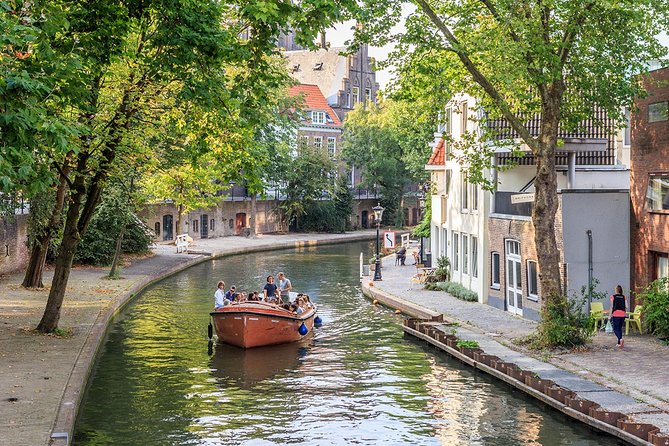
Right after that, you move into the canal world with the Oudegracht, literally the old canal, running through the center of Utrecht. This is one of the best sections for soaking up the feel of the city. The canals come with restaurants and outdoor spots, so this is where your feet can slow down and you can decide whether to snack now or later.
Tip from the way people describe the trail: take your time. One review noted walking roughly 10 km, with breaks for lunch and drinks. This trail supports that style. If you go fast, you might miss the best atmosphere.
Utrecht University botanic garden: from a former fort to quiet green paths
Next you reach a botanic garden on the Utrecht University campus, set around a former fort. It is part of the so-called Holland Water Defence. That historical link is the point.
You are not just strolling among plants. You are walking where defensive planning once shaped the landscape, and you are seeing how Utrecht repurposes old structures into calm, public space.
This stop can be a great reset if your earlier church and civic buildings feel like too much stone in a row. It also offers a different kind of scenery for photos: less skyline, more texture and pathways.
Utrecht’s railway area: the station experience that feels like more than a museum

The route includes a stop described as the most exciting train station in the Netherlands, pointing you to the Railway Museum, with the idea that it is more than just a museum. Even if you do not spend a full hour inside a museum, the setting alone can work as a visual and emotional shift.
Stations are where cities show their energy. Rail culture brings motion, design, and history into the same frame. In a scavenger format, that matters because it keeps the day from feeling repetitive.
If you tend to skip transport museums, this is still worth a look. The app keeps the visit goal-oriented, so you are not wandering without a reason.
Neude and city hall: a swamp-origin square plus civic power from 806
Next up is Neude, and the story is surprisingly specific. Neude comes from node, meaning swamp. The square used to be a lot lower than it is now. That kind of origin story makes a public space feel alive. You are standing somewhere that has been reshaped by time, land, and planning.
Then you reach the Utrecht city hall, where the oldest parts date from 806. After five centuries, the building looks as you recognize it today. That time span is wild. It means you are walking past a civic building with layers, not a single moment preserved in stone.
This section suits you if you enjoy history that connects to everyday spaces, like squares and municipal buildings. It is also a good time to catch your breath, since you might be near open areas and larger facades.
Paushuize on Pausdam: a monumental 16th-century landmark
You continue to Paushuize, built at the beginning of the sixteenth century. It is described as an important monumental building located on Pausdam.
This stop is a reminder that Utrecht’s center has power structures beyond churches. It also helps balance the route. After religious architecture and canal charm, you get a civic and institutional presence again.
Agnietenstraat and the rococo boarding school building completed in 1761
On Agnietenstraat, you find a foundation building completed in 1761. It was originally built as a boarding school for orphaned boys, and it is highlighted for its rococo character.
This is the kind of stop that turns the city into a social story. It is easy to view old buildings as decoration. Here, the purpose matters, and the route’s question prompts can help you notice the details you might otherwise skip.
If you like art styles, this is where you can pay attention to decorative features without needing a deep background. Even a quick look can make the rococo feel tangible instead of academic.
De Zeven Steegjes: working-class Utrecht near the Oudegracht
Then you move into De Zeven Steegjes, described as one of the last working-class neighborhoods in Utrecht’s center. The characteristic workers’ houses near the Oudegracht are the focus.
This stop is valuable because it stops the day from becoming only “grand landmarks.” It grounds you in human-scale neighborhood life. You get a different Utrecht character, one that feels closer to daily living than sightseeing highlight reels.
If you are the type who likes side streets, this is a great place to slow your pace and look at doorways, street widths, and how the neighborhood nestles along the canal corridor.
Churches finish strong: Nicolaïkerk, Janskerk, and the quiet atmosphere of the Sterrehof courtyard
The trail continues with church stops that give the day extra depth. You visit the Nicolaïkerk, located at Nicolaaskerkhof 8, and it is also known as the Nicolaaskerk. Then you reach the Janskerk at Janskerkhof, founded shortly after 1040 by Bishop Bernold and dedicated to John the Baptist.
These church stops are not duplicates, even though they are all religious. Each one adds a different layer of Utrecht’s timeline. You also get more than one answer prompt about origin and identity, which keeps you thinking as you walk instead of just taking photos.
Finally, you end in the Sterrehof, a courtyard described as atmospheric and valued as a national monument. Courtyards are perfect for a scavenger hunt because they are visually distinct. They also offer a breather. You can finish your last answers with calmer surroundings before walking back to Domplein.
How to make the app work smoothly (and avoid the common frustrations)
This experience is built around the mobile app. That means your success depends on two things: phone usability and patience.
- Bring power
You will be using your phone for the ticket and for question prompts. Charge before you go, and keep a phone cable handy if you have one.
- Have data or a plan for signal
Smartphone and data are not included, so you need to handle connectivity.
- Read prompts carefully and look at nearby details
Some people report issues when pins feel out of reach or hints do not match the right direction. When that happens, it helps to expand your search a bit instead of getting stuck on a single point. If you need to pause, pause. These trails reward steady effort more than speed.
- Tap bonus points
One practical tip from the trail experience: when you reach locations, make sure you click the bonus points in the app each time. It can affect your score and keeps you moving through the whole experience.
- Don’t expect full essays in the answers
The tone of the trail is functional and game-like. If you want extra detail beyond what the app provides, plan to look things up afterward. You will still be satisfied with what you learn during the walk, but it is not trying to replace a museum guide.
Who this Utrecht e-Scavenger hunt is best for
This is ideal if you like:
- Walking with purpose instead of pure wandering
- Light competition, since the app includes a scoring element
- City history in bite-sized stories, tied to the places you see
- Groups up to 6, especially friends and families who want flexibility
It is also a good choice for visitors who find guided tours too rigid. The pace stays yours.
If you hate puzzles or want a traditional step-by-step guided explanation at every stop, you might feel less satisfied. The app does not replace a live guide, and some answers can feel brief. But if you are okay with that trade-off, it can still be a very fun way to see Utrecht.
Should you book the e-Scavenger hunt in Utrecht?
I would book it if you want a low-pressure, app-led walking game that covers the key Utrecht highlights plus quieter corners like De Zeven Steegjes and Sterrehof. The price for up to 6 people can be a strong value, and the route naturally fits into a 2 to 4 hour window.
I would pause before booking if you are the type who needs pinpoint-perfect directions every time, or if you are very sensitive to unclear map pins. The trail can still be fun, but you should go in expecting a little problem-solving, not a fully escorted route.
If you want Utrecht in a single afternoon, with Dom Tower, canals, churches, and a few surprises, this is a solid match.
FAQ
How long does the e-Scavenger hunt in Utrecht take?
It is listed as 2 to 4 hours (approx.).
Where do we start and where does it end?
You start at Domplein 20, 3512 JD Utrecht, Netherlands, and the activity ends back at the meeting point.
What language is the experience in?
The mobile ticket and city trail are offered in English.
How many people can be in a group?
The price is per group of up to 6 people.
Do I need a smartphone and data?
Yes. Smartphone and data are not included, so you will need your own device and connectivity.
Is this activity suitable for hearing impaired visitors?
It is listed as user-friendly for hearing impaired travelers.
Is free cancellation available?
Yes. You can cancel for a full refund up to 24 hours in advance, and it is free cancellation.
Latest Utrecht reviews
- Utrecht Food Tour: 7 food stops and a fantastic local guide★ 4.4 · 15 reviews
- Utrecht: Highlights and Secrets with a Walking Tour★ 5.0 · 17 reviews
- 3 Hours itinerary between Amsterdam & Utrecht: The Heart Of Holland In A Sidecar★ 5.0 · 20 reviews
- Utrecht Guided Highlights Walking Tour★ 5.0 · 22 reviews
- Discover Our Utrecht: Limited Group Size & Optional Extras★ 5.0 · 32 reviews
- Utrecht: Ludwig’s Original Pub Crawl with VIP Club Entry★ 3.3 · 42 reviews
- Utrecht: Museum Speelklok Entry Ticket★ 4.5 · 48 reviews
- Discover Utrecht with a self-guided Outside Escape city game tour★ 4.5 · 51 reviews
City Exploration Games, compared.

e-Scavenger hunt Maastricht: Explore the city at your own pace
Read our review →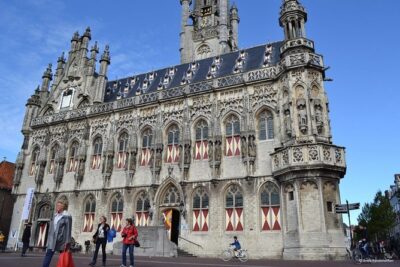
e-Scavenger hunt Middelburg: Explore the city at your own pace
Read our review →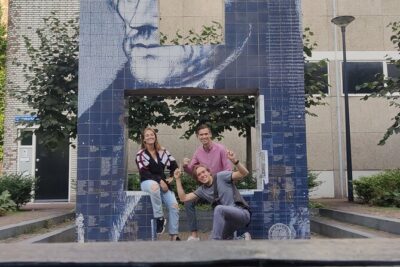
Rotterdam Highlights & Spies: Interactive City Game
Read our review →
Discover Utrecht with a self-guided Outside Escape city game tour
Read our review →
e-Scavenger hunt Den Bosch: Explore the city at your own pace
Read our review →
Discover Delft with a self-guided Outside Escape city game tour!
Read our review →
e-Scavenger hunt Eindhoven: Explore the city at your own pace
Read our review →
e-Scavenger hunt Groningen: Explore the city at your own pace
Read our review →Browse the lists this tour appears in