
Reviewed · ANNE FRANK HOUSE
Anne Frank’s Amsterdam Jewish History WWII Semi-Private 12ppl Max
WWII Jewish history in Amsterdam gets personal fast, and this tour keeps it that way. You walk a clear route of sites tied to persecution, hiding, resistance, and remembrance, with stops that feel human, not just historical. The pace is steady, built for questions, and it is designed for small groups, up to 12 people.
I like that it is truly semi-private, so the guide can slow down when you ask something. I also like that you get a guided thread through the story, not random landmark hopping. One word of caution, though, is that the Anne Frank House is exterior only, so if you want to go inside, you will need separate tickets.
The rest of the route leans on memorials and meaningful public spaces, many of them free to visit, which is a smart way to see more for your money. Still, plan on being outside for a while. If rain rolls in, you will want a rain jacket and shoes you can trust.
Key things to know before you go

- Semi-private, up to 12 people, so you are not swallowed by a huge crowd
- Anne Frank House is exterior only, admission ticket not included
- Many stops are free, so your tour price buys the guide and the full walking route
- The route spans multiple WWII-connected memorials, from Jewish resistance to deportation clues
- Guides keep it interactive, and they handle questions even in bad weather, like with Anita and Klaus in past tours
A 12-person WWII Jewish history route through Amsterdam streets
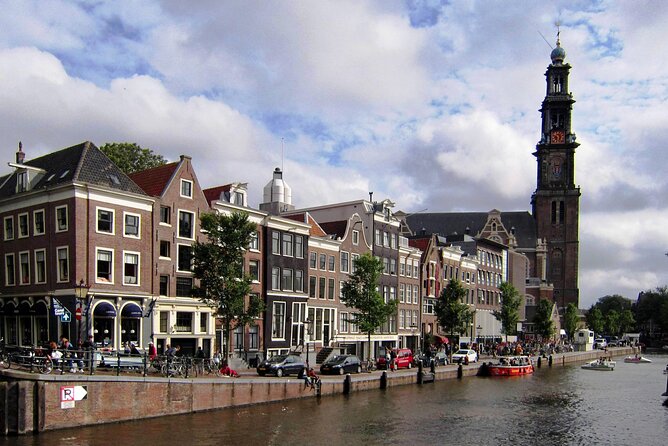
This tour is built for people who want a guided story, not just a checklist of places. You meet at Westermarkt 60 (1016 DL) and walk for about 2 hours 30 minutes, ending at the National Holocaust Names Monument (1018 DP). With a maximum of 12, you should get enough time to absorb what you are seeing without feeling rushed.
At $62.54 per person, the value is mostly in the guide and the structure of the walk. Admission is not included for the two main paid entries on the route, Anne Frank House and the Portuguese Synagogue, so you should plan your expectations accordingly. If you are okay with exterior views there and you care about the meaning of the surrounding memorials, the price starts to make a lot more sense.
Also, the tour runs in English, and it is designed for a moderate physical fitness level. That usually means comfortable walking, uneven sidewalks, and a steady pace for multiple stops. If your group travels with mobility concerns, you will want to think ahead about how much time you can spend outdoors.
More Historical Tours in Amsterdam
- Amsterdam Food and Cultural Tour with Tastings
★ 5.0 · 4,315 reviews - Amsterdam: Historic City Centre Canal Cruise
★ 4.3 · 659 reviews - Amsterdam: Haunted History and Ghost Walking Tour
★ 4.5 · 488 reviews
Exterior Anne Frank House, then a walk that explains what you are looking at
The start is at the Anne Frank House, but with an important twist. You see it as an exterior stop only, and the admission ticket is not included. Still, that exterior moment matters, because it anchors the rest of the walk. You will learn about the family hiding from the Nazis for two years, and that context helps everything you see later feel connected.
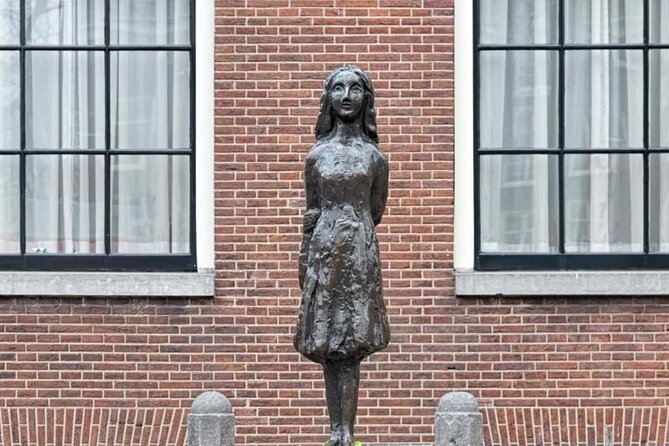
Right after that, you head to the Statue of Anne Frank. This tribute stands with the Westerkerk church behind it, a 17th-century backdrop that symbolizes the sense of comfort and also the pull of the world beyond. It is a quick stop, but it is the kind of place where a guide’s framing makes the tears and the history land.
If you are expecting museum-level details from every stop, you might feel the time is short at each location. Each stop is around 10 minutes, and you do not linger long. The tradeoff is that the tour covers a lot of ground and builds momentum through the story.
Westerkerk, LGBTQ memorials, and Amsterdam’s WWII memory on public ground
This route does not treat WWII as one event in one building. It shows how it reached into many communities, including those targeted for reasons beyond ethnicity alone.
The Homomonument is the first clear example. It is the first memorial in the world dedicated to persecuted LGBTQ+ individuals, honoring people who lost their lives under Nazi rule. The value here is how the guide links the memorial to the broader machinery of persecution. Even if you already know the basics, seeing it in the street space makes it feel immediate.
Then you move through Dam Square, one of Amsterdam’s main squares. Here, the guide connects the physical place to Nazi recruitment, and you also pay respects at the National Monument, a cenotaph for victims of World War II and later conflicts. This is another short stop, but it is effective because it sits in the middle of normal city life. That contrast is often the point.
A practical note: Dam Square can feel like traffic, noise, and crowds. The guide’s job is to help you slow down enough to really notice what you are there to honor.
Jewish thinkers and public monuments, from Spinoza to Jewish Resistance
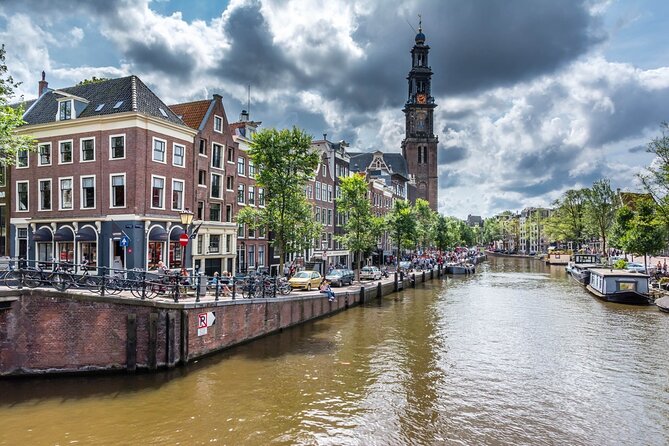
After the big public squares, the tour shifts into a calmer but still meaningful phase. You visit the Spinoza Monument, tied to the Dutch philosopher whose ideas about religion and politics were considered radical for his time. The guide’s job is to connect those ideas to the later reality of what happens when human reasoning and rights are suppressed.
Next comes the Monument vor Joods verzet (Jewish Resistance Monument). It was erected in 1988 to remember Jewish resistance fighters who died during WWII. This stop also marks something specific: it is associated with the first mass protest against Nazi occupation. That detail helps you understand the monument as more than a memorial, it is also a record of action.
These stops are free and quick, but they provide a steady education in how Amsterdam remembers through ideas and through public acts. If you like context and causality, this is where the tour starts to feel like a guided essay written across the city.
More history tours in Amsterdam:
- Amsterdam High-End Dutch Food & History Tour – Up to 8 guests
★ 5.0 · 482 reviews - From Amsterdam: Volendam Heritage & Cheese Half-Day Tour
★ 4.4 · 461 reviews - Amsterdam: Historic City Sightseeing Canal Cruise
★ 4.5 · 444 reviews - Amsterdam: Historical Highlights Walking Tour with Tasting
★ 4.6 · 381 reviews
Deported children, deportation traces, and the quiet power of small monuments
One of the most moving elements of this walk is how it includes smaller, subtle memorials that people often miss on their own. You pause at the Monument Megadlé Jethomiem, where stones trace the outline of an orphanage. The connection is painful but important: Jewish children and caretakers from there were deported to Sobibor in 1943.
Then you shift to places tied to other forms of suffering and victimhood. The tour visits the Deaf Memorial, honoring Jewish deaf and hard-of-hearing victims of the Nazi regime from 1940 to 1945. The Nazi labeling used at the time was dehumanizing, and the guide explains that this memorial recognizes people who were systematically murdered. The emotional impact can be strong, but the framing stays factual and respectful.
You also see the Auschwitz Monument at Wertheimpark. It uses a shattered mirror concept, reflecting the sky and symbolizing how even heaven felt broken by the horrors of Auschwitz and other concentration camps. This is the kind of stop where the guide does not need to do much. The image and the quiet around it do a lot of work.
If you dislike heavy symbolism, this section may feel like too much. On the other hand, if you want remembrance that is visual and not only verbal, you will probably appreciate how the tour uses different styles of memorial design.
Portuguese Synagogue area and the Jewish neighborhood thread
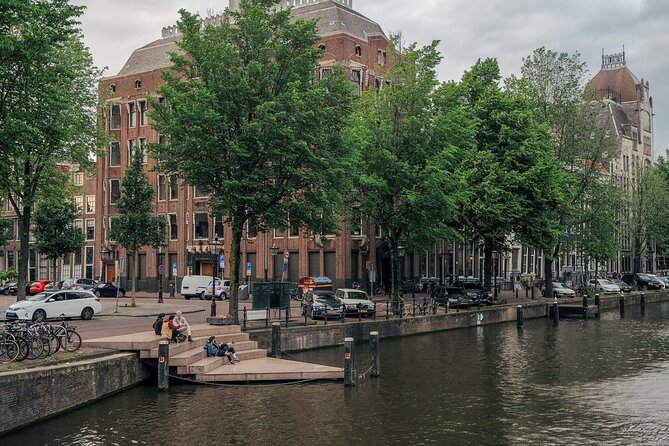
The tour includes the Portuguese Synagoge area, described as what was once one of the world’s largest synagogues. This stop is meant to represent Amsterdam’s once-thriving Jewish community. The catch is that entry is not included, so you are mainly seeing the site from the outside, and the separate Portuguese Synagogue and Jewish Museum admission is not part of the tour price.
Across the street, the Jewish Museum offers deeper context on Jewish life and history in the Netherlands, which is useful if you want to extend the experience after the walking portion. Even without museum entry included, the guide’s explanations can help you understand what you are looking at and why this synagogue area mattered.
A quick reality check: if you want indoor details, photography access, and artifact-level history, you should plan to pay for entry separately. If you do not, the walk still works, because the guide connects the synagogue area to the rest of the route through persecution and memory.
The Dokwerker, quiet memorials, and the February Strike connection
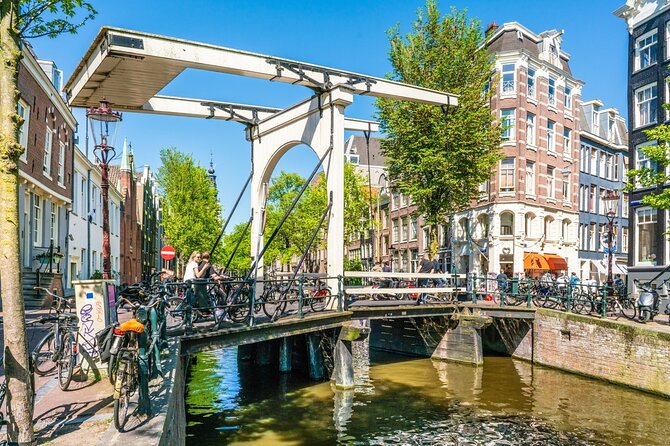
Next up is a powerful stop called The Dokwerker, also described as the Memories of the February strike. This memorial connects to February 1941, when thousands of workers staged the first public protest in occupied Europe against Nazi persecution. The guide helps you understand why that matters, because it is not just resistance as an idea. It is resistance as coordinated public action.
A key benefit of the tour’s pacing is that it mixes larger, easier-to-find sites with reminders that require a bit more attention. The Dokwerker stop is memorable partly because it is not a museum room. It is part of the city’s layout, like the story is still happening around you.
National Holocaust Names Monument and Stumbling Stones, the end point that lands hardest
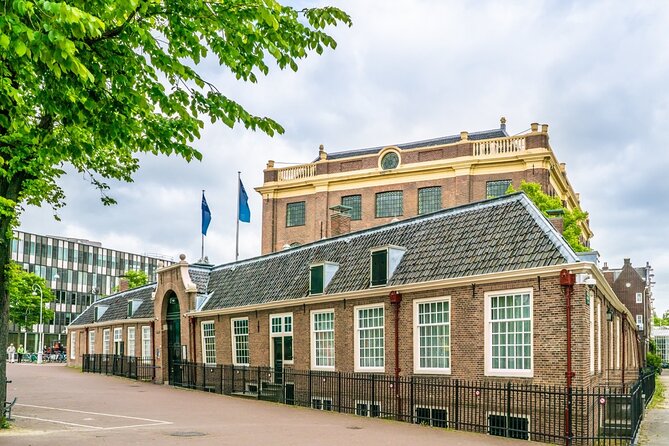
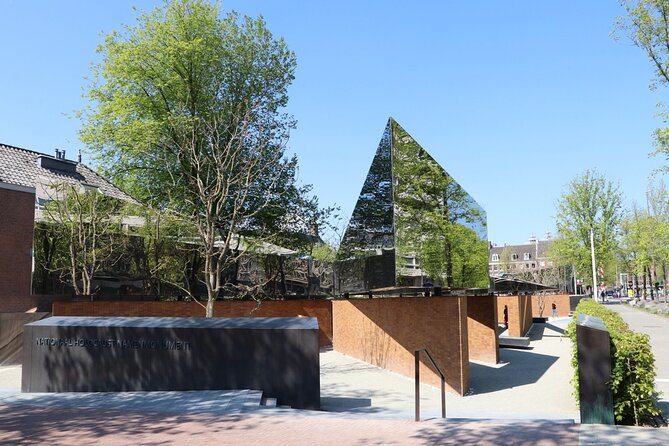
The final stretch is where the tour becomes most concrete. You end at the National Holocaust Names Monument, and you will see both the National Holocaust Names area and Stumbling Stones.
The names are engraved for 102,000 Jewish victims and 220 Roma and Sinti murdered by the Nazis. That scale can feel hard to hold in your head. A guide can help you focus on the human level, even when the number is enormous.
Then there are the Stumbling Stones. These are small brass plaques embedded in pavement, and each one marks the last known residence of a deported Holocaust victim. That design changes the way you look at the street. Every step feels linked to a person, not a statistic.
This end point is free to visit, and the tour price effectively covers the guided route that gets you here with the right context. If you want a finale that does not just inform you, but makes you think about how memory sits in everyday places, this is it.
Rain, questions, and how the guide style makes the tour better
I love tours where the guide handles questions without making you feel like you are slowing the group down. Based on past experiences with guides like Anita and Klaus, the best part is how they keep the lesson moving and still answer everything you ask. In rainy conditions, that matters even more, because you want the explanation to continue while everyone is trying not to get soaked.
You might also find the group size becomes smaller than the max. One example is when a tour ended up effectively intimate, with just two participants. Since it is a 12-person maximum, the odds are in your favor compared with big city bus tours.
Just keep your own expectations realistic: each stop is time-boxed. So if you have a big question about one particular moment, you should ask it early so the guide can fit it into the flow. The structure is designed for learning across many sites, not one deep dive at every corner.
Price and logistics: what to plan for so you do not get surprised
Here is the straightforward math. You are paying $62.54 for a guided walking tour in English, semi-private up to 12, lasting about 2 hours 30 minutes. What you are not paying for are the key paid entries: Anne Frank House admission and Portuguese Synagogue and Jewish Museum admission are not included.
Most other stops on this route are listed as free memorials, including the Homomonument, Spinoza Monument, the Jewish Resistance Monument, and several more remembrance sites that are marked without admission fees. That means your money goes to the guide and the connection between places.
For logistics, plan to dress for weather and to be comfortable walking. You may not have time to stop for long breaks. The tour also does not include food and drinks, so bring water if you know you get thirsty. The tour does not include hotel pickup or drop-off, and the practical recommendation is to use Uber or taxi if you need help getting to the start.
If you pack a coat or have luggage, note that luggage and coat storage are not included. If you are traveling light, you will find the experience easier.
Who this Amsterdam WWII Jewish history tour suits best
This tour is ideal if you want to connect the dots across Amsterdam’s WWII Jewish history through a walk that stays organized. It works well for independent travelers who want a guide to interpret what they are seeing, especially at memorials that might otherwise feel confusing or too subtle.
You will likely enjoy it if you:
- Care about how history is remembered through public space
- Prefer small groups and a guide who can answer questions
- Want a route that covers many communities and forms of persecution
It may not be the best fit if you mainly want museum entry time, because Anne Frank House interior and Portuguese Synagogue interior are not included. If indoor exhibits are your top priority, you should add separate ticket plans.
Should you book this tour?
I think you should book this if you want a small-group, guided route through Amsterdam’s most important WWII memorial sites, with a guide who keeps the story clear and answers questions. The price is reasonable for the amount of walking and interpretation you get, especially since most stops are free and you are not paying entry fees all the way through.
I would skip or adjust your expectations if you are traveling specifically for indoor time at the Anne Frank House or the Portuguese Synagogue. This tour gives you strong context from the outside, but it does not cover those paid entries.
FAQ
FAQ
Is entry to Anne Frank House included?
No. The tour includes an exterior-only stop at the Anne Frank House, and Anne Frank House admission is not included.
Does the tour include entry to the Portuguese Synagogue?
No. Portuguese Synagogue entry is not included in the tour price.
What is the maximum group size?
This is a semi-private walking tour with a maximum of 12 travelers.
How long is the tour?
It runs for about 2 hours 30 minutes.
What language is the tour in?
The tour is offered in English.
Where do I meet the guide and where does the tour end?
You start at Westermarkt 60, 1016 DL Amsterdam, and the tour ends at the National Holocaust Names Monument, 1018 DP Amsterdam.
What is the cancellation policy?
You can cancel for free up to 24 hours in advance for a full refund.
Latest Amsterdam reviews
- Amsterdam Private Prosecco Bike with Music Sound System★ 5.0 · 3 reviews
- Private Day Trip From Amsterdam to Rotterdam and Zaanse Schans★ 3.5 · 3 reviews
- The Best of Amsterdam: Private Full-Day Tour with a Canal Cruise★ 2.5 · 3 reviews
- 1 hour Amsterdam City Tour in Pedicab★ 4.5 · 3 reviews
- Amsterdam Walking Tour with Audioguide on Your Smartphone★ 3.5 · 3 reviews
- Bike Tour with Guide in Amsterdam★ 4.5 · 3 reviews
- Private tour (max 3 per) to Giethoorn & Canal ride from Amsterdam★ 3.5 · 3 reviews
- Concert at The Royal Concertgebouw – Amsterdam★ 5.0 · 3 reviews