
Reviewed · RED LIGHT DISTRICT
Amsterdam’s Red Light District: A Self-Guided Audio Tour
This area is interesting because Amsterdam treats it like a real neighborhood, not a theme park. You walk past shopfronts, streets, and old city edges, while a GPS-linked audio story nudges you to look closer and think harder.
I like the self-paced format most, because you control the speed and can pause or replay if you want. I also like the offline audio and maps part, since it means you can keep going even if data is spotty.
One drawback to consider, and it matters, is that this is a fixed route with set stops. If you want specific sights beyond what is built into the walk, you may feel a bit underwhelmed.
Key things to know before you go
- GPS-triggered audio with offline support so you do not have to drain data as you walk
- 35 minutes is tight, which is great for a first pass, but you might want extra time if you linger
- Dam Square to the Belle statue gives you a clear start and finish, with history tucked into the route
- Respect-focused stories tied to real people and real institutions, including Mariska Majoor and the Prostitutes Information Center
- Sexual themes warning means this is not a kid-friendly listen
- Regulation-compliant approach means you are not joining a guided Red Light District-style tour
Price and time: does $9.99 make sense for the Red Light District?
For $9.99, you get a short walk, roughly 35 minutes, built around specific points of interest. That price is worth it if you want context fast, without paying for a live guide or being stuck with someone else’s pace. It is also a good fit if you like learning while you move, since the audio is designed to start automatically as you reach each stop.
If you are the type who enjoys “one good loop” and then keeps exploring on your own, this timer suits you. But if you tend to roam, stop for photos, and get pulled into side streets, plan on extending your time after the tour ends. The tour ends at the Belle (sex worker commemorative) statue, so your legs will feel the difference between “audio tour time” and “actual wandering time.”
More Audio Tours in Amsterdam
- Amsterdam: 75 Minute City Canal Cruise with Audio Guide
★ 4.4 · 19,938 reviews - Amsterdam: Royal Palace Entry Ticket + Audio guide
★ 4.6 · 7,889 reviews - Amsterdam Sightseeing Canal Cruise with Audio Guide
★ 3.5 · 828 reviews
Where it starts and ends, and how to set yourself up
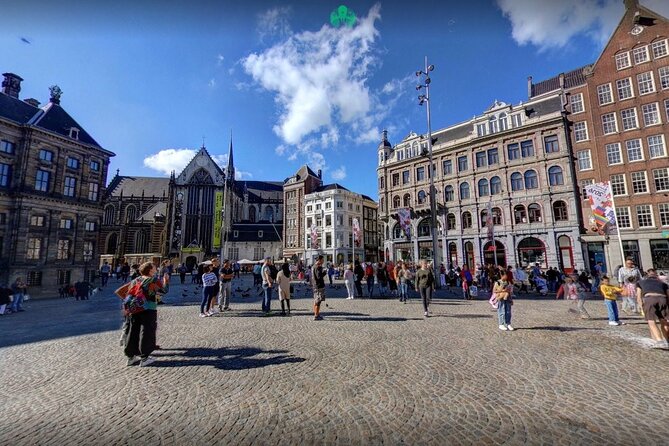
The walk starts at Dam Square (Dam, 1012 Amsterdam) and ends at Belle (Sex Worker Commemorative Statue), Oudekerksplein 19, 1012 GX. It is a straightforward route, and that clarity helps a lot in an area where streets can feel chaotic.
You do not need transport booked for the tour itself. It is just you, your phone, and the VoiceMap app. The catch is that your phone is part of the system, so your best move is to charge it beforehand. Also, save your battery by keeping the screen brightness reasonable. The audio is meant to be listen-first.
I also recommend you download the tour on Wi-Fi before you start. Some people found it easier and more reliable that way. Once you begin, the app uses phone GPS and can keep working offline, including audio, maps, and geodata.
The best part: how the VoiceMap audio actually works on your feet
This is not a “read the facts at a stop” setup. It is a walking experience where the app guides you segment by segment. The audio plays automatically using phone GPS, so you feel the story unfold as you move rather than hunting for the next page in a guide.
From the user experience, the audio instructions are clear, with directions you can follow even if you are not staring at the map the whole time. I like that you can pause and replay. That is handy if you want to repeat a detail, or if you need to step aside for a moment of crowd flow.
One practical note: keep your expectations grounded. A 35-minute audio tour cannot cover every corner. It gives you a curated route, not a full course in Amsterdam law, history, and modern social policy.
Stop-by-stop: what you’ll hear as you walk the route
More Self-Guided Tours in Amsterdam
- Amsterdam Van Gogh Museum with Audio or Guided Tour
★ 4.0 · 266 reviews - Van Gogh Museum Skip the Queue with Audio Guide
★ 4.0 · 261 reviews - Amsterdam 1h Canal Cruise by Semi-Open Boat with Audio Guide
★ 3.5 · 197 reviews - Amsterdam: Museum of the Canals Ticket with Audio Guide
★ 4.7 · 150 reviews
1) Dam Square area: look past the loud part of the street
Right away, the tour asks you to look beyond the obvious chaos. You are warned about the sexual themes, but the main message is to treat the Red Light District like a living neighborhood. That tone shift is useful. It nudges you to slow down and notice things you would otherwise ignore, like the everyday street life and the way Amsterdam’s tolerance and pragmatism show up in city design and behavior.
You are not just walking for shock value. You are walking for context. If you come in expecting only spectacle, this opening will either gently recalibrate you, or it will feel different than you thought you signed up for. Either way, it sets a clear frame.
2) Zeedijk, the sea-dike idea from the 1100s onward
Next, the walk connects the district to an older Amsterdam problem: water. You hear about Zeedijk, a former sea dike or flood protection wall, most likely built around the 1100s. That might sound like a random history detour, but it is smart. Amsterdam’s identity is tied to managing the sea, and the city’s growth is wrapped in that engineering story.
In practical terms, this kind of stop helps you stop seeing the Red Light District as isolated. It connects the street to the wider city logic, which makes the walk feel more like “Amsterdam” and less like “one odd zone.”
A drawback here: if you are hoping to hear about sex work history only, this water-and-dikes segment could feel like a left turn. But it pays off by giving you a bigger frame for why streets and neighborhoods look the way they do.
3) Nieuwmarkt Square: markets, hipsters, and what changes with the day
At Nieuwmarkt Square, the audio sets expectations for what you might see depending on the time of year. The square might be empty, or it might have a market, or even a carnival-style moment. It also positions Nieuwmarkt as a hotspot for today’s hipsters.
I like this stop because it reminds you that streets change. The Red Light District and its neighboring areas are not frozen in time. If you visit on a calmer day, the story still works because the square itself becomes part of the lesson: “this area shifts, like any city center.”
4) Belle statue story: Els Rijerse and why it exists
Then you reach the tour’s emotional anchor: Belle, created by Dutch artist Els Rijerse. The statue was made at the request of Mariska Majoor, the founder of the Prostitutes Information Center. The goal is to encourage respect.
This stop is the one that tends to linger in your mind, because the focus is not just on the district. It is about dignity and how communities try to shape public attitudes. It also gives you a name list to remember, which makes your walk feel more grounded than generic “facts about the area.”
If you are visiting and want to understand the district through the lens of advocacy and information services, this is the part that delivers.
5) De Oude Kerk area context: wooden church replaced by brick in 1306
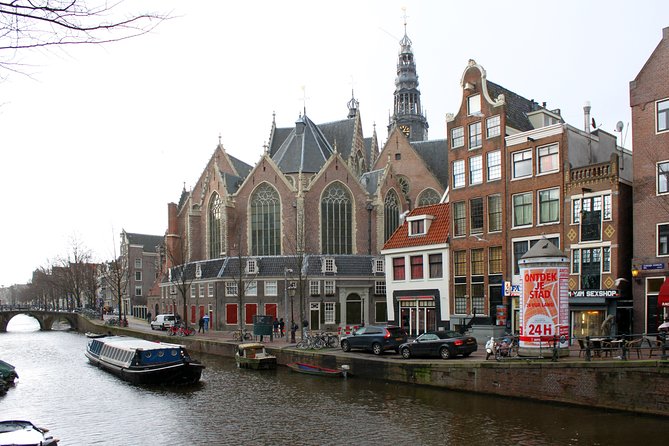
Near the end, the audio ties the route into de Oude Kerk site history. You hear that the first wooden church built at the site dates to the 1200s, then it was replaced in 1306 by a brick structure. Parts were added over later centuries, but the main hall remains.
This matters because it places the ending point in real Amsterdam time. The Red Light District has a modern reputation, but the city around it is medieval, layered, and still active. That contrast is a useful way to reset your brain before you finish the walk.
One consideration: if you only want Red Light District context and nothing else, the church history might feel like it is stretching the topic. But if you want “Amsterdam context,” it is a good payoff.
What makes this tour feel better than live walking tours
Live tours of the Red Light District are often restricted, so a self-guided format can be a practical way to get information without running into those limits. This tour is described as fully compliant with regulations that bar Red Light District tours, and that matters for your expectations. You are not joining a staged guide-led experience. You are getting a story while you walk.
That also explains why this works well for people who prefer privacy or quiet focus. You can step aside, move at your own pace, and revisit segments when you want clarity.
And because it is private in the sense that only your group participates, you do not have the awkward energy of trying to hear a guide while others crowd around. The audio is your companion, not a group dynamic.
Timing tips: when to start your 35 minutes
The tour is available every day, around the clock, but the Red Light District experience changes with time of day. The route is short, so you can fit it into an afternoon, an early evening, or as a “first look” before you explore deeper.
If you want the neighborhood feel and not just the nightlife vibe, start earlier and give yourself enough time to finish without rushing. If you want it at night, do the same, but keep your phone use low-key so you stay aware of foot traffic around you.
Also, the tour is commonly booked in advance, with an average of 8 days out. If you plan right at the last minute, you might be fine, but booking earlier helps you avoid stress.
Common reasons you might feel underwhelmed
The most honest reason is the route is defined. You are walking to set stops with set topics. If you imagined this would replace a live guide who can improvise based on what you want to see, you might feel like something is missing.
Another reason could be the expectation mismatch on what the tour covers at each point. There is history, water and dikes, squares that change with events, and the Belle statue story. If you wanted only one narrow angle, you may find the pacing shifts.
Still, if you accept it as a guided-by-audio loop for context, it tends to work well. The audio directions and GPS cues seem to be the main reason people feel it is easy to follow.
Value check: what you really get for $9.99
Here is the value logic that makes sense for most visitors:
You get lifetime access to the tour, so you can reuse it later. If you come back to Amsterdam, you can do it again or use it as a refresher. You get offline support for audio, maps, and geodata. That is big in a city where signal can be unpredictable inside crowded areas.
You do not pay for museums, entrances, or add-on tickets as part of this. There are no included transport or food stops. So you are not forced into a schedule. You can plan your meal before or after you walk.
In short, you pay for time-saving context and a frictionless way to learn while moving.
Who this tour suits best
This fits you if:
- You want a first pass at understanding the Red Light District in a calm, controlled way
- You like self-guided experiences with GPS-linked audio
- You prefer learning from stories tied to real names, like Els Rijerse and Mariska Majoor
- You want offline capability to keep your phone from becoming the most expensive battery you own
It might not fit you if:
- You only want a narrow topic and dislike history detours
- You expect to “see everything” in 35 minutes
- You need a flexible guide who responds to your specific interests in real time
A quick safety and comfort reality check
This is a sexual-themed district, and the tour itself warns you that it contains sexual themes. Keep that in mind if you are traveling with anyone who might not be comfortable with that.
Also, the Red Light District is a busy place. Even with clear audio directions, you will be sharing sidewalks with foot traffic. Use the app for guidance, but stay present, not absorbed.
Should you book this Amsterdam Red Light District audio tour?
If you want a simple, clear way to learn while walking, I would book it. The GPS-triggered audio, the ability to pause and replay, and the offline support make it practical in the real world. It also respects the idea that this is a neighborhood with layered history, from flood protection engineering to the Belle statue’s respect message.
I would skip it if you want a highly flexible, see-anything live experience, or if you are already set on specific sights that are not part of the route. In that case, you may need a different kind of guide.
My best advice: treat this as your context loop. Do it, then spend the extra time after the tour ends wandering with better eyes. That is where Amsterdam pays you back.
More Red Light District Walking Tours
- Amsterdam: Red Light District Tour in DE/EN/IT/ES/FR
★ 4.9 · 7,136 reviews - Amsterdam: Red Light Secrets Museum Entry Ticket
★ 4.2 · 5,722 reviews - Amsterdam Red Light District & Coffee Shop Tour
★ 4.6 · 4,134 reviews - Amsterdam: Red Light District Pub Crawl with Unlimited Shots
★ 4.1 · 2,130 reviews
Latest Amsterdam reviews
- Amsterdam Private Prosecco Bike with Music Sound System★ 5.0 · 3 reviews
- Private Day Trip From Amsterdam to Rotterdam and Zaanse Schans★ 3.5 · 3 reviews
- The Best of Amsterdam: Private Full-Day Tour with a Canal Cruise★ 2.5 · 3 reviews
- 1 hour Amsterdam City Tour in Pedicab★ 4.5 · 3 reviews
- Amsterdam Walking Tour with Audioguide on Your Smartphone★ 3.5 · 3 reviews
- Bike Tour with Guide in Amsterdam★ 4.5 · 3 reviews
- Private tour (max 3 per) to Giethoorn & Canal ride from Amsterdam★ 3.5 · 3 reviews
- Concert at The Royal Concertgebouw – Amsterdam★ 5.0 · 3 reviews
Red Light District, compared.
Amsterdam Red Light District & Coffee Shop Tour
Read our review →
Red Light District Pub Crawl with Unlimited Shots
Read our review →
Private Amsterdam Red Light District and Coffee Shop Tour
Read our review →
Browse the lists this tour appears in