
Reviewed · SECOND WORLD WAR HISTORY
Amsterdam: World War II Private Walking Tour
What makes this private Amsterdam World War II walk interesting is that it starts at the Monument to Jewish Resistance, where Amsterdam’s Nazi occupation story feels immediate and specific. I like how the guides take you through streets and smaller lanes that most visitors never think to search out.
I also like the tour’s focus on the war’s ongoing legacy, not just dates. One consideration: this walk does not include the Anne Frank House, the Resistance Museum, or the Hollandsche Schouwburg, so if those are your top priorities, you will want separate plans.
Quick take: what you will love
- Starts at the Monument to Jewish Resistance, anchoring the tour in a real place tied to the occupation years
- Private group only, so you can set your own pace and ask direct questions
- Led by Ben de Jong and Peter Schaapman, with Peter especially noted for historical storytelling
- 3 hours walking time, with a coffee or rest room break halfway through
- Ends at the National Holocaust Names Monument, a strong final note for reflection
- Admission ticket is free, but coffee is not included
Why the Monument to Jewish Resistance sets the tone
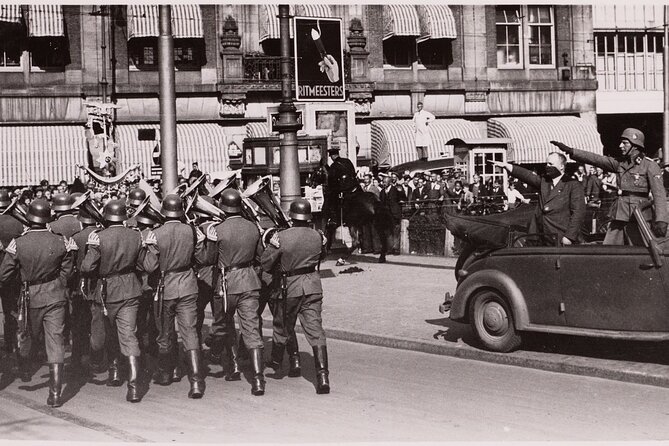
If you want a World War II tour that feels grounded, this one starts in exactly the right place. The Monument to Jewish Resistance is not just a stop on a map. It frames what you are about to see, so the rest of the walk clicks into focus: who resisted, what happened during the Nazi occupation in Amsterdam from 1940 to 1945, and why those events still matter today.
I like that the tour doesn’t treat history like a lecture you just endure. The guides point out the important sites and monuments connected to the occupation, then connect the dots in plain language. Instead of asking you to memorize facts, the walk helps you understand how those facts shaped daily life, fear, choices, and survival.
The best part is the emotional realism. This is heavy subject matter, but it is handled thoughtfully, and the route is designed for learning in context. You will finish with a clearer mental map of Amsterdam under control, and also a better sense of what resistance and memory look like in the real world.
More Walking Tours in Amsterdam
- Amsterdam Anne Frank: Small-Group Walking Tour & Local Guide
★ 4.8 · 12,789 reviews - Anne Frank’s Story – Guided Walking Tour through Amsterdam
★ 5.0 · 11,619 reviews - Absolutely Amsterdam – the Essential Introductory Walking Tour
★ 5.0 · 3,629 reviews
Private pacing with Ben de Jong and Peter Schaapman
A private tour changes everything, even when the route is walking only. With this experience, your group is the only group. That means fewer distractions, more time for your questions, and a guide who can tailor the pace to your curiosity.
You will be guided by Ben de Jong and Peter Schaapman. One of the reasons the tour gets such strong marks is the storytelling style. Peter Schaapman, described as a published historian, brings a calm, informed way of explaining what it would have been like to move through the city during the occupation. That matters, because World War II history can get abstract fast. Here, you keep landing back in a physical place, then the human side of the story follows.
If you like history but do not want a stiff, rigid experience, this pairing of expert guidance plus street-level walking works well. You are not stuck with someone reading a script. You get real explanations that fit the streets in front of you.
The Amsterdam route: how a walk becomes a lesson
The tour is built around a guided walk through the important places and monuments tied to the Nazi occupation. While you are not chasing a long list of branded attractions, you are still seeing history in a way that feels like it belongs to the city.
Here is what the structure does for you:
- It helps you connect the timeline (occupation years) to geography (where events played out).
- It trains your eye to notice meaningful memorial details, not just pretty architecture.
- It turns ordinary street corners into evidence of past life.
Because this is a walking tour, the route also teaches you something practical about Amsterdam itself. You start to recognize how neighborhoods and canals shape movement. That sounds like a side note, but it affects everything in a story about hiding, travel, and risk.
The guides also talk about the ongoing legacy of the Second World War. That is a key point. A tour like this should not end at 1945. The world after the war, how remembrance developed, and how Amsterdam carries this memory now, are part of the learning.
Stops you will make, plus what you should not expect
You will begin at the meeting point on Prinsengracht 263, 1016 GV Amsterdam, and the tour ends at the National Holocaust Names Monument, 1018 DP Amsterdam. Along the way, you will see the important sites and monuments related to Nazi occupation in Amsterdam.
There is a halfway break too. The tour includes a short pause for coffee and/or a rest room visit, which is smart. Three hours is a good length, but only if you are not quietly suffering through it.
Now the important reality check: this experience does not visit the Anne Frank House, the Resistance Museum, or the Hollandsche Schouwburg. That is not a bad thing. It just means the tour is focused on its own route and themes.
So who should care? If you specifically want Anne Frank House timed entry, the Resistance Museum exhibits, or the Hollandsche Schouwburg deportation-center context as part of your guided day, you will need to arrange those separately. In exchange, you get a guided walk that stays concentrated on the occupation story it is designed to tell.
Not the right fit? Amsterdam also runs these:
- Amsterdam: Van Gogh Museum Ticket
★ 4.7 · 52,054 reviews - Amsterdam: Heineken Experience Ticket including 2 Drinks
★ 4.6 · 36,014 reviews - Amsterdam Classic Saloon Boat Cruise with Drinks and Cheese
★ 5.0 · 31,825 reviews - Amsterdam Luxury Canal Cruise + Unlimited Drinks & Bites option
★ 5.0 · 30,518 reviews
Timing and walking pace for about 3 hours
Plan on roughly 3 hours total, with walking time that typically lands around 2.5 to 3 hours. The day has a set start time of 9:30 am, and that early start is useful. Amsterdam streets can get busy later in the day, and an earlier departure helps keep the experience calmer and more reflective.
Fitness-wise, you should assume moderate walking. The tour is not described as strenuous, but it is still city walking over that time. If you know you tire quickly on foot, it may be worth thinking twice, or at least going into it with a plan for comfort.
The tour also suggests a minimum age of 13, which makes sense for the topic and intensity. If you are traveling with teens who can handle serious history thoughtfully, this can be a powerful way to learn. If your group is younger, you will likely find the content difficult for that age range.
Price per group: why $180.04 can work out well
The price is $180.04 per group, with a group size of up to 4 people. That pricing structure is the big value lever here. If you are traveling as a couple, you split the cost. If you are a small family or a group of friends, the per-person math can become pretty reasonable compared to solo-priced history tours.
What else boosts value:
- All fees and taxes are included
- Admission ticket is free
- The tour is private, so you are paying for one-on-one or small-group guidance, not a crowded format
- Coffee is not included, which is clear up front, so there are no surprise extras
This tour tends to be booked about 54 days in advance on average. That does not mean you must book immediately, but it is a hint that private WWII guides are a popular choice in Amsterdam. If your dates are fixed, securing a slot earlier usually reduces stress.
What to do before you go so it lands better
Because the subject matter is serious, a tiny bit of prep can make the walk feel sharper. You do not need to study for weeks. Just come with these basics in mind:
- The occupation in Amsterdam runs from 1940 to 1945
- Resistance was real and varied, not one single action
- Memorials and monuments are part of how the city teaches memory
If you are the type who likes to ask questions as you go, this is a good match. Private walking tours shine when you engage. If you prefer to listen and absorb, you can do that too, because the pacing and focus support it.
Also, bring comfortable shoes. You are walking for hours, and Amsterdam sidewalks and canal-side paths are part of the experience.
Practicalities that affect your day
This is a private activity with mobile ticket entry. You are offered the tour in English and German, which helps if you are traveling with mixed language preferences.
It is also stated to be near public transportation, so you should have options for getting there without a long taxi ride. And service animals are allowed, which is useful to know.
One more practical detail: the tour ends at a different location from where you start, at the National Holocaust Names Monument. That is normal for walking routes, but plan your exit accordingly, especially if you are lining up later museum visits or dinner reservations.
Who should book this WWII walking tour
This tour is a strong fit if you:
- Want a focused World War II walk that is not centered on the biggest headline attractions
- Like learning through street-level context and memorials
- Prefer a private experience where you can ask questions
- Travel with teens aged 13 or older who can handle serious historical content
It is also a smart choice if you value guides who can explain the “why” behind the places, not just point at them.
You might look elsewhere if your top goal is a checklist of major WWII sites like the Anne Frank House or specific museum stops. This walk is intentionally different, and that can be either a relief or a disappointment depending on your priorities.
Should you book this Amsterdam WWII private walking tour?
I think you should book it if you want a memorable Amsterdam World War II experience that stays specific, grounded, and guided by real expertise. The start at the Monument to Jewish Resistance and the finish at the National Holocaust Names Monument give the walk a clear emotional shape. Add a private format, a halfway break, and expert guidance from Ben de Jong and Peter Schaapman, and you get a tour that feels serious without feeling stiff.
If you need the Anne Frank House, the Resistance Museum, or Hollandsche Schouwburg as part of your one guided session, then this may not meet your full wishlist. But if you want the occupation story told through a carefully chosen walk, this is a solid, practical way to learn.
FAQ
Is this tour private?
Yes. It is a private tour/activity restricted to your own group only.
How long is the Amsterdam World War II walking tour?
It runs about 3 hours (approximately 2.5 to 3 hours of walking time).
What language is the tour offered in?
The tour is offered in English and German.
What major sites are not included?
The tour does not visit the Anne Frank House, the Resistance Museum, or the Hollandsche Schouwburg. Tickets for those museums, plus drinks, are not included.
Is coffee included?
A short break halfway through includes coffee and/or a rest room visit, but coffee and/or tea are not included.
Where do I meet and where does it end?
It starts at Prinsengracht 263, 1016 GV Amsterdam, and it ends at the National Holocaust Names Monument, 1018 DP Amsterdam. The start time is 9:30 am.
What is the minimum age?
The suggested minimum age is 13.
Can I cancel for a refund?
Yes, you can cancel for a full refund up to 24 hours in advance of the experience start time. If you cancel less than 24 hours before, the amount paid will not be refunded.
Latest Amsterdam reviews
- Small Group Tulip and Spring Flower Fields Bike Tour★ 4.5 · 14 reviews
- Amsterdam Van Gogh Museum Private Tour for Kids & Families★ 4.0 · 14 reviews
- Zaanse Schans Windmills Private Tour from Amsterdam Airport★ 5.0 · 14 reviews
- Bruges Day Trip from Amsterdam★ 4.5 · 14 reviews
- Volendam: Volendams Museum Entry Ticket★ 4.4 · 14 reviews
- Zaanse Schans Windmills, cheese and clogs and Volendam tour from Amsterdam★ 5.0 · 14 reviews
- Departure from Amsterdam City to Amsterdam Airport AMS by Minivan★ 5.0 · 14 reviews
- Walking Tour about Golden Age Architecture, private local guide★ 5.0 · 15 reviews