
Reviewed · ANNE FRANK HOUSE
Amsterdam Walking Tour:Anne Frank, History & Liberal Culture
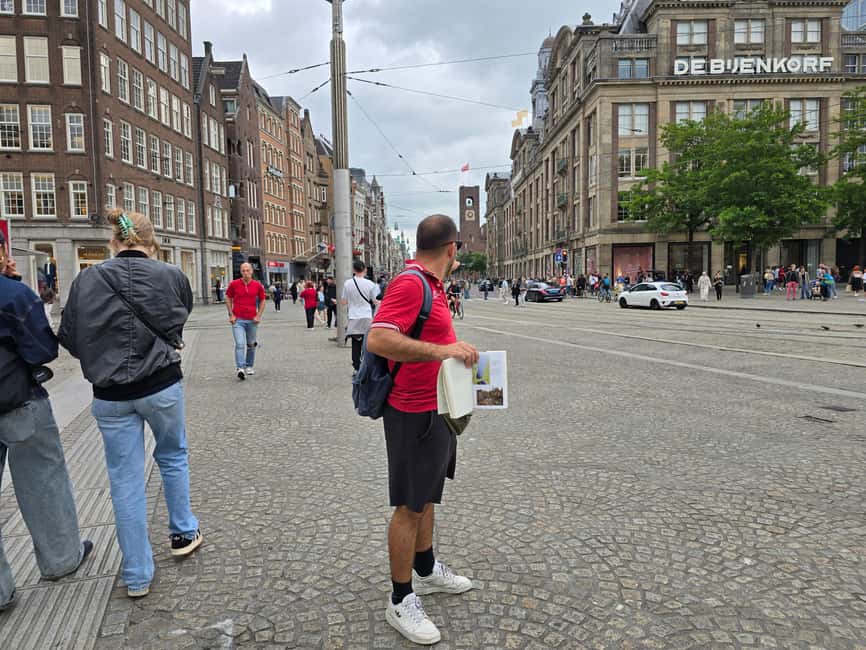
What makes this Amsterdam walking tour interesting is how it connects World War II trauma with the city’s modern, liberal way of thinking, guided by Antonis. I love the way he tells stories with jokes and human details, so dates do not feel like homework. I also like that the walk is short enough to stay relaxed, even when the topics get heavy.
My second favorite part is the optional Anne Frank VR experience that gives you a realistic sense of what the Secret Annex felt like, then you slow down with coffee and Dutch sweets. One consideration: this tour is not for wheelchair users, and it involves steady walking on city streets and bridges, so plan for a solid 3-hour stroll.
Key things to know
- Small group, English guide (Antonis): capped at 10, so you can actually ask questions without shouting over crowds
- Water, canals, and Dutch problem-solving: you learn why managing water is a big deal in everyday Amsterdam life
- Chalk-and-books storytelling style: the history comes with visuals, not just speeches
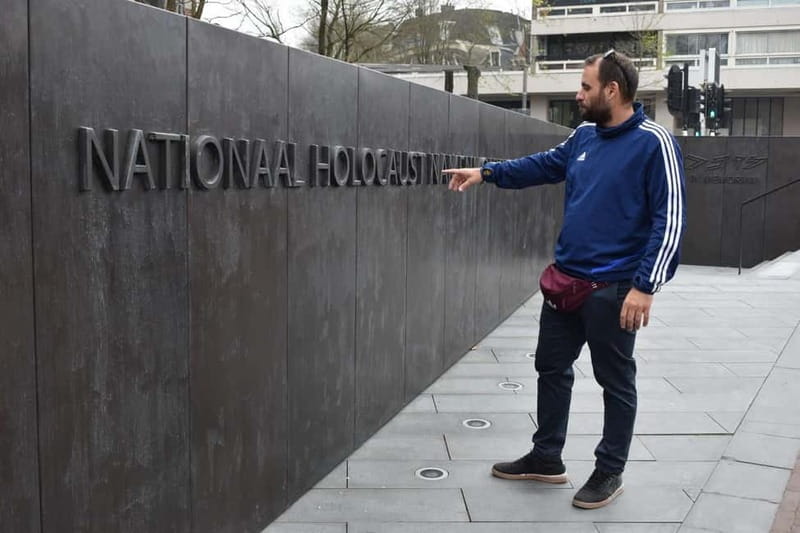
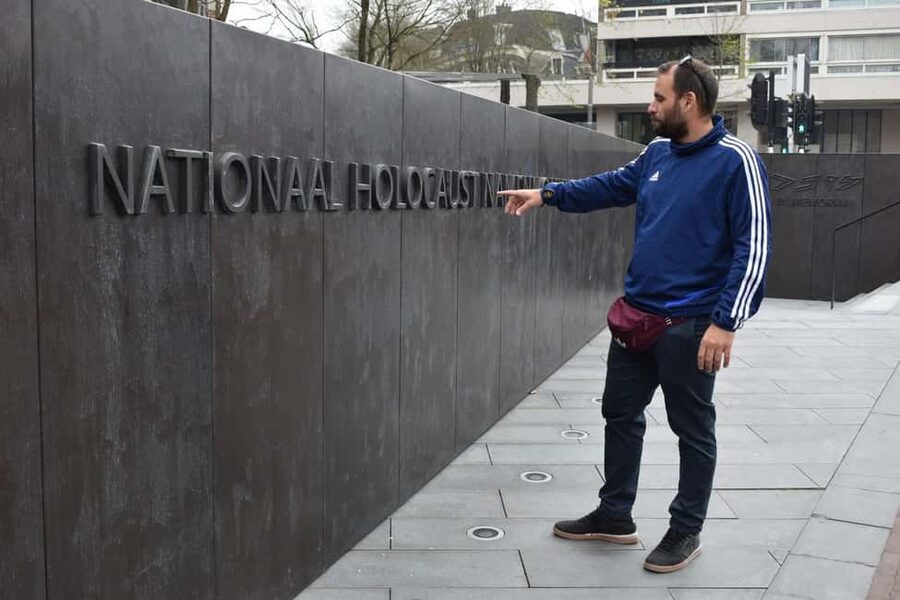
- Jewish Quarter and Holocaust reflection: you spend time at the National Holocaust Names Monument
- Anne Frank VR is optional: if you cannot get tickets elsewhere, this is a practical alternative
- A memorable take-home: a Polaroid photo plus an official stamped postcard
A 3-hour Amsterdam walk that ties WWII to liberal culture
This tour is built around a simple idea: Amsterdam is not only pretty canals and clever bridges. It is also a city with strong values, debate culture, and a long memory of what happens when hate wins.
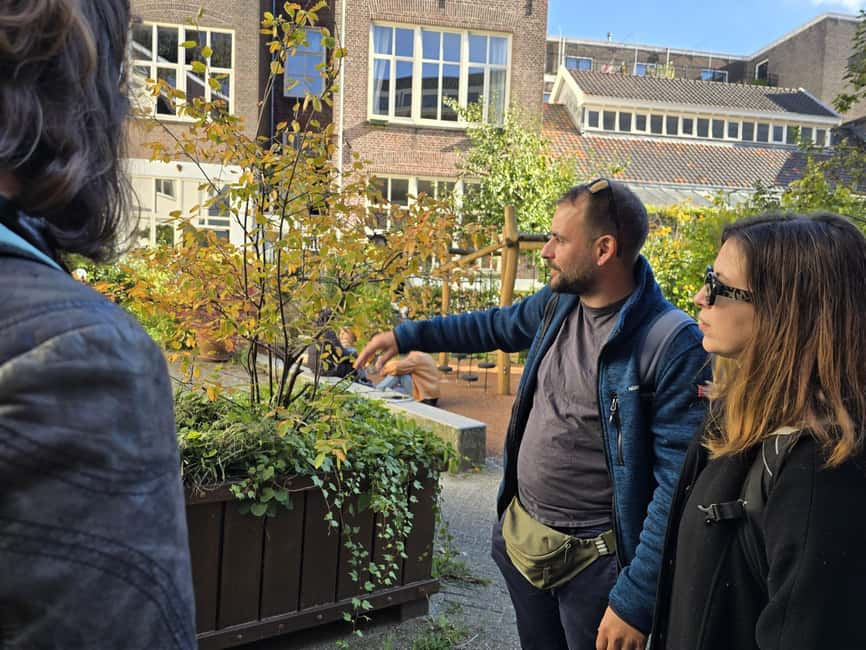
Antonis leads you through central Amsterdam in a way that feels like learning from a local friend who cares. You walk, stop, look, and talk. And when you move from everyday Amsterdam details to Jewish history and WWII, the shift feels thoughtful rather than rushed.
At $40 per person for a 3-hour small-group experience, the value comes from what you get bundled in: coffee, a sweet snack, a take-home Polaroid, a postcard with a handwritten message and official stamp, plus the VR session. You are not just paying for movement and talking. You are paying for context, access to a specific VR experience, and a guide who will point out what most people miss.
More Historical Tours in Amsterdam
- Amsterdam Food and Cultural Tour with Tastings
★ 5.0 · 4,315 reviews - Amsterdam: Historic City Centre Canal Cruise
★ 4.3 · 659 reviews - Amsterdam: Haunted History and Ghost Walking Tour
★ 4.5 · 488 reviews
Meeting at Kattengat and getting oriented fast
The tour starts at Kattengat 4-6, in front of the restaurant De Silveren Spiegel. This matters because it is an easy starting point if you want to build the rest of your day around the walk.
Right away, Antonis sets the pace. This is not a marathon, but it is also not a sit-and-watch. You will do photo stops and guided explanations in between stretches of walking, with enough breaks to take pictures and reset your brain.
Early in the tour, there is a short stop at the HIV/AIDS monument. Even if you mostly know Amsterdam for canals and museums, I like how this kind of stop signals that the city’s story includes public memory and civic responsibility. It also gives you a mental warm-up before the WWII chapters.
Centraal Station and the practical Amsterdam mindset
You swing by Amsterdam Centraal Station for another photo stop and quick guided sightseeing. I find stations fascinating because they show how a city moves. Amsterdam is full of canals, sure, but it also has a strong sense of logistics, movement, and daily flow.
Antonis uses these early stops to help you read the city like a system, not like a postcard. You start noticing how bridges connect neighborhoods, how routes shape life, and how the city’s layout supports both tourism and daily living.
It also helps that the group stays small. When questions come up, you can hear the answers. When someone needs a slower moment, the pace can adjust. That makes the later, heavier stops feel easier to handle.
Tony’s Chocolonely and the story behind modern Dutch culture
One of the more fun stops is Tony’s Chocolonely Superstore, where you get a photo stop and guided sightseeing for a short moment. This is not random. It fits the tour theme of liberal culture and modern values showing up in everyday choices.
You will likely notice how Dutch identity often mixes practicality with ethics and social debate. A chocolate store may sound silly next to Anne Frank, but that contrast is the point: Amsterdam does not treat morality like something distant. It shows up in consumer brands, education, and civic conversations.
If you snack on the tour, this is a good place mentally. It reminds you that history is not only grim. People still lived, laughed, worked, and made choices even during scary times.
More Walking Tours in Amsterdam
- Amsterdam Anne Frank: Small-Group Walking Tour & Local Guide
★ 4.8 · 12,789 reviews - Anne Frank’s Story – Guided Walking Tour through Amsterdam
★ 5.0 · 11,619 reviews - Absolutely Amsterdam – the Essential Introductory Walking Tour
★ 5.0 · 3,629 reviews - Amsterdam: Anne Frank Guided Walking Tour in DE/EN/IT/ES
★ 4.9 · 3,107 reviews
Aluminium Bridge and the city’s water engineering lesson
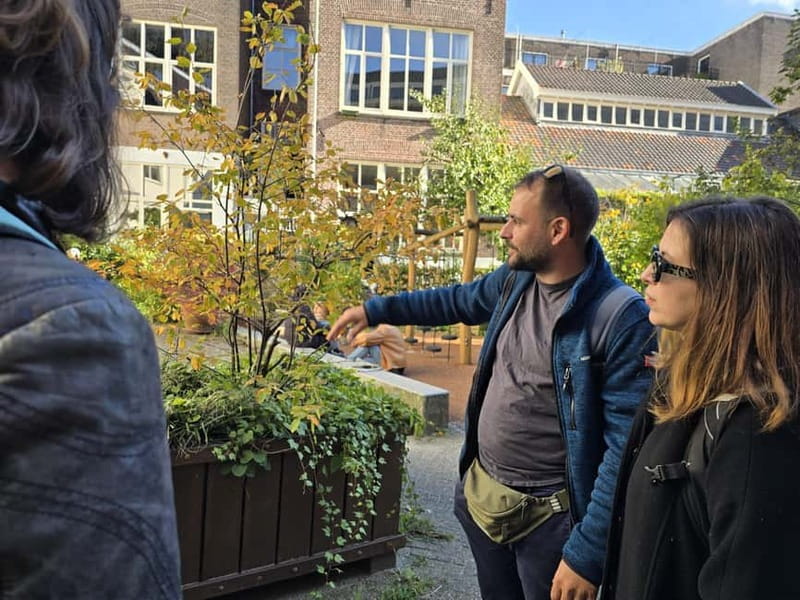
You will walk past and stop at bridges including the Aluminium Bridge, then Staalmeestersbrug in Amsterdam. These are the kinds of places where Amsterdam’s design language becomes obvious once someone points it out.
Here is where the tour’s water management theme clicks for me. Amsterdam is famous for being surrounded by water, but it is smarter than that. Water is a constant factor, and Dutch progress shows up in how the city controls flooding risk, navigates canals, and builds for long-term living.
Bridges are part of that story. They connect more than routes. They connect the city to the way people cope with their environment. If you are the kind of traveler who likes a city lesson you can see, this section delivers.
When canals turn into stories: leaning houses and houseboat life
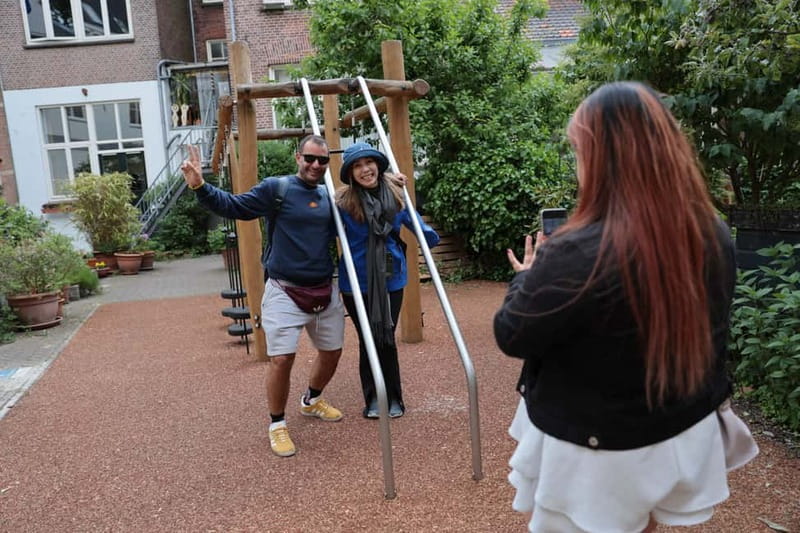
As the walk continues, you learn about the charm of living on houseboats and the idea of leaning houses. These details matter because they explain what looks odd at first glance.
Leaning houses are not just quirky architecture. They become a way to talk about history, building techniques, and how Amsterdam’s residents dealt with a watery foundation long before modern engineering became standard.
Houseboats, meanwhile, show a different side of the city. Amsterdam is liberal, but it is also practical. People adapted housing to their reality, and those choices shaped neighborhoods and daily culture.
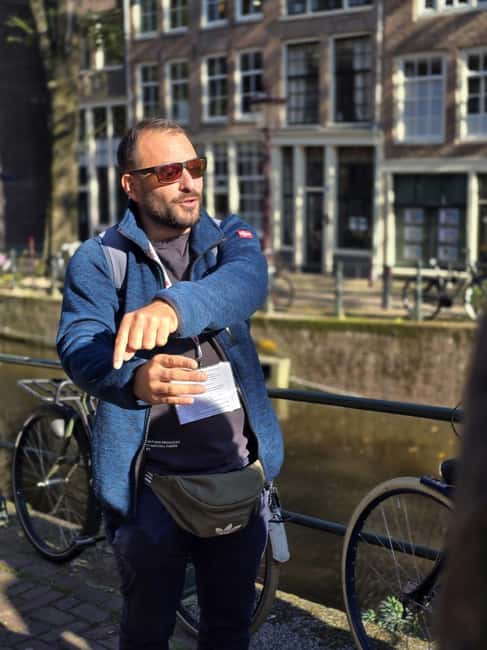
Antonis keeps this part engaging with humor and visuals. In the reviews, I saw people mention chalk drawings and books used to make the story easier to remember. Even if you forget dates, you tend to remember pictures and mental images. That is the whole trick.
Into the Jewish Quarter: where WWII history becomes personal
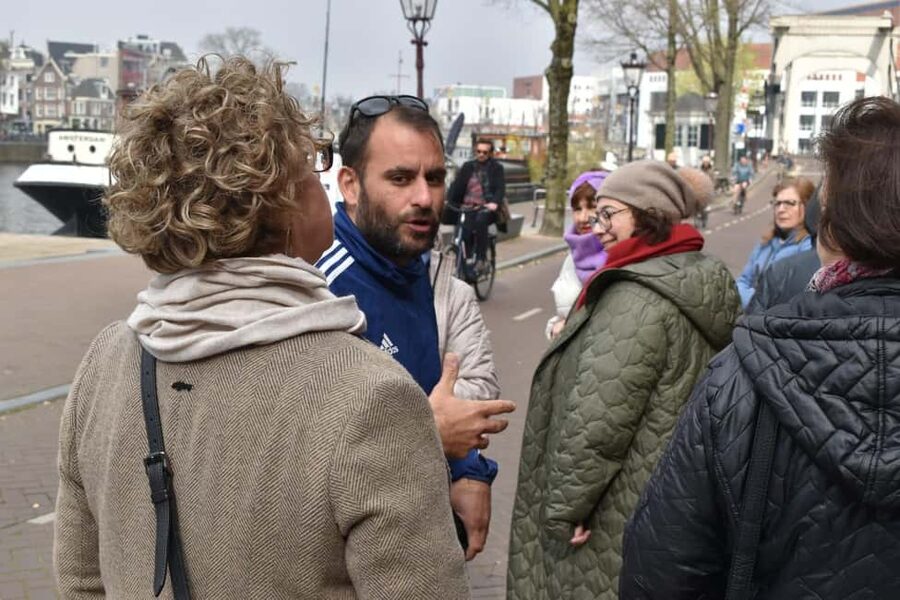
The tour reaches the Jewish Quarter area with guided time for context. This is one of the places where the tour’s tone shifts carefully. You are not walking through a theme park. You are moving through a city that still holds memory.
You get a guided stop and discussion, then you head toward Magere Brug, also called the Skinny Bridge, for another photo stop and sightseeing. Bridges again. They keep showing up for a reason: they are physical connections, and they help Antonis connect the past to the present street layout.
When I do a tour like this, I pay attention to how the guide structures the story. Here, the WWII context and the liberal culture thread stay connected, not separated. That gives you a clearer picture of how a society can swing between open-minded ideals and real-world cruelty.
National Holocaust Names Monument: a reflective pause that matters
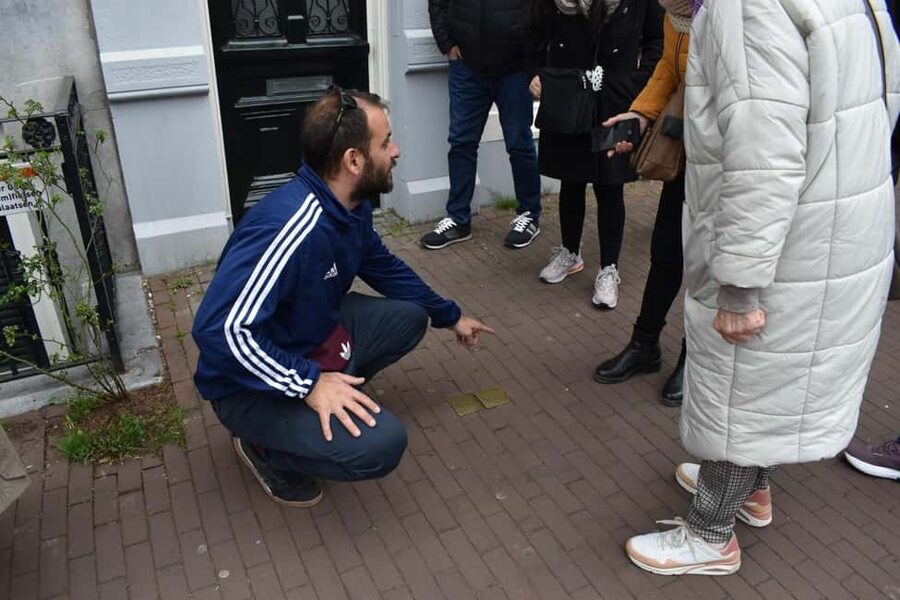
One of the most serious stops on the route is the National Holocaust Names Monument. You get guided time here for reflection and understanding.
This part is not about sprinting through a landmark. You are given time to slow down, read what you can, and let the gravity land. For me, that is essential on any Anne Frank focused experience. If you skip reflection, you risk turning the story into a photo opportunity.
The tour also keeps the pacing gentle, so this stop does not feel like a sudden wall. You arrive with enough background from earlier sections that the monument feels connected to the broader story rather than random.
Zuiderkerk, Nieuwmarkt, and the everyday city around the past
After the Holocaust reflection, you continue with more central Amsterdam sights. You pass Blauwbrug Bridge for photo stop and sightseeing, then Zuiderkerk for another photo stop and guided time. You also spend time at Nieuwmarkt Square with photo stop and guided sightseeing.
This cluster of stops is where Amsterdam’s present-day life shows up around the historic layers. Churches, squares, and bridges are all part of the city’s daily rhythm. It is a reminder that these stories happened in real neighborhoods, not in some separate historical museum world.
Antonis ties it together in a way that stays practical. He shows you how to interpret what you see now using what you learned earlier. That is why the city tour feels more useful than a checklist of sights.
Finish at Waag with coffee, sweets, and VR options
The tour ends at Waag. Along the way, you also have a coffee break that includes coffee and a daily sweet surprise, typically chocolate or a Dutch biscuit or stroopwafel-style treat.
This is where the experience becomes more conversational. You get time to ask questions and share reactions, and Antonis helps you connect dots between neighborhoods, ideology, and lived experience.
Then comes the optional VR portion. The tour includes Virtual Reality access that takes you into the Secret Annex. Importantly, this is not presented like a hard sell. If you want it, you do it. If you prefer to talk and reflect instead, you can still enjoy the experience fully.
In the reviews, people described this VR as a way to get access when regular Anne Frank House tickets are hard to get. That is exactly how I’d frame it for your planning. It is an additional layer of understanding, not a replacement for visiting in person. Still, it can be deeply moving.
The included extras that make the tour feel worth $40
Let’s talk value in plain terms. Three hours of walking with a guide could be “just okay” in many cities. Here, the price buys several tangible extras that make it easier to remember and easier to plan your day.
You get:
- Coffee and a sweet surprise (chocolate or biscuit, plus Dutch-style options like stroopwafel mentioned)
- A mini Polaroid photo taken during the walk
- A postcard of Amsterdam with a personalized handwritten message and an official stamp
- A list of recommendations for nearby bars and restaurants
- The VR experience (optional but included in the tour package)
- A local guide, Antonis, leading you in English
The Polaroid and stamped postcard are not silly freebies. They act like time anchors. When you get home, you remember where you were and what you learned, instead of only remembering that you took photos.
The restaurant and bar recommendations also help right after the tour. Amsterdam can be overwhelming when you are hungry and tired. A good guide’s suggestions can turn a vague evening into something smooth and local.
Who this tour suits best, and who should skip it
This fits you if you want more than landmarks. You care about how Amsterdam works as a society, not just how it looks on Instagram.
It also works well for:
- First-time visitors who want context fast
- Couples or solo travelers who like small group dynamics
- People who want WWII and Anne Frank history, but still want liberal culture and modern Amsterdam themes
- Travelers who cannot or do not want to line up for the Anne Frank House, but still want a meaningful Secret Annex VR experience
Skip it if:
- You use a wheelchair, since the tour is not suitable for wheelchair users
- You hate walking for 3 hours, because this is a steady pace with stops, photo moments, and bridges
Practical tips so you enjoy every stop
Wear comfortable shoes. Amsterdam streets are forgiving until they are not, and you will be on your feet for most of the 3-hour duration.
Bring water. The tour includes coffee, but you still want a bottle for the walk segments. Add a camera if you like photos, but also remember that some of the emotional stops work better if you look first and shoot second.
Weather matters in Amsterdam. Bring weather-appropriate clothing so you do not spend the tour thinking about getting dry. The whole experience works best when you stay present.
If you plan to do this on a busy day, give yourself a calm buffer after it ends at Waag. You will likely want a little time to process, especially after the National Holocaust Names Monument and the VR session.
Should you book this Amsterdam walking tour with Antonis?
I think you should book this tour if you want a thoughtful mix of Anne Frank related WWII history, Holocaust memorial reflection, and the modern, liberal logic that shapes Amsterdam today. Antonis runs it with storytelling that stays human, and the small group size makes the experience feel more like dialogue than a lecture.
You might skip it only if you cannot handle walking, or if you prefer pure sightseeing with minimal emotional content. The tour does not shy away from serious topics, and it uses reflection time on purpose.
If you are deciding between “see the sights” and “understand the city,” this one leans hard toward understanding, while still giving you practical fun moments like chocolate, Polaroids, coffee, and bridge photo stops.
Latest Amsterdam reviews
- Small Group Tulip and Spring Flower Fields Bike Tour★ 4.5 · 14 reviews
- Amsterdam Van Gogh Museum Private Tour for Kids & Families★ 4.0 · 14 reviews
- Zaanse Schans Windmills Private Tour from Amsterdam Airport★ 5.0 · 14 reviews
- Bruges Day Trip from Amsterdam★ 4.5 · 14 reviews
- Volendam: Volendams Museum Entry Ticket★ 4.4 · 14 reviews
- Zaanse Schans Windmills, cheese and clogs and Volendam tour from Amsterdam★ 5.0 · 14 reviews
- Departure from Amsterdam City to Amsterdam Airport AMS by Minivan★ 5.0 · 14 reviews
- Walking Tour about Golden Age Architecture, private local guide★ 5.0 · 15 reviews