
Reviewed · MUSEUMS
Amsterdam: Houseboat Museum Entry Ticket
This Amsterdam Houseboat Museum is interesting because you do not just read about life on the water, you step into it. I love that it is set on a real 1914 cargo ship called the Hendrika Maria, later turned into a home in 1967.
I also like how the visit leans practical, not just decorative. You get interactive commentary about how a family of four lived on board, plus details that connect daily life to the ship’s working past. The main drawback is simple, the museum is in a real houseboat, so space is tight and the stairs are steep.
Key highlights at a glance
- Hendrika Maria, a 1914 cargo ship converted into a houseboat in 1967
- A preserved, lived-in feel with an interior reflecting its 1970s use
- Family-of-four stories from when it was still a freight barge
- Original sailing gear you can spot, including the mast and leeboard
- Only houseboat museum in Amsterdam
- Photo-friendly outside, no flash inside
Stepping Into the Only Houseboat Museum in Amsterdam
If you like Amsterdam for its canals and architecture, this is a clever side-door. You still get the city’s floating-life vibe, but the focus here is different. Instead of admiring houseboats as scenery, you see one as shelter, work space, and history, all at once.
The museum runs on one vessel, the Hendrika Maria. It started life as a cargo ship in 1914. Then, in 1967, it got converted into a residential houseboat. That one timeline makes the whole experience click. You are not bouncing between random exhibits. You are walking through the same structure and seeing how needs change, from freight transport to everyday living.
The layout is small by design, because a houseboat is small by nature. That is part of the charm, and part of the reason this works best when you are ready to slow down and look closely.
More Museums in Amsterdam
- Amsterdam: Van Gogh Museum Ticket
★ 4.7 · 52,054 reviews - Moco Museum Amsterdam Entrance Tickets with Banksy & More
★ 4.4 · 10,088 reviews - Amsterdam: Red Light Secrets Museum Entry Ticket
★ 4.2 · 5,722 reviews
Getting Oriented Fast Before You Go Aboard
This is an entry-ticket visit with a one-day duration. In practice, you will pick a starting time and go from there. Since it is on a real boat, your first minute matters. Tight quarters means your pace sets your mood.
Once you are inside, expect a clear, guided path through rooms rather than a wide museum floor. A few of the experience points are built into the ship itself, like the way you naturally move past key features, and how the preserved interior encourages you to notice texture, layout, and color.
I like that the museum is interactive. That usually means you are not just reading placards. You are picking up context as you go, so even if you are not a maritime expert, the story still lands. The host language options are broad too: English, French, Traditional Chinese, German, Spanish, Portuguese, Italian, and Dutch.
Also, plan your photo habits. Photography is allowed, but flash photography is not permitted inside. In a small interior, no flash is a big deal for keeping the space comfortable and protecting whatever surfaces are on display.
Hendrika Maria’s 1970s Interior Colors, and Why They Matter
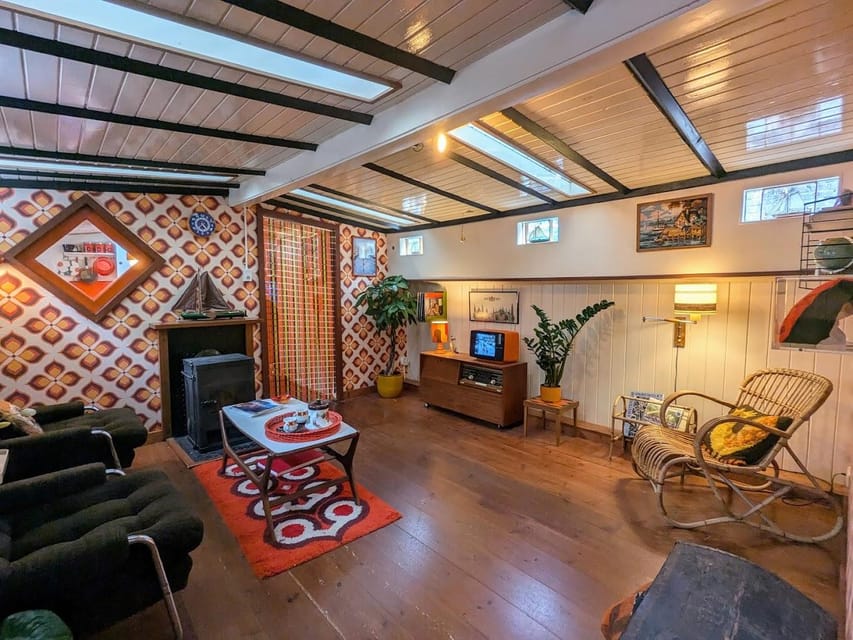
The interior is described as original from the 1970s, when it began to function as a regular house. That detail sounds like a small fact. In reality, it changes how you feel in the space.
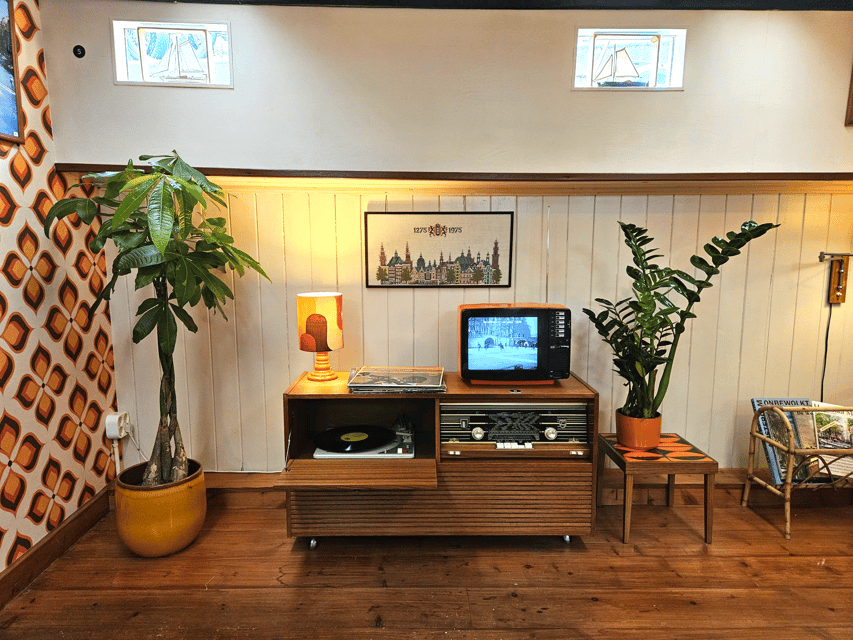
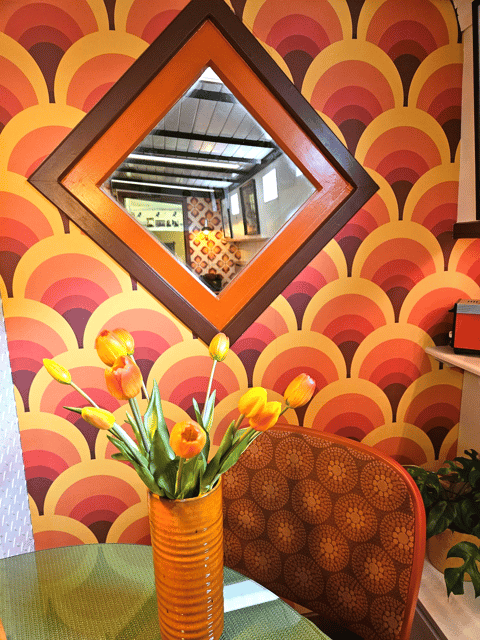
The color scheme is a throwback, with lots of orange, yellow, and brown. It is not just visual style. Those tones help you picture a specific era when people were turning older boats into homes. You can almost see the practical logic behind the choices: warmth, durability, and a lived-in feel.
Because the space is compact, every room is connected. You notice how people dealt with limited square footage. Where a larger home gives you separation between functions, a boat forces you to blend them. That is why this museum feels different from typical indoor history displays. You are not only learning about the past. You are experiencing the constraints that shaped it.
One review mentioned following an audio guide and taking about 15 to 20 minutes to tour roughly 80 square meters. Your time may vary, but the point is useful. This is not an all-afternoon crawl. It is a focused walk where small details reward your attention.
From Freight Barge to Family Home: What You Learn as You Walk
A key reason this works is the transformation story. Hendrika Maria was a cargo ship, then a freight barge life, and later a houseboat. The museum shows how a family of four used the boat both for living and for life connected to transportation.
That family-of-four angle is the heart of the experience. It is one thing to learn that people lived on boats. It is another to see how daily life had to be organized for four people in a space that could never feel like a typical apartment. When you look at fixtures, storage, and the general flow of rooms, you can understand why certain areas would matter more.
You also get the contrast between then and now. Some of the context you pick up is aimed at helping you see how living on water has changed. Modern floating houses can look like they were designed from scratch for comfort. Here, you get the sense of adaptation, using an older working vessel and turning it into something livable.
One more subtle detail: the museum tells you that the residents have lived on this historical boat for over 100 years. That matters because it shifts the feeling from museum object to home continuity. You are not looking at a one-time reconstruction. You are looking at a space with a long living thread.
Not the right fit? Amsterdam also runs these:
- Amsterdam: Heineken Experience Ticket including 2 Drinks
★ 4.6 · 36,014 reviews - Amsterdam Classic Saloon Boat Cruise with Drinks and Cheese
★ 5.0 · 31,825 reviews - Amsterdam Luxury Canal Cruise + Unlimited Drinks & Bites option
★ 5.0 · 30,518 reviews - Amsterdam: Rijksmuseum Entry Ticket
★ 4.7 · 29,512 reviews
The Sailing Mast and Leeboard Details You Should Not Rush
Do not speed past the outside elements you can access from inside viewing areas. The boat has an original sailing mast and a leeboard. These are not random decorative bits. They are practical components tied to how the ship moved and worked.
The museum context points to how the ship used these sailing features as part of transportation, including voyages to Scandinavia. That tells you something important about the ship’s original purpose. It was not only built to float. It was built to function in real routes and real conditions.
When you spot the mast and leeboard features, try to connect them to what you see in the interior. The layout makes more sense when you imagine the ship as a working vessel first. You start to understand where weight and movement would matter. You also get a clearer picture of why the interior feels the way it does, including the preserved practical elements from earlier use.
In a place this small, noticing one or two major technical features makes the whole visit feel more complete. This is one of the most memorable parts because it connects the everyday rooms to the boat’s real job.
Space Is Tight, Stairs Are Steep, and That Changes Your Plan
This is a real houseboat. That means limited space is not a technicality. It is the reality of the experience.
Steep stairs can be a deal-breaker for some people. If you have mobility concerns, you should treat this as a serious consideration rather than a minor inconvenience. Also, narrow areas can feel crowded if you go at peak times or with a larger group.
My practical advice is to go with the right mindset. This is a short museum, but not a casual one if you are uncomfortable in cramped indoor spaces. If you enjoy close-up detail and do not mind moving carefully, you will likely have a great time. If you prefer big open galleries, you might feel constrained.
Size also explains the price debate you will hear. At $12 per person, some visitors expect more time or more rooms. But for a compact, 1914-to-1970s living space, the value depends on your interests. If you love design details, maritime features, and how everyday people adapted to limited space, the ticket can feel reasonable. If you are only hunting for a quick checklist, it may feel too short.
Time on Site: Expect a Compact Visit, Not a Full-Day Museum
The duration is listed as one day, which basically means you can fit it into your Amsterdam route easily. But the visit itself is best thought of as a quick, structured walk through a single vessel.
One review noted about 15 to 20 minutes for the tour when following an audio guide, and referenced the interior size as around 80 square meters. That lines up with how you will experience the layout. You are not covering separate floors like a big museum complex. You are moving from room to room and paying attention to stories and preserved details.
So here is the best strategy if you want value: go in ready to slow down for a handful of key moments. Pick out the color palette. Watch how the space is arranged for daily living. Locate the sailing mast and leeboard details. Listen closely to the commentary, because that is what turns a small space into a real story.
If you do not do that mental shift, you will finish quickly and wonder why you paid. If you do, you will come away with an unusually specific memory, the feeling of living on a converted cargo ship.
Who This Houseboat Museum Ticket Is Really For
This museum ticket is a strong match for people who enjoy:
- Maritime details, even basic ones, like how sailing equipment connected to transport routes
- Design and interior history, especially the preserved 1970s look
- Small, intimate experiences over big crowds and long museum loops
- Stories about everyday life, not only famous events
It is also a good fit if you are staying in Amsterdam for a short time and want something that feels authentic and different from the typical canal photo stop. Since this is the only houseboat museum in Amsterdam, it helps you avoid the feeling of repeating the same theme.
If you are traveling with limited mobility, or if steep stairs would stress you out, you might want to rethink the plan. The boat’s size is part of the authenticity. It is also why you should be honest about your comfort level.
Price and Value: Is $12 Fair for a 1914 Ship?
At $12 per person, this is not a huge splurge. It also is not “so cheap you can do it without thinking.” The value question is really about your expectations.
Here is how I’d frame it: you are paying for access to a preserved, lived-in, converted vessel. That is not something you see every day in a major city. You are also paying for an experience that includes interactive explanation, plus the sensory impact of walking through a compact real home.
On the other hand, this is not a sprawling museum. If you go straight through, the visit can feel short. One review complained it was too expensive for how quickly it can be seen. That criticism makes sense if your goal is to maximize time on site like a traditional museum.
My take is simple. If you like the idea of living history and you enjoy detail, $12 is reasonable. If you only want a fast stop with minimal effort, you may feel shortchanged.
Practical Tips for a Smoother Visit on a Real Houseboat
A few details can help you get the most from the time you spend on board:
- Wear shoes you trust on steep stairs. The museum is in a real boat, so the steps are not like flat indoor stairs.
- Keep your expectations about space in check. Tight rooms can mean you need patience as you pass others.
- Plan for a focused visit. Treat it like 15 to 30 minutes of close-up viewing, not an all-day activity.
- Use your camera without flash. Photography is allowed, flash is not.
- Pick the language that lets you follow the commentary easily. The host supports multiple languages, which helps you understand the story instead of just scanning.
This museum is small enough that a little readiness goes a long way. When you settle into that mindset, you can enjoy it instead of just enduring it.
Should You Book the Amsterdam Houseboat Museum Entry Ticket?
Book this ticket if you want something hands-on and compact that connects Amsterdam houseboat life to a real ship past. The Hendrika Maria story, the 1967 conversion, and the preserved 1970s interior create a memorable sense of time travel without requiring you to be a nautical expert. If you like sailing details like the mast and leeboard, you will likely enjoy spotting them and understanding why they existed.
Skip it or reconsider if stairs and tight spaces are hard for you, or if you usually dislike short museum visits. Also, if you expect to spend hours roaming, you will probably leave feeling unsatisfied.
For the right traveler, $12 buys you a rare, authentic view of how people adapted daily life inside a converted cargo vessel. That is exactly the kind of Amsterdam experience I like to recommend, the kind you do once and then remember.
FAQ
What is included with the Houseboat Museum entry ticket?
The ticket includes entrance to the Houseboat Museum.
What boat is the museum located on?
The museum is on the Hendrika Maria, a 1914 cargo ship that was converted into a residential houseboat in 1967.
How long is the visit?
The activity is listed as duration 1 day. Specific tour length depends on availability and the starting time, and the visit itself is typically a short onboard walkthrough.
How much does it cost?
The price is $12 per person.
What languages are offered for the host or greeter?
English, French, Traditional Chinese, German, Spanish, Portuguese, Italian, and Dutch.
Is photography allowed inside?
Photography is allowed, but flash photography is not permitted inside the museum.
Is the museum accessible for everyone?
The museum is located in a real houseboat, so space may be limited. It also has steep stairs, which may not be suitable for everyone.
What should I expect from the interior design?
Be prepared for an interior style described as originally from the 1970s, including orange, yellow, and brown colors.
Is the museum interactive?
Yes, the museum is described as interactive, with a lot of knowledge shared during the visit.
Is the museum the only houseboat museum in Amsterdam?
It is described as the only houseboat museum in Amsterdam.
Can I cancel or change my plans?
Free cancellation is available up to 24 hours in advance for a full refund, and reserve now & pay later is offered.
Latest Amsterdam reviews
- Small Group Tulip and Spring Flower Fields Bike Tour★ 4.5 · 14 reviews
- Amsterdam Van Gogh Museum Private Tour for Kids & Families★ 4.0 · 14 reviews
- Zaanse Schans Windmills Private Tour from Amsterdam Airport★ 5.0 · 14 reviews
- Bruges Day Trip from Amsterdam★ 4.5 · 14 reviews
- Volendam: Volendams Museum Entry Ticket★ 4.4 · 14 reviews
- Zaanse Schans Windmills, cheese and clogs and Volendam tour from Amsterdam★ 5.0 · 14 reviews
- Departure from Amsterdam City to Amsterdam Airport AMS by Minivan★ 5.0 · 14 reviews
- Walking Tour about Golden Age Architecture, private local guide★ 5.0 · 15 reviews
Museums, compared.

Moco Museum Amsterdam Entrance Tickets with Banksy & More
Read our review →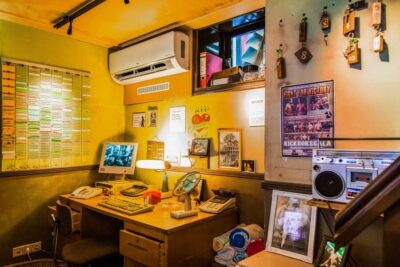

Amsterdam’s Weirdest Museum: Ripley’s Believe It or Not!
Read our review →


Browse the lists this tour appears in