
Reviewed · WALKING TOURS
Amsterdam: History, Hidden Gems & Future Eco-Walking Tour
This tour is interesting because it treats Amsterdam like a living experiment in water, politics, and culture, not a museum you shuffle through. You start with the city’s problem, being built below sea level, and you end with how today’s Amsterdam thinks about sustainability and community.
I especially like two things: the street-level “water and wind” visuals using chalk drawings and historical maps, and the iPad overlays that make Golden Age paintings line up with the modern streets.
One consideration: you are outside for about 2 hours on cobblestones, so you will want comfortable shoes and real weather layers.
Key Highlights You Should Know Before You Go
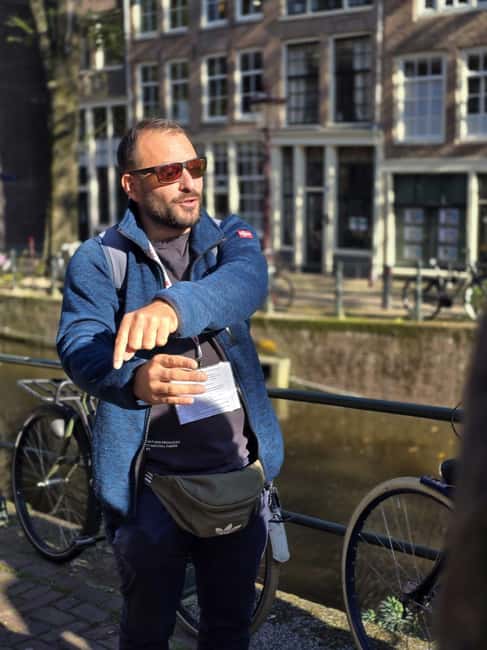
- 750 years in two hours: a time-packed route that connects early settlement, the first dam and dikes, the Golden Age, WWII, and later social change.
- Chalk drawings right on the street: chalk sketches and historical maps turn abstract engineering into something you can actually see.
- iPads for past and present: historical paintings get layered onto modern views so the timeline clicks fast.
- Eco-minded, not preachy: you connect Dutch education and politics to everyday urban choices you can spot as you walk.
- Quiet side streets over crowd time: you pass major sights quickly, then move into calmer routes, secret courtyards, and urban gardens.
- A handwritten keepsake: you finish with a handwritten postcard from historic A’Dam.
A Two-Hour Timeline That Starts With Water, Wind, and Why Amsterdam Exists
Amsterdam can look like it was always here. This tour corrects that feeling quickly. You get the basic origin story in a practical way: the city exists because people engineered their way around water and wind. The guide uses chalk drawings directly on the street and pairs them with historical maps, so you are not just hearing about dikes and dams, you are seeing how the system likely worked in real space.
This is where the tour feels different from the usual “walk past the postcard spot” routine. You will be thinking about infrastructure. Why were windmills so central? Why did water control become political? The tour frames windmills as the original green energy and connects the long battle against water to how Dutch society organized itself. It is history, but it is also problem-solving.
I like that the guide keeps the discussion grounded in everyday reality. Amsterdam is famous for canals and bikes, but the tour reminds you the city’s real personality comes from planning, adaptation, and continuous repair.
More Historical Tours in Amsterdam
- Amsterdam Food and Cultural Tour with Tastings
★ 5.0 · 4,315 reviews - Amsterdam: Historic City Centre Canal Cruise
★ 4.3 · 659 reviews - Amsterdam: Haunted History and Ghost Walking Tour
★ 4.5 · 488 reviews
Chalk and Maps: When the Engineering Makes Sense Fast
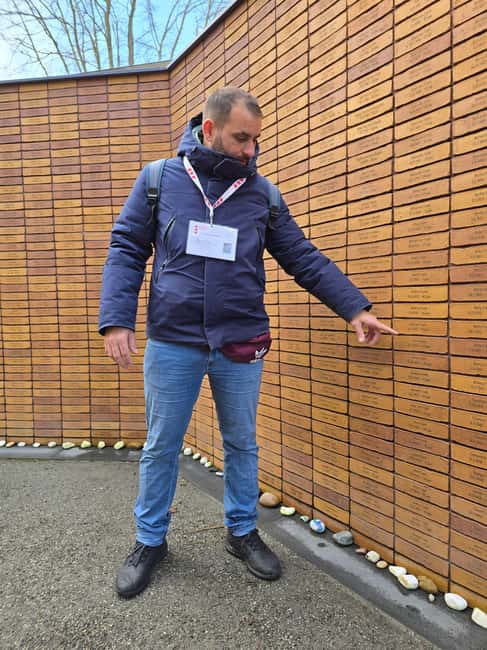
You get the tour’s foundation, the water and wind part, before you even get too far into the fun visuals. Expect chalk sketches that help you visualize levels, barriers, and the idea of keeping land livable. The historical maps help you see Amsterdam changing over time, not just staying frozen in the Golden Age picture people carry in their heads.
Why this matters for you: if you have ever visited Amsterdam and wondered why everything seems so tightly planned, this explains the why behind the layout. You also learn the first dam and dikes story as a starting point, so later eras feel connected rather than random.
The pacing also helps. Two hours goes quickly, so you want the key ideas early. This tour does that. You walk, you stop, you look down at chalk on the ground, then you move again with a clearer mental map.
iPads and Old Paintings: The Golden Age Lands Right Where You Stand
Then comes the “windows to the past” section. This is where the technology earns its keep. The guide uses iPads to overlay historical paintings onto modern streets, so you can compare what you see now with what stood there before.
For most cities, overlays can turn into gimmicks. Here, it works because the tour is focused on specific turning points: the early growth of the city, the role of wealthy merchants in the 17th century, and how the city’s identity accelerated during the Golden Age. When you see the overlay align, you start noticing details you otherwise would ignore, like street angles, how neighborhoods expanded, and the way Amsterdam’s physical space reflects its economic story.
If you are the kind of traveler who likes cause and effect, you will enjoy this part. You are not just collecting facts. You are connecting the dots between power, prosperity, and the way a place looks.
WWII and the City’s Resilience, Plus the Culture Shift After
Amsterdam’s story does not stop at the high points. You also hear about WWII and the city’s resilience. The guide connects this period to the later explosion of liberal culture in the 1970s, and you also get a straight explanation of how social movements and protests helped shape Amsterdam into what it is today.
This part is important for context. Without it, you can miss why Amsterdam’s identity feels both progressive and complicated. The tour helps you understand that modern liberal culture did not appear out of thin air. It grew from specific moments, pressure, and organized voices.
A small practical tip: if you like taking photos, have your camera ready during the overlay moments, since that is when the contrast between old and new is most dramatic. The tour does not include time for long museum-style stops, so quick captures at the right moments pay off.
More Walking Tours in Amsterdam
- Amsterdam Anne Frank: Small-Group Walking Tour & Local Guide
★ 4.8 · 12,789 reviews - Anne Frank’s Story – Guided Walking Tour through Amsterdam
★ 5.0 · 11,619 reviews - Absolutely Amsterdam – the Essential Introductory Walking Tour
★ 5.0 · 3,629 reviews - Amsterdam: Anne Frank Guided Walking Tour in DE/EN/IT/ES
★ 4.9 · 3,107 reviews
Eco Mindset: How Dutch Education and Politics Show Up in Daily Life
One of the most useful sections for future-travel thinking is the green mindset part. You are not just told that the Netherlands is sustainable. You learn why that mindset starts young, through education, and how Dutch green politics supports long-term decisions.
Then the guide does something I appreciate. As you walk, you look for urban eco details and stop to appreciate them. That keeps sustainability from turning into abstract “green values” talk. Instead, it becomes a set of things you can spot on the street and connect back to policy and education.
For you, this is a value add if you are traveling with an eye for how cities work. You will leave with a checklist mindset, mentally noting how nature is integrated into daily life, even in a dense urban environment like Amsterdam.
Quiet Routes, Courtyards, and the Art of Avoiding Crowd Time
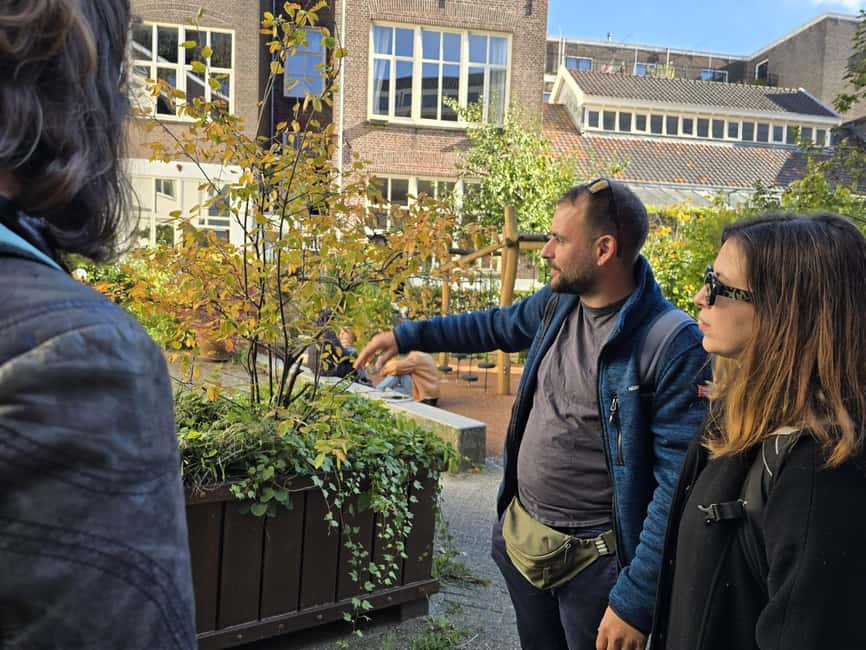
This tour is built around the idea of not spending your two hours fighting crowds. You do pass by essential historic landmarks, but you do not linger where it is loud and packed. The route aims to escape into quieter local streets, secret courtyards, or urban gardens.
That “quiet route” approach makes a big difference in how you remember the tour. You get the key sights without the fatigue. And if you are the type who gets overwhelmed by busy canal areas, this feels like a smart way to get answers without the sensory overload.
There is also a human touch. If you run into street musicians or artists, the guide pauses to enjoy the moment and support local culture. It is not a forced stop. It is a small reminder that Amsterdam is not only history and policy, it is living art in motion.
A Walk That Stays Semi-Private: Up to 8 People
The tour is designed for a small group, with a maximum of eight guests. That matters because it keeps the interaction real. You are not stuck listening from the back while people file past like on a conveyor belt.
It is also semi-private, which helps the guide move the conversation at the group’s pace. In past tours with the guide Antonis, the experience has run past the planned time, with the guide extending it by an extra hour so people could get more out of the city. That tells me the tour style is flexible, not rushed.
Also worth noting: a solo traveler has reported the tour still ran and was not canceled. So if you are visiting on your own, you have a decent chance the small-group format works in your favor.
Price at $29: What You Get for Two Hours (and Why It Can Be Worth It)
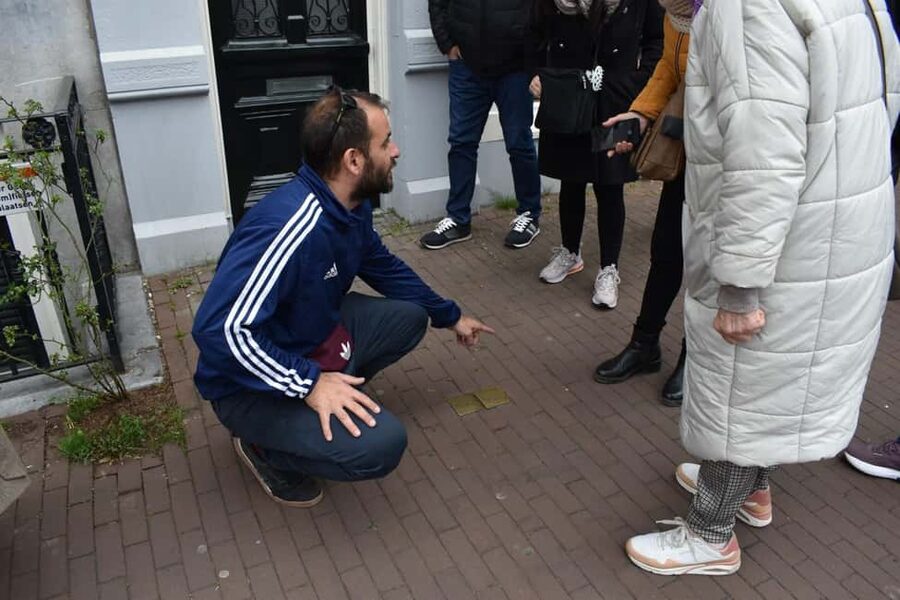
At $29 per person for two hours, this is positioned as a high value “concept tour” rather than a museum ticket. You are paying for:
- an expert local eco-guide,
- interactive tools like iPads, chalk, and historical maps,
- a small-group cap,
- and a practical ending with recommendations for social impact cafes, shops, and breweries.
The standout value is the method. Chalk plus overlays means you are learning spatial history, not just hearing it. And because the tour includes a thoughtful walking strategy, you spend time in calmer streets instead of burning energy in crowds.
You should also factor in what is not included. There is no food or drink, and there is no hotel pickup or drop-off. So you might plan a quick snack stop before or after, and you should be ready to meet the guide on foot.
Overall, if you want a guided route that connects Amsterdam’s past to today’s sustainability mindset, the price feels fair for what you get. If you only want a slow stroll with no stories and no hands-on tools, you might find this too “structured.”
Meeting Point, Timing, Shoes, and Other Practical Stuff That Actually Matters
You meet in front of the restaurant De Zilveren Spiegel at Kattengat 4. Plan to arrive about 10 minutes early so you can start on time.
Comfort is non-negotiable here. The tour includes walking on cobblestones, so wear shoes that you can walk in for two hours without turning it into a foot emergency. If your shoes feel even slightly wrong now, they will feel much worse later.
Bring a reusable water bottle. You will be shown where to fill it with fresh Dutch water for free, which is a nice touch if you are trying to keep costs down and travel lighter.
Weather in Amsterdam can shift fast. Bring layers, and expect to be outside for the whole tour. This is not a warm-up-your-hands-in-a-museum kind of experience.
One more rule: video recording is not allowed. Photography likely works, and having your camera handy for overlay stops is smart, but follow the guide’s direction on what is permitted.
Who This Tour Fits Best (and Who Might Skip It)
This tour is a strong match if you:
- want context that ties together engineering, politics, and culture,
- like interactive visuals such as chalk drawings and iPad overlays,
- prefer smaller groups and calmer streets,
- and you care about sustainability in a practical, real-world way.
Skip it or choose a different style if you:
- do not like walking on cobblestones,
- prefer quiet, sit-down explanations with minimal stopping,
- or you dislike history that moves quickly through several eras.
It is also a good fit for first-time Amsterdam visitors because it gives you a framework for interpreting the city you will keep seeing after the tour.
Should You Book This Amsterdam History and Eco-Walking Tour?
I would book it if you want more than facts. This tour gives you a lens. You will see Amsterdam differently after thinking about water control, wind energy, and how social movements shaped the city’s modern identity. The interactive tools are a real help, not a distraction, and the small-group format keeps the experience human.
If you are time-limited and want a concentrated hit of history plus sustainability themes, $29 for two hours can be a solid use of your day. Just make sure you come prepared for outdoor walking, and go in ready to listen, look down at chalk on the ground, and be a little curious.
FAQ
Where does the tour start?
Meet your guide in front of the restaurant De Zilveren Spiegel at Kattengat 4. Arrive about 10 minutes before the tour starts.
How long is the tour, and how big is the group?
The tour lasts 2 hours. It is limited to a small group with a maximum of 8 participants.
What should I bring with me?
Bring comfortable shoes for cobblestones, a reusable water bottle, a camera, and weather-appropriate clothing in layers.
Are videos allowed during the tour?
No. Video recording is not allowed.
What languages is the guide available in?
The live tour guide runs in English and Greek.
Is hotel pickup included, and what about cancellation or payment?
Hotel pickup and drop-off are not included. You can cancel up to 24 hours in advance for a full refund, and you can reserve now and pay later to keep plans flexible.
Latest Amsterdam reviews
- Small Group Tulip and Spring Flower Fields Bike Tour★ 4.5 · 14 reviews
- Amsterdam Van Gogh Museum Private Tour for Kids & Families★ 4.0 · 14 reviews
- Zaanse Schans Windmills Private Tour from Amsterdam Airport★ 5.0 · 14 reviews
- Bruges Day Trip from Amsterdam★ 4.5 · 14 reviews
- Volendam: Volendams Museum Entry Ticket★ 4.4 · 14 reviews
- Zaanse Schans Windmills, cheese and clogs and Volendam tour from Amsterdam★ 5.0 · 14 reviews
- Departure from Amsterdam City to Amsterdam Airport AMS by Minivan★ 5.0 · 14 reviews
- Walking Tour about Golden Age Architecture, private local guide★ 5.0 · 15 reviews
Walking Tours, compared.
Absolutely Amsterdam – the Essential Introductory Walking Tour
Read our review →
Amsterdam Highlights Walking Tour: Small Group Experience
Read our review →

Browse the lists this tour appears in