
Reviewed · RED LIGHT DISTRICT
Amsterdam: Guided Red Light District and City Walking Tour
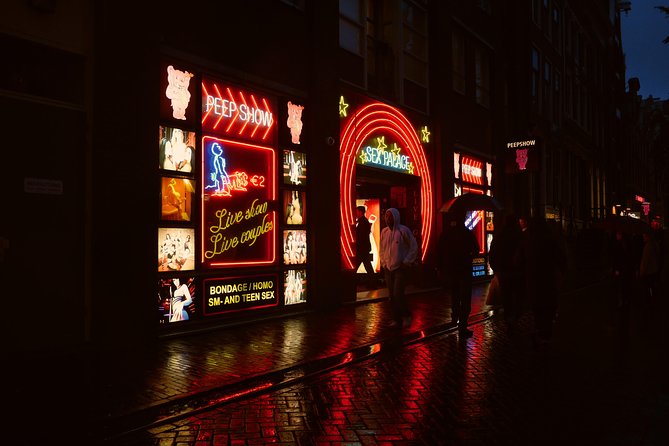
Amsterdam’s Red Light District can feel like a movie set until you hear the stories behind it. This 2-hour guided walk turns the area into a walkable timeline of the city, not just a headline. I like that you get city context while you’re still in the middle of the streets.
What I really like is the balance: you’ll see major landmarks plus small, character-packed stops that explain why Amsterdam looks the way it does. I also like the human touch from guides such as Ben, Ari, Pedro, Angel, and Max, who use humor and clear explanations to keep things moving. One caution, this isn’t for everyone, since it’s not recommended for travelers with limited mobility and there’s a small chance you could end up with an unprofessional guide.
If you want a tight, practical introduction that helps you understand what you’re seeing, this is a good bet. The tour caps at 15 travelers, it’s in English, and you can usually pick a start time that fits your day.
Key Things I’d Watch For
- A Red Light District history walk with real street-level context, not just photos and gossip
- Old Town stops that connect prostitution, trade, architecture, and law into one flowing route
- Wooden house survival stories, including what happened after a major 1450s fire
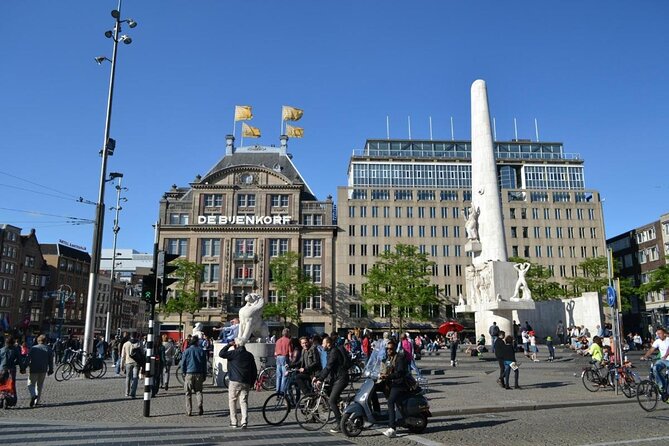
- Iconic landmarks like the Waag and the Dam, placed in the bigger Amsterdam story
- Small-group pace (max 15), so questions actually get answered
Price and Logistics: What You’re Really Paying For
At about $35.44 per person for roughly 2 hours, you’re buying two things: a guided story and a focused route. Amsterdam is best when you have a plan, and this kind of tour saves you from wandering without understanding what matters.
The value gets stronger because the tour includes a licensed guide and a local guide. That usually means you’re not only getting history, you’re getting street knowledge, the kind of practical detail that makes places make sense fast. There’s also mobile ticket access and multiple start times, which is helpful if you’re juggling museum tickets, canal boat timing, or dinner plans.
My one practical note: the tour is booked about 27 days in advance on average. If you’re traveling during high season or weekends, don’t wait until the last minute just because it sounds casual.
More Walking Tours in Amsterdam
- Amsterdam Anne Frank: Small-Group Walking Tour & Local Guide
★ 4.8 · 12,789 reviews - Anne Frank’s Story – Guided Walking Tour through Amsterdam
★ 5.0 · 11,619 reviews - Absolutely Amsterdam – the Essential Introductory Walking Tour
★ 5.0 · 3,629 reviews
Walking Into Amsterdam’s Oldest Layers (Dam and Old Town Setup)
The tour gets going in Amsterdam with an easy-to-find starting point near public transit at Geldersekade 2, 1012 BH Amsterdam. From there, you’ll walk narrow streets where the city’s layout starts to feel like part of the story. Your first big theme is Amsterdam’s foundations, including how buildings are supported by wooden poles driven deep through soft layers of fen and clay.
Then you move into the Old Town area that connects to the Red Light District. This is the part I think many people misunderstand. You’re not only seeing a nightlife zone, you’re walking through the older bones of the city, where trade, port life, and laws developed over centuries.
You also get a framing of what the area is today. The guide focuses on the history and current situation so you can watch the street scene with context instead of confusion. That’s the main reason a guided format helps here.
Beyond the Windows: How Guides Explain the District’s History
A Red Light District tour can go wrong in two ways. It turns into shock tourism, or it turns into vague lecturing. The better guides do what this tour tries to do: keep it grounded in how the city formed and how the district became what it is.
You’ll hear stories tied to merchants, port arrivals, and how people made money around shipping and trade. One of the standout review themes is how smoothly guides connect those dots, and how they explain the laws and culture around the area so it feels less like a rumor and more like a system. If you want to understand what’s happening on the street without turning it into awkward staring, you’ll appreciate that tone.
Pub The Ape (Int Aepjen): Wood, Fire, and Why It Survives
One of the most memorable stops is Pub The Ape, known in Dutch as Int Aepjen. You’ll learn it dates to around 1540, and the reason it feels special is tied to Amsterdam’s architecture history.
After a major fire in 1452, city rules pushed buildings toward brick facades. Pub The Ape remains one of just a couple of wooden buildings still standing. Seeing it on a walk makes that fact click, because you’re looking at the building style as a physical survivor, not just a trivia line.
This is also where a good guide can make the whole tour feel more human. If the guide has a light touch, the stop doesn’t feel like a lecture. Instead, it becomes a snapshot of risk, regulation, and daily life centuries ago.
Practical note: like most old Amsterdam streets, the route can be tight. Wear shoes you’re comfortable in for standing and turning at corners.
More Red Light District walking tours:
- Amsterdam: Red Light District Tour in DE/EN/IT/ES/FR
★ 4.9 · 7,136 reviews - Amsterdam: Red Light Secrets Museum Entry Ticket
★ 4.2 · 5,722 reviews - Amsterdam Red Light District & Coffee Shop Tour
★ 4.6 · 4,134 reviews - Amsterdam: Red Light District Pub Crawl with Unlimited Shots
★ 4.1 · 2,130 reviews
Waag and the City Gate Story: When Defense Became Commerce
Next you’ll hit the Waag, a landmark that used to function as one of Amsterdam’s city gates as part of the defensive wall system. It was built around the 1400s and is described as the second oldest building of Amsterdam.
Your guide also connects the Waag to Amsterdam’s trading culture. Over time, it wasn’t only about defense. It became a space for guild and craftsman organizations, with groups based in and around the Waag and the square.
This stop matters because it helps you read the district’s economy in a broader way. Amsterdam’s Red Light District didn’t exist in a vacuum. Port trade, guilds, and city governance all shaped how neighborhoods evolved and which occupations could cluster where.
If you like architecture that has a job history, you’ll enjoy this part. It’s a good reminder that many “tourist” buildings were once functional infrastructure.
The Smallest House of Amsterdam and VOC Storage to Real Living
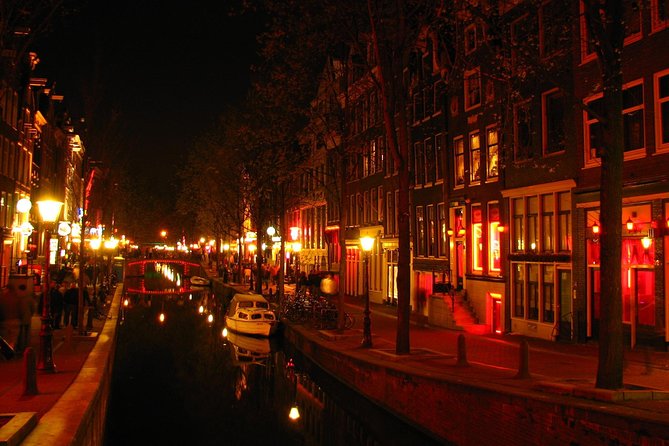
Another quietly fascinating stop is the smallest house of Amsterdam, built around the 1700s. Here the tour’s value is in how it links everyday scale to global trade.
You’ll learn the house began as storage for the VOC trading company, then later turned into a place where people lived for a long time. That transformation is exactly the kind of detail that makes Amsterdam feel real. It’s not just a pretty city with canals. It’s a city where space, work, and housing all got repurposed as history shifted.
If you’re the type of traveler who likes understanding how people actually lived, this stop will land well. Even if you don’t know VOC details yet, your guide should make the connection between Amsterdam’s trading power and its housing footprint.
Condomerie: The City’s Modern Retail Quirk in a Historic Neighborhood
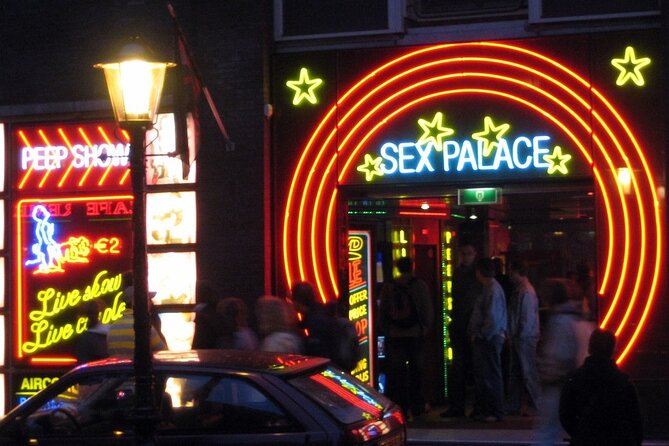
The tour also includes the Condomerie, described as the world’s first condom shop dedicated specifically to condoms, operating in this location since 1987.
This is a modern counterpoint to the rest of the route, and it’s useful because it shows how Amsterdam keeps layering new culture onto old neighborhoods. The district you’re walking through is not only historical. It’s current and practical, with businesses that reflect changing attitudes and needs.
If you’re sensitive to the subject matter, you might want to mentally prepare for a tour that treats the Red Light District as a full neighborhood, not a “skip it” topic. The goal is understanding, but it’s still Amsterdam, not a themed museum.
Guides and Pace: Why Ben, Angel, Max, and Pedro Get Repeated Mentions
A lot of the praise centers on the guides. Names that come up with strong marks include Ben, Ari, Pedro, Angel, Max, Aaron, and David. The strongest overlap in what you’ll get is a clear speaking style, strong organization, and stories that keep the walk from feeling repetitive.
Some guides lean funny. Others lean policy and law. Either approach works best when the guide respects the group and keeps the tone appropriate. That’s not a small point. One booking reported a guide being rude and making inappropriate comments, which is a red flag in any setting. If something feels off, handle it immediately with the guide, and if needed, report it to the provider so the issue can be addressed.
Because the group is capped at 15 travelers, the guide can usually answer questions without the whole tour going slow. That matters when you have curiosity about what you’re seeing right in front of you.
Timing and Atmosphere: Late Light and Canal-Bridge Magic
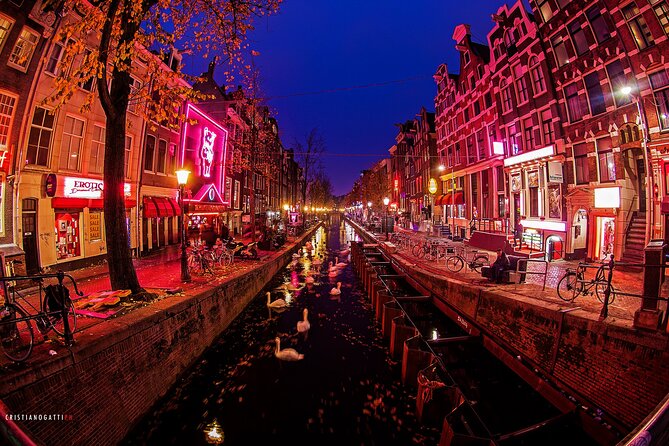
You can choose a start time, and the late-afternoon to evening slots tend to change the feel of the walk. One of the most memorable moments described is how, in late summer, you get visible light for longer, then the bridge lights look spectacular as evening settles in.
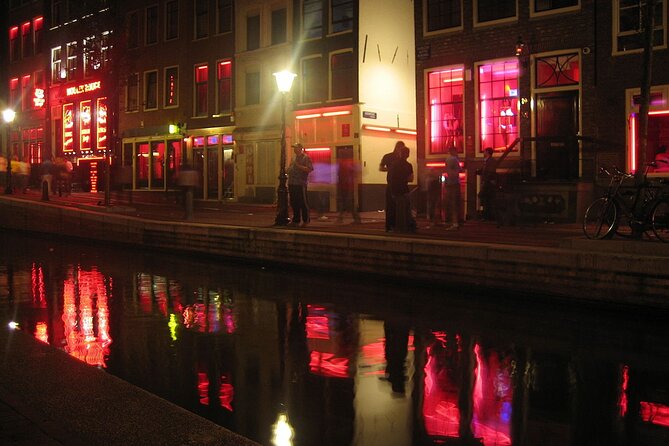
Even if your start time isn’t late, this area has a built-in visual contrast. Daytime feels more observational. Night adds drama. If you hate crowds, you might prefer an earlier slot. If you love atmosphere, go later.
Either way, this is a walking tour, so dress for the weather. A light rain changes Amsterdam streets fast.
What to Expect on the Route (and What You Can Skip in Your Head)
There’s no escaping that you’re walking through a zone connected to sex work. The experience works best when you treat it as a cultural and legal topic inside a living city. Your guide should help you keep your focus on the bigger picture: how port life, housing, and city governance shaped this neighborhood.
You’ll see iconic spots such as the Dam and historic structures like the Waag and the wooden building at Int Aepjen. You’ll also notice the modern retail note at the Condomerie. The mix is part of the value. It prevents the tour from becoming one-note.
At the same time, it’s not the best fit if you want a purely general Amsterdam overview. This is intentionally specific, and the emphasis is on the district and its connections.
Who This Tour Suits Best
This guided walk is a strong match if:
- You want context for what you see in the Red Light District area
- You like architecture and city history tied to real neighborhoods
- You enjoy a small-group format where you can ask questions
- You want an efficient plan that takes about 2 hours
It may not be ideal if:
- You have limited mobility, since it’s not recommended for that
- You’re uncomfortable with explicit subject matter connected to the district
- You hate walking on narrow streets and standing in small clusters
Should You Book This Amsterdam Red Light District Walk?
If your goal is to understand the Red Light District as part of Amsterdam’s broader story, I’d book it. The price is reasonable for a licensed guide setup, and the route includes high-signal stops like the Dam, Waag, Pub The Ape (Int Aepjen), the smallest house, and the Condomerie. That mix helps you connect the present to the city’s physical design and trading-era past.
Skip it only if you know you want a softer, purely sightseeing tour, or if your mobility needs are a concern.
When you book, pick a start time that fits your energy and dress for walking. And if your guide’s tone ever crosses the line, speak up early. In a small group, issues should be easier to address fast.
FAQ
How long is the Amsterdam Red Light District and city walking tour?
It runs for about 2 hours.
How much does the tour cost?
The price is $35.44 per person.
What language is the tour offered in?
The tour is offered in English.
Where does the tour start?
The meeting point is Geldersekade 2, 1012 BH Amsterdam, Netherlands.
Is food included in the tour price?
No, food and drinks are not included.
What’s included with the tour?
The tour includes a licensed guide and a local guide.
Is the tour suitable for everyone, including limited mobility?
It is not recommended for travelers with limited mobility.
Can I bring a service animal?
Yes, service animals are allowed.
Can I cancel and get a full refund?
Yes. You can cancel for a full refund up to 24 hours in advance of the experience’s start time.
Latest Amsterdam reviews
- Small Group Tulip and Spring Flower Fields Bike Tour★ 4.5 · 14 reviews
- Zaanse Schans Windmills Private Tour from Amsterdam Airport★ 5.0 · 14 reviews
- Amsterdam Van Gogh Museum Private Tour for Kids & Families★ 4.0 · 14 reviews
- Bruges Day Trip from Amsterdam★ 4.5 · 14 reviews
- Volendam: Volendams Museum Entry Ticket★ 4.4 · 14 reviews
- Zaanse Schans Windmills, cheese and clogs and Volendam tour from Amsterdam★ 5.0 · 14 reviews
- Departure from Amsterdam City to Amsterdam Airport AMS by Minivan★ 5.0 · 14 reviews
- Walking Tour about Golden Age Architecture, private local guide★ 5.0 · 15 reviews
Red Light District, compared.
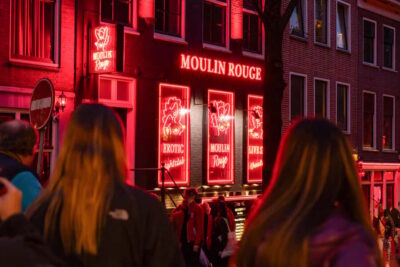
Amsterdam Red Light District & Coffee Shop Tour
Read our review →
Red Light District Pub Crawl with Unlimited Shots
Read our review →
Private Amsterdam Red Light District and Coffee Shop Tour
Read our review →
Browse the lists this tour appears in