
Reviewed · WALKING TOURS
Amsterdam City Center & History – Exclusive Guided Walking Tour
This tour is interesting because it stitches Amsterdam’s big visual landmarks to everyday life, religion, trade, and money. I like how the route mixes churches and historic city buildings so you see Amsterdam’s shifts over time, not just pretty façades. I also like that you finish with practical suggestions for what to explore next, based on what you care about.
One possible drawback: it’s a moderate walking route for about 2.5 hours, and some places are shown from the outside since not every stop can be entered due to security and ticket rules.
Key things to know before you go
- Fast, focused orientation: you get a tour that helps you understand what you’re seeing right away.
- Guides with real Amsterdam know-how: multiple guides are praised for clear explanations and keeping the group moving.
- A mix of free and ticketed sights: some stops are free, others are not included.
- Rain or shine, so plan your outfit: the tour runs in all weather and you’ll walk through it.
- Classic Amsterdam corners, ending with pie: the finish is at Het Papeneiland, a historic brown café known for apple pie.
- Private feel, small-group options: your booking type affects how exclusive the guide attention is.
A 2.5-Hour Amsterdam City-Center Walk, Built for First-Timers and Returnees
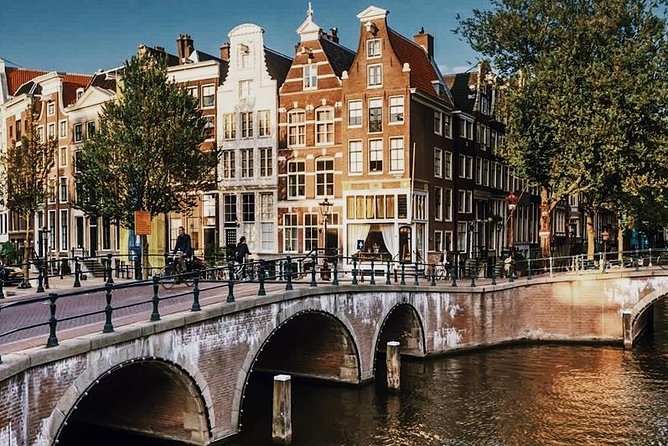
If Amsterdam is your first stop in the Netherlands, this kind of guided walk can save you time and confusion. In a short span, you cover the parts of the center that make the city make sense: waterways, old trading streets, major squares, and the religious and civic buildings that shaped daily life. You’re not just “checking boxes.” You’re getting the why behind the buildings you already see in photos.
The pace is friendly but purposeful. You’ll spend about 2 hours 30 minutes on foot, and the tour is designed to keep you moving even when the weather turns. That matters because Amsterdam walking can feel effortless in good weather, then suddenly become tiring when wind or rain shows up.
Value is also part of the equation. At $62.48 per person, you’re paying for a live guide, a tight route, and a clear explanation of what you’re looking at. And it’s not only about paying for entry tickets. Several stops are free, so you’re already getting your money’s worth without constant add-on costs.
More Historical Tours in Amsterdam
- Amsterdam Food and Cultural Tour with Tastings
★ 5.0 · 4,315 reviews - Amsterdam: Historic City Centre Canal Cruise
★ 4.3 · 659 reviews - Amsterdam: Haunted History and Ghost Walking Tour
★ 4.5 · 488 reviews
The Route Starts at Prins Hendrikkade, Then Turns Into a Story
Your walk begins at Prins Hendrikkade 73 (1012 AD) and ends around Prinsengracht 2 at Het Papeneiland (1015 DV). That matters more than it sounds. Starting near the central water streets helps you orient fast, and ending on a scenic canal corner is a nice way to close the day without immediately scrambling for your next plan.
You should also know this is a guided walking tour that runs rain or shine. The operator explicitly recommends comfortable shoes, bringing a bottle of water, and using an umbrella if rain shows up. In summer, they also suggest a hat. Do that, and the weather becomes just a hassle instead of a deal-breaker.
Another practical note: no large bags or suitcases are allowed. If you’re traveling light, that’s easy. If you’re dragging luggage, switch to a small day bag and plan to store large items elsewhere.
Stop-by-Stop: From St. Nicholas Basilica to the Canal Corners at Papeneiland
Here’s how the route unfolds, and why each stop is worth a pause.
St. Nicholas Basilica, a Catholic Landmark After Centuries of Restriction
You start at St. Nicholas Basilica, Amsterdam’s primary Roman Catholic church. The key idea here is context. This church was built in the late 19th century after much earlier periods of Catholic prohibition. You’re seeing not only a religious building, but also a symbol of shifting rules and growing tolerance.
Admission here is free, so it’s a low-risk, high-impact start. Even if you only look quickly, the guide’s framing helps you understand why the architecture and timing are tied to Amsterdam’s changing religious landscape.
More Walking Tours in Amsterdam
- Amsterdam Anne Frank: Small-Group Walking Tour & Local Guide
★ 4.8 · 12,789 reviews - Anne Frank’s Story – Guided Walking Tour through Amsterdam
★ 5.0 · 11,619 reviews - Absolutely Amsterdam – the Essential Introductory Walking Tour
★ 5.0 · 3,629 reviews - Amsterdam: Anne Frank Guided Walking Tour in DE/EN/IT/ES
★ 4.9 · 3,107 reviews
Schreierstoren (Weeping Tower), Where Farewells Once Had a Place
Next comes the Schreierstoren, often called the Tower of Tears. It’s medieval, and the story is human: it’s associated with women bidding farewell to loved ones departing by ship.
The admission detail: this stop is not included, so you’re usually seeing it as part of the walk rather than planning around an entrance. Still, it’s a great example of how Amsterdam’s waterways were not just scenery, but part of departure routes, work, and family life.
Zeedijk and the Old Sea Dike, Amsterdam’s Water-Control Story in Plain Sight
You then head to Zeedijk, one of Amsterdam’s oldest streets. The guide connects it to infrastructure. Long before modern city planning, a sea dike held back the waters of the IJ, and Zeedijk sits on that old defense line.
You also see the Kolksluis, noted for picturesque lock-bridge views. This is the kind of stop that makes Amsterdam feel logical. Once you understand the city is always negotiating with water, the canals stop being “cute scenery” and start being the real system that made the city possible.
Admission for this segment is free.
Nieuwmarkt and De Waag, Trading Square Energy and a Historic Gate Building
At Nieuwmarkt, you’re stepping into a square that has served commerce and social life since the 17th century. The reason it mattered is practical: it sat just inside an old city gate, so traders and shoppers had a convenient entry point for fresh produce and goods.
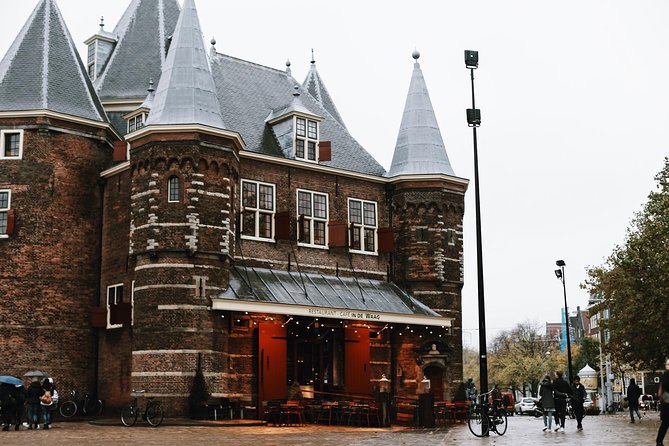
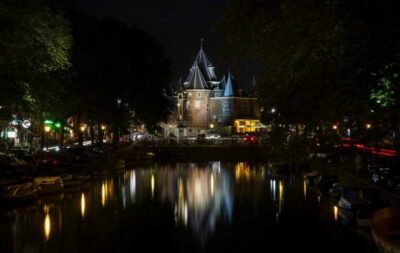
During this portion of the walk you’ll also see De Waag. It’s a 15th-century building, one of Amsterdam’s oldest remaining non-religious buildings. It originally functioned as a city gate and part of the old wall system, and later it served in multiple roles like guildhall, museum, and fire station.
Admission for these stops is free. This is a good moment if you enjoy city layers, because the same structure can reflect different eras of Amsterdam’s needs.
Trippenhuis and Kleine Trippenhuis, Wealth and Space Pressure in One Look
Then you reach the Trippenhuis, described as Amsterdam’s grandest 17th-century mansion and once owned by the Trip family. You’re also shown the contrast with the smallest house across the street.
The tour notes that the Trippenhuis and Kleine Trippenhuis are not included, so you’ll likely see them from outside. That works, because the contrast is the point: when space was expensive and taxes were tied to land, architecture leaned upward and narrowed.
It’s a quick stop, but it’s a powerful visual lesson in economics.
Oost-Indisch Huis Courtyard, The Dutch East India Company at Ground Level
Next is the Oost-Indisch Huis, where you step into the courtyard of the Dutch East India Company’s headquarters. The guide frames it as the birthplace of the world’s first multinational corporation.
This is one of those stops where “history talk” turns into something you can feel. The courtyard helps you picture a work world built on trade routes, finance, and ambitious shipping. Admission is free here, so again, you’re not paying extra to get the value.
Zuiderkerk, Rembrandt’s Amsterdam, and the City’s Major Institutions
From there, you’ll move through the area of major Protestant and civic landmarks.
You’ll see Zuiderkerk, Amsterdam’s first purpose-built Protestant church designed by Hendrick de Keyser. The highlight is the tower, described as one of the defining landmarks. This stop is not included, so plan on outside views.
You’ll also stop outside Museum Het Rembrandthuis, Rembrandt’s former home and studio where he lived and worked for nearly 20 years. Again, admission is not included, so you’ll view it as part of the walk, not as an entry experience.
Then you reach the Stopera, the building complex that houses the city hall and the Dutch National Opera and Ballet. The construction is described as taking at least 60 years. This is a “look and understand” stop. Admission is not included, but the guide’s commentary can help you connect institutions to the city’s priorities.
Huis Aan De Drie Grachten and Begijnhof, Canal Geometry and Quiet Courtyard Life
You’ll also see Huis Aan De Drie Grachten, a rare 17th-century canal house located where three canals meet. The façades face three directions, which makes it a practical reminder that Amsterdam’s geography shapes how people build.
Admission is not included, but it’s worth pausing to look up and around.
After that, you step into Begijnhof, a peaceful medieval courtyard once home to devout women known as Beguines, plus one of the oldest wooden houses in Amsterdam. This stop is not included, so you’re there for atmosphere and place, not a ticketed visit.
Begijnhof is often the kind of stop that makes the walking feel worth it. You get a breather from traffic and noise, which also helps you reset your attention.
Dam Square and Herengracht, Where Power Meets Trade
Then it’s Dam Square, described as the historic heart of Amsterdam, framed by the Royal Palace, the 15th-century New Church, and the National Monument to WWII victims. Admission here is free.
This is a strong stop for orientation because it connects the city’s modern presence to older civic power. Even from outside, you’ll get the sense of why this is where people gather, protest, celebrate, and remember.
Next you admire Herengracht, specifically the Golden Bend lined with richly ornate canal mansions from the Dutch Golden Age. This is free, and the reason it works on a guided walk is simple. A guide can point out why certain bends and canal lines mattered for wealth and status.
Outside the Anne Frank House Area and Up to Gables on Bloemgracht
You pause near the Anne Frank House, where the diarist hid during WWII. The tour also notes the Westerkerk nearby, with the tallest church tower in Amsterdam.
Admission is not included, so the value is in the framing and where the guide directs your attention.
Then you’ll look up at De Drie Hendricken aan de Bloemgracht 87 to 91, with quirky gable stones carved with allegories and trade emblems. This is the kind of stop that pays off if you like architecture details. The fact that the guide points it out matters because you would probably walk past those carvings without realizing what they mean.
Admission is not included.
Coöperatieve Vereniging Karthuizerhof and Noorderkerk, Welfare Courtyards and Protestant Design
Later you discover the largest hofje in Amsterdam, the almshouse complex Coöperatieve Vereniging Karthuizerhof BA, built around a tranquil courtyard for the city’s poor and elderly. Admission is free.
Then you visit Noorderkerk, a 17th-century Protestant church built for the Jordaan district. The unusual cross-shaped floor plan reflects Reformation worship ideals. Admission is free for this stop too.
The reason these last church and courtyard moments matter is that they show a different kind of Amsterdam. It’s not only about power and wealth. It’s also about how cities cared for people, and how beliefs changed built form.
Finish at Papeneiland, Where the Apple Pie Note Is Part of the Fun
The tour ends at Het Papeneiland, a canal corner with a brown café from 1642. The tour also says it serves what’s claimed to be the best apple pie in town.
This is free as part of the stop, and it’s a nice end point because you have an immediate option for a snack or drink right where you finish. Even if you don’t order pie, the location is pretty, and it gives you a clean landing after a dense history route.
How Much Independence Do You Get After the Tour?
The big promise here is not only seeing the highlights. It’s leaving with enough context and tips to explore on your own afterward.
When I think about value in tours, I care about this part. If you leave with a sense of which neighborhoods connect best to your interests, you spend less time on guesswork. The route ends near the canal network, so your next step can be a short walk or tram ride to whatever you want to see next.
The guide experience also seems to matter. People highlight guides like Anita, Diana, and Pedro for being clear, moving the group along, and handling questions with care. That’s exactly what you want in a 2.5-hour walk. You get the history, but you don’t get stuck.
Price and Ticket Reality: What Your $62.48 Covers
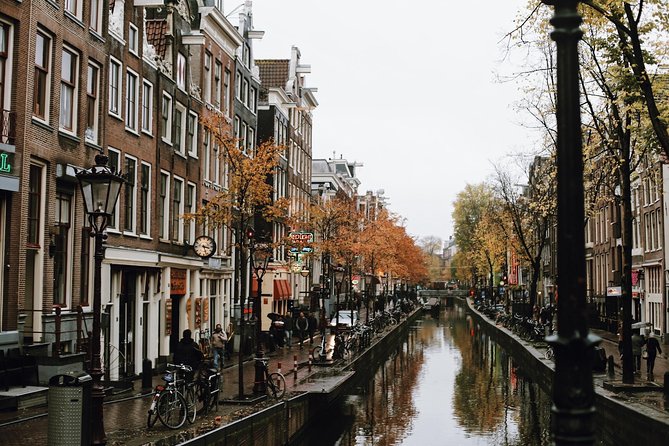
Let’s talk money in a real way.
You’re paying $62.48 per person for a guided walk lasting about 2 hours 30 minutes, and the tour runs in all weather. Some stops are explicitly free, like St. Nicholas Basilica, Zeedijk and lock-bridge views, Nieuwmarkt and De Waag, Oost-Indisch Huis courtyard, Dam Square, Herengracht, Karthuizerhof, and Noorderkerk, plus the Papeneiland café stop.
Other stops are marked as not included, meaning you should expect outside viewing unless you choose to pay separately. Examples include Schreierstoren (Tower of Tears), Trippenhuis and Kleine Trippenhuis, Zuiderkerk, Museum Het Rembrandthuis, the Stopera area, Anne Frank House outside the building, and the Bloemgracht gable viewing area, plus a few others where entry isn’t part of the tour package.
So the value is strongest if you like explanation and orientation, not if you’re planning to check off a list of paid interiors in one go. If you want interiors, you can still plan those later, but this tour is designed for meaning first.
Who This Tour Fits Best
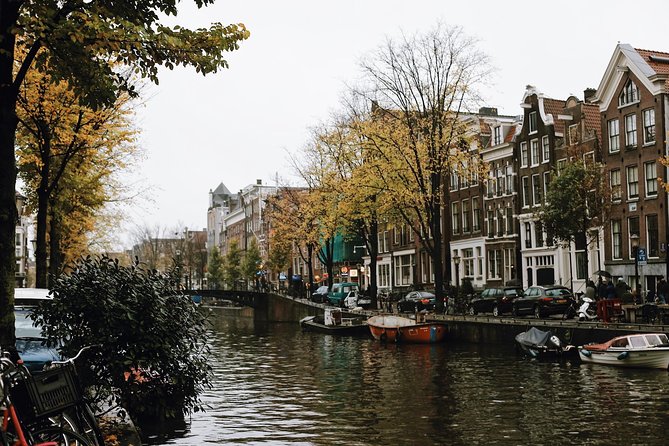
This walk fits best if you want to:
- Get your bearings fast in Amsterdam’s city center
- Understand why key buildings exist, especially how religion, trade, and civic life shaped the city
- Spend your time on a route that ends in a pleasant spot rather than dragging you across town again
You should consider it if you travel in winter or rainy shoulder seasons. The tour explicitly runs rain or shine, and the route is designed for weather disruption with an alternative route if national celebrations affect parts of the path.
You should also consider it if you’re okay with outside viewing at several sights. The notes say some places can’t be visited from the inside due to security measures, so plan to enjoy what you see from the street and courtyards.
Should You Book This Amsterdam City-Center History Walk?
Yes, if you want a guided route that helps you understand Amsterdam beyond postcards, this is a strong pick. The price makes sense because many stops are free and you’re paying for a focused guide who connects the dots between churches, squares, trade buildings, and canal-era wealth.
I would skip it only if you want a tour that guarantees paid museum interiors at multiple stops. This one is built around seeing highlights and learning how they connect, not around stacking ticketed entries.
If your schedule is tight and you want a history-led orientation with a friendly ending at Papeneiland, book it early and come with comfortable shoes. Amsterdam rewards you when you slow down, look up, and ask questions, and this tour is set up for exactly that.
FAQ

How long is the Amsterdam city-center walking tour?
It runs for about 2.5 hours.
Is the tour in English?
Yes, it is offered in English.
Do I need to pay for admission at each stop?
Not all stops have admissions included. Some are free, and others are marked as admission tickets not included.
Where does the tour start and end?
It starts at Prins Hendrikkade 73, 1012 AD Amsterdam, Netherlands. It ends at Het Papeneiland at Prinsengracht 2, 1015 DV Amsterdam, Netherlands.
Does the tour run in bad weather?
Yes, it runs rain or shine. You should dress appropriately and bring items like an umbrella.
What should I bring for the walk?
Comfortable shoes are recommended, along with a bottle of water. An umbrella is suggested for rain, and a hat for summer.
Is the tour accessible for everyone?
The note says travelers should have a moderate physical fitness level.
Is this tour private?
This is described as a private tour/activity, with only your group participating. The guide exclusivity note also says it does not apply if you choose the SAVE! BOOK SEMI-PRIVATE option.
Can I cancel for free?
Yes. Free cancellation is available up to 24 hours in advance for a full refund.
Latest Amsterdam reviews
- Amsterdam Private Prosecco Bike with Music Sound System★ 5.0 · 3 reviews
- Private Day Trip From Amsterdam to Rotterdam and Zaanse Schans★ 3.5 · 3 reviews
- 1 hour Amsterdam City Tour in Pedicab★ 4.5 · 3 reviews
- The Best of Amsterdam: Private Full-Day Tour with a Canal Cruise★ 2.5 · 3 reviews
- Amsterdam Walking Tour with Audioguide on Your Smartphone★ 3.5 · 3 reviews
- Bike Tour with Guide in Amsterdam★ 4.5 · 3 reviews
- Concert at The Royal Concertgebouw – Amsterdam★ 5.0 · 3 reviews
- Private tour (max 3 per) to Giethoorn & Canal ride from Amsterdam★ 3.5 · 3 reviews
Walking Tours, compared.

Absolutely Amsterdam – the Essential Introductory Walking Tour
Read our review →
Amsterdam Highlights Walking Tour: Small Group Experience
Read our review →

Browse the lists this tour appears in