
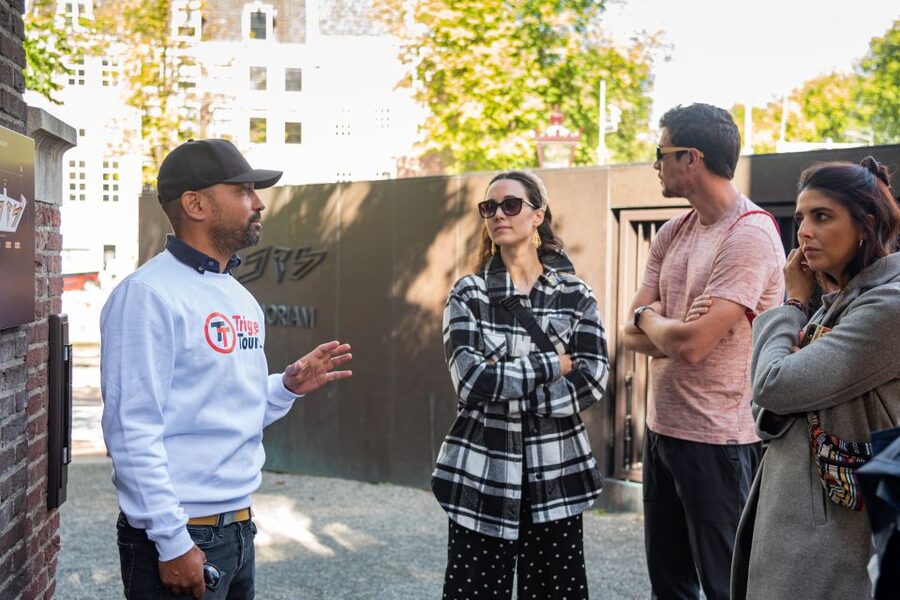
Reviewed · ANNE FRANK HOUSE
Amsterdam: Anne Frank Walking Tour
This is one of those Amsterdam tours that turns normal streets into a clear, human timeline of World War II. I especially like how guides, including people like James and Aaron, tell the Anne Frank story with empathy and strong pacing that keeps it understandable without watering it down.
You’ll walk through the Jewish Quarter and key WW2-era landmarks, with stops tied to the February strike, the Hunger Winter, and the city’s Jewish community. One key consideration: the tour does not include entrance to the Anne Frank House, so plan that separately if you want to go inside.
Key Highlights You’ll Care About
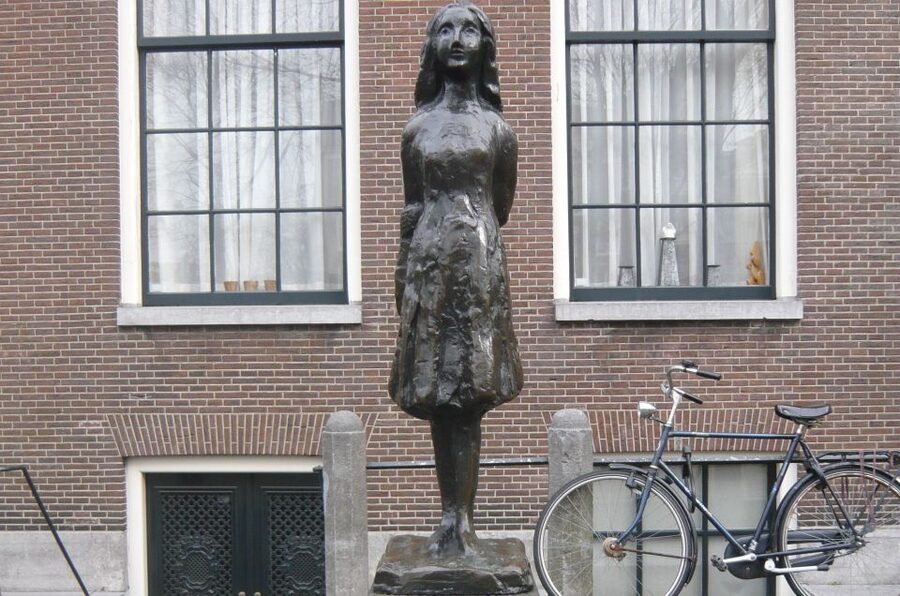
- WW2 Amsterdam made street-level with stops around the Jewish Quarter, Plantage, and nearby memorial sites
- Anne Frank’s family timeline, including the move from Germany and what happened after the war
- Portuguese Synagogue and Jewish Historical Museum area stops that help you understand the community before the war
- Auschwitz Monument visit for a solemn, fitting endpoint to the walking story
- Short, guided moments at each place so you keep momentum for the full 2-hour walk
- English or Spanish live guiding, often praised for storytelling that stays respectful and easy to follow
Two hours through Amsterdam’s Jewish streets and the Anne Frank story

If you want the Anne Frank story without only looking at indoor exhibits, this walk is built for you. You trade a museum’s fixed pace for the feeling of moving through the city, including the narrow lanes that still carry the weight of what happened there.
I like that the tour is not just about Anne Frank as a name. You also get the surrounding context: what Jewish life in Amsterdam was like before the war, how the city changed under occupation, and how families were affected step by step. A good guide turns that into something you can hold in your head while you’re outside, looking at real buildings and street corners.
The other reason this works is emotional balance. You’ll hear the hardest parts of the Holocaust and what Amsterdam’s Jewish community endured, but you also get framing. That matters, because it helps you understand why these exact locations are still meaningful.
More Walking Tours in Amsterdam
- Amsterdam Anne Frank: Small-Group Walking Tour & Local Guide
★ 4.8 · 12,789 reviews - Anne Frank’s Story – Guided Walking Tour through Amsterdam
★ 5.0 · 11,619 reviews - Absolutely Amsterdam – the Essential Introductory Walking Tour
★ 5.0 · 3,629 reviews
Meeting near Waterlooplein, then settling into a smart walking rhythm
The tour meets near Waterlooplein. Your exact corner can vary based on the option you book, but the start point is in that same area of the city. The walk runs for 2 hours, so it’s long enough to cover several key locations, but short enough that you won’t feel like you’ve been walking all day.
Wear comfortable shoes. Parts of the Jewish Quarter are tight streets and alleys, so good shoes keep you focused on the story instead of your feet. The stops are kept short, with guided moments that let you see what’s in front of you, then move on.
You can also choose private or small groups. In practice, that tends to help if you have questions. English and Spanish are available with a live guide, which is a big deal here because the tour depends on narration, not just signage.
Portuguese Synagogue area: seeing continuity before the war

One of the early stops puts you around the Portuguese Synagogue. Even if you only see it from the street, this is a powerful moment because it anchors the story in long-established community life, not just tragedy.
You’re not asked to memorize details. Instead, you learn how Jewish life in Amsterdam had deep roots and how the community shaped city culture and heritage over centuries. When you hear that early, the later WW2 restrictions and persecution land harder, because you understand what was being targeted and why.
This is also a practical lesson in “reading” the city. Amsterdam has layers. Standing near a landmark like this gives you a reference point so later stops do not feel random. They start to click into a timeline.
Jewish Quarter lanes: how WWII stories fit the street plan
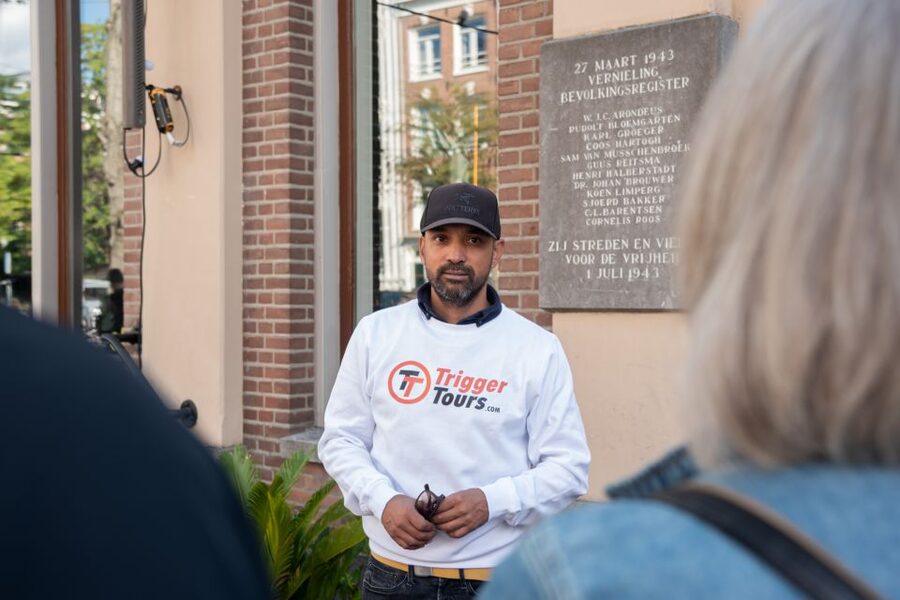
Next comes the heart of the Jewish neighborhoods, centered on the Jewish Quarter. This is where the tour’s street-level storytelling really pays off. You’ll walk narrow streets and smaller alleys where the guide connects what you’re seeing to what happened during World War II.
This part is not just about Anne Frank. You’ll also hear about Amsterdam under occupation and the struggles people endured, including the February strike and the Hunger Winter. Those events matter because they show how war reached everyday life, not only headlines and camps.
You’ll also be pointed toward major Jewish-related sites in the city, including the Jewish Council headquarters. The guide helps you understand why those institutions mattered and how the city’s Jewish community was forced into impossible choices.
One detail I found especially useful from guide-led experiences like this: you may notice small markers in the pavement, and the guide explains what they represent. It gives the walking an extra layer of meaning, because you’re not just looking up at buildings, you’re noticing what the ground is recording.
Not the right fit? Amsterdam also runs these:
- Amsterdam: Van Gogh Museum Ticket
★ 4.7 · 52,054 reviews - Amsterdam: Heineken Experience Ticket including 2 Drinks
★ 4.6 · 36,014 reviews - Amsterdam Classic Saloon Boat Cruise with Drinks and Cheese
★ 5.0 · 31,825 reviews - Amsterdam Luxury Canal Cruise + Unlimited Drinks & Bites option
★ 5.0 · 30,518 reviews
Jewish Historical Museum stop: context that makes the hard parts clearer
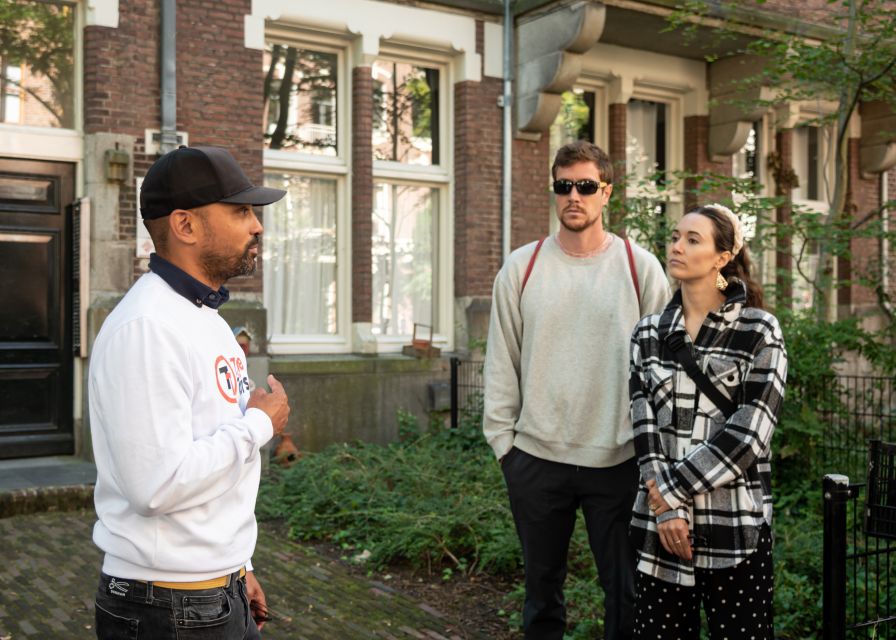
You’ll spend a shorter guided time at the Jewish Historical Museum area. Even without spending hours inside, this stop helps you set the timeline before the most painful parts of the story.
Think of it as mental setup. Once you understand a little about what came before, you can follow the later narrative more cleanly, especially when the guide links the city’s wartime experience to the Anne Frank story.
This stop also helps you learn a key travel skill: don’t wait until you’re already overwhelmed to start understanding. A quick dose of background early makes later stops feel less like disconnected moments and more like a coherent journey.
Waterlooplein, Nieuwmarkt, and Lastage: connecting neighborhoods to wartime pressure
You’ll work your way through the broader area around Waterlooplein, then onward toward Nieuwmarkt en Lastage. These streets and squares help you understand that Amsterdam’s Jewish history is not sealed into one single pocket. It’s woven into multiple neighborhoods, daily routines, and community life.
At this stage, the guide usually shifts from “what it used to be” to “how the war changed things.” That’s where you’ll hear more about what Amsterdam’s Jewish community faced during the Holocaust, and the enduring legacy of that period.
A practical tip: keep your attention on the guide’s links between places. The city is easy to wander in, especially if you’ve got canals and side streets in your head. The narration gives you a thread so your photos and your memories do not turn into a random set of stops.
Auschwitz Monument: a sober endpoint that stays respectful
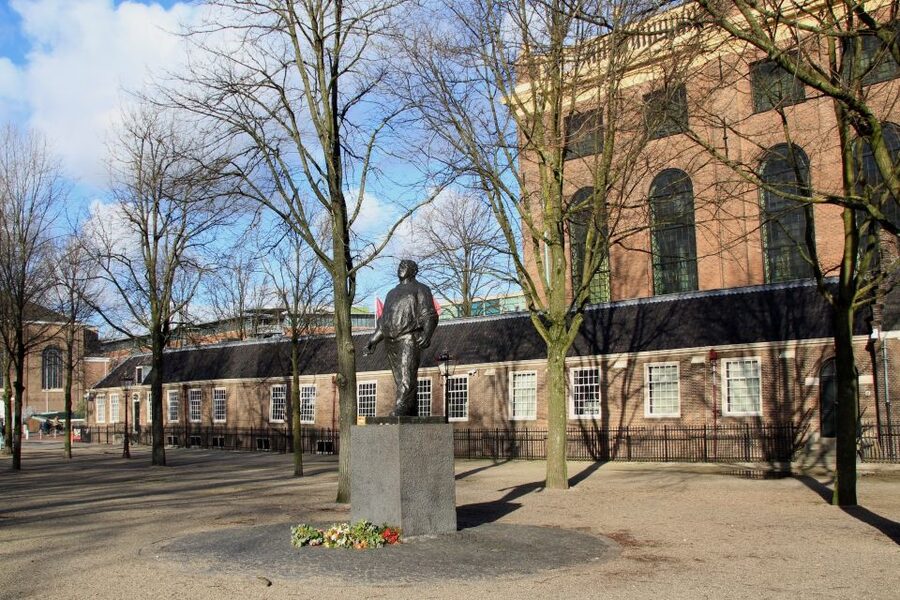
The walk includes the Auschwitz Monument in Amsterdam. This stop is often the moment when the tour’s mood shifts, because it’s a direct commemoration tied to the Holocaust.
I like that this tour doesn’t pretend the story ends with sightseeing. It guides you to a memorial setting that gives the emotional weight room to land. This is also a good point to slow down mentally, not just physically, because the guide’s narration here is meant to bring closure to what you’ve been hearing all along.
If you’re traveling with teens or first-time visitors to Amsterdam history, this moment can be especially important. It turns abstract learning into something grounded in place.
Anne Frank House stop: you’ll see it, but you plan the entry separately
You’ll reach Anne Frank House during the walk, but there’s an important boundary: the tour does not include entrance or tickets. So you’ll likely see the place and hear what it represents, but you won’t be doing the full inside visit during this 2-hour experience.
Still, this is valuable. The guide helps you connect the locations you’ve visited to Anne Frank’s story: her family’s move from Germany, the years of hiding, and her father’s life after the war. You’ll also hear how Anne’s diary was published after the war by her father and how it became one of the best-selling books of all time.
That background is what makes the exterior stop meaningful. If you’re hoping to go inside, treat this walk as the narrative foundation, then add the Anne Frank House entry as a separate step.
Plantage district wrap-up: remembering the story in the city’s living present

The tour finishes by heading into Plantage. This part of the walk matters because it reinforces that history is not stuck in the past tense. You’re ending in an area that feels like real Amsterdam, not a closed-off history theme park.
The guide’s job here is to help you carry what you learned into the city you still have time to explore after the tour. You get a sense of why the Jewish community’s history shaped Amsterdam’s culture and heritage, and why these reminders still matter in how the city understands itself today.
If you want to keep your trip feeling connected, Plantage is a nice last step. It helps you transition from heavy narration back into normal street life without feeling like you’re switching topics too fast.
Price and value for 2 hours in Amsterdam
At $21 per person for a 2-hour guided walk, this is a strong value if your goal is context and clarity. You’re paying for more than “seeing buildings.” You’re getting someone to link the WW2 story to each location so you don’t have to research while you’re standing there, cold and tired, trying to read signs.
It’s also good value because the tour covers a sequence of meaningful sites, from neighborhood context to a major Holocaust memorial, rather than focusing on one stop. That structure is what makes the price feel fair.
The trade-off is simple and worth planning for: no Anne Frank House entrance is included. If you want the inside experience, budget extra time on a different day. If you’re only comfortable doing one Anne Frank-focused activity, decide whether you want guided city context (this tour) or the full house visit (tickets and an entry time slot). Many people do both, spaced out.
Who this tour suits best (and who should consider another option)
This walk is a great match if you want:
- A clear Anne Frank story with Amsterdam WW2 context
- A guided tour that connects history to specific places
- A short, focused activity that fits into a busy Amsterdam itinerary
It may feel less ideal if:
- You’re looking for a light, casual walk. This is serious material, and the memorial stop is not a quick photo moment.
- You want to go inside the Anne Frank House during the tour. You will need separate entry planning.
One more practical note: the tour description includes wheelchair accessibility language, but it also lists that it’s not suitable for wheelchair users. If accessibility affects your plans, contact the provider ahead of time to confirm what can realistically work for your situation.
Should you book this Anne Frank walking tour?
Book it if you want your Amsterdam visit to include the real story behind the headlines, with street-level context that makes the locations matter. The $21 price is fair for a guided walk that connects major WW2 events, the Jewish neighborhoods, and the Anne Frank narrative into one coherent route.
Skip or change your plan if your top priority is only seeing the Anne Frank House interior, because this tour does not include entrance. Also be honest with yourself about emotional content, especially if you prefer a more distant approach to history.
If you do book, do two things that make the day better: wear comfortable shoes, and plan the House entry separately if you want it. With that, you’ll leave with a far clearer understanding of Amsterdam during World War II, and why these streets still hold meaning today.
FAQ
How long is the Amsterdam Anne Frank Walking Tour?
It lasts 2 hours.
How much does it cost?
The price is $21 per person.
Where do I meet the guide?
You meet the guide near Waterlooplein. The exact meeting point can vary depending on the option booked.
Which places are included on the walk?
You’ll cover stops tied to the Anne Frank story and Amsterdam’s Jewish WWII history, including areas connected to the Portuguese Synagogue, the Jewish Quarter, the Jewish Historical Museum, Nieuwmarkt en Lastage, the Auschwitz Monument, Anne Frank House (outside), and Plantage.
Does the tour include tickets to the Anne Frank House?
No. The tour does not include entrance or tickets for the Anne Frank House.
Is food or drinks included?
No. Food and drinks are not included.
What languages is the live guide available in?
The live guide speaks English and Spanish.
Is this tour good for families or teens?
The tour covers WW2 history and the Anne Frank story. It may work well for teens who want historical context, but it includes Holocaust-related material, so consider your group’s sensitivity level.
Is the tour suitable for wheelchair users?
The information provided includes wheelchair accessibility language, but it also states it is not suitable for wheelchair users. If you rely on a wheelchair, check with the provider ahead of time.
What should I bring?
Bring comfortable shoes, since it’s a walking tour with street-level stops.
Latest Amsterdam reviews
- Small Group Tulip and Spring Flower Fields Bike Tour★ 4.5 · 14 reviews
- Amsterdam Van Gogh Museum Private Tour for Kids & Families★ 4.0 · 14 reviews
- Zaanse Schans Windmills Private Tour from Amsterdam Airport★ 5.0 · 14 reviews
- Bruges Day Trip from Amsterdam★ 4.5 · 14 reviews
- Volendam: Volendams Museum Entry Ticket★ 4.4 · 14 reviews
- Departure from Amsterdam City to Amsterdam Airport AMS by Minivan★ 5.0 · 14 reviews
- Zaanse Schans Windmills, cheese and clogs and Volendam tour from Amsterdam★ 5.0 · 14 reviews
- Walking Tour about Golden Age Architecture, private local guide★ 5.0 · 15 reviews