
Reviewed · RED LIGHT DISTRICT
Amsterdam: 1,5-Hour Red Light District Tour
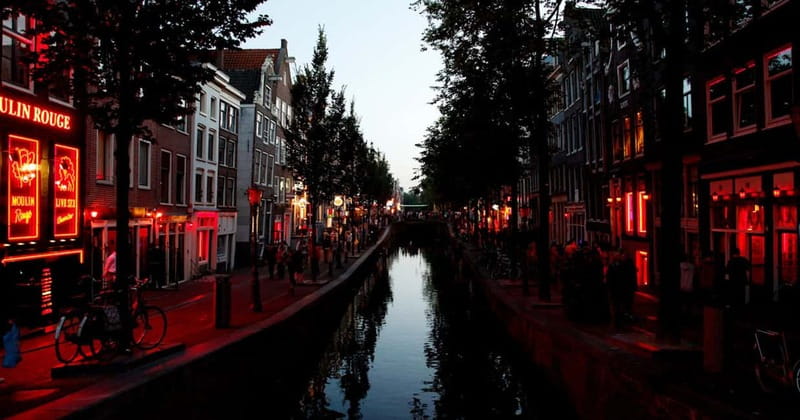
Amsterdam’s Red Light District is the kind of place that sparks questions fast, but most people only see a postcard version. This 1.5-hour walking tour is interesting because it gives you real neighborhood context around De Wallen and the history of sex work. I like the pacing and clarity, so you can ask questions without feeling lost in the noise. One possible drawback: the topics are adult by nature, and it may feel uncomfortable if you want a purely light and casual walk.
I also like that you learn why Amsterdam is known for a liberal approach to prostitution legalization and drug policy, instead of just hearing slogans. The tour connects that history to coffee shop culture and why it became such a visible part of everyday Amsterdam life. You’ll come away with a better sense of how policy, street life, and public debate intersect.
Finally, here’s the key consideration: guided tours inside the district are restricted since 2020, so you explore the outskirts, then finish at De Wallen with a map to explore on your own. If you were hoping for a guide-led walk through the densest lanes, this won’t be that.
Key things you’ll notice on this 1.5-hour tour
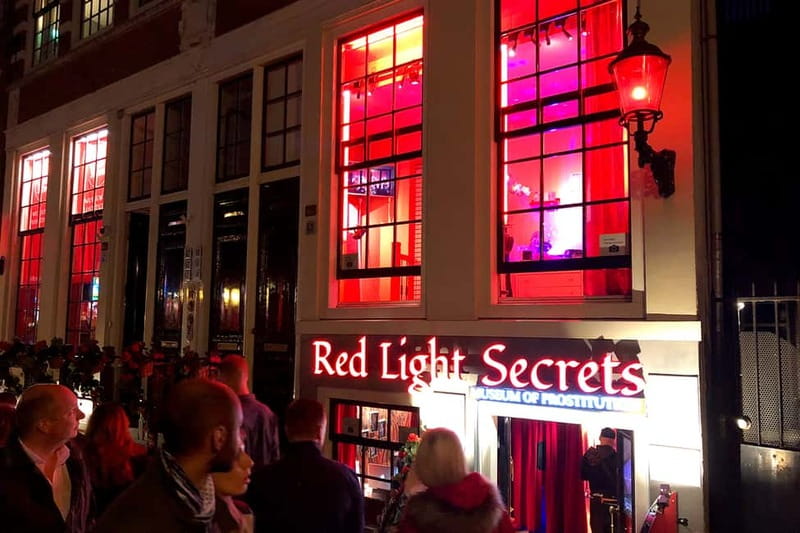
- Outskirts route due to 2020 restrictions, with a map for the last stretch on your own
- Sex work history and current challenges, framed through Amsterdam’s policy choices
- Coffee shop culture explained, including why it matters in the city’s public life
- A guided route of major landmarks nearby, including Dam Square and Amsterdam Centraal
- A small end-of-tour gift or treat, meant to add a bit of cheeky fun
- Interactive guides with solid street instincts, including names like Valeria and Manouk in recent departures
Beursplein to De Wallen: a short walk with a purpose
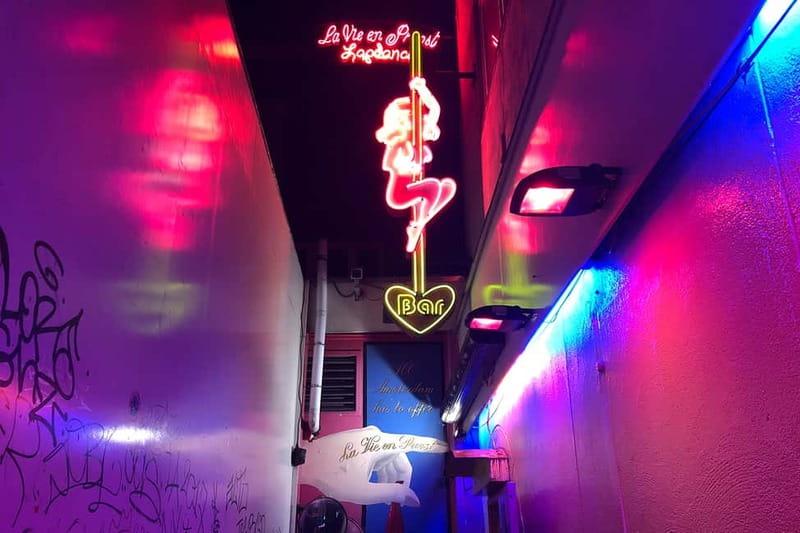
This is a focused, 90-minute way to start understanding Amsterdam’s most talked-about neighborhood. The tour is built around one simple idea: if you want to make sense of De Wallen, you need context first. So you get a guided route through the area around the district, then you finish where you can choose your next steps.
The tour price is $31 per person for a reason. You are not just paying for walking and pointing. You’re paying for a live guide who talks through the logic behind the city’s reputation for tolerance on sex work and drugs, plus the day-to-day realities that come with legalization. Add in a map for the final stretch and a small gift at the end, and it starts to feel like good value for your first night in town.
More Red Light District walking tours:
- Amsterdam: Red Light District Tour in DE/EN/IT/ES/FR
★ 4.9 · 7,136 reviews - Amsterdam: Red Light Secrets Museum Entry Ticket
★ 4.2 · 5,722 reviews - Amsterdam Red Light District & Coffee Shop Tour
★ 4.6 · 4,134 reviews
Meeting point: find the guide fast
You’ll meet at Beursplein. Go to the bottom of the stairs of Bistro Berlage, where the guide waits by a large black lantern with a sign that says Guidance. If you arrive a few minutes early, you can lock onto the landmark and get your group together without stress.
What you should bring
Wear comfortable shoes. This is a walking tour, and the route is short, but it still works better when your feet are happy.
What you should not bring
Alcohol and drugs are not allowed. That keeps the vibe respectful and tour-appropriate, especially for a neighborhood that already attracts strong opinions.
A few other ways to fill a day in Amsterdam
- Amsterdam: Van Gogh Museum Ticket
★ 4.7 · 52,054 reviews - Amsterdam: Heineken Experience Ticket including 2 Drinks
★ 4.6 · 36,014 reviews - Amsterdam Classic Saloon Boat Cruise with Drinks and Cheese
★ 5.0 · 31,825 reviews - Amsterdam Luxury Canal Cruise + Unlimited Drinks & Bites option
★ 5.0 · 30,518 reviews
Your route: landmarks that set context before the finish
The itinerary is designed like a warm-up act. You start near Beursplein, work your way through a string of well-known central spots, then end at De Wallen. Even when you’re only stopping briefly, each place helps you orient yourself so the final area makes more sense.
Here’s what the timing looks like and why it matters:
Beursplein (about 10 minutes)
This is your starting reset. You begin in the central area first, so the guide can frame what you’re about to hear and where De Wallen sits in Amsterdam’s broader map. It’s a useful start because you’ll get the historical and policy context before you’re surrounded by the district’s visual cues.
Dam Square (about 15 minutes)
Dam Square acts like a key reference point. The extra time here gives the guide room to set the tone, especially around the themes that run through the tour: tolerance, public debate, and how laws shaped daily life. If you’re the type who likes to ask questions early, this stretch usually gives you that opening.
Oude Kerk photo stop (about 10 minutes)
You pause for photos at Oude Kerk. That stop is less about architecture trivia and more about keeping the group moving while you still get a moment to orient yourself. Photo stops also help you stay present. You’ll likely start noticing how the city’s layout funnels people toward the canals and the district edge.
Amsterdam Centraal Station photo stop (about 5 minutes)
A quick Centraal Station pause can feel like a breather. It also helps you anchor the walk relative to transit. Even if you’re not planning to use the station right now, it helps you later when you decide how you want to explore on your own.
Amsterdam Chinatown photo stop (about 10 minutes)
This stop nudges you away from the idea that De Wallen is the only story in the neighborhood. Amsterdam’s central districts blend. Around the walk, you’ll see that De Wallen is one part of a much bigger patchwork of cultures, streets, and everyday life.
Nieuwmarkt Square photo stop (about 15 minutes)
Nieuwmarkt Square gets a longer pause, which is often a sign that the guide wants time for explanation. This can be a good moment for clarifying questions. If you’ve been wondering how legalization played out in real life, this is the kind of stop where you can expect the guide to connect the historical dots.
One more short photo stop on the approach (about 5 minutes)
There’s an additional brief photo stop before the finish. It functions like a final repositioning. You’re moving from landmarks into the more specific edges of De Wallen, so this is the last chance to settle your bearings before you get the map at the end.
Finish at De Wallen (end of the tour)
You end at De Wallen. Since guided access inside the district is restricted since 2020, the guide can’t lead you through the center lanes. Instead, you finish at the right place, then you use your map to explore the last stretch yourself.
That is actually a smart way to do it. You get guidance for the heavy topics and the city context, then you get freedom to decide how close you want to be.
What the guide actually teaches: sex work policy, challenges, and coffee shops
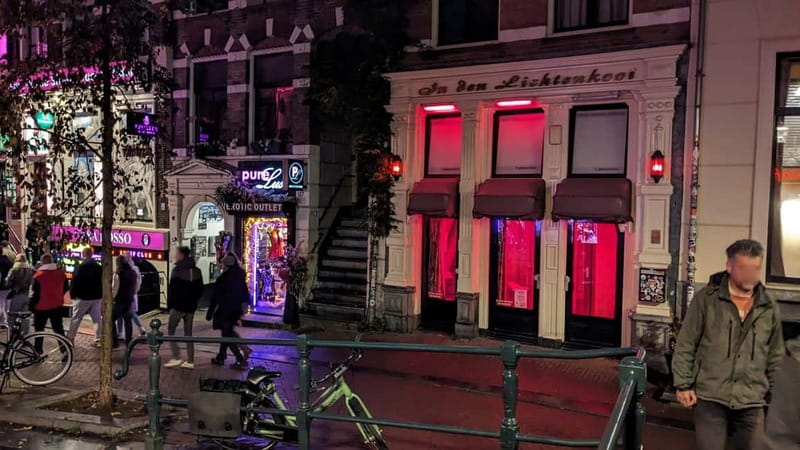
The best part of this tour is how the guide frames the neighborhood. Instead of only describing what you might see, you hear why Amsterdam became known for liberal stances and how those decisions affected sex work and drug policy.
The liberal attitude: policy first, street life second
One of the tour’s stated goals is to explain why Amsterdam’s reputation exists and what sits behind it. You’ll hear about legalization of prostitution and current sex worker challenges. That matters because it shifts the conversation from shock to understanding.
The district is often misunderstood in other countries. A tour like this helps you move past stereotypes and think in terms of law, public health, and the real constraints of living and working in a high-attention neighborhood.
Current challenges, not just history
The tour includes the present-day realities sex workers face. You also get the mention of recent controversies. The point is not gossip. It’s context for why the area stays in the spotlight and why policies keep evolving.
If you’re the kind of person who hates half-truths, you’ll like that the tour stays focused on what legalization changed and what problems remained.
Coffee shops: culture and significance
You also learn about Amsterdam’s coffee shops and their cultural significance. That’s important because many people associate coffee shops with one thing, then assume the rest of Amsterdam is the same. Instead, you get a clearer picture of how coffee shops became part of local identity and public life.
You may not be inside every coffee shop during this short walk, but you do get the explanation that helps you see them as more than a tourist prop. It also helps you avoid the common mistake of treating the city like a theme park.
Real guide energy you can feel in the group
The reviews attached to this experience mention a strong thread of good communication and humor. Some guides you might encounter include Valeria and Manouk, and one departure mentions a pairing with a helper named Trixie. The consistent takeaway is that the guide handles questions well and keeps the pace comfortable.
That matters on a topic like this. You want a guide who can talk directly, handle sensitive subjects without getting preachy, and keep you oriented.
After the walk: the map and the little treat
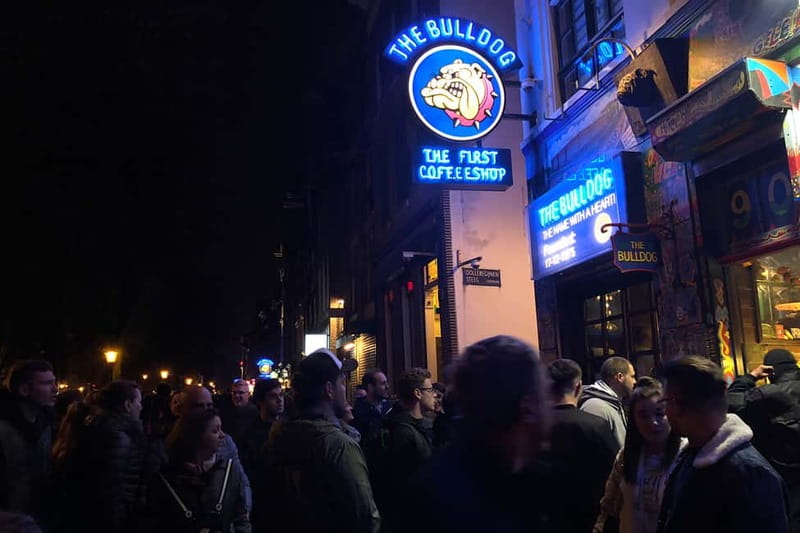
At the end, you receive a map with information for the last stretch of the Red Light District. This is the practical piece that turns the tour into a tool, not just a story.
Because you cannot join a guide inside the district since 2020, the map is what helps you do two things:
- Choose how much you want to see
- Navigate the edge of De Wallen without wandering aimlessly
You also get a small gift at the end. The tour describes it as a little treat in the shape of the Red Light District, and reviews describe it as cheeky and smile-inducing. Even if you don’t care about souvenirs, I like this kind of token because it marks the moment you’re done with the learning part and ready for your own exploration.
Who this tour suits best, and who should skip it
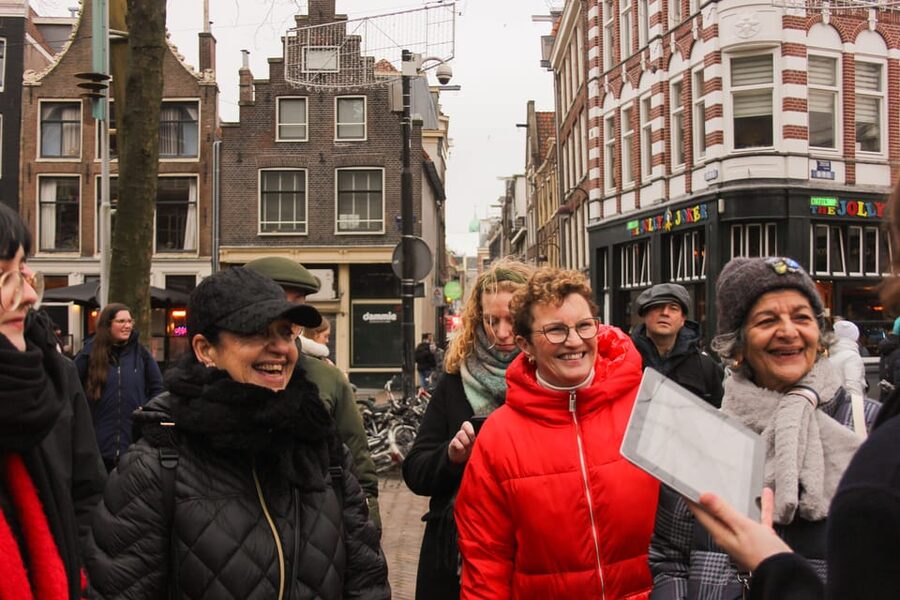
This tour works best if you want to understand De Wallen with context. If you like asking questions about how laws affect real people, you’ll probably enjoy it a lot.
It also fits well on day one. Many travelers want their first Amsterdam evening to include a dose of local insight, and this tour is built for that. You’ll end near the district with a map in hand, so you can decide what to do next without relying on luck.
You might want to choose another option if
The tour covers sex work and drug policy. You’ll hear about legalization and current challenges. If adult themes are a hard no for you, skip this one.
Also, remember the 2020 restriction. This is not a guided walk through the busiest lanes inside the district. If that is your must-have, adjust your expectations before you book.
Price and value: what you get for $31
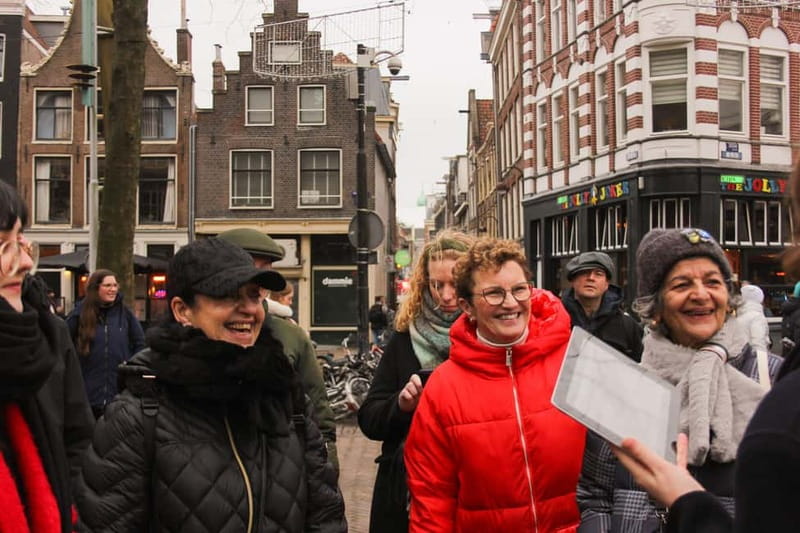
At $31 per person for 1.5 hours, this sits in the range of a typical walking tour, but the value comes from the mix of ingredients.
You get:
- A live guide focused on sex work history, prostitution legalization, and current challenges
- A clear explanation of Amsterdam’s liberal attitude toward sex and drugs
- Coffee shop culture context
- Outskirts coverage due to the 2020 restriction
- A map for the last stretch near De Wallen
- A small end-of-tour gift or treat
If you’re doing other Amsterdam activities that are photo-heavy but context-light, this is the kind of tour that balances your itinerary. It also prevents the common frustration of going into De Wallen with only assumptions. You’ll be able to look at the neighborhood and understand what shaped it.
Quick FAQ on this Amsterdam Red Light District tour
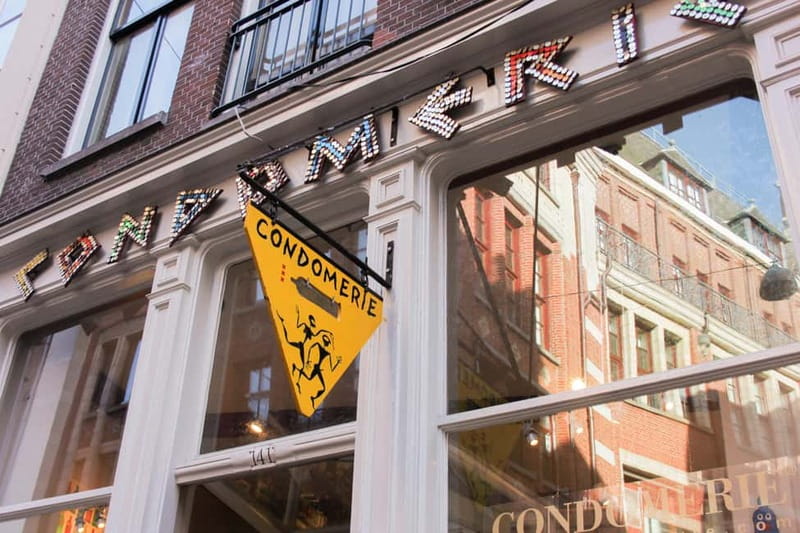
FAQ
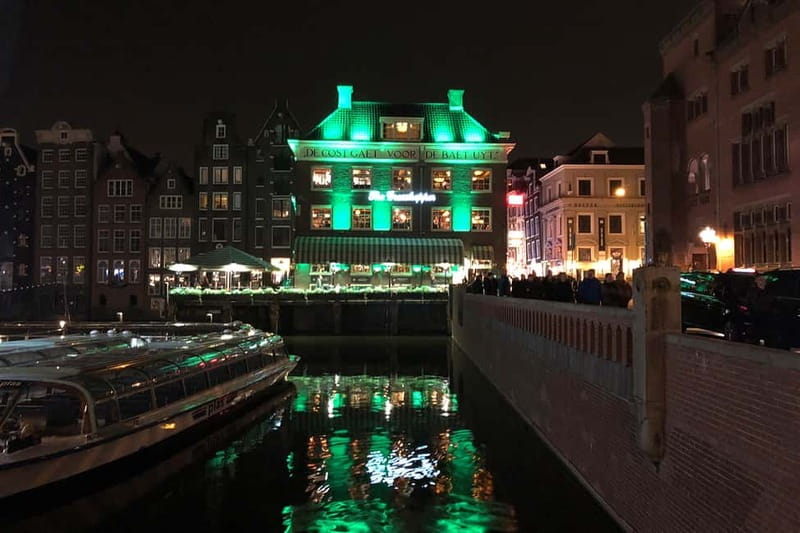
How long is the Amsterdam Red Light District tour?
It lasts 1.5 hours.
What does the tour cost?
The price is $31 per person.
Where do I meet the guide?
Meet at Beursplein. Wait at the bottom of the stairs of Bistro Berlage. The guide will be by the large black lantern holding a sign that says Guidance.
Will the tour go inside the Red Light District?
No. Guided tours inside the Red Light District are restricted since 2020, so this tour explores the outskirts. You finish at De Wallen and get a map to explore the last stretch yourself.
What language is the tour offered in?
The live tour guide speaks English.
What stops are included on the walking route?
You’ll include stops and photo stops around Beursplein, Dam Square, Oude Kerk, Amsterdam Centraal Station, Amsterdam Chinatown, and Nieuwmarkt Square, then you finish at De Wallen.
Are alcohol and drugs allowed during the tour?
No, alcohol and drugs are not allowed.
Is the tour wheelchair accessible?
Yes, the activity is listed as wheelchair accessible.
Should you book it?
Book it if you want a short, guided way to understand De Wallen beyond the stereotypes. I’d treat this as a smart first-night experience: you get history plus policy context, coffee shop culture explained, and a map so you can choose how much you want to see afterward.
Skip it if you only want a purely visual, entertainment-style walk, or if adult topics are a deal-breaker for you. And keep one expectation straight: since tours inside the district are restricted, you are walking the outskirts with guidance, then exploring the last stretch on your own. That setup is part of what makes the experience workable and respectful.
Latest Amsterdam reviews
- Small Group Tulip and Spring Flower Fields Bike Tour★ 4.5 · 14 reviews
- Amsterdam Van Gogh Museum Private Tour for Kids & Families★ 4.0 · 14 reviews
- Zaanse Schans Windmills Private Tour from Amsterdam Airport★ 5.0 · 14 reviews
- Bruges Day Trip from Amsterdam★ 4.5 · 14 reviews
- Volendam: Volendams Museum Entry Ticket★ 4.4 · 14 reviews
- Zaanse Schans Windmills, cheese and clogs and Volendam tour from Amsterdam★ 5.0 · 14 reviews
- Departure from Amsterdam City to Amsterdam Airport AMS by Minivan★ 5.0 · 14 reviews
- Walking Tour about Golden Age Architecture, private local guide★ 5.0 · 15 reviews
Red Light District, compared.
Amsterdam Red Light District & Coffee Shop Tour
Read our review →
Red Light District Pub Crawl with Unlimited Shots
Read our review →
Private Amsterdam Red Light District and Coffee Shop Tour
Read our review →
Browse the lists this tour appears in