
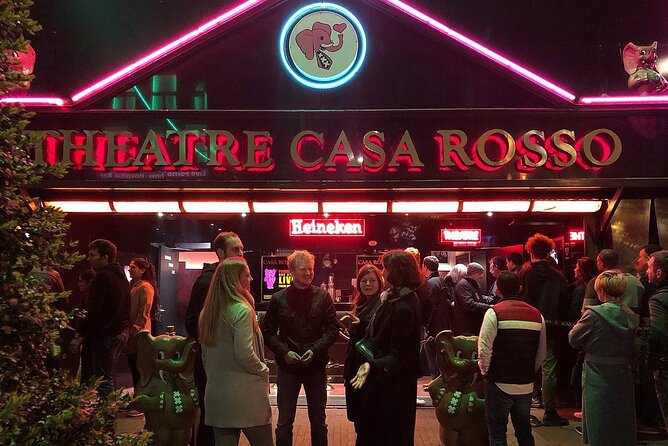
Reviewed · RED LIGHT DISTRICT
Red Light District tour in Amsterdam
Amsterdam’s Red Light District is one of those places people think they understand, then realize they only know the headlines. This tour is interesting because it focuses on how the neighborhood became what it is, and how Amsterdam built a cultural system around tolerance, not just entertainment.
I especially like the small-group format (up to 15) and the relaxed pace that lets you actually process what you see and hear. I also love that you finish with a map for your own last stretch, so the experience keeps going after the walk ends.
One possible drawback to plan for: since city rules changed in 2020, guided groups do not enter the Red Light District itself. You’ll stay on the outskirts and you will not go inside to view sex workers up close.
Key tour takeaways
- Perimeter walking with city rules in mind: you see the area’s layout without entering the restricted zone.
- Coffee shop context tied to specific stops: Dam Square to the coffee culture story, not just vague trivia.
- A route that connects multiple neighborhoods: De Wallen, Warmoesstraat, Zeedijk (Chinatown), and Nieuwmarkt.
- Cultural and legal realities, explained clearly: including the legalization of prostitution and the legal status of coffeeshops.
- Your guide drives the tone: many guides are described as funny, patient, and open to questions.
- A map plus a small gift: you get practical takeaways and a light, silly extra to end on a smile.
A walk that explains De Wallen and coffee culture without the circus vibe
This is a guided evening walk around one of Amsterdam’s most talked-about neighborhoods, but it doesn’t treat the topic like a dare. The focus is on how and why sex work and the city’s coffee culture became intertwined with Amsterdam’s reputation for liberal attitudes. The result is a tour that feels more like an education from the street level than a scripted performance.
The route also helps you read Amsterdam like a local. You’re not just hearing facts. You’re walking through streets that show how different parts of the area connect, then ending with a map so you can decide what you want to do next.
More Red Light District walking tours:
- Amsterdam: Red Light District Tour in DE/EN/IT/ES/FR
★ 4.9 · 7,136 reviews - Amsterdam: Red Light Secrets Museum Entry Ticket
★ 4.2 · 5,722 reviews - Amsterdam Red Light District & Coffee Shop Tour
★ 4.6 · 4,134 reviews
Price and timing: what $31.44 buys you in real-life value
At $31.44 per person for about 1.5 hours, you’re paying for three things: a guide’s live storytelling, a structured walking route, and practical navigation support afterward.
That’s good value because the tour includes:
- A guide-led walk around the area
- A map for the final self-guided part
- A small gift
Also, the group size cap of 15 travelers matters. Smaller groups usually mean fewer people trying to ask questions at once, and you’re more likely to get direct answers. Reviews also mention a manageable pace and that Amsterdam is mostly flat, so this isn’t an intense hike.
Meeting point and how the 1.5-hour route is paced
You meet at Bistro Berlage, Beursplein 1, 1012 JW Amsterdam, and the walk ends back at the same meeting point. The tour runs for about 1.5 hours, and between main stops the guide keeps the conversation going as you walk.
A practical heads-up: at least a few reviews note that the exact meeting location can be tricky to find. When you arrive, take a minute to compare what you see on the street with your confirmation details, and give yourself time so you’re not sprinting to catch the group.
The walking itself is straightforward. You should plan for a moderate physical fitness level, and you’ll likely spend most of the time outdoors. If the weather is nasty, you’ll still want layers, because Amsterdam evenings can get cold fast.
Stop 1: De Wallen, the story starts with why sex work was allowed here
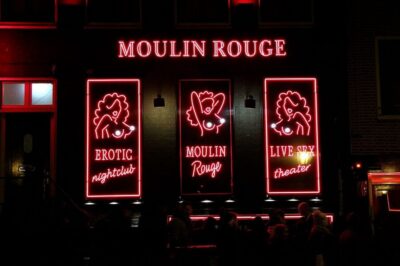
The tour’s first anchor is De Wallen, the Red Light District itself. This is where the guide sets the foundation: how the district developed, why sex workers chose to settle there, and why Amsterdam earned its reputation for tolerance around sex.
What this stop does well is pacing your expectations. Instead of telling you what to think, the guide explains the historical logic behind the neighborhood’s identity. It also helps you understand why you might hear different opinions about the district today.
Important rule to remember: because of regulations starting in 2020, you will not enter the district during the guided portion. You’ll learn the context first, then see enough from the edges to connect the story to the real place.
A few other ways to fill a day in Amsterdam
- Amsterdam: Van Gogh Museum Ticket
★ 4.7 · 52,054 reviews - Amsterdam: Heineken Experience Ticket including 2 Drinks
★ 4.6 · 36,014 reviews - Amsterdam Classic Saloon Boat Cruise with Drinks and Cheese
★ 5.0 · 31,825 reviews - Amsterdam Luxury Canal Cruise + Unlimited Drinks & Bites option
★ 5.0 · 30,518 reviews
Stop 2: Dam Square, where the coffee shop idea took hold
Next comes Dam Square, which the tour uses as a key reference point in the coffee shop story. You’ll learn how the concept is tied to this area and what Dam Square once represented as a center of tolerance and freedom.
This stop works because it reframes coffee shops as cultural institutions, not just nightlife stops. Even if you already have opinions about coffeeshops, the guide’s explanation helps you understand why Amsterdam developed this reputation in the first place.
Stop 3: Warmoesstraat and the Old Church sightline
From there you head to Warmoesstraat, one of Amsterdam’s older streets. The tour connects the street’s age to its modern role as an entertainment zone, and you also get a glimpse of the Old Church.
Why I like this stop: it shows how cities reuse space. Streets don’t stay frozen in time. Warmoesstraat is a good example of Amsterdam layering old and new in the same corridor.
You also get a small reset here. After the heavier context around De Wallen, the route shifts to something easier to picture, street-by-street.
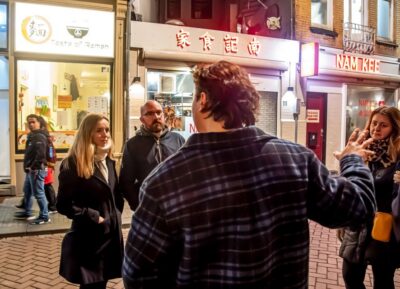
Stop 4: Zeedijk, Chinatown’s rise and fall from the 1970s
The tour then moves to Zeedijk, where you’ll see Chinatown. This stop is built around change over time. You learn that Zeedijk was once among the more dangerous areas of Amsterdam during the 1970s, then how and why it declined.
And the contrast is the point. Today, it’s one of the favorite spots for many Amsterdammers. That shift from fear to everyday enjoyment is a powerful lens for understanding Amsterdam as a city that reinvents itself.
If you’re the type of traveler who likes a neighborhood’s human story, this is one of the best stops. It’s not just history for history’s sake. It shows why the present makes sense.
Stop 5: Nieuwmarkt, legalization and the reality for sex workers today
At Nieuwmarkt, the guide explains the legalization of prostitution and the challenges sex workers face today.
This is where the tour stays grounded. The district can feel like a caricature from afar, but legalization is complicated, and so are the lived outcomes. This stop is designed to bring you from “what happened” into “what it means now.”
One reason this matters for your experience: it keeps the tour from turning into pure spectacle. You learn the legal context, then you understand why the neighborhood is still debated.
Stop 6: Kloveniersburgwal, coffeeshops and their legal status
Next is Kloveniersburgwal, a street tied closely to Amsterdam’s coffeeshop reputation. Here the guide gives insight into coffeeshops and focuses on their legal status.
This stop is especially valuable if you’re the kind of visitor who doesn’t want to guess. You’ll hear how Amsterdam’s approach works in practice, and why the city’s tolerance comes with boundaries.
In other words, you get the rules behind the myth.
Stop 7: Paulusbroederssluis, the map handoff for your own route
The final guided piece is at Paulusbroederssluis, where you receive a map with information for the last stretch. Then you get the chance to discover parts of the area on your own.
This is a smart way to handle city regulations. Since the guided portion does not go inside the Red Light District, the tour gives you a way to continue respectfully and independently after the walking ends.
Reviews also mention the map being helpful, especially if you want to explore with more confidence about where things are and what to expect.
Coffee shops in Amsterdam: why the tour’s framing helps
A lot of visitors treat coffeeshops like a single thing, a single vibe, a single rule set. This walk does better than that. It ties coffeeshops to the city’s broader identity, including how Amsterdam thinks about freedom and tolerance.
You’ll also hear about the legal status of coffeeshops directly, which is what you want if you’re worried about crossing lines you do not understand. Even if you never plan to go inside, you’ll walk away with context that makes Amsterdam’s coffee culture easier to interpret from street-level.
And if you do plan to visit, the map handoff at the end helps you make choices without feeling lost.
Your guide: humor, questions, and a pace that works
Guides are clearly a big part of why this tour scores so high. Names that appear in feedback include Carlos, Nadav, Valeria, David, and Manouk. The common theme is clear: guides are described as funny, friendly, and patient, and they make room for questions.
That matters because the topic can feel awkward for some people. A good guide turns that into honest discussion and respectful street-level understanding.
There is also a practical pacing note. Many reviews describe the walk as manageable and relaxed, with Amsterdam being flat. Still, at least one review mentions the pace felt quicker than expected. If you prefer a slower conversation, you can ask the guide at the start about pacing for questions.
What you should expect to see, and what you will not see
Here’s the key reality check.
You will walk around the Red Light District and pass nearby streets connected to the story, but you will not be allowed to enter the district during the guided experience. City regulations since 2020 are the reason for this.
So if you’re hoping for an up-close view inside the regulated area during the tour, that is not what this experience is designed for. What you get instead is context first, plus the perimeter view that helps you orient yourself later.
The tour is still worth it for many people because understanding the neighborhood’s history, its legal evolution, and the coffee culture framing makes the area feel less random when you walk there on your own.
Who this tour fits best
This is a good match if you want:
- An organized, guided walk that connects history, culture, and laws
- Clear explanations of prostitution legalization and coffeeshop legal status
- A small-group experience with a guide who answers questions
It’s also a solid option if you’re doing Amsterdam for the first time and you want one topic tour that gives you “street context” fast. Reviews repeatedly highlight that it’s informative without being overly explicit, with a respectful tone.
One more thing to consider: this is not a general Amsterdam stroll. It focuses tightly on a specific neighborhood. If you want a simple overview without the topic at the center, you might feel the emotional weight of the conversations.
Practical tips for getting the most from your walk
Bring a few things to make this smoother:
- Wear shoes for walking. The route is flat, but it’s still outdoors and continuous.
- Plan for weather. Even when it rains, people note the tour continues in a careful way.
- Arrive early enough to find the meeting point. Some people report it was easy to miss.
- Have one or two questions ready. If the guide is open to questions, you will get more out of your 90 minutes.
Also, decide in advance how you want to handle the topic. You do not need to agree with everything. You do need to keep it respectful. This tour is built around that tone.
Should you book this Red Light District tour?
Book it if you want a guided, small-group walk that gives you the context behind Amsterdam’s Red Light District and its coffee shop culture, plus a map to keep exploring after.
Skip it (or consider a different approach) if you are mainly chasing an inside-the-district, up-close viewing experience during the tour itself. Since 2020, guided entry into the Red Light District is not allowed, so you will not get that.
If you’re curious, thoughtful, and okay with the idea that Amsterdam’s tolerance comes with real rules and real people, this 1.5-hour walk is a strong use of time.
Latest Amsterdam reviews
- Small Group Tulip and Spring Flower Fields Bike Tour★ 4.5 · 14 reviews
- Amsterdam Van Gogh Museum Private Tour for Kids & Families★ 4.0 · 14 reviews
- Zaanse Schans Windmills Private Tour from Amsterdam Airport★ 5.0 · 14 reviews
- Bruges Day Trip from Amsterdam★ 4.5 · 14 reviews
- Volendam: Volendams Museum Entry Ticket★ 4.4 · 14 reviews
- Zaanse Schans Windmills, cheese and clogs and Volendam tour from Amsterdam★ 5.0 · 14 reviews
- Departure from Amsterdam City to Amsterdam Airport AMS by Minivan★ 5.0 · 14 reviews
- Walking Tour about Golden Age Architecture, private local guide★ 5.0 · 15 reviews
Red Light District, compared.
Amsterdam Red Light District & Coffee Shop Tour
Read our review →
Red Light District Pub Crawl with Unlimited Shots
Read our review →
Private Amsterdam Red Light District and Coffee Shop Tour
Read our review →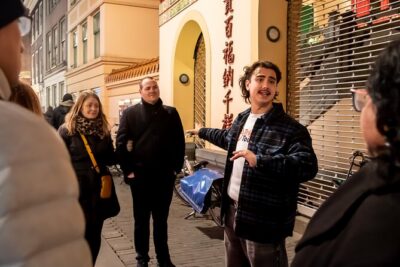
Browse the lists this tour appears in