
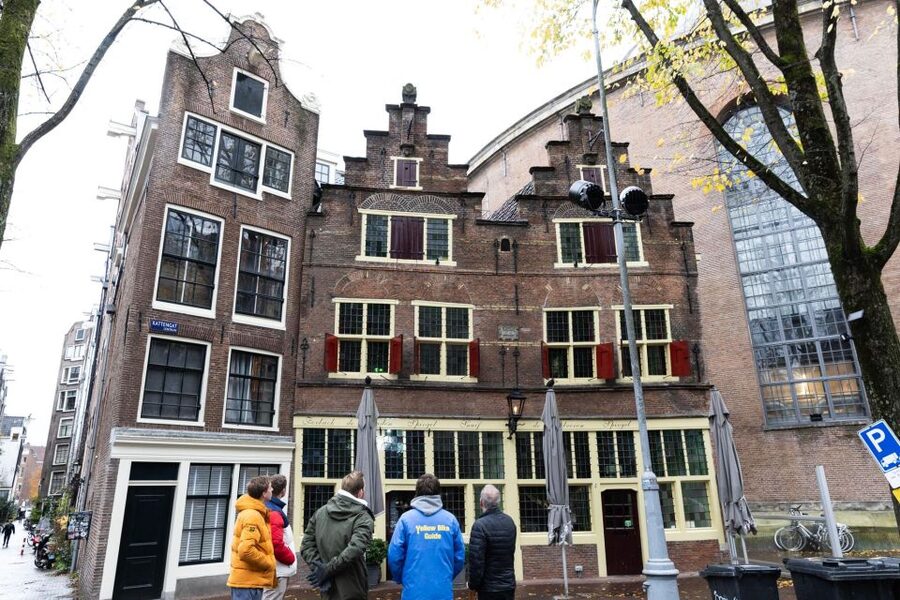
Reviewed · WALKING TOURS
Amsterdam Central Walking Tour
Amsterdam Central is one of those places where the streets look simple, then you learn the details and it all clicks. Yellow Bike’s walk pulls you through canals, courtyards, bridges, and key neighborhoods with a guide who can make the city feel personal. If you’re lucky, you might get a tight group like one booking that turned into a private tour with Sid, and another with Willem that mixed old facts with what is happening now.
I especially like the small group size (up to 12, often fewer), because you can ask questions instead of watching from the back. I also love the way the tour pairs famous spots like Anne Frank House with practical city lessons, like why buildings sit on wooden poles and how Amsterdam handles seawater issues. One thing to consider, especially in winter, is that the route is mostly on foot, rain or shine, with warm clothing and comfortable shoes doing real work for you.
Key Highlights You Will Feel Right Away
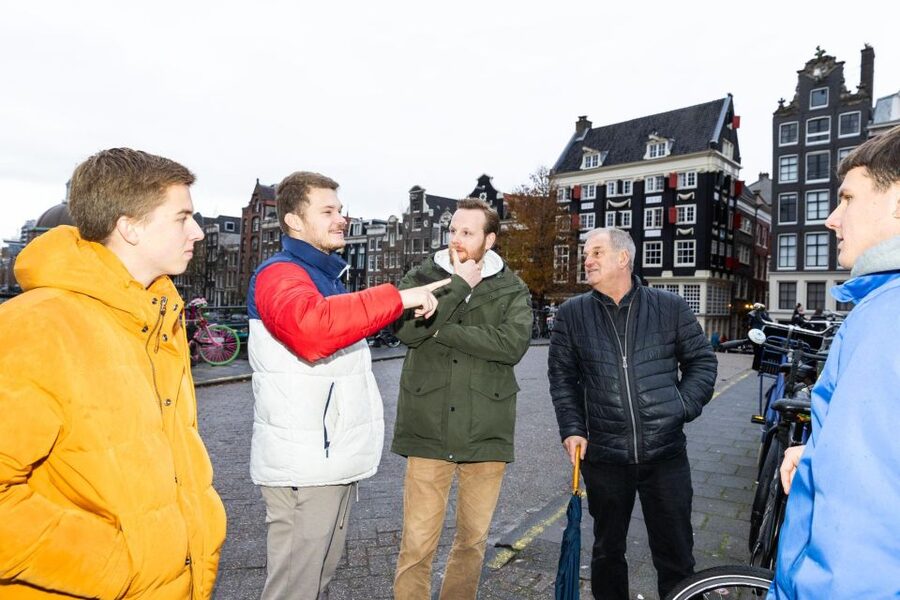
- Small groups, up to 12, often fewer, so the guide can actually talk with you
- City storytelling that connects neighborhoods, from Jordaan to the Canal Ring area
- Red Light District etiquette is part of the lesson, including no photos and no lingering
- A traditional Dutch café stop, with drinks not included but the break is built in
- Tilted houses, church towers, and old bridges tied to clear, human-scale reasons
- Luggage storage is free, so you can walk without hauling bags around
Why This 2-Hour Central Walk Works in Winter
This tour is built for a specific kind of Amsterdam day: gray sky, damp air, and streets that still feel alive. In winter, the city can be a bit slippery underfoot, and that makes a guided walking route extra valuable. You are not just moving from photo stop to photo stop, you are following a thread of stories that make the buildings and canals make sense.
The “winter walk” angle matters because the pacing is realistic. You get a dense slice of central Amsterdam in only about two hours, without trying to sprint between every landmark. The guide also helps you slow down in the right places, so you notice things you would normally miss, like building shapes, bridge functions, and why certain streets developed as they did.
What I find comforting is the consistency. The tour runs rain or shine. That means the guide plans for weather, and you are not left hunting for a backup plan. One review even pointed out that a very wet and cold tour still felt enjoyable, which tells me the guide knows how to keep the experience moving when conditions are rough.
More Walking Tours in Amsterdam
- Amsterdam Anne Frank: Small-Group Walking Tour & Local Guide
★ 4.8 · 12,789 reviews - Anne Frank’s Story – Guided Walking Tour through Amsterdam
★ 5.0 · 11,619 reviews - Absolutely Amsterdam – the Essential Introductory Walking Tour
★ 5.0 · 3,629 reviews
Starting at Nieuwezijds Kolk, Ending at Dam Square
The tour begins at Nieuwezijds Kolk 29. You meet at Yellow Bike, and the practical instruction is simple: look for the Yellow Bike sign and check in at the counter. Ending at Dam Square also helps, because you are dropped into the heart of central Amsterdam rather than tucked away in some random side street.
That matters for your schedule. If you still have energy after the tour, Dam Square is a natural jumping-off point for museums, shopping streets, or just wandering. You can also connect to other parts of your day without needing to retrace your steps.
One more small but useful perk is free luggage storage. If you are arriving by train, or if you have a bag that is going to become an annoyance, you can store it and walk light. It is one of those “small detail, big relief” things that makes a walking tour feel less stressful.
The Story Thread Through Canals, Bridges, and Neighborhoods
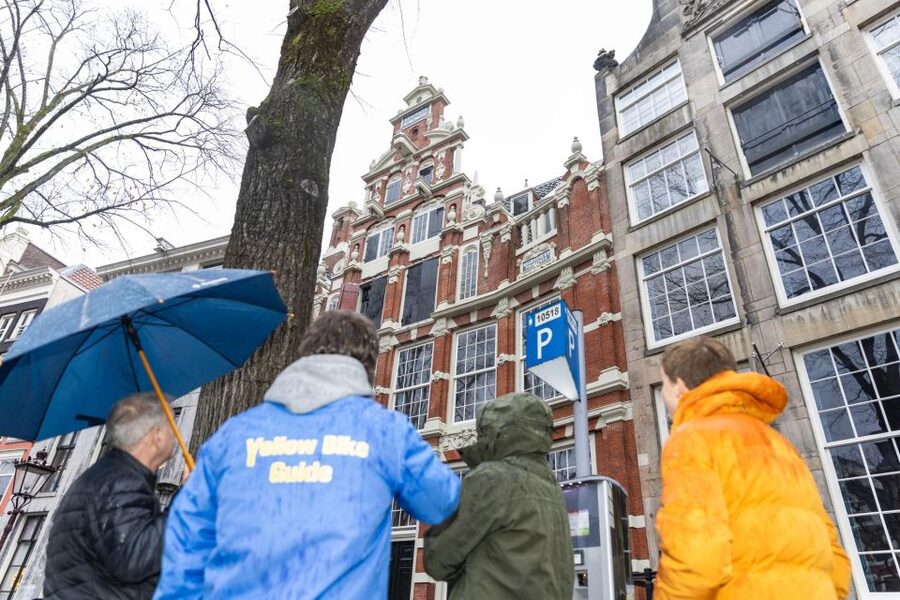
The best walking tours do two jobs at once: they show you where to look and they explain why those places matter. Yellow Bike’s approach is exactly that. You spend time around canal-side architecture, old street patterns, and places that connect daily life to major historical shifts.
You start from the oldest parts of Amsterdam, where the city’s beginnings are not just dates on a timeline. You get the sense of how the city grew into a dense trade hub on water, then had to keep solving the problems that came with building there. It is not just scenery. It is city logic.
You also pass through neighborhoods that feel different in tone even within a short walk. The Jordaan area is treated as a working-class enclave in the story, and that context helps when you see the later cultural layers. You do not just walk past a street, you understand the social roles that shaped it.
And yes, you will hit a lot of famous names, including Anne Frank House. But you also get the supporting cast: towers, churches, bridges, and street corners that help you understand what Amsterdam looked like before it became a postcard machine.
Crooked Houses and Wooden Poles: Seeing Amsterdam’s Engineering Up Close
One of the tour’s strongest moments is the focus on Amsterdam’s physical reality. Those iconic tilted houses are not treated as a cute oddity, they are tied to the city’s foundation on wood.
The guide connects the crooked-house look to the fact that Amsterdam stands on wooden poles driven into the ground. It is the kind of explanation that changes how you look at the entire skyline. After you hear it once, you start seeing patterns across multiple buildings, not just one famous sight.
You also get practical lessons about water control. Nieuwe Haarlemmersluis is part of the route, with the idea that the city has always fought the challenges of seawater intrusion from its historic canals. That helps you understand why canals are not just pretty, they are infrastructure that had to keep working as the city changed.
In a two-hour tour, it is impressive how much the route anchors your sightseeing in “how it works.” It makes the city feel less like a museum and more like a lived system that is still evolving.
Not the right fit? Amsterdam also runs these:
- Amsterdam: Van Gogh Museum Ticket
★ 4.7 · 52,054 reviews - Amsterdam: Heineken Experience Ticket including 2 Drinks
★ 4.6 · 36,014 reviews - Amsterdam Classic Saloon Boat Cruise with Drinks and Cheese
★ 5.0 · 31,825 reviews - Amsterdam Luxury Canal Cruise + Unlimited Drinks & Bites option
★ 5.0 · 30,518 reviews
Red Light District Etiquette: Respect Is Part of the Lesson
This is one section where a good guide really matters. The Westerlijke Wallen, the Red Light District, is included, and the tour frames it with clear expectations. You are told to treat the area with respect and understanding. The rules are practical: no photos and no lingering.
Those instructions are not just “for the sake of rules.” They also change your experience. If you spend time staring with a camera, you miss what the guide is trying to show: how this area became part of Amsterdam’s social conversation and why it is approached differently than other tourist scenes.
If you are sensitive to crowds or feel uncomfortable with mature content areas, this is worth thinking about before booking. The tour includes this stop, and the guide will set boundaries so you can move through appropriately, but it is still a real neighborhood with real sights.
If you are fine with the idea of respectful viewing, this part can be one of the most memorable, because you get context, not just spectacle.
Spui and Spuistraat: Provo Energy and Squatting History
The Spui area is one of the stops that gives the tour extra personality. You learn about the symbolic Provo statue and the role it played in student protests and cultural movements. The tour also brings in the squatting history along Spuistraat, showing how resistance and alternative lifestyles have shaped parts of central Amsterdam.
This is where the walking tour feels less like a highlight reel and more like a local’s explanation of how Amsterdam thinks. You are not only learning “what happened,” you are learning how people argued, protested, and pushed for civil resistance.
If you like history that connects to ideas, this section is for you. It gives you something to carry beyond the tour, like a better sense of why certain places in Amsterdam have a reputation for civic energy.
Famous Stops, Plus the Supporting Cast
You will recognize a few big names and you will also get a few “wait, what is that?” moments that make the time feel worthwhile.
Anne Frank House is included as a major stop, and the tour uses it as a chance to reflect on World War II and the courage behind the diary story. Even if you already know the broad details, the guide’s framing helps you connect the landmark to the reality of what it meant for people living there.
You also see Westertoren, Amsterdam’s tallest church tower, with historical significance explained in the walk. Koepelkerk and its copper-clad Lutheran church story is another standout. There is a strong theme here: Amsterdam repeatedly had to rebuild after disasters, and these buildings are part of that resilience.
Other supporting stops help you see the city’s hidden layers, like Jan Roodenpoortstoren, which connects to historic prison cells, and Torensluis, once part of the city’s defensive wall. Those are not just random photos. They explain how the city protected itself and how spaces were repurposed over time.
Even the Bartolotti House comes into the narrative as an elegant mansion with a specific place in Amsterdam’s story. It helps you notice class and power as you walk, not just architecture.
Negen Straatjes and Kalverstraat: When Wandering Feels Guided
After you get the history and the heavier stories, the route shifts into something that feels more relaxed: the Nine Streets area, Negen Straatjes, and then Kalverstraat.
Negen Straatjes is where you can slow down and let the guide show you the streetscape. It is known for artisan roots and today it is popular for trendy boutiques and cafés. That mix matters, because the tour is showing you how Amsterdam keeps reinventing itself without losing the shape of the old streets.
Kalverstraat is the major shopping street in the Netherlands, and you get it as a real-world contrast to the earlier sections. It is a reminder that central Amsterdam is not only about history, it is also about daily life and commerce now.
If you want to shop after the tour, you are set up well. If you do not, you can still enjoy the walk because the street levels and canal-adjacent connections make it feel like you are seeing a living city.
Café Break at a Traditional Dutch Brown Café
You get a break at Brown Cafe Pitstop. This is a classic type of pause in a Dutch walking tour, and it is useful because it keeps the tour from becoming one long cold push.
Drinks are not included, but you can warm up and plan the rest of your day. When you are walking in winter, a planned stop is better than hoping you find something at the right moment.
This is also a good moment to ask your guide practical questions, like what neighborhoods to prioritize next or what to skip if you want quieter streets.
Price and Value: Why $26 Can Feel Like a Bargain
At $26 per person for about two hours, this is priced like a “high value experience” rather than a premium tour. But the value is not just the price. It is what you get per minute.
First, you are walking with a live guide for the full time. That matters in Amsterdam, where street patterns, canal geography, and building details can be confusing without someone to translate them. Second, the group cap at 12 people (often fewer) means you are more likely to get real interaction, not just one-way storytelling.
You also get free luggage storage, which can save you time and hassle, especially if you are traveling with a bag and moving through the city center.
The café stop is a small bonus, and the included stops cover big names plus the context pieces. Even if you have done an Amsterdam “greatest hits” day before, this walk is structured to give you explanations you can use while you keep exploring on your own.
One caution for value: the tour quality appears to depend on the guide and conditions. There is at least one instance where a booking felt like there was not much information and the flow felt messy. That is the main potential drawback to keep in mind. Still, the overall rating is very high, and most feedback emphasizes strong guides and enjoyable pacing.
What to Bring, and How to Stay Comfortable
This walk is rain or shine. For winter, you will be glad you packed like a local.
Bring:
- Comfortable shoes for cobblestone streets
- Warm clothing, plus a hat and gloves
- A scarf if you feel the cold in your neck
If you are sensitive to cold, dress in layers. You will likely warm up during the walk, then cool down quickly during breaks. Also plan to keep your hands free, because you may want to use your phone for quick reference photos before you reach areas where photography is restricted.
If you are thinking about accessibility, the tour is listed as wheelchair accessible, but it is also marked as not suitable for people with mobility impairments. Since the route involves a lot of walking and cobblestones, this is one of those cases where you should ask the provider directly if you have a specific mobility need.
Who This Tour Is Best For
This is a great fit if you want:
- A focused central Amsterdam introduction in about two hours
- A guide who can connect landmarks to stories about society, politics, and city planning
- A calm group size that makes questions easy
- A winter-friendly route with a built-in café break
It is also a good choice if you like context. The tour includes stories tied to civil resistance, cultural movements, and the social sides of neighborhoods. If you only want famous attractions with minimal talking, you might find it a bit heavy in places. But if you want to understand Amsterdam’s “why,” you will likely enjoy it.
Should You Book This Amsterdam Central Walking Tour?
Yes, I would book it if you want a high-effort guided walk that covers the main central sights without turning into a sprint. The combination of small group size, a café stop, and city explanations that make architecture and street patterns click is strong value at $26.
Book with extra confidence if you care about guided interpretation and you are traveling in winter when it is harder to figure things out on your own. If you hate cold weather, wear layers and take the warm-up break seriously.
The only reason I would hesitate is if you are strongly uncomfortable with mature content areas, or if mobility limitations make long walks hard. Otherwise, this is exactly the kind of tour that helps you get your bearings fast and keep exploring with better instincts.
FAQ
Where does the tour start?
The meeting point is Nieuwezijds Kolk 29. You should look for the Yellow Bike and check in at the counter.
How long is the Amsterdam Central Walking Tour?
The duration is 2 hours.
How much does it cost?
The price is $26 per person.
Is luggage storage available?
Yes. Free luggage storage is included.
Is the café stop included, and do I need to pay for drinks?
A break at a traditional Dutch café is included, but drinks are not included, so you will pay for what you order.
What language is the tour guide speaking?
The live guide speaks Dutch and English.
Will the tour run in bad weather?
The tour runs rain or shine.
Latest Amsterdam reviews
- Amsterdam Private Prosecco Bike with Music Sound System★ 5.0 · 3 reviews
- Private Day Trip From Amsterdam to Rotterdam and Zaanse Schans★ 3.5 · 3 reviews
- 1 hour Amsterdam City Tour in Pedicab★ 4.5 · 3 reviews
- The Best of Amsterdam: Private Full-Day Tour with a Canal Cruise★ 2.5 · 3 reviews
- Amsterdam Walking Tour with Audioguide on Your Smartphone★ 3.5 · 3 reviews
- Bike Tour with Guide in Amsterdam★ 4.5 · 3 reviews
- Private tour (max 3 per) to Giethoorn & Canal ride from Amsterdam★ 3.5 · 3 reviews
- Concert at The Royal Concertgebouw – Amsterdam★ 5.0 · 3 reviews
Walking Tours, compared.
Absolutely Amsterdam – the Essential Introductory Walking Tour
Read our review →
Amsterdam Highlights Walking Tour: Small Group Experience
Read our review →

Browse the lists this tour appears in