
Reviewed · CASTLES
Loevestein Castle Entry Ticket
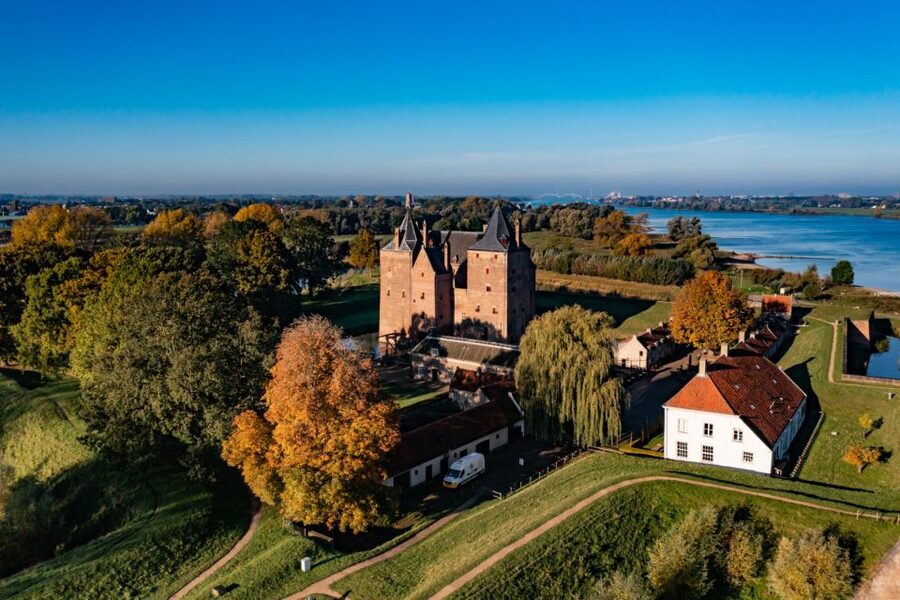
Slot Loevestein is interesting because this 14th-century fortress later became a state prison, and it is famous for the Hugo Grotius escape. I love the medieval stonework and the way the book chest legend gives the whole visit a strong thread.
I also like that you get castle history plus the surrounding Waterline landscape, so the day feels more than just walking halls. You will get a mix of indoor stories and outdoor atmosphere, which helps the visit move at a comfortable pace.
Do note there are spiral staircases and no elevator, so it is not suitable for wheelchair users. Comfortable shoes matter, because you will be climbing to higher levels.
Key highlights worth planning around
- Hugo Grotius escape story: hidden in a book chest in 1621, one of the most iconic escapes in Dutch history
- Fortress to prison evolution: founded in 1358 by Knight Dirc Loef van Horne, then reshaped during the Eighty Years’ War
- UNESCO Waterline connection: part of the Old and New Hollandse Waterline defense system, recognized as a UNESCO World Heritage Site
- Annual exhibitions: you get both permanent and temporary displays, and the temporary exhibit changes each year
- Good for families: hands-on activities like musket practice, gunpowder mixing, and a climbing course
- Small practical realities: expect a lot of stairs, and during special events some spaces may feel busier or different
Slot Loevestein: a fortress that became a prison, then part of a water-defense system

Slot Loevestein is not just a medieval castle you tour and forget. It is a working story across centuries. You start with a defensive stronghold idea, then watch it become the kind of place where someone could be sentenced to life, and finally see why the Dutch built layered defenses around it, using water as part of the strategy.
The castle traces back to 1358, when Knight Dirc Loef van Horne founded a defensive tower. Over time, the tower and position grew into a fortress that mattered during the Eighty Years’ War, when it traded hands between Dutch and Spanish forces. That back-and-forth is a big deal because it explains the castle’s sturdy, no-nonsense layout. You are not just reading about battles. The architecture tells you why it mattered.
Then the role changes again. Once secured by the Dutch Republic, Loevestein becomes a state prison. That shift helps you understand why the Hugo de Groot story is more than trivia. It is the reason the castle is world-known.
More Dutch castles near 's-Hertogenbosch:
- Utrecht: De Haar Castle + Gardens Entry Ticket
★ 4.7 · 1,838 reviews - Utrecht: De Haar Castle Gardens and Park Only Entry Ticket
★ 4.5 · 223 reviews
Tickets, time, and what 1 day really means here

You have a 1-day ticket. That sounds broad, but it is actually a good match for how the site feels. Loevestein is active and story-driven, and you will likely need time for:
- the fortress spaces and higher floors (thanks to spiral stairs)
- at least one exhibition
- the nature areas around the castle grounds
The experience is designed so you can go at different speeds. On a quieter day, you can take your time with photos and reading, and you will still feel like you saw the main points. On a busier day, you will want to prioritize the Hugo Grotius escape path first, then work outward to the exhibitions and views.
If you are the type who likes to slow down for details, plan a relaxed morning start and build in breaks. If you prefer to keep things tight, you can still do a meaningful circuit without rushing.
Entering the fortress: what to expect once you’re inside
When you arrive, you are set up for an easy start. Your ticket covers entry to the fortress and the castle, plus both a map and access to temporary and permanent exhibitions. There is also guided storytelling available, and you can use the free izi.Travel app for two audio tours if you prefer to mix self-paced time with guided moments.
You should also know this is a place of vertical movement. Higher floors require spiral mural stairs, and there is no elevator. That means you need two things to enjoy your visit:
1) comfortable shoes
2) a pace that works for stairs
It is a practical consideration, not a deal-breaker for most people, but it changes how you plan. If stairs tire you quickly, your day will be shorter. If you are fine with steps, you will enjoy seeing how the castle layout supports defense and control.
Fortress views and the spiral stair challenge
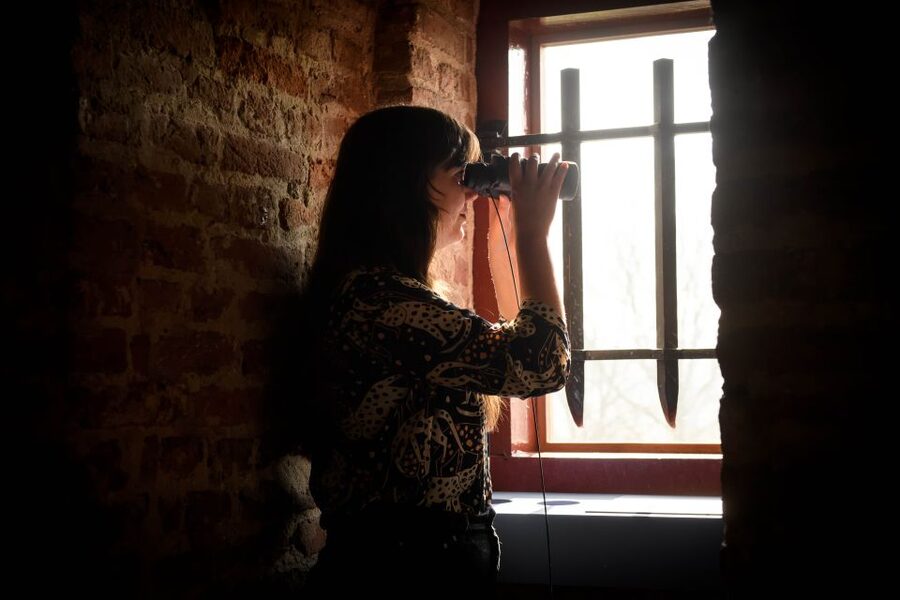
I like castles where the route makes sense, where each climb feels connected to a purpose. Loevestein fits that idea. The staircases push you upward to spaces that help you picture why watch towers, wall circulation, and vantage points mattered in real conflicts.
Still, the spiral design means it is not the most relaxing walking experience, especially if you are already tired from travel. You cannot count on avoiding stairs, so bring a calm mindset. If you travel with kids, it helps to make the stair climbs part of the story rather than a chore.
Also, there is a key limitation to be aware of: the site is not suitable for wheelchair users. If mobility is an issue, check alternatives in advance rather than assuming accessibility features will make a difference inside the castle.
The Hugo de Groot story: where the book chest legend lives
The Hugo de Groot escape is the headline story for a reason. Hugo Grotius, as he is also known, was a lawyer and theologian who was sentenced to life imprisonment. In 1621, he escaped in an ingenious way: he was hidden inside a book chest, with help from his wife slipping past the guards. It is the kind of plan that feels theatrical, but the castle setting makes it feel plausible, because you are standing inside the place that made him visible and trapped.
At Loevestein, the story is not treated like a single photo op. The site uses the castle layout to help you imagine the pressure points: where a prison is meant to control movement, and where small human help can change everything. Even if you only catch the core beats, you leave with a much clearer understanding of why the castle became famous far beyond the region.
If you like history with a plot, this is the part that will grab you. If you prefer strict dates and political context, you will still benefit, because the escape story is tied to the wider prison role Loevestein held after it was secured by the Dutch Republic.
Knight’s Tower to state prison: seeing the war layers in the walls
One of the most useful ways to read Loevestein is through its different “jobs” across time. You start with a knight’s stronghold in the mid-1300s. Then the Eighty Years’ War brings urgency, and the fortress changes hands between Dutch and Spanish forces. That period matters because it helps you understand why the castle’s position and fortification strategy mattered so much.
Then the Dutch take control and the castle shifts to the role of state prison. That transformation is not cosmetic. It shapes how you should interpret the spaces you see, including the idea of confinement, controlled movement, and the careful use of barriers.
If you enjoy walking into buildings and decoding their purpose, Loevestein is satisfying. The castle is not trying to be a theme park first. It is trying to explain how power works in stone.
The Hollandse Waterlinie: how water became defense

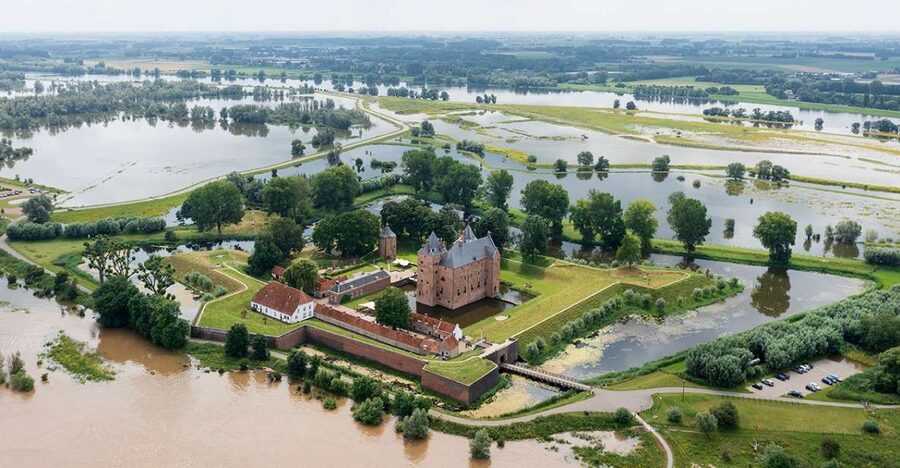
Later, Loevestein becomes part of the Old and New Hollandse Waterline, a system of water-based defenses designed to protect the Dutch Republic. This is where the experience becomes uniquely Dutch, because the defenses are not only walls and towers. The landscape itself becomes an active tool.
In 2021, the Waterline received UNESCO World Heritage recognition. That global status is important, because it explains why Loevestein matters beyond local pride. It is one piece of a larger defense logic that used controlled flooding and fortifications together.
For you, this means the visit should not be only indoor rooms. Take breaks outdoors so you can understand the setting. Even a simple walk around the grounds helps you feel what kind of terrain the defense system was built to manage.
Exhibitions that change each year, plus the steady permanent displays
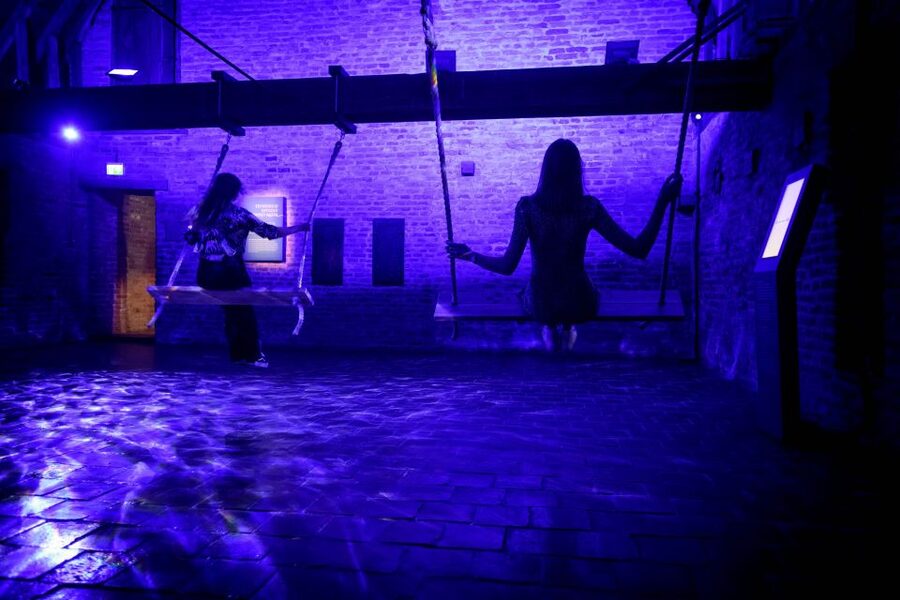
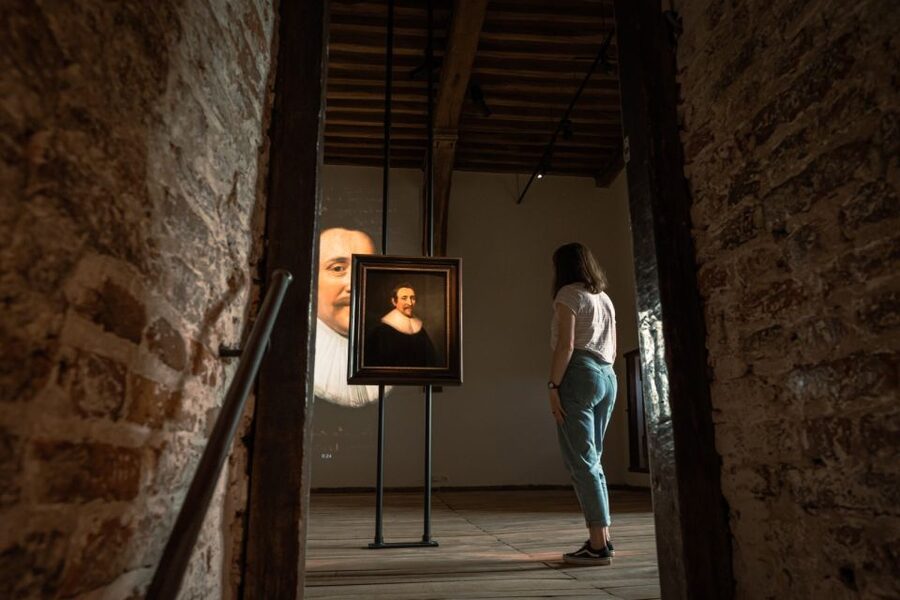
One of the best practical things about Loevestein is the way the exhibition program keeps the visit from feeling static. You get permanent and temporary exhibitions, and the temporary exhibit is refreshed each year with a new, relevant theme.
That matters because history sites can sometimes feel like a museum loop. Here, the exhibition portion gives you a reason to return, or at least a reason to pay attention while you are there. Even if you are not a big exhibition person, it helps to let the exhibition give you a lens before you read the castle spaces.
If you are visiting on a day when a special event is happening, plan for crowds or altered flow. On at least some days, that can reduce the feeling of quiet, because spaces inside might be used differently than usual. The castle still works, but you may need to adapt your timing and pick your priorities.
Nature time: using the grounds to cool down between stories
I like historical places where the setting gives you a breather. Loevestein has that. After you focus on prison legends and defensive design, stepping outside lets you reset your attention.
The grounds connect the castle and the Waterline defense concept. So the outdoor time is not just relaxing. It is a way to make the history make physical sense. You begin to understand how a fortress fits into a broader system, and how nature and human planning overlap in this part of the Netherlands.
If you want photos, this is where you can slow down. If you want simple walking, you can keep it easy. Either way, it helps your day feel less like a checklist.
Family-friendly fun: learning through hands-on activities

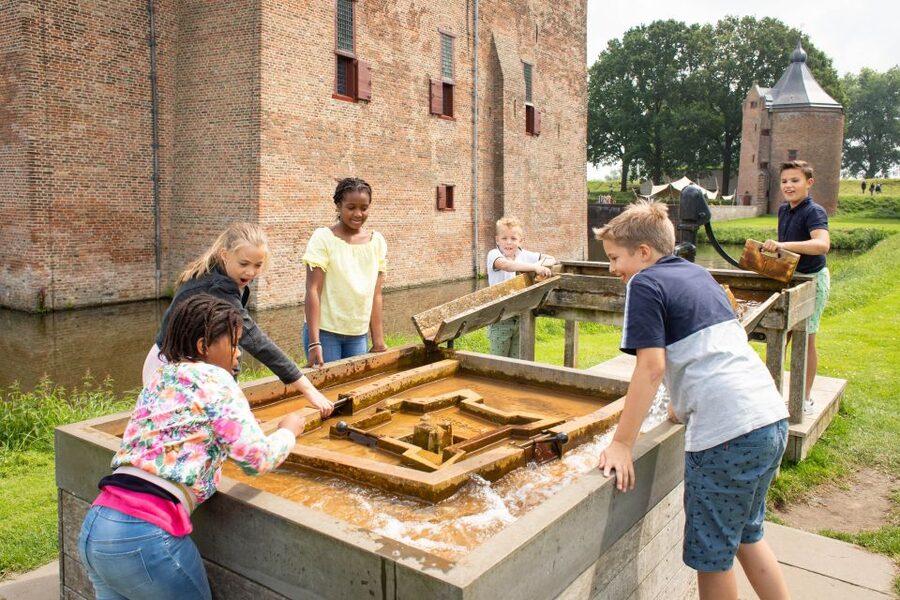
Slot Loevestein is especially strong for families. Kids do not have to just look at walls and listen to dates. They can try activities that match the castle theme.
Depending on what is available during your visit, children can:
- learn how to fire a musket
- mix ingredients to create gunpowder and feel the tower shake
- help keep the fortress safe when the water rises
- explore secret wall staircases and ramparts
- test strength and agility on a climbing course
What I like about this setup for families is that the activities match the core story. It is not random playtime. It is a way to connect the idea of defense, movement, and water control with something physical.
For adults, it is also a nice break. Watching kids engage can make the history feel more concrete, and it often slows down your day in a good way.
Guides, audio tours, and the map: how to get the most with your own pace
Loevestein includes stories of guides, and the host or greeter speaks Dutch and English. That matters if you prefer a live narrative, because guides can connect small details to big ideas without you needing to hunt for context.
But you also have flexibility. You get a map, free wifi, and the free izi.Travel app with two audio tours. That is helpful if you want to:
- start on your own to get oriented
- pause for reading and photos
- return to guided areas if something catches your interest
If you like self-paced travel, a quiet day can make this especially pleasant. You can wander, follow signage, and spend time where the story pulls you in.
If you are in a group or it is busy, use the map early. It saves time and helps you avoid doubling back. Good signage and cleanliness can make that process easier, and the site does well on those basics.
Getting there: parking is free, and getting your bearings matters
Free parking is included, which is a big convenience if you are driving in the Gelderland area. It removes one stress and lets you focus on the visit itself.
If you are arriving by water, be prepared to spend a little time figuring out the ferry location, especially if you are not local. The good news is that once you have your bearings, the day is straightforward.
Practical tip: give yourself a little buffer. Castles love good weather and good timing, but they do not always love late arrivals.
Price and value: is $20 per person a fair deal?
At $20 per person, Loevestein is priced like a serious heritage stop, not a quick roadside attraction. The value comes from what is included, not just the walls.
You get:
- entry to the fortress and castle
- temporary and permanent exhibitions
- stories from guides
- a map
- free izi.Travel audio access (two audio tours)
- free wifi and free parking
You are also getting a day-long structure with enough variety to satisfy different interests. If you like architecture, you climb and explore. If you like political history and famous individuals, you focus on Hugo Grotius and the prison role. If you like Dutch systems, you connect Loevestein to the Waterline.
The main reason some people feel lukewarm is that the castle visit can feel small if you expected a giant complex. You should treat it as a focused site. For many visitors, that is a plus, because you can actually finish without exhaustion. For others, it can feel like not enough.
My take: if you care about the Hugo Grotius escape story, or you want to understand the Waterline defense system, the ticket is a good use of a day. If you mainly want large-scale castle grounds and lots of separate buildings, you may want to temper expectations.
Who should book this experience
Book Loevestein if you:
- like history with a story, especially the Hugo Grotius escape
- want a Dutch heritage stop connected to the Hollandse Waterline
- travel with kids and want hands-on activities
- prefer a day that mixes outdoor atmosphere with indoor exhibits
Consider skipping or pairing with something else if you:
- want a fully barrier-free visit (the site is not suitable for wheelchair users)
- get worn out by stairs and tight circulation
- expected a huge estate rather than a compact, story-focused fortress
Should you book Slot Loevestein entry?
Yes, I think it is worth booking if you are curious about how Dutch history used real places for real strategies. The Hugo Grotius escape is the kind of story that makes the visit feel purposeful, not like you are just walking through old rooms.
Also, the combination of permanent and changing exhibitions, plus the Waterline context, gives you more than one angle on the same site. Add the hands-on family activities if you are traveling with kids, and you have a day that feels active rather than passive.
If you want to maximize your experience, wear comfortable shoes, plan time for stair climbs, and check in advance for anything special happening that could affect how some spaces feel during the day.
FAQ
Where is Loevestein Castle located?
Slot Loevestein is in Gelderland, Netherlands.
How much is the Loevestein Castle entry ticket?
The price is $20 per person.
How long should I plan for my visit?
The ticket is valid for 1 day, so you can plan to spend a full day exploring the fortress and castle.
What is included with the entry ticket?
Your ticket includes entry to the fortress and castle, a map of the fortress, temporary and permanent exhibitions, stories of the guides, free izi.Travel app access with 2 audio tours, and free wifi. Free parking is also included.
Is there an elevator in the castle?
No. The visit includes spiral mural stairs to reach higher floors, and there is no elevator.
Is Loevestein Castle suitable for wheelchair users?
No, it is not suitable for wheelchair users.
What languages are available for guides?
The host or greeter provides stories in Dutch and English.
Is parking available?
Yes, free parking is included.
What should I bring?
You should bring comfortable shoes, since the visit involves climbing stairs.
Is there family-friendly activity at the castle?
Yes. There are fun, hands-on activities for kids, such as learning how to fire a musket, mixing ingredients for gunpowder, and activities related to water rising and climbing courses.
Latest 's-Hertogenbosch reviews
- Den Bosch: Het Noordbrabants Museum Entry Ticket★ 3.9 · 35 reviews
- Den Bosch: Bossche Bollen Experience★ 3.8 · 111 reviews
Castles, compared.
De Haar Castle Gardens and Park Only Entry Ticket
Read our review →

Castle De Haar Small-Group Tour from Amsterdam
Read our review →
Drive it yourself electric History and Castle GPS audio tour
Read our review →
Amsterdam Castle & Utrecht City – Private Day Tour
Read our review →Browse the lists this tour appears in