
Reviewed · ANNE FRANK HOUSE
Anne Frank’s Amsterdam Jewish History WWII Exclusive Guided Tour
This tour works because it treats Amsterdam like a living archive. You start near the Anne Frank House area, then walk to memorials that cover what the Nazis did to many different groups, not only one family. I love that the guide connects the sites so your brain stops treating them as random plaques on a map.
Two things I like a lot: you get an expert local guide who keeps the story clear, and you finish at the National Holocaust Names Monument, where the names and the ground-level Stumbling Stones land with real weight. One thing to consider: you do not get entry inside the Anne Frank House or the Portuguese Synagogue, so this is a walk-and-explain experience, not a ticketed museum day.
Key highlights you will actually feel

- Exterior-only Anne Frank House start, so you still get the context even without entry
- Homomonument on the LGBTQ+ persecution in Nazi-occupied Europe
- Jewish Resistance Monument tied to the first mass protest against Nazi occupation
- Monument Megadlé Jethomiem tracing an orphanage outline connected to deportations to Sobibor in 1943
- Deaf Memorial for Jewish deaf and hard-of-hearing victims
- Names Monument and Stumbling Stones ending the walk with names and last-known residences
A walking route that turns Amsterdam into WWII memory
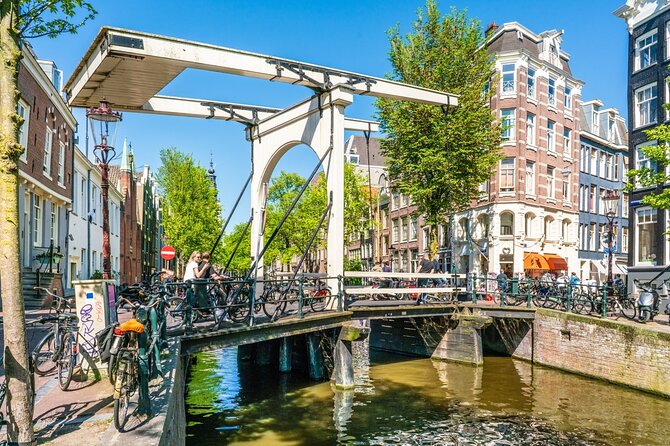
Amsterdam can feel like pure postcard beauty until you stop in the right places. This tour takes you through that switch. One minute you are looking at church towers and city squares, the next you are at memorials that name persecution, resistance, and murder.
What makes it special is the way it widens the frame. Yes, Anne Frank is part of the story, but you also see memorials connected to Jewish resistance, LGBTQ+ persecution, and the killing of Jewish deaf and hard-of-hearing people. You also encounter remembrance for Roma and Sinti victims, which is too often left out of quick city overviews.
I also like the tone. It is respectful, direct, and focused on why each site matters. Expect a walk that feels emotionally heavy at times, but structured enough that you are not lost.
More Historical Tours in Amsterdam
- Amsterdam Food and Cultural Tour with Tastings
★ 5.0 · 4,315 reviews - Amsterdam: Historic City Centre Canal Cruise
★ 4.3 · 659 reviews - Amsterdam: Haunted History and Ghost Walking Tour
★ 4.5 · 488 reviews
Price and value for 2.5 hours with a private guide
The price is $59.28 per person for about 2 hours 30 minutes. That sounds like just a number until you think about what you are buying: an expert guide, a tightly planned route, and a way to make sense of what you are seeing.
A lot of the stops are free to visit on your own. The value here is in the explanations and in the order. When you have a guide who connects the dots between a monument, a square, and a specific group targeted under Nazi rule, the walk becomes more than sightseeing.
This is also private, meaning it is your group only. Private does not mean the guide talks at you the whole time. It usually means you get to set the pace, ask questions, and take little pauses when your brain needs a moment.
Finally, there is a satisfaction guaranteed or money back promise. That matters for a tour like this, where the emotional tone and the quality of interpretation can make or break the day.
Meeting point, timing, and practical planning that saves stress
You meet at Westermarkt 60, 1016 DL Amsterdam. The walk ends at the National Holocaust Names Monument, 1018 DP Amsterdam. That ending point is a gift, because once the tour is done, you are already standing where the names and Stumbling Stones are.
It runs in English, and you get a mobile ticket. You are also close to public transportation, which is handy if you do not want to play taxi roulette across the city.
A few practical notes that I think are worth treating seriously:
- Food and drinks are not included. If you plan a longer day in central Amsterdam, you will want your own snack and water.
- Luggage and coat storage are not included. If you are traveling with bags, plan how you will carry them.
- You should have a moderate physical fitness level, since it is a walking tour with frequent stops.
- Hotel pickup and drop-off are not included. The recommendation is Uber or a taxi, which is usually the easiest way to get to Westermarkt.
If you are the type who likes to show up organized, charge your phone and check offline maps ahead of time. You will be moving from stop to stop, and you do not want to waste energy hunting addresses in rainy weather.
Exterior-only Anne Frank House: close, but not inside
The tour starts at the Anne Frank House exterior. That is important. You are not entering the building, so you do not get the attic experience or the inside exhibits from the Anne Frank House site.
Still, this opening works well because it frames Anne Frank in the wider landscape of WWII persecution. You learn about Anne, her family, and four others who hid from the Nazis for two years. Even from the outside, the story has a clear gravity when someone puts it into the right context.
If you have Anne Frank House tickets, you can think of this as a warm-up. If you do not, it becomes a meaningful alternative. Either way, it helps you understand what you are looking at before you move on to the rest of the memorial route.
More history tours in Amsterdam:
- Amsterdam High-End Dutch Food & History Tour – Up to 8 guests
★ 5.0 · 482 reviews - From Amsterdam: Volendam Heritage & Cheese Half-Day Tour
★ 4.4 · 461 reviews - Amsterdam: Historic City Sightseeing Canal Cruise
★ 4.5 · 444 reviews - Amsterdam: Historical Highlights Walking Tour with Tasting
★ 4.6 · 381 reviews
The Anne Frank statue and Westerkerk: comfort with a reminder
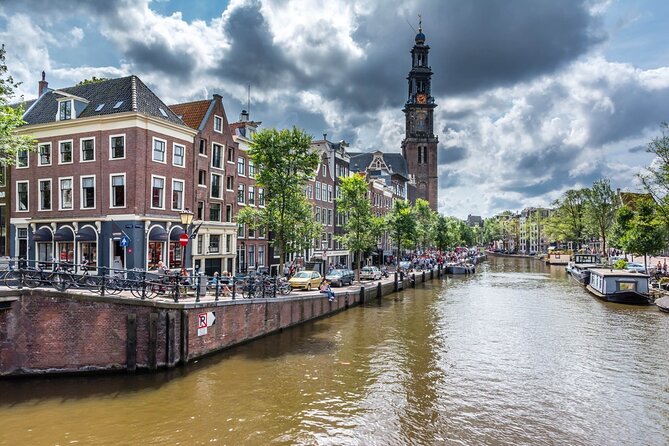
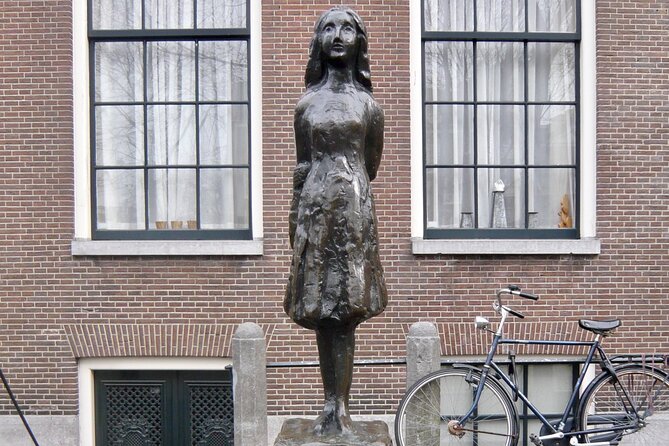
From there you see the Statue of Anne Frank, set against the backdrop of Westerkerk, the 17th-century church. The details matter here. You learn how the bells could feel like comfort, but also a reminder of the world beyond the hiding place.
This is one of those spots where the city looks calm, almost everyday. That contrast is part of the point, and it is why the guide’s framing is so important. Without it, you might treat the statue like any other photo stop.
Homomonument and Dam Square: the Nazi footprint beyond one community
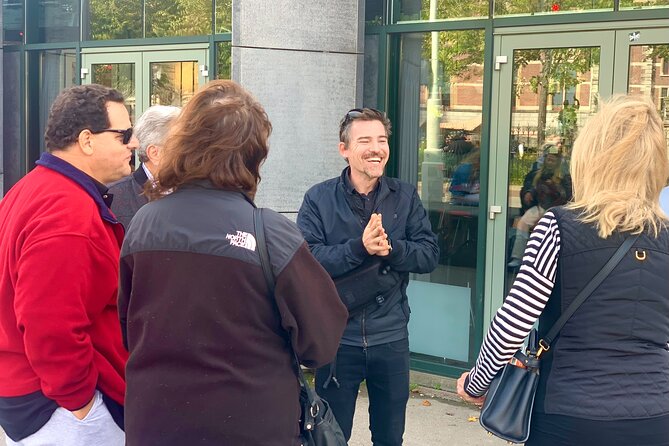
Next is the Homomonument, described as the first memorial in the world dedicated to persecuted LGBTQ+ people. This stop broadens the story in a way that feels necessary. It reminds you that Nazi persecution was not limited to one religion or one nationality. It targeted people for who they were and what they represented.
Then you walk through Dam Square, Amsterdam’s historic main square. Here you learn about the Nazi recruitment office that once stood in the area. From there, you pay respects at the National Monument, a cenotaph honoring victims of World War II and later conflicts.
These two stops together help you understand something crucial: the occupation did not only happen in secrecy or in documents. It also operated in public spaces where the machinery of control could function.
Spinoza Monument to the resistance sites: Jewish thought and Jewish resistance
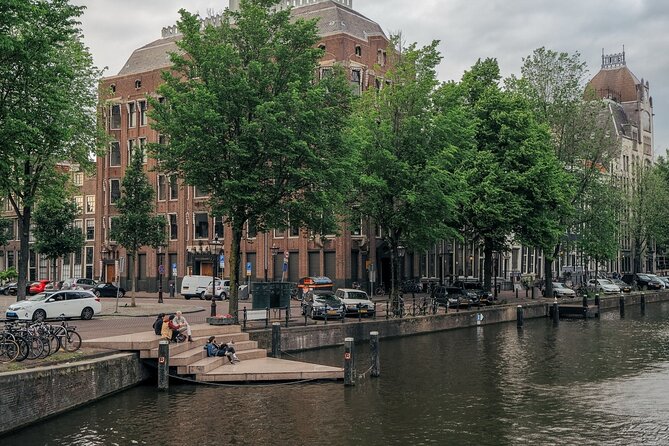
You stop at the Spinoza Monument, tied to Dutch Jewish philosopher Baruch Spinoza. You learn about his rationalist ideas on religion and politics, and why they were considered radical in his time. The guide also connects those ideas to later influence on the Enlightenment.
This is a smart change of pace. It prevents the story from being only about suffering. It includes the intellectual world that existed before the Nazis destroyed so many lives and institutions.
Then the route turns toward resistance. You visit the Monument vor Joods verzet, the Jewish Resistance Monument. It was erected in 1988 to commemorate Jewish resistance fighters who died in WWII. You also hear how this site marks the first mass protest against Nazi occupation.
After that, you pause at Monument Megadlé Jethomiem. This one is subtle, which is why it hits hard. Stones trace the outline of an orphanage from which Jewish children and their caretakers were deported to Sobibor in 1943.
If you want a measure of good guiding, watch how the guide handles these two sites. The best ones keep the focus on meaning, not on sensational details.
Portuguese Synagogue from the outside, then the docks memory
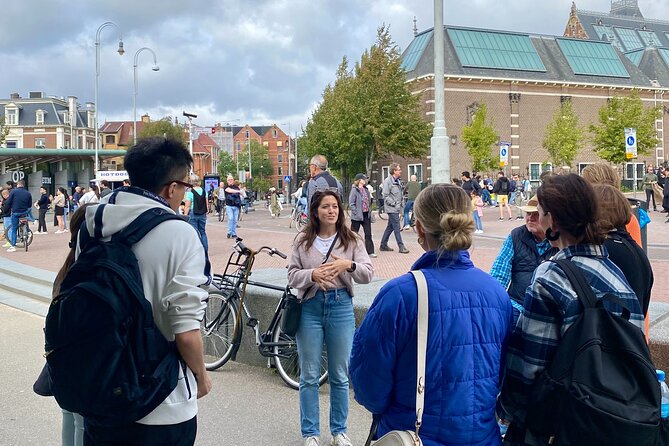
You admire the Portuguese Synagogue, described as once the world’s largest synagogue. The guide positions it as a symbol of Amsterdam’s once-thriving Jewish community. You also get a note that the Jewish Museum across the street offers deeper insight into Jewish life, history, and culture in the Netherlands.
Here is where you need to plan ahead mentally. Entry to the Portuguese Synagogue is not included in the tour price. So if your dream is to go inside, you will need separate tickets or another plan.
Next comes the Dokwerker, tied to the memories of the February strike. You reflect at a statue commemorating the February Strike of 1941, when thousands of workers staged the first public protest in occupied Europe against Nazi persecution.
For me, this stop feels like a reminder that normal people resisted in visible ways, even when the stakes were deadly. It also helps the earlier resistance monuments click into place.
Deaf Memorial and the Auschwitz mirror: the parts of the story many miss
You visit the Deaf Memorial, honoring Jewish deaf and hard-of-hearing victims of the Nazi regime from 1940 to 1945. The Nazis labeled many of them with “Untermenschen,” and you learn how they were systematically murdered.
This stop matters because it names a category of victims that does not always get center stage in standard WWII tours. It also makes the guide’s role really clear. Someone has to explain why the wording and classification matter, and how this fits into the broader system of persecution.
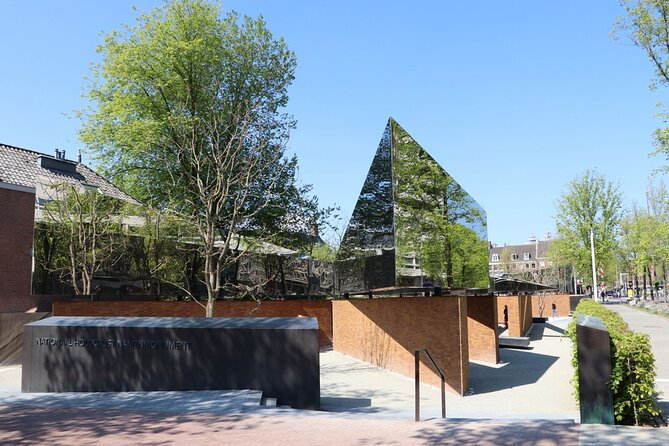
Then you visit the Auschwitz Monument in Wertheimpark. It is a quiet corner with a memorial built around a shattered mirror that reflects the sky. The point is simple and brutal, and it does not need extra drama. You feel the brokenness in the design, and you understand what it symbolizes through the guide’s framing.
National Holocaust Names Monument and Stumbling Stones: ending with names, not just symbols
The tour ends at the National Holocaust Names Monument and you also see the Stumbling Stones. This is one of the strongest finishes you could ask for.
At the Names Monument, you encounter engraved names of 102,000 Jewish victims and 220 Roma and Sinti murdered by the Nazis. Then you look down for the Stumbling Stones, small brass plaques embedded in the pavement, each marking the last known residence of a deported Holocaust victim.
Even if you think you already know the facts, walking this section helps your brain slow down. It turns the abstract into something physical and local. And it gives you a place to return to after the tour if you want more time on the names.
What I’d do to get the most out of the walk
This tour moves through emotional material. The best way to handle it is to support your body and your attention.
I suggest you:
- Wear comfortable shoes, because you are walking and stopping for about 2.5 hours
- Bring something small to drink and a snack since food and drinks are not included
- Dress for the weather. One guide in a rainy session kept checking on comfort, so you should plan to do the same for yourself
- Save some phone battery for the mobile ticket and quick map checks
Pairing ideas, if you like building a fuller day:
- If you can get Anne Frank House entry separately, this walk can give you the context first
- If you want more on Jewish life in Amsterdam, the Jewish Museum is mentioned as across from the Portuguese Synagogue
This is also ideal if you want to understand the why and the how, not only the who. The memorials are powerful, but the guide’s connections are what make the route feel like one coherent story.
Should you book? Yes, if you want meaning, not just landmarks
Book this tour if:
- You want a WWII-focused Amsterdam walking experience that covers more than one famous story
- You care about memorials that name LGBTQ+ victims, Jewish resistance, Jewish deaf victims, and Roma and Sinti victims
- You want an English-speaking expert local guide who can answer questions as you go
- You prefer a private format so you can go at your pace
Skip it or reconsider if:
- You specifically want indoor access to the Anne Frank House or the Portuguese Synagogue, because this is exterior only for Anne Frank and it does not include Portuguese Synagogue entry
- You are looking for a light, casual history stroll. This walk is thoughtful and heavy, by design
If you are trying to choose between a standard city walking tour and something more direct and human, this one is a strong bet. It ends where the names are, and that alone makes it hard to forget.
Latest Amsterdam reviews
- Small Group Tulip and Spring Flower Fields Bike Tour★ 4.5 · 14 reviews
- Amsterdam Van Gogh Museum Private Tour for Kids & Families★ 4.0 · 14 reviews
- Zaanse Schans Windmills Private Tour from Amsterdam Airport★ 5.0 · 14 reviews
- Bruges Day Trip from Amsterdam★ 4.5 · 14 reviews
- Volendam: Volendams Museum Entry Ticket★ 4.4 · 14 reviews
- Zaanse Schans Windmills, cheese and clogs and Volendam tour from Amsterdam★ 5.0 · 14 reviews
- Departure from Amsterdam City to Amsterdam Airport AMS by Minivan★ 5.0 · 14 reviews
- Walking Tour about Golden Age Architecture, private local guide★ 5.0 · 15 reviews