
Reviewed · WORKSHOPS
Perfumery Exploration Workshop in Groningen
A Groningen perfumery workshop is interesting for one simple reason: you do the work with your nose. In a group of no more than 5, you explore real perfumery ingredients, learn how accords are built, then leave with the scent you helped create. The host, Ananias Potamitis, guides the whole thing in a calm, structured way that still feels playful.
I love how hands-on it is. You smell a wide range of professional ingredients up close, then you build accords like rose, jasmine, strawberry, and fougère with real formula thinking behind it. I also like that there is zero pressure to buy anything, no hard-sell. That makes the workshop feel like a lesson and not a shopping detour.
One consideration: this is a scent-heavy session, so if strong smells are a problem for you, plan carefully. You are asked to arrive fragrance-free, which you should take seriously, because your nose needs a clean slate to catch the nuances.
Key things you will remember
- Small group experience with a maximum of 5 people, so you get real attention while you smell and mix
- Professional ingredient tasting that turns perfume notes into something you can actually identify
- Accords practice (rose, jasmine, strawberry, fougère, and more) plus a peek at how formulas are structured
- Team blending where you collaborate on one direction and one final formula
- Take-home reward: you receive a 10ml bottle of the perfume created together
Meet Your Nose Teammate: A Small-Group Workshop in Groningen
This is the kind of Groningen activity that works even if perfume is not your hobby. The group stays tiny, up to five travelers, which changes the whole vibe. You are not watching from the sidelines, and you are not rushed past the fun parts. Instead, you get time to smell, think, and talk through what you experience.
The workshop runs about 2 hours 30 minutes, starting at 12:00 pm. You meet at Gedempte Kattendiep 11, 9711 PL Groningen, and it ends back at the same spot. Since it is near public transportation, it slots into a day without turning your schedule into a puzzle.
Most importantly, the format is built for learning by doing. You start with context, then move fast into sensory work. That balance matters. If you jump straight to mixing, it can feel like random sniffing. If you only get theory, it can feel like a lecture you forget by dinner. This workshop gives you both, with the hands-on time taking center stage.
And yes, the atmosphere feels intentionally calm and elegant, like you are doing something a little special. People also seem to enjoy the social side, because you share impressions while you test notes and try to agree on what something reminds you of. It is educational, but it still feels like a cool experiment with friends.
More hands-on workshops in Groningen:
- Amsterdam: Traditional Dutch Syrup Waffle Making Workshop
★ 4.8 · 4,093 reviews - Amsterdam Traditional Dutch Syrup Waffle Making Workshop
★ 5.0 · 960 reviews - Amsterdam: Bols Cocktail Experience and Cocktail Workshop
★ 4.8 · 666 reviews
Fragrance-Free Check-In: The Sensory Rule That Matters
Before you even start, there is one instruction that makes or breaks the experience: when you book, arrive fragrance-free. That means no perfume, no scented lotion, no strongly scented deodorant, and ideally no lingering hair products. If you do not follow this, you will fight your own smell trail.
Why does this matter so much? Perfume is subtle. A professional ingredient may smell mild on its own, but in combination it can bloom into something totally different. If your nose is already “loaded” with your personal scent, it becomes harder to separate what you are smelling from what you brought with you.
You will also likely be smelling a lot during the session. The workshop includes a long ingredient tasting block, so think of it like guided sensory training, not a casual sniff. If you are prone to headaches from strong odors, take that seriously ahead of time. But if you can handle everyday fragrance (like coffee, herbs, fresh soap, or scented flowers), you should be fine.
Practical tip: if you are the type who forgets what you smelled five minutes ago, bring a tiny notebook app note in your phone and jot down quick impressions during the tasting portion. You will thank yourself later when you are building accords and trying to name the character you want.
History and Tools: Getting Oriented Without Getting Bored
The session opens with a short history segment, about 10 minutes, designed to give perfume context quickly. You do not get a textbook. You get enough background to understand why perfumery developed the way it did and how perfume culture evolved over time.
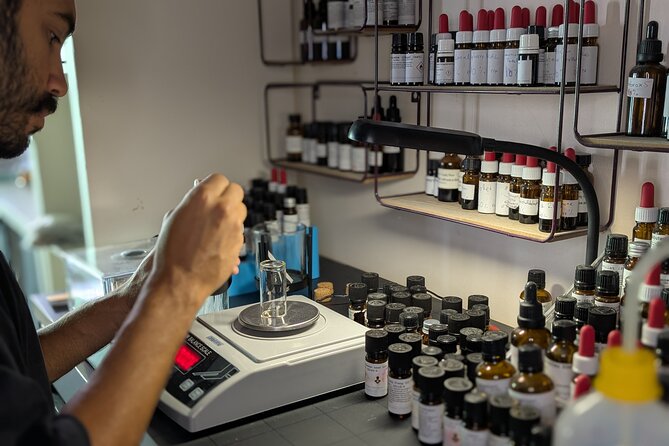
Then you shift into how a perfumer works, also about 10 minutes. You get a look at the host’s lab setup, with tools and materials explained right from the lab desk. This part is especially useful because it makes perfume feel like a craft instead of a mystery. You start realizing that real fragrance creation is built from components, not vibes.
One reason this opener works is pacing. The workshop does not hang around too long on any single concept. It moves from “where perfume comes from” to “how it is built,” and then it sends you straight to smelling.
From there, the host’s style matters. Ananias Potamitis comes across as someone with real focus and professionalism, but he still lets you do a lot yourself. Instead of simply telling you what something should smell like, he guides you while you test and compare. That approach keeps the session feeling engaging, even for first-timers.
Sixty Minutes of Ingredient Exploration: Smell, Sort, Explain
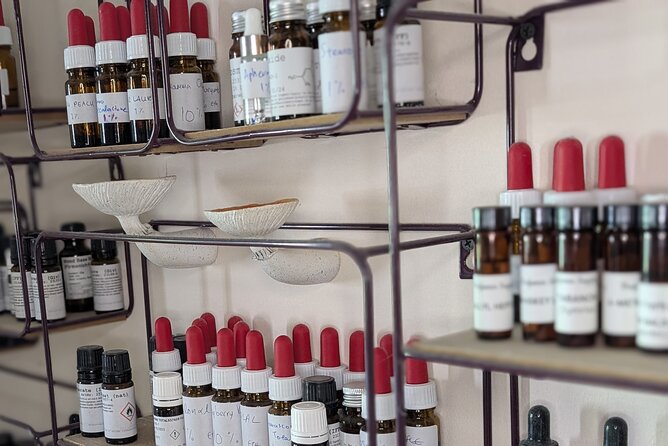
The heart of the workshop is the ingredient exploration block, about 60 minutes. This is where you get the most sensory payoff. You smell a diverse set of professional perfumery ingredients and learn how to understand their profiles.
This is also the part where your brain starts doing new work. You are not just smelling for comfort. You are learning how ingredients behave: what feels floral versus fruity, what reads as green, what leans warm or airy, and what gives a perfume its structure. The workshop includes a bit of a guessing game vibe, which turns the process into something interactive. You compare impressions with the rest of the group, and that discussion helps you sharpen your own sense of categories.
I like this section because it gives you a practical skill for everyday life. After you start recognizing ingredient families, you will find it easier to answer questions like:
- Why a fragrance feels clean but not boring
- Why one perfume smells sharp at first then softens
- Why some scents feel more “dated” and others more modern
And for beginners, this block is a confidence builder. One of the most common fears is not knowing what kind of scent you like. Here, you start from scratch and build preferences by experience, not by marketing.
If you want to get the most out of it, pace yourself. Smell, pause, then try to put the experience into words. Not perfect words, just quick ones. Over time, your descriptions become clearer, and that makes the mixing part much easier.
A few other ways to fill a day in Groningen
- Groningen: City Canal Cruise
★ 4.3 · 895 reviews - Groningen: Climb the Martinitower
★ 4.5 · 365 reviews - Groningen: Terrace Boat Experience with a Cozy Bar
★ 4.1 · 307 reviews - Groningen: Open Boat City Canal Cruise
★ 4.7 · 250 reviews
Accords and Formula Insights: From Notes to Structure
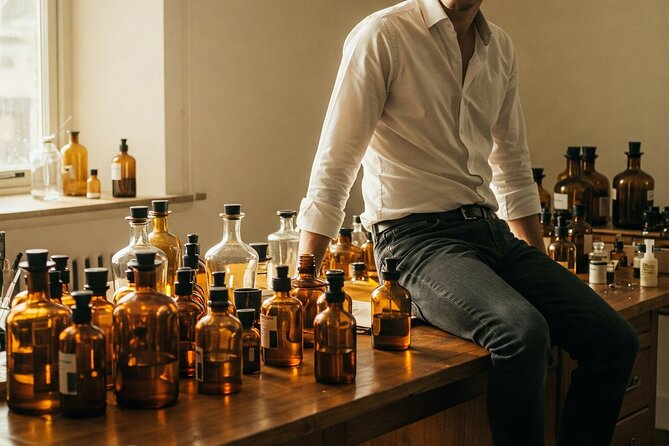
After the ingredient tasting, you move into building accords, plus a peek at how real perfume formulas work. This portion runs about 30 minutes.
Accords are where perfume stops being a collection of single smells and starts becoming a composition. You learn the fundamentals of creating accord families, including examples like rose, jasmine, strawberry, and fougère. That matters because those names are not random. They describe a sensory direction, a blend effect that feels like one unified “thing,” even though multiple ingredients make it happen.
You also get a brief glimpse into the structure of actual formulas. You are not just learning how to mix in a kitchen sense. You are learning the logic of perfumery: how parts contribute to the overall personality of a fragrance and how the direction you choose guides everything else.
This is where the workshop earns its “complete” feel. The session connects the dots. If you only smelled ingredients, you might wonder how they turn into something wearable. If you only learned theory, you might wonder how to make it real. Here, accords and formula thinking bridge the gap.
Expect questions, experimentation, and short bursts of guidance. And even though this is a guided learning activity, you still have room to make the experience your own, because you are preparing for the team creation step.
Team Creation and Your Take-Home 10ml Bottle
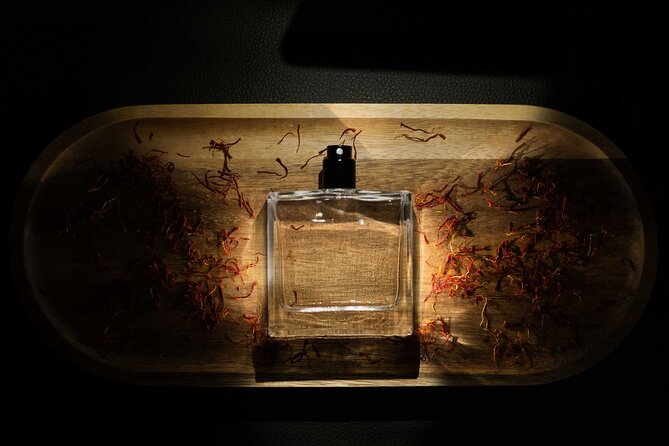
The last part is about team creation, roughly 30 to 40 minutes. This is where the workshop shifts from learning to making. You collaborate with the group to decide on an olfactory direction and then choose a single formula for the session’s perfume.
Think of it like a mini design project for your nose. You are not crafting alone, and you are not crafting randomly. You are negotiating scent choices based on what the group recognizes and enjoys together. That social element is one of the reasons people leave feeling genuinely pleased, not just educated.
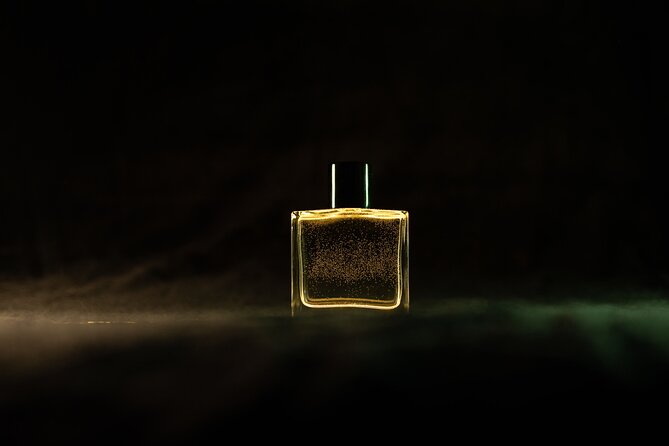
Once the team formula is decided and blended, each participant receives a 10ml bottle of the collaborative perfume to take home. That take-home bottle is more than a souvenir. It gives you a way to remember the process every time you wear it, because you can trace the scent back to the ingredient profiles and accords you worked on.
If you are visiting Groningen with friends, this is also a fun “we made this” moment that doesn’t require advanced skills. If you are traveling solo, it still works because the group size keeps it personal and interactive. Either way, you end the session with something tangible that reflects your choices.
Price, Timing, and Value of This 2.5-Hour Session
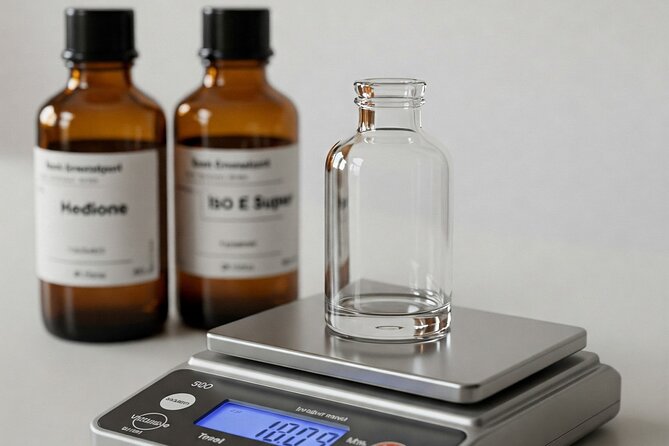
The price is $72.09 per person for about 2 hours 30 minutes. On paper, that might sound like a nice activity, but not a bargain. In practice, the value comes from three things.
First, it is small-group. With a maximum of 5 travelers, you get more direct involvement and more time for questions while you smell and mix. Second, you get a serious sensory training session, not just a quick demo. The long ingredient exploration block plus accord lessons is substantial. Third, you receive a 10ml bottle made from the team formula, which makes the experience feel like it ends with a gift, not just a memory.
Also, the workshop uses a mobile ticket, and you are near public transportation. That reduces friction on travel days, which matters more than most people admit.
If you are trying to pick one “hands-on” cultural stop in Groningen, this one has a good ratio of learning to time. You should plan it as a main activity rather than a side quest, because the nose work takes focus.
Who This Workshop Fits Best in Your Trip
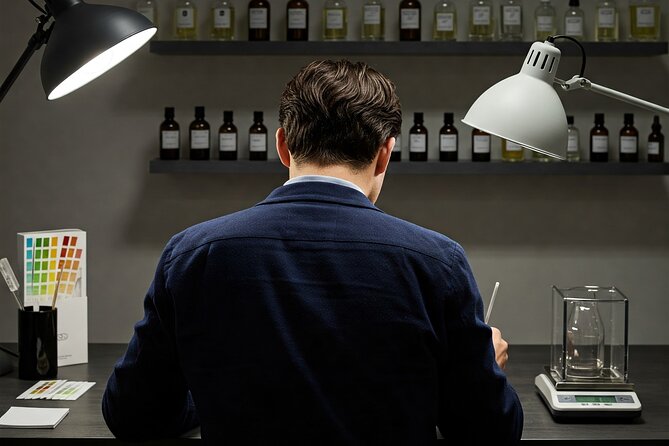
This workshop is a strong fit if you are curious about scent, even if you feel like you have no clue what you like. Beginners seem especially happy here because the experience starts with fundamentals and builds from there. You learn how to identify profiles and accords by practicing, not by memorizing.
It also fits if you enjoy creative activities. The team blending part turns the session into an outcome you can wear. And if you like calm, well-structured activities with a friendly host, this seems to hit that tone well.
A couple groups that should consider it:
- Couples or friends who want a shared, interactive experience
- Solo travelers who prefer learning that actually involves them
- Anyone who wants to understand why perfume feels like art, not just product
If you are extremely scent-sensitive or you dislike being exposed to multiple fragrances in a row, treat it as a personal decision. The fragrance-free requirement alone tells you the workshop is designed around smell accuracy.
Should You Book the Perfume Workshop in Groningen?
My take: book it if you want to leave with both understanding and something you can use. The structure is clear, the focus stays on smelling and making, and the small-group format keeps it from feeling generic. The biggest practical win is the instruction style, you get real guidance while you do the work yourself.
Skip it only if you know you react strongly to fragrance or you cannot follow the fragrance-free rule. Otherwise, this is one of the more memorable, hands-on ways to spend time in Groningen, because it teaches a skill you can apply to perfumes you encounter later.
FAQ
Where is the workshop meeting point in Groningen?
The meeting point is Gedempte Kattendiep 11, 9711 PL Groningen, Netherlands.
What time does the experience start?
The start time listed is 12:00 pm.
How long is the workshop?
It lasts about 2 hours 30 minutes.
How much does it cost?
The price is $72.09 per person.
What is the maximum group size?
The workshop has a maximum of 5 travelers.
Do I need to arrive fragrance-free?
Yes. You are asked to arrive fragrance-free for the best sensory experience.
Do I get to take something home?
Yes. You receive a 10ml bottle of the team perfume you create.
When will I get confirmation after booking?
You receive confirmation within 48 hours of booking, subject to availability.
Latest Groningen reviews
- Groningen: Pub Crawl with Pub Quiz, Free Shots and Games★ 4.3 · 17 reviews
- Groningen: Booze Cruise with Unlimited Drinks★ 4.9 · 18 reviews
- e-Scavenger hunt Groningen: Explore the city at your own pace★ 4.5 · 28 reviews
- Groningen: City canal cruise (with unlimited drinks)★ 4.8 · 29 reviews
- Groningen: Evening Cheese and Wine cruise★ 4.9 · 54 reviews
- Groningen: City Highlights Bike Tour★ 4.8 · 59 reviews
- Historical Canal Tour★ 5.0 · 60 reviews
- Groningen: Walking Tour with Local Guide★ 4.6 · 202 reviews
Workshops, compared.
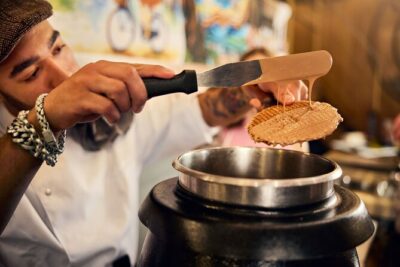
Traditional Dutch Syrup Waffle Making Workshop
Read our review →Amsterdam Traditional Dutch Syrup Waffle Making Workshop
Read our review →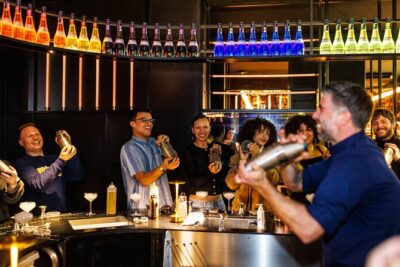


Amsterdam Bols Cocktail Experience and Cocktail Workshop
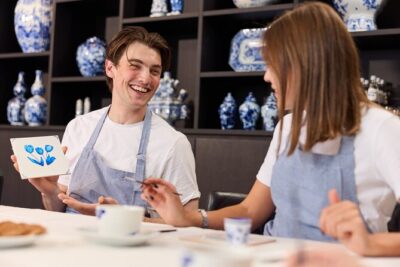
Read our review →Amsterdam Traditional Dutch Blue Tile Painting Workshop
Read our review →Browse the lists this tour appears in