
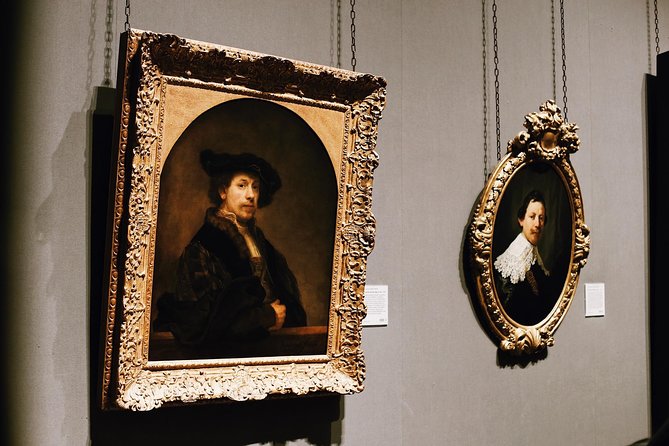
Reviewed · RIJKSMUSEUM
Rijksmuseum & Amsterdam City Center Semi-Private Tour 12ppl Max
What makes this tour stand out is the balance: you get a semi-private Rijksmuseum visit, then you get a guided walk that helps you connect the city’s big sights fast. I love that it caps at 8 people, so you actually hear your guide and can ask questions. I also like that you start with pre-arranged Rijksmuseum entry, so your day doesn’t turn into guesswork and waiting.
One thing to consider: you will cover a lot of streets on foot after lunch, so comfortable shoes matter. Also, at the Rijksmuseum there are bag rules, so if you bring a big backpack or suitcase, you may not be able to bring it inside.
Key highlights you’ll feel right away
- Small group (max 8) keeps the pace human and the guide easy to hear
- Rijksmuseum ticket included with prebooking, plus an all-day ticket so you can return later
- A guided city loop that strings together canals, gates, churches, and hofjes in one afternoon
- No rush lineup energy compared with big-bus style groups, with time to look and listen
- Lots of “look up” moments, from gabled canal houses to the Golden Bend on Herengracht
Semi-private size, skip-the-line entry, and why this day flows
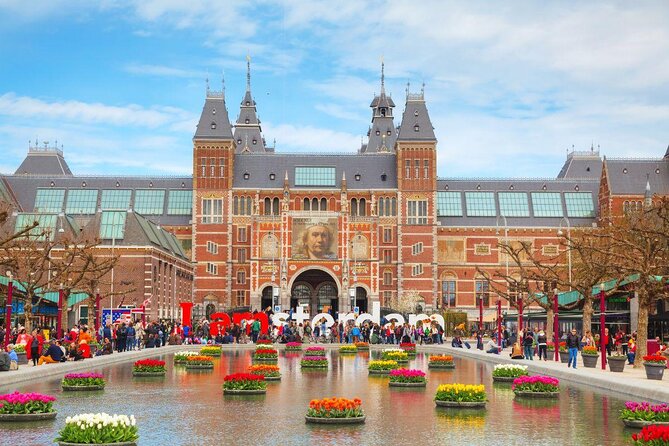
Amsterdam is compact, but sights are not. The trick is sequencing. This tour uses the smartest order: start inside the Rijksmuseum while your energy is high, then switch to walking once you’ve got the city’s art and power structure in your head. Because it is semi-private, you are not stuck in a moving crowd where the guide becomes background noise.
You also get practical value from the included tickets. The Rijksmuseum piece matters because it is one of Europe’s most popular museums, and prebooking helps you avoid losing your morning. The rest of the city walk is designed to give you quick orientation. You learn what each area is, why it mattered, and how Amsterdam’s past explains what you see today, from gates and trade buildings to hofjes and churches.
As for the “attention” part, the best evidence is in the guide feedback. The review that named Diana called out how in depth she was at the Rijksmuseum, and how accommodating she was during the longer walking stretch. That is exactly what you want from a guide on a half-day like this.
More Rijksmuseum entries:
- Amsterdam: Rijksmuseum Entry Ticket
★ 4.7 · 29,512 reviews - Amsterdam: City Canal Cruise and Rijksmuseum
★ 4.5 · 2,226 reviews - Rijksmuseum Amsterdam Small-Group Tour with Private Upgrade
★ 4.5 · 1,547 reviews
Meeting at the I am Amsterdam sign and getting into the Rijksmuseum
You meet at 10:00 am outside the Rijksmuseum at the letter I of the giant I am Amsterdam sign. It is an easy landmark, and it sets the tone for a smooth start. You’ll also need a mobile phone number with country code, so the team can reach you if anything changes on the day.
From there, you go directly inside to your museum time. The tour is set up to help you skip the line at the entrance. Still, be realistic about security. The museum has rules, and increased security measures at many attractions can mean some lines still form. The tour also notes that some areas inside the museum can be quiet or have restricted speaking, so your guide will point out where that applies before you move in.
One more real-world tip: the museum does not allow large bags or suitcases inside. Only handbags or small, thin bag packs go through security. If you travel with a bulky daypack, plan to leave it at the hotel or swap to something that fits the rules.
Rijksmuseum highlights you’ll actually remember
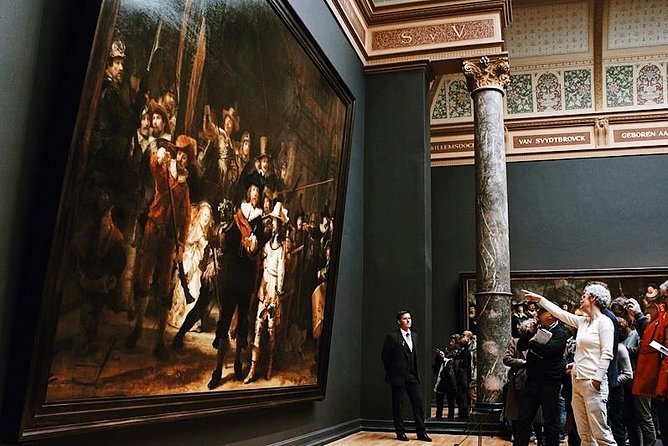
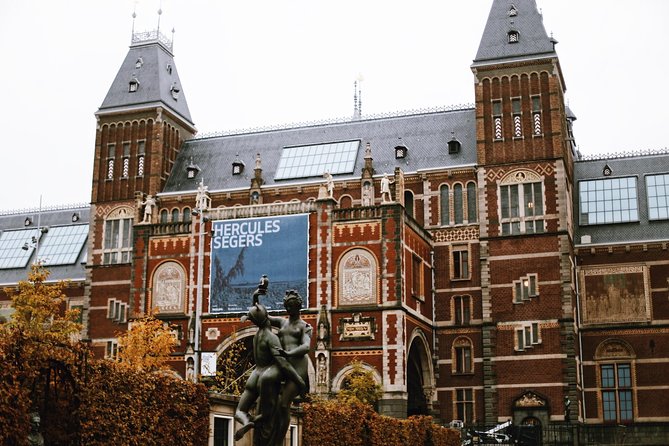
At the Rijksmuseum, you spend about 2 hours 30 minutes, with admission included. You are not just touring paintings, either. The museum’s strength is how it tells Dutch history through objects. The guide focuses your attention so you connect names you’ve heard, like Rembrandt, with the details you might not know, like 17th-century dollhouses.
Here are the kind of things you should expect to notice while you move through the collection:
- Masterpieces tied to daily life and power
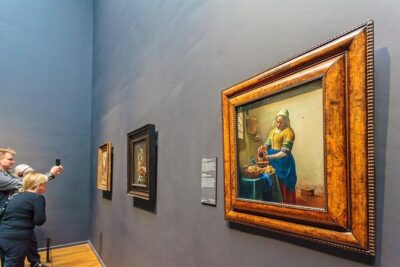
- Artworks from famous Dutch artists, including Rembrandt and Vermeer
- Stories in unexpected corners, not only in the big gallery rooms
- A 19th-century library with Dutch and international literature
One of the best parts of a structured museum visit is learning what to look for when you are standing in front of something famous but unfamiliar. You’ll likely talk about how the Dutch Golden Age shaped art, homes, trade, and identity. You may also get help with the museum name pronunciation, which sounds minor, but it saves you the awkward pause when you ask staff a question later.
And don’t ignore the library component. A museum library can feel like a side detail until someone explains what it represents in that time period. Here, it is part of how the Rijksmuseum links culture, learning, and the wider world.
Lunch break and the all-day Rijksmuseum ticket perk
The total tour time is about 5 hours 30 minutes, and that includes a lunch break. Lunch is not included, so you are free to eat on your own. This is a good setup because it lets you choose what fits your energy and budget, instead of being herded into one option.
After the walking tour ends, your Rijksmuseum ticket remains valid all day. That is a big advantage if you want a second look. Maybe you want to spend extra time with one room you love, or maybe you skipped something because you were listening to the guide and didn’t linger enough.
Just keep your museum entry rules in mind if you return later. If you bring the wrong bag again, you might end up reworking your plan.
A few other ways to fill a day in Amsterdam
- Amsterdam: Van Gogh Museum Ticket
★ 4.7 · 52,054 reviews - Amsterdam: Heineken Experience Ticket including 2 Drinks
★ 4.6 · 36,014 reviews - Amsterdam Classic Saloon Boat Cruise with Drinks and Cheese
★ 5.0 · 31,825 reviews - Amsterdam Luxury Canal Cruise + Unlimited Drinks & Bites option
★ 5.0 · 30,518 reviews
From St. Nicholas Basilica to the Weeping Tower: Amsterdam’s layered stories

After the museum, you shift into a historical walking segment of Amsterdam’s older core. The route includes medieval and religious landmarks, plus a bit of legend.
You start at St. Nicholas Basilica. This Roman Catholic church was built at the end of the 19th century, when Catholics could again practice publicly after centuries of prohibition. Even if you only stop for a short moment, the guide context helps you see the church as a symbol of a change in public life, not just architecture.
Next is Schreierstoren, often called the Tower of Tears or Weeper’s Tower. The story centers on the belief that women wept there for husbands leaving for war or for fishing. Whether you treat it as folklore or history, it adds emotional texture to an otherwise stone-and-brick sight.
Then you head toward Zeedijk, the street known as Amsterdam’s Chinatown. Here, the value is how your guide ties geography to community. You are seeing how immigrant neighborhoods grew and how food and commerce shaped the city fabric.
Nieuwmarkt, De Waag, and the trade-city vibe

Nieuwmarkt is a lively square in the old city center, described as a commerce and social hub since the 17th century. You learn that its location just inside the old city gate made it a natural meeting point for traders and shoppers.
From there, you see De Waag. It is a 15th-century building and one of Amsterdam’s oldest remaining non-religious structures. It originally served as a city gate, and it later functioned as a guildhall, museum, and fire station. That range of uses is exactly what you want on a city walk: buildings that keep changing roles while staying in place.
These stops are short on purpose. The goal is to get you oriented fast and help you connect what you see with why it exists, so you can wander on your own later with more confidence.
Trippenhuis and the East India Company courtyard
The walk continues past Trippenhuis and Klein Trippenhuis. Trippenhuis is described as Amsterdam’s widest home, spanning 22 meters. Across from it, Klein Trippenhuis is among the narrowest houses in the city. Standing near both gives you a visual lesson: land taxes and practical economics pushed buildings upward and squeezed them into shape.
You also step into the courtyard area of Oost-Indisch Huis, the Dutch East India Company headquarters, linked to the birthplace of the world’s first multinational corporation. Even a quick stop here works because it reframes Dutch power as something tied to ships, contracts, and global networks.
This part of the city walk is where you start seeing Amsterdam as a business machine with style. The courtyards and facades show wealth, but the stories behind them explain how that wealth was made.
Zuiderkerk and the cultural block around the Stopera
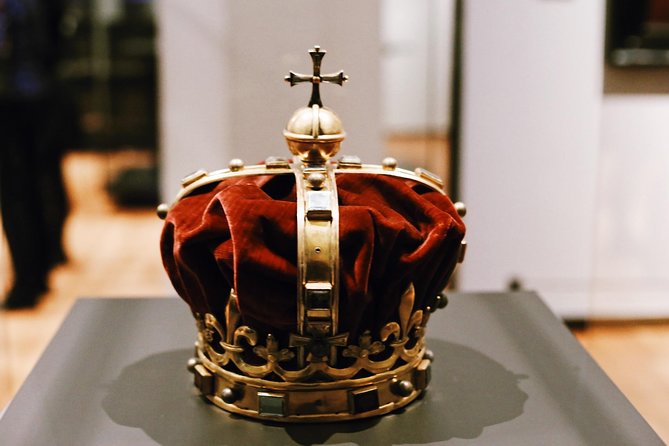
Next is Zuiderkerk, Amsterdam’s first purpose-built Protestant church. Designed by Hendrick de Keyser, its tower is a defining landmark. Protestant church architecture can look less ornate than Catholic designs at first glance, but learning the context helps you notice the intention behind the form.
You also pass by Rembrandt’s house, now the Museum Het Rembrandthuis. The museum is a historical building where Rembrandt lived and worked from 1639 to 1656. The collection includes Rembrandt’s etchings and paintings by his contemporaries. Even if you are not going inside, the guide connection makes it easier to understand why this spot matters.
Then you head to the Stopera, a building complex that houses the city hall and the Dutch National Opera and Ballet. The construction took at least 60 years. That detail gives you a clue about how long-lasting civic pride and cultural investment can be in Amsterdam.
Hofjes, Dam Square, and canal-side architecture for serious looking
You continue to Huis aan de Drie Grachten, a rare 17th-century canal house where the façades face in three directions. Small stops like this are perfect for your neck muscles in Amsterdam. The guide’s job is to tell you what you’d miss if you only watched the street.
Then you reach Begijnhof, one of the oldest hofjes, or almshouses. It is built around a secluded courtyard and garden, originally housing the Beguines, unmarried women living together under vows of chastity. Today it includes two churches. This stop is short, but it’s one of those places where the atmosphere shifts, because you are entering a sheltered pocket inside the larger city.
Dam Square is next. It is one of Amsterdam’s best-known plazas, with major buildings and frequent events. You’ll see the Royal Place, New Church, and the National Monument area. Even if you only pause briefly, it is a powerful center point for first-time orientation.
After that, you look at Herengracht, specifically the Golden Bend lined with the city’s richest and most ornate canal mansions from the Dutch Golden Age. The “Golden” part is not just decorative. It is tied to how canal routes acted like economic highways.
Anne Frank House area, gabled façades, and the Amsterdam you see when you look up
You pause outside the Anne Frank House, where the young diarist hid during World War II. Next door is the Westerkerk, with the tallest church tower in Amsterdam. These are not quick “look and move” stops if you want them to mean something, so use the moment to absorb the fact that Amsterdam’s streets are layered with modern history as well as older structures.
Then you spot De Drie Hendricken aan de Bloemgracht 87 to 91. This is a façade stop, focused on quirky gable stones carved with allegories and trade emblems. It is proof that Amsterdam street art and symbols are not only modern. Old cities encode meaning in stone.
You also see Karthuizerhof, described as the largest hofje in Amsterdam, built as almshouses around a tranquil courtyard for the poor and elderly. It is another example of Amsterdam’s care structures shaping the city’s built form.
Wrapping up near Noorderkerk and Papeneiland
Near the end, you reach Noorderkerk, a 17th-century Protestant church for the Jordaan district. Its floor plan is cross-shaped, reflecting Reformation worship ideals. It is a good “close the circle” moment because it reminds you how religion, design, and worldview connect.
Finally, you end at The Papeneiland, one of the prettiest canal corners. You visit Het Papeneiland, a brown café from 1642, said to serve the best apple pie in town. That ending matters because it gives you an easy next step. If you want a dessert and a slow sit-down after the walk, this is built for it.
And if you would rather keep exploring, you’ve now learned enough to choose where to wander next, with fewer guesswork turns.
Price, value, and who this tour makes the most sense for
At $286.56 per person, this is not a budget option. But it is also not a “just show up and hear basics” deal. You are paying for a semi-private group size cap of 8, a professional guide, about 5.5 hours of guided time, and entrance fees. You also get prebooking that guarantees entry to the Rijksmuseum, plus an all-day museum ticket that gives you flexibility after the walk ends.
For me, the value equation looks best if you:
- Want a smarter museum start, not a waiting game
- Like guided context so you understand what you are seeing
- Prefer walking with structure but not a huge crowd
- Plan to return to at least one Rijksmuseum area later
This tour is also described as running rain or shine, and it is near public transportation. You should have moderate physical fitness because it is a walking-heavy route with many stops.
Should you book Rijksmuseum and Amsterdam City Center semi-private?
If your ideal Amsterdam day is part art, part city stories, and part “I want to get my bearings fast,” this is a strong choice. The semi-private cap keeps the experience personal, and the museum time starts with purpose. The guide experience is a real selling point, with Diana specifically called out for being excellent and accommodating.
Book it if you want an efficient afternoon that still leaves room to return to the Rijksmuseum on your own later. Think twice if you need step-by-step accommodations for mobility, since the tour is not recommended for wheelchair use or walking disabilities. If you can handle a solid walk with a few short stops, you’ll leave with a clearer picture of Amsterdam and a head full of details you can actually use next time you wander.
FAQ
How many people are on this semi-private tour?
The group is capped at a maximum of 8 travelers.
Where and when does the tour start?
You meet at 10:00 am at the letter I of the giant I am Amsterdam sign outside the Rijksmuseum.
What is the total duration of the experience?
The tour runs about 5.5 hours, and that includes a lunch break.
Is lunch included, or do I pay on my own?
Lunch is not included, so you’ll need to cover your own meal during the break.
Is Rijksmuseum admission included, and can I return after the tour?
Rijksmuseum admission is included, and your ticket is valid all day so you can return after the guided portion ends.
Is this tour okay if I have limited mobility or use a wheelchair?
This tour is not recommended for people with walking disabilities or using a wheelchair.
Latest Amsterdam reviews
- Small Group Tulip and Spring Flower Fields Bike Tour★ 4.5 · 14 reviews
- Amsterdam Van Gogh Museum Private Tour for Kids & Families★ 4.0 · 14 reviews
- Zaanse Schans Windmills Private Tour from Amsterdam Airport★ 5.0 · 14 reviews
- Bruges Day Trip from Amsterdam★ 4.5 · 14 reviews
- Volendam: Volendams Museum Entry Ticket★ 4.4 · 14 reviews
- Zaanse Schans Windmills, cheese and clogs and Volendam tour from Amsterdam★ 5.0 · 14 reviews
- Departure from Amsterdam City to Amsterdam Airport AMS by Minivan★ 5.0 · 14 reviews
- Walking Tour about Golden Age Architecture, private local guide★ 5.0 · 15 reviews
Rijksmuseum, compared.

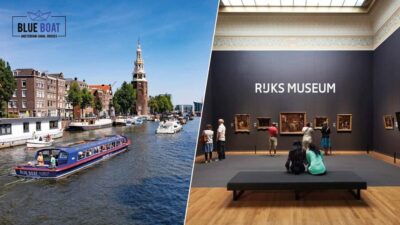
Rijksmuseum Amsterdam Small-Group Tour with Private Upgrade
Read our review →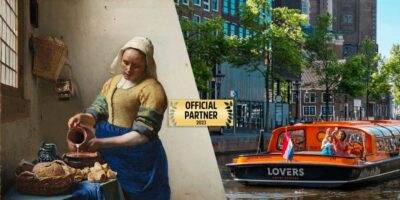
Rijksmuseum Entry Ticket and Canal Cruise Combo
Read our review →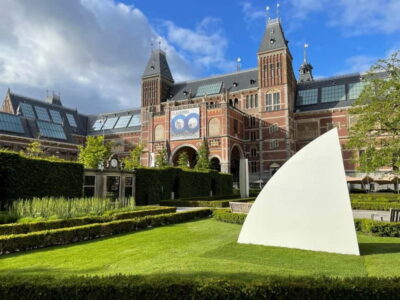
Go City Amsterdam Pass: Attractions Pass with Rijksmuseum
Read our review →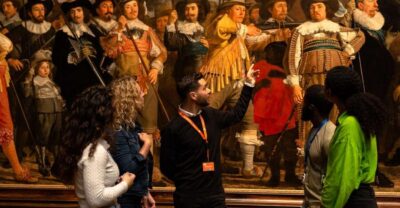
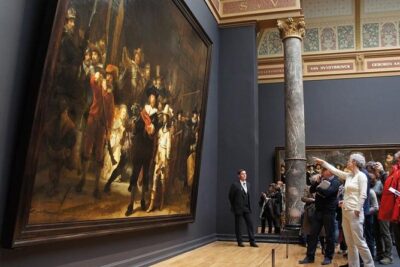
Rijksmuseum Amsterdam Exclusive Guided Tour w/ Reserved Entry
Read our review →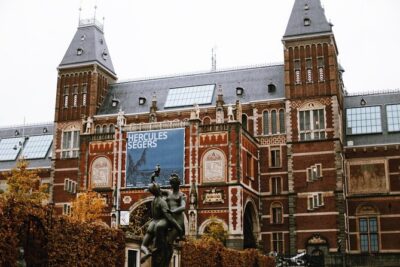
Van Gogh & Rijksmuseum w/ Reserved Entry Semi-Private 8ppl Max
Read our review →Browse the lists this tour appears in