
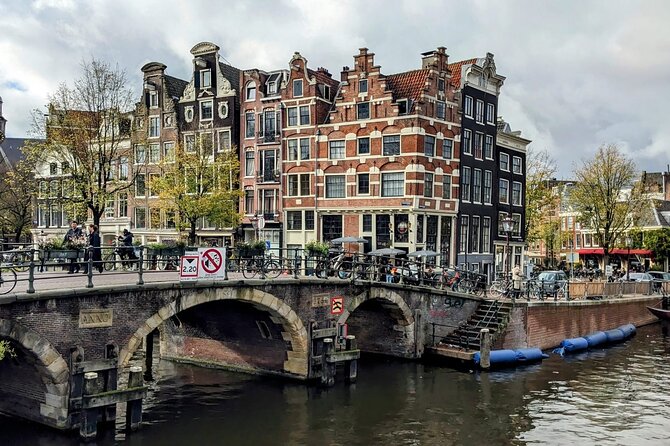
Reviewed · HISTORICAL TOURS
History & culture tour in Amsterdam with a local
This Amsterdam history and culture walk works because it links the city’s big turning points to real streets you can see in one smooth loop. With a local guide and a small group, you get stories at the places where they happened, from Beursplein to Centraal Station. Local guide + 2 hours makes it a smart first-day plan.
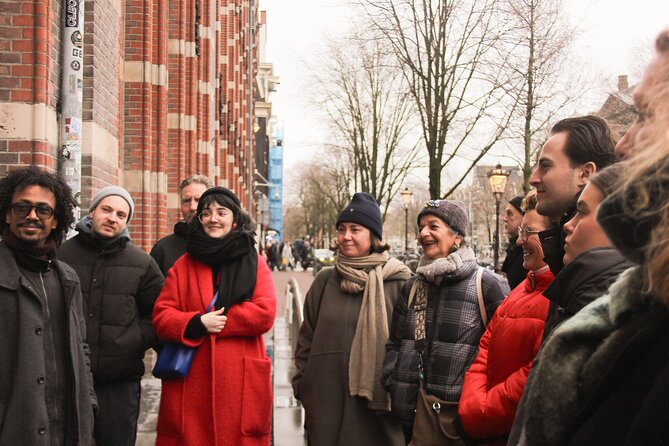
I love the small-group setup, with a maximum of 15 people, which keeps questions flowing. I also like the practical payoff: a classic Dutch stroopwafel along the way so the tour feels like more than just facts. One consideration, it’s still a walking tour for about 2 to 2.5 hours, so bring comfortable shoes and expect a steady pace.
Quick hits before you go
• Beursplein origin story covers how a fishing village became a 17th-century powerhouse
• Dam Square stop ties the Royal Palace to the city’s formation and World War II significance
• Begijnhof courtyard and tolerance explains what the serene space reveals about Amsterdam’s approach to faith
• House on the Three Canals includes the bicycle bridge story, a clever bit of canal-era design
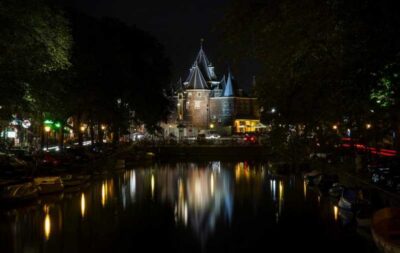
• Nieuwmarkt and the Waag connects an old city gate to guild life and Amsterdam’s famous facades
• Zeedijk Chinatown evolution traces the area’s 1970s reputation to today’s day-to-day neighborhood feel
Why this Amsterdam walking tour is such a good use of 2 hours
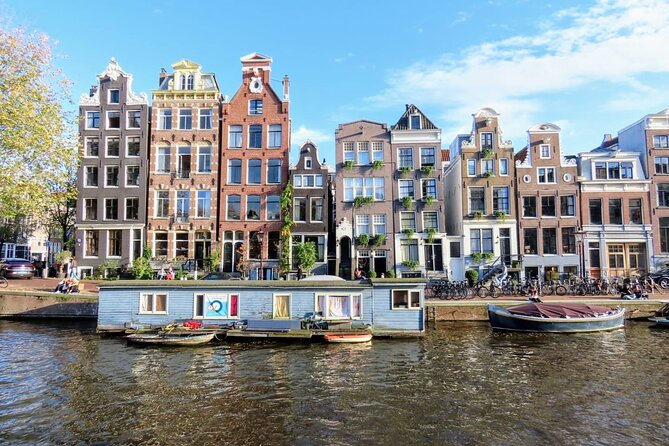
Amsterdam is packed with places that look pretty first and make more sense later. This tour helps you do the second part fast. Instead of wandering randomly, you get a guided route through key city squares, canal-side oddities, and old gate buildings, with commentary that explains what you’re seeing and why it matters.
What makes it especially useful is the pacing. You’re not doing museum time. You’re walking between stops, usually around 10 to 15 minutes per place, and your guide uses the streets themselves as the lesson plan. That format is great when you want to understand Amsterdam’s personality without spending your whole day inside.
Also, you’re not stuck in a huge crowd. The group size max of 15 makes the experience feel personal enough for follow-up questions. In past private bookings, guides like Manouk and Malik have been noted for tailoring the tour to fit the group’s interests, which is exactly what you want if you care more about architecture, street history, or how neighborhoods change.
Possible drawback to keep in mind: because it’s outdoors and on foot, you’ll want to dress for typical weather and move comfortably. If you hate walking between city highlights, you may find the pace a bit brisk for you.
More Historical Tours in Amsterdam
- Amsterdam Food and Cultural Tour with Tastings
★ 5.0 · 4,315 reviews - Amsterdam: Historic City Centre Canal Cruise
★ 4.3 · 659 reviews - Amsterdam: Haunted History and Ghost Walking Tour
★ 4.5 · 488 reviews
Price and what you actually get for $30.07
At about $30.07 per person for a roughly 2 to 2.5 hour walking tour, the value comes from the mix of things that are hard to replicate on your own.
First, this price buys a guided storyline, not just a route. The stops are free to view, with admission marked as free at each highlight, so you are not paying extra museum fees along the way. Second, you get a small-group format that makes the guide’s explanations more useful. With fewer people, the conversation tends to stay interactive.
Third, there’s a real food moment included, a classic Dutch stroopwafel. It’s a small detail, but it changes the feel of the tour. It gives you a short break and keeps energy up for the walking segments.
One practical signal: this tour is often booked about 79 days in advance on average. That doesn’t mean you must plan months ahead, but it does suggest slots can fill, especially around peak travel season or weekends. If Amsterdam is your “do it early” destination, booking ahead is smart.
Beursplein: how a city got its name and its global reach
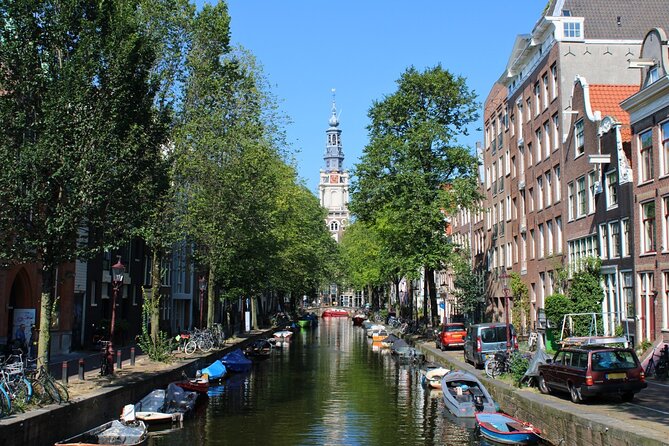
Your walk starts at Beursplein (1012 JW Amsterdam). This is a good opener because it sets a big-picture theme right away: Amsterdam did not become Amsterdam overnight.
At Beursplein, you’ll hear how the city’s origins tie back to a fishing village that eventually grew into the center of the global economy in the 17th century. You also learn about how Amsterdam acquired its name. That may sound like a trivia snack, but it’s actually a useful lens. When you know the origin story, you start noticing patterns in the architecture and street layout that reflect wealth, trade, and long-term planning.
The stop is about 10 minutes, so you’re not trapped at a single point. You’re getting orientation, then moving on while the context is still fresh.
What to watch for at this stage: if you’re the kind of traveler who likes to connect the dots, keep track of the “trade and growth” theme. Later stops will circle back to how power and culture show up in buildings, guild life, and even neighborhood change.
Dam Square and the Royal Palace, plus a serious WWII note
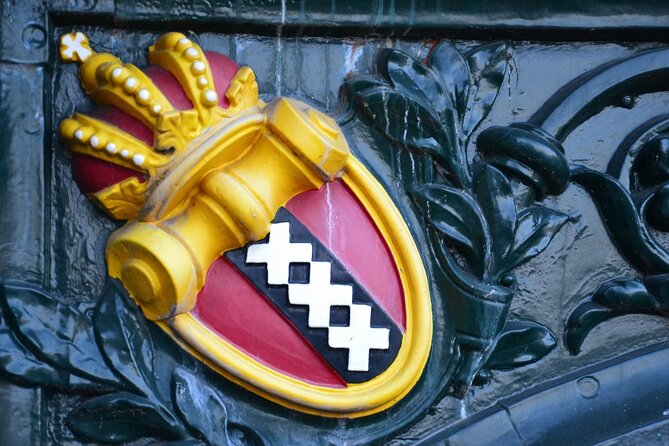
Next up is Dam Square, one of those places where everything feels symbolic, even when you’re just passing through.
Here, the focus is twofold. You’ll learn the significance of Dam Square in the city’s formation and see the Royal Palace on the Dam. The tour also brings in the Second World War context, explaining how the square played a role during that difficult period.
This stop works well because it balances grandeur with history that isn’t just old. You get a sense of how public spaces become stages for national identity, and how those meanings shift over time.
Timing is about 10 minutes, so it’s a quick grounding stop rather than a deep memorial visit. If you want to linger, you can after the tour, but you’ll likely appreciate having your guide set the scene before you go looking on your own.
More history tours in Amsterdam:
- Amsterdam High-End Dutch Food & History Tour – Up to 8 guests
★ 5.0 · 482 reviews - From Amsterdam: Volendam Heritage & Cheese Half-Day Tour
★ 4.4 · 461 reviews - Amsterdam: Historic City Sightseeing Canal Cruise
★ 4.5 · 444 reviews - Amsterdam: Historical Highlights Walking Tour with Tasting
★ 4.6 · 381 reviews
Begijnhof courtyard: faith, tolerance, and one of Amsterdam’s oldest houses
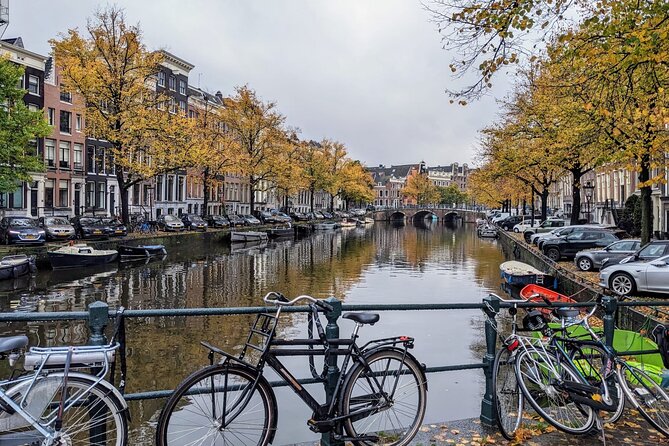
Then you step into the calm of Begijnhof. This place feels like a palate cleanser from the surrounding city noise, even though you’re still in the center.
The big story here is religious history and what Begijnhof reveals about Amsterdam’s tolerance. The courtyard’s serenity is part of the lesson. You’re meant to understand that cultural attitudes are not only written into laws or famous speeches, they’re also reflected in everyday spaces where people lived, prayed, and interacted.
You’ll also see one of the oldest houses in Amsterdam, including one of the two wooden cottages. That’s the kind of detail that makes the past feel physical. Instead of just hearing that something is old, you can point at it and understand why it’s memorable.
Plan for about 15 minutes at Begijnhof, making it one of the more time-reserved stops. If you’re sensitive to crowds, this is usually a welcome moment because it’s a quieter pocket where the guide’s voice carries better.
House on the Three Canals and the bicycle bridge idea
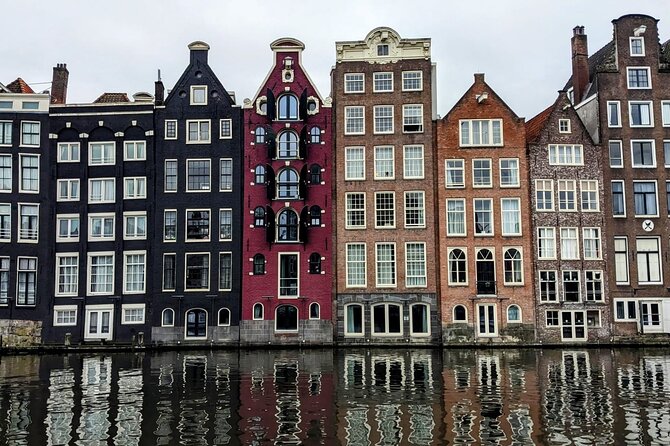
From Begijnhof you head to the quirky side of Amsterdam: the House on the Three Canals.
This stop is all about a distinctive layout. You’ll see a house that’s positioned around three canals, and you’ll hear the story behind the bicycle bridge. That combination of water engineering and everyday mobility is very Amsterdam. It’s the city doing practical problem-solving in a way that’s still creative centuries later.
Timing is about 10 minutes, and that’s perfect here. This is a “look, understand, and keep moving” kind of stop. If you spend too long staring, you’ll lose the connection to what the guide is building overall, which is how geography shapes life.
What I like about including this stop is that it breaks up the heavier themes. After Royal Palace and WWII context, this kind of local engineering story resets your brain and gives you something concrete to remember later.
Nieuwmarkt: the Waag, guilds, and the dancing houses
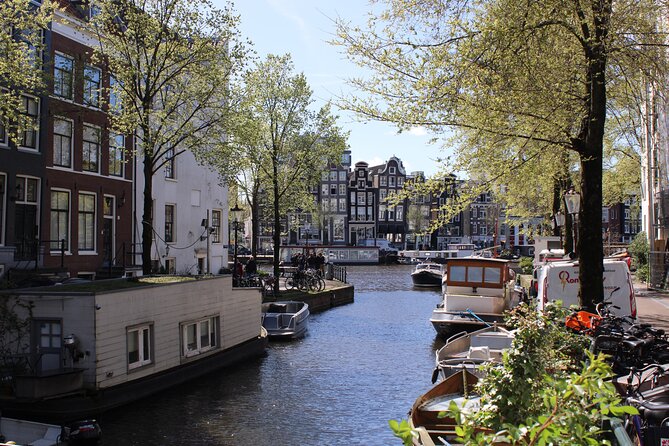
At Nieuwmarkt, the tour shifts to commerce and community structure.
You’ll discover the Waag, an old city gate that later became a guild hall. That matters because guilds weren’t only about jobs. They shaped training, quality standards, and social networks. In other words, they helped turn trade into a recognizable city culture.
You’ll also see the dancing houses, another visually memorable element. Even if you don’t memorize every architectural detail, you’ll leave with the sense that Amsterdam’s buildings reflect clever design and the city’s long obsession with curves, facades, and tight urban space.
This stop is about 10 minutes. It’s long enough to learn why guild life mattered, then move you along before you start rushing out of boredom.
Practical tip: if you’re traveling with kids or a friend who gets impatient with history lectures, this is a good stop to engage them. Visual landmarks like gates and distinctive facades help everyone stay interested.
Zeedijk and Chinatown: from a dangerous 1970s reputation to today’s routine
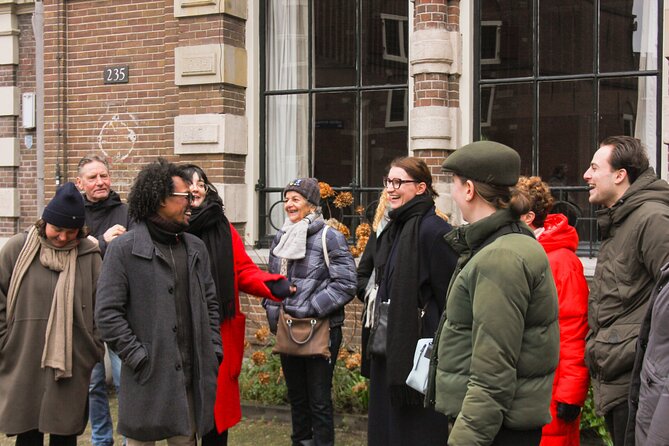
Next is Zeedijk, where the tour covers neighborhood change, not just famous buildings.
You’ll discover Chinatown here and learn that it was once the most dangerous place in Amsterdam during the 1970s. Then the story turns. You’ll hear about how the area declined and how the street has transformed into one of the favorite spots for many Amsterdammers.
This stop is valuable because it gives you a modern lesson: city identity is not fixed. Neighborhoods shift based on economic pressure, social patterns, and public response. You’re not just learning history in the abstract. You’re seeing how it shows up in the way a street functions today.
The stop is about 10 minutes, which keeps the tone moving. If you want to learn more afterward, this is a great area to wander on your own because you’ll already have a framework for what you’re looking at.
Centraal Station: architecture, transport power, and connection
The final highlight on the walk is Centraal Station.
The emphasis is on both beauty and purpose. You’ll explore one of Amsterdam’s most stunning buildings, known for its architecture, and you’ll hear why the station’s location has been crucial for centuries as a transportation hub. It’s also described as a historical symbol of connection and prosperity.
This is a satisfying closer. Early on you learned about origins and economic growth. Then the tour showed how power and trade became buildings, guild culture, and neighborhood patterns. Ending at Centraal Station feels like the logical modern chapter, because transportation is still what ties the city together.
This stop is about 10 minutes. If you want more, you can hang around after the tour and soak in the station atmosphere, but the guide’s context helps you appreciate the structure rather than treating it as just a landmark.
The Dutch stroopwafel moment, and how to enjoy the tour even if you snack earlier
A tour like this lives and dies by small rhythm points. You’re walking between stops for 2 to 2.5 hours, so energy matters. This one includes a classic Dutch stroopwafel as a thoughtful treat.
Even if you like to eat light, I recommend you take it. Stroopwafel is sweet and sticky in the best way, and it’s a practical pause while you’re still in the flow of the tour. Also, since admission at the stops is free, having one included food moment helps the experience feel complete without turning into a costly day.
How to make it easy on yourself:
- Wear comfortable shoes, because Amsterdam sidewalks can be uneven in spots.
- Bring water, especially if the weather is warm.
- If you’re sensitive to sweets, plan to share or take smaller bites.
Who this tour fits best in your Amsterdam plan
This tour is a strong match if you want:
- A history and culture overview without museum hours
- A route that covers both iconic squares and smaller, quieter courtyards
- A small-group experience where you can ask questions
- A first-day orientation that helps you navigate the city with better context
It’s also a good idea if you plan to spend the rest of your trip doing independent wandering. Once you understand how Amsterdam grew from its early roots through trade, guild life, and neighborhood change, your self-guided time gets better.
If you’re traveling with mobility limits, the walking time may be a factor. The tour is marked as something most travelers can participate and service animals are allowed, but the core format is still walking in central areas.
Should you book this Amsterdam history and culture tour?
If you want an efficient, human-scale way to understand Amsterdam, I think this is a yes for most people. The price is reasonable for what you get: free-to-see stops, a guided storyline, a small group size up to 15, and an included stroopwafel. It’s especially worth it if this is your first visit and you want your photos to come with meaning.
I’d skip or reconsider if you dislike walking for around 2 to 2.5 hours, or if you only want deep museum-style history rather than street-level interpretation. Otherwise, booking this is an easy way to get your bearings fast and make Amsterdam feel less like a blur of canals and more like a city with a clear story arc.
FAQ
How long is the walking tour in Amsterdam?
The tour takes about 2 to 2.5 hours.
Is the tour offered in English?
Yes, it is offered in English.
What is the group size limit?
The group is limited to a maximum of 15 travelers.
Where does the tour start and where does it end?
It starts at Beursplein, 1012 JW Amsterdam and ends back at the meeting point.
Is there food included?
Yes. You’ll enjoy a classic Dutch stroopwafel during the tour.
What is the cancellation policy?
You can cancel for a full refund if you cancel at least 24 hours before the experience’s start time. If you cancel less than 24 hours before, the amount you paid will not be refunded.
Latest Amsterdam reviews
- 5dporn experience: adres Oudekerksplein 18 Amsterdam★ 3.0 · 13 reviews
- Whisperboat rental in beautiful area close to Amsterdam★ 5.0 · 13 reviews
- True Crime Tour Amsterdam: Explore the Dark Side of the City★ 4.9 · 13 reviews
- Bruges Private Custom Tour from Amsterdam★ 4.5 · 13 reviews
- 2-in-1 Combo: City Tour & Heineken Rooftop (with 2 Drinks)★ 4.6 · 13 reviews
- Amsterdam: 2.5-Hour Historic Private Walking Tour★ 4.7 · 13 reviews
- Zaanse Schans, Edam, Marken & Volendam – Private Luxury Tour★ 4.5 · 14 reviews
- Holland Four City Charm Tour – Private Day Tour★ 5.0 · 13 reviews
Historical Tours, compared.

Amsterdam Food and Cultural Tour with Tastings
Read our review →
Kinderdijk UNESCO World Heritage Entry Ticket
Read our review →

Amsterdam High-End Dutch Food & History Tour – Up to 8 guests
Read our review →
Cruise through the Historic City Center with Guide
Read our review →Browse the lists this tour appears in