
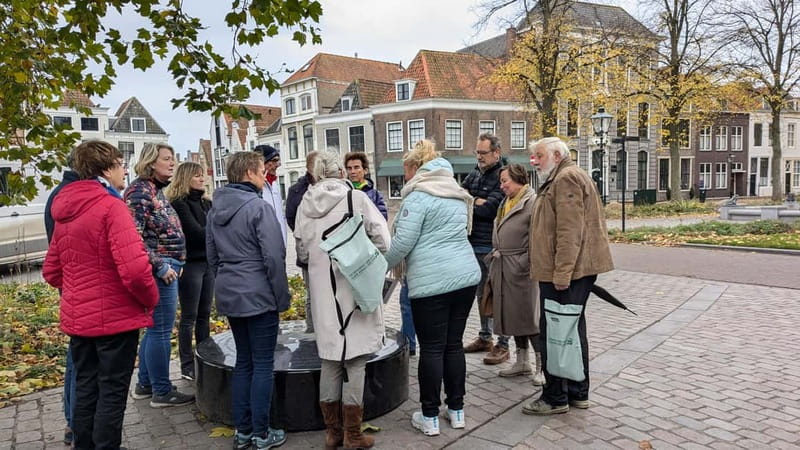
Reviewed · WALKING TOURS
Zierikzee: Guided Walking Tour
Zierikzee feels like a town built for trade. On this guided walk, you connect harbor gates and church towers to the everyday business of the Middle Ages, so the stones make sense fast.
I especially like how the guide leans into stories you can picture: why salt, cloth, madder, and herring mattered, and how the town’s position on the Oosterschelde shaped its fortunes. I also love the human pace, there is room for questions and the tour does not feel like a facts-only lecture.
One thing to think about: the activity info says wheelchair accessible, but it also lists it as not suitable for wheelchair users and people with mobility impairments. If mobility is part of your planning, confirm fit with the provider before you go.
Key things I’d prioritize on this walk
- You start at the harbor gate area (Muziektent op het Havenpark), so the trade story gets anchored right away.
- North and South harbor gates frame the city’s medieval power and maritime focus.
- Gravensteen gets explained as a former count’s residence and prison, not just another old building.
- Nieuwe Kerk and Dikke Toren bring the Middle Ages to life with religion, authority, and design you can still see.
- The guide works at a conversational pace, with space for questions and input.
- It is short on purpose: 1.5 hours is enough to connect key landmarks without dragging you through a long itinerary.
Zierikzee’s walking tour: how trade turns into street-level history
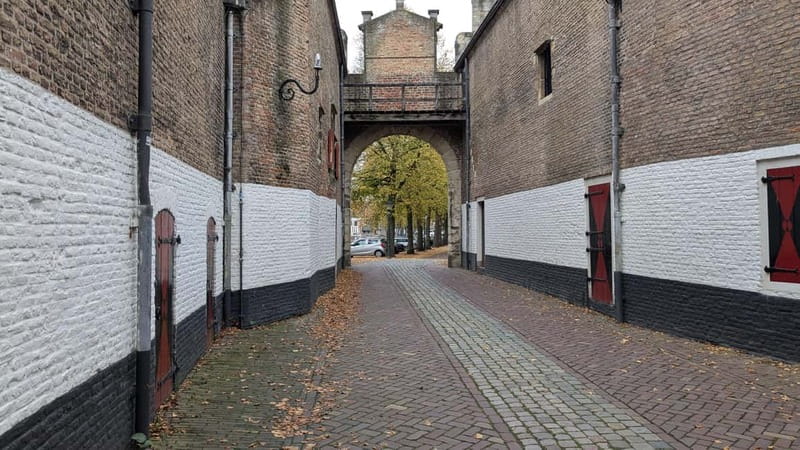
Zierikzee is one of those places where the medieval “why” is visible. You can point at gates, civic buildings, and church architecture and then understand what they were for, trade, governance, and control all in one compact area.
That is the real payoff of this 1.5-hour walk. Instead of drowning in names, you get a guided story that links the city’s geography to the goods it exported, and then explains why the city later lost influence. By the time you reach the Dikke Toren, the Middle Ages feel practical, not abstract.
The tour is priced at $15 per person, which is a big part of its value. You are buying context and a smooth route between major landmarks, not paying for a museum ticket.
Where you meet and how to find your guide fast
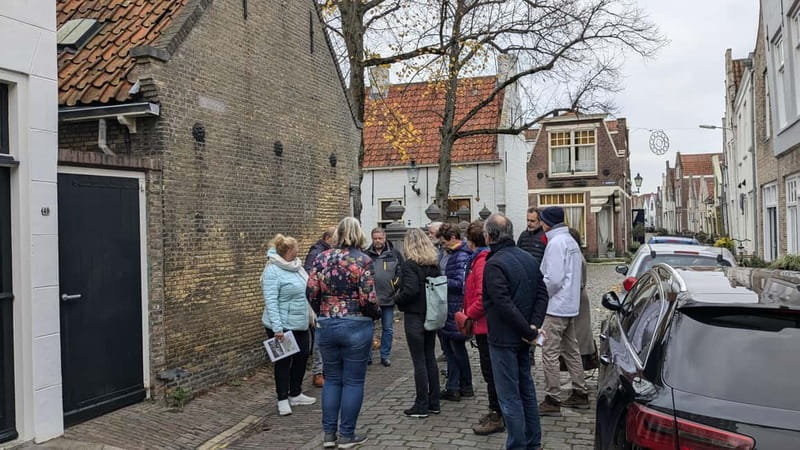
You meet at Muziektent op het Havenpark. The guide wears a white jacket with the Gidsendienst Zeeland logo, so you can usually spot them quickly even if you arrive a few minutes early.
Bring comfortable shoes. This is a moderate walking tour, and historical town centers often mean uneven pavement and frequent short stops.
If you are worried about finding the group, use the contact info connected to your booking. One practical tip I really like here is that when someone could not locate the guide, calling the number attached to the details helped them sort it out smoothly.
More walking tours in Middelburg:
- Middelburg: Guided City Walking Tour
★ 4.5 · 315 reviews - Amsterdam Anne Frank: Small-Group Walking Tour & Local Guide
★ 4.8 · 12,789 reviews - Anne Frank’s Story – Guided Walking Tour through Amsterdam
★ 5.0 · 11,619 reviews
Noordhavenpoort and Zuidhavenpoort: start where the city made money
The walk begins at the harbor gate zone, starting with the Noordhavenpoort on the northern side and then moving toward the Zuidhavenpoort on the southern side. Standing near these entrances, you immediately get the sense that Zierikzee was built to manage movement of people and goods, not just to look pretty.
A good guide will show you more than the basic structure. You should expect commentary on the city’s role as an important trading center, especially thanks to its position on the Oosterschelde. This is where you learn to read the town’s layout like a system: approach routes, access points, and the kind of infrastructure a trade city needs.
If you like maritime history, this section is where it clicks. You will connect later landmarks, the civic power buildings and the church, back to the same theme: trade created wealth, and wealth created institutions.
The old town hall: civic power in stone
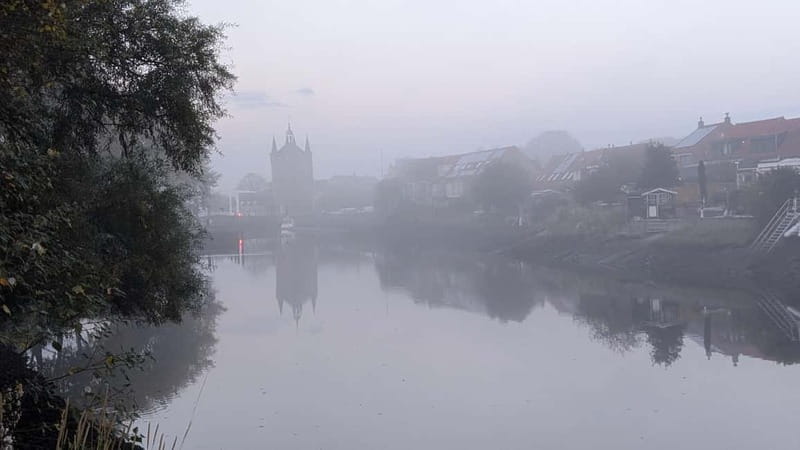
After the harbor gates, you walk past the old town hall. This is one of those stops that can easily feel like just another historic facade if your guide does not add the human story.
Here, the guide ties the civic role to the city’s timeline. Zierikzee was first mentioned in 976, and it likely received its first city rights in 1219, with an expansion in 1248. Even if you do not love dates, it matters because city rights change what a place can do: organize trade, govern disputes, raise resources, and build public authority.
For you, this stop is about understanding how trade translated into rules and administration. The town hall is not an abstract symbol. It represents the legal and civic machinery that helped a trading city function day after day.
Gravensteen: a count’s residence that also worked as a prison
Next comes the Gravensteen, described as a former residence of the count and prison. That dual purpose is why this stop is so memorable.
You get the tension of the medieval world in one location. A place of status could also be a place of confinement. When your guide explains that background, the building stops being a mystery and becomes a piece of how authority operated in Zierikzee.
This is also a good spot for questions, because it is easy to wonder how these roles worked in practice. The tour style here tends to leave space for that kind of curiosity, rather than rushing through a strict monologue.
A few other ways to fill a day in Middelburg
- Middelburg: City Canal Cruise
★ 4.5 · 527 reviews - Middelburg: Guided Tour Townhall Middelburg
★ 4.6 · 65 reviews - Self-Guided Electric Boat Rental
★ 4.5 · 60 reviews - e-Scavenger hunt Middelburg: Explore the city at your own pace
★ 4.5 · 55 reviews
Nieuwe Kerk: the religious center you can actually point to
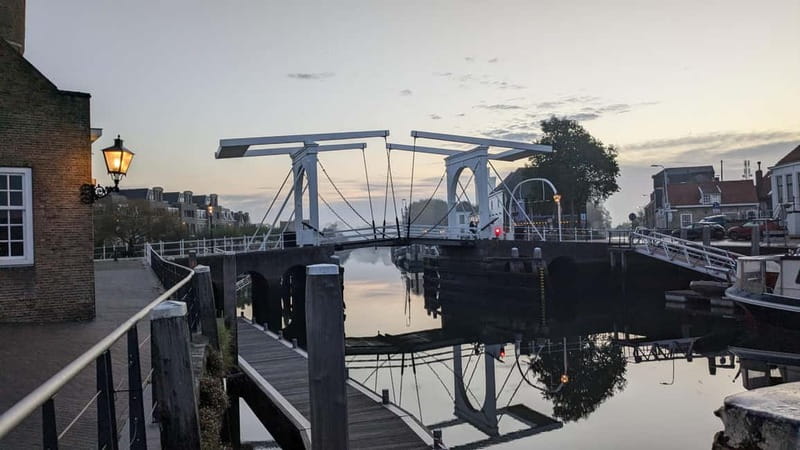
From Gravensteen, you move on to the Nieuwe Kerk. Churches in towns like this were not only about worship. They were community anchors, landmarks for navigation, and visible statements of what the city valued.
On your walk, you should expect the guide to connect the church setting to medieval life. Think about who attended, what the building represented socially, and how religious institutions sat alongside trade and governance.
If you enjoy architecture, the Nieuwe Kerk gives you a chance to slow down and look. If you care more about story, this is where the guide can connect religious life back to the same city that exported salt and fish.
Dikke Toren: why a tower matters beyond views
The final stretch highlights the Dikke Toren, a prominent tower tied to Zierikzee’s medieval past. Towers like this often served practical purposes in addition to symbolism, and on this tour you learn how to interpret that significance without needing a detailed lecture.
What I like about finishing with a landmark like the Dikke Toren is that it turns your walk into a full loop of meaning. You started at the gates where ships and goods entered. Now you end with height, visibility, and authority.
This is also where the guide’s pacing helps. You do not just see the monument, you understand why it belongs in the city’s story, faith, power, and community identity all in one shape.
The city rights timeline: why 976, 1219, and 1248 are not trivia
A lot of walking tours toss out dates like confetti. This one uses key milestones in a way that helps you make sense of change.
You should hear that Zierikzee was first mentioned in 976, likely gained its first city rights in 1219, and had those rights expanded in 1248. When you hear this in context, it connects to a practical idea: as a city gained rights, it gained systems to manage trade and growth.
That matters because it also explains how the city became an important trading place by the end of the Middle Ages. You are not just collecting facts. You are building a timeline of how a settlement became a real city in administrative terms.
Salt, cloth, madder, herring: the exports that shaped daily life
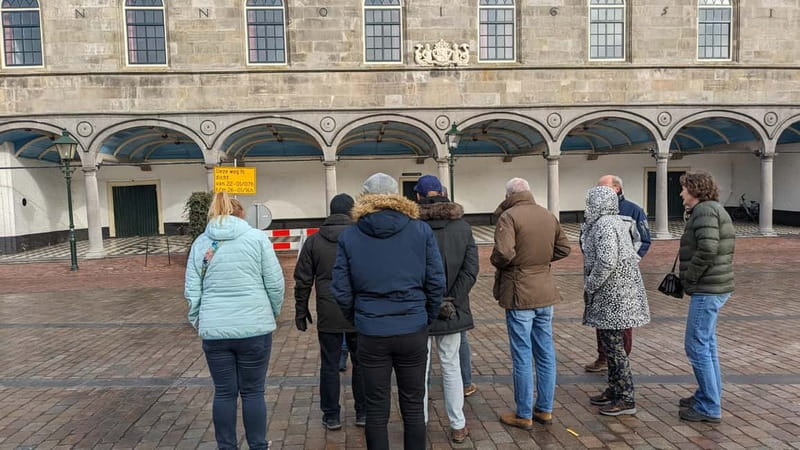
One of the best parts of this walk is the explanation of Zierikzee’s exported products. You hear that major exports included salt, cloth, madder, and herring.
For you, that list is more than trivia. It gives you a way to picture the economic engine. Salt links to preservation and the ability to move food and goods. Cloth and madder connect to dyeing and manufacturing, meaning this was not only a fish-and-ship story. Herring shows the straightforward link between local resources and market demand.
When a guide ties those exports back to the city’s favorable location on the Oosterschelde, it becomes easier to understand why this town mattered when it did.
Why Zierikzee lost its position, and why so much old architecture remains
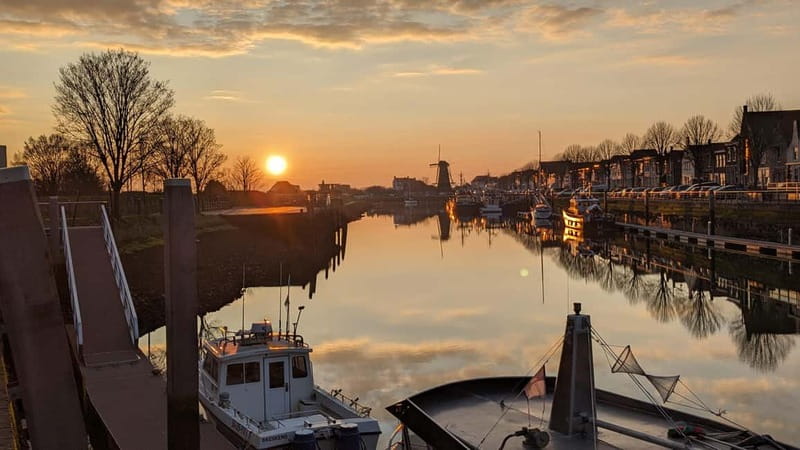
Eventually, the story shifts from growth to slowdown. The guide explains why Zierikzee lost its important position: huge city fires, diseases, and the silting of the waters.
This is the key turning point for why the walking tour is worth doing. When trade routes change, and when repeated disasters hit a place, you do not just lose money. You often lose momentum, the ability to rebuild, and the confidence to replace old structures.
The most helpful takeaway is this: Zierikzee retained its beautiful old town and numerous monuments because there was a lack of money to renovate the city. In other words, preservation here is not the result of a perfect heritage plan. It is the result of hardship and limited resources.
That makes the tour feel more honest. You are not looking at an idealized medieval postcard. You are seeing the physical evidence of real economic change, including what survived.
Practical value: timing, cost, and what is included
At $15 per person for about 1.5 hours, this tour is built for value. You spend your time in the right spots, with the guide connecting the major monuments and city story into one walk.
You get:
- a guided walking tour
- expert commentary by a local guide
You do not get:
- meals and beverages
- hotel pickup and drop-off
- personal expenses
- any entrance to museums or monuments
So plan on mostly seeing things from the streets and viewpoints the guide can cover. If you were hoping for ticketed interior access to every stop, you may need to treat this as a landmarks-and-context tour rather than a museum day.
What to wear, what to bring, and simple rules that help
This walk is straightforward, but you will enjoy it more if you prepare.
Bring:
- comfortable shoes
- a camera
- weather-appropriate clothing
Dress for walking and short outdoor pauses. Zeeland weather can change quickly, so layering helps.
Photography is allowed. Just skip flash inside historical sites. Also, no smoking is allowed during the experience.
Who this walking tour is best for
This is a good fit if you want:
- a compact way to understand Zierikzee’s medieval trade role
- landmark context without committing to a long full-day plan
- a relaxed guide who gives enough information and leaves space for questions
It may be less ideal if you:
- need step-free or fully accessible routes throughout, because the provided info is mixed on wheelchair suitability
- have limited tolerance for moderate walking and older town surfaces
If you are unsure about mobility fit, confirm with the provider before you pay, and ask what parts of the route are easiest to access.
Should you book the Zierikzee guided walking tour?
Yes, I think you should book this tour if you want a smart, affordable way to connect Zierikzee’s key monuments to the story of trade. For $15 and 1.5 hours, you get a route that hits the harbor gates, civic power, a count’s residence and prison, and major church and tower landmarks.
Book it with extra confidence if you like conversations during tours. The guide style here sounds flexible, with room to ask questions rather than being rushed through a lecture. And if you worry about missing the group, save the meeting info and use the contact details if you cannot locate the guide right away.
Skip or re-check expectations only if you need full accessibility guarantees or you want paid interior entries at each stop. Otherwise, this is a very sensible way to see Zierikzee with your eyes wide open.
FAQ
How long is the Zierikzee guided walking tour?
The tour lasts 1.5 hours.
Where do I meet the guide?
You meet at Muziektent op het Havenpark.
What language is the live guide?
The live tour guide speaks Dutch.
Is the tour suitable for wheelchair users?
The activity info says wheelchair accessible, but it also lists it as not suitable for wheelchair users and people with mobility impairments. You should confirm route suitability with the provider before booking.
What should I bring?
Wear comfortable walking shoes, and bring a camera and weather-appropriate clothing.
Are meals included?
No. Meals and beverages are not included.
Are museum entrances included?
No. Entrance to museums and monuments is not included.
Latest Middelburg reviews
- Discover Middleburg by playing Escape game The Alchemist★ 4.5 · 4 reviews
- Zierikzee: verhalen tour met gids “De legendes” NL / EN★ 5.0 · 6 reviews
- Vlissingen: Maritime Museum Entry Ticket★ 4.6 · 7 reviews
- Goes: Explore Oosterschelde and Veerse Meer on E-Choppers★ 4.7 · 8 reviews
- Middelburg: Zeeuws Museum Entry Ticket★ 4.1 · 14 reviews
- Middelburg: Canoe or SUP Rental City Centre★ 4.7 · 14 reviews
- Vlissingen: Westerschelde Sailing Trip with Skipper – 3 hrs★ 4.6 · 18 reviews
- e-Scavenger hunt Middelburg: Explore the city at your own pace★ 4.5 · 55 reviews
Walking Tours, compared.
Absolutely Amsterdam – the Essential Introductory Walking Tour
Read our review →
Amsterdam Highlights Walking Tour: Small Group Experience
Read our review →

Browse the lists this tour appears in