
Reviewed · ROTTERDAM ARCHITECTURE
Walking Tour about Golden Age Architecture, private local guide
Golden Age Amsterdam has a special kind of brainy magic. This walking tour is built around how the city looked when it was at its richest, and how people actually managed the engineering problems of building on soft, marshy ground. You get a private local guide in English, so the buildings come with the why, not just the what.
Two things I really like about this experience are the way it connects design to daily life, and the fact that it is intentionally focused. Stops like the Royal Palace Amsterdam and the canal houses are explained in a way that helps you spot details you would otherwise miss on your own. Also, the guide quality matters here, with Anna called out for friendly, patient explanations and strong English.
One thing to consider before you book: it is a 1.5 hour walk and it is not recommended if you use a walker or have trouble walking and standing for that length of time. Plus, bottled water is not included, so plan on bringing your own.
Key highlights you will feel on this walk
- Private guide time, just for your group, with lots of room for questions
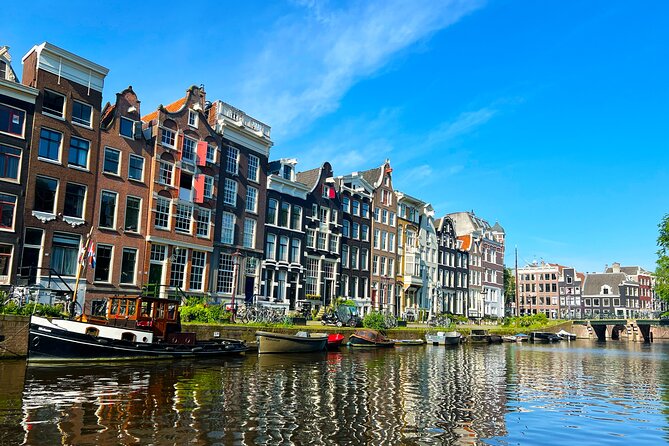
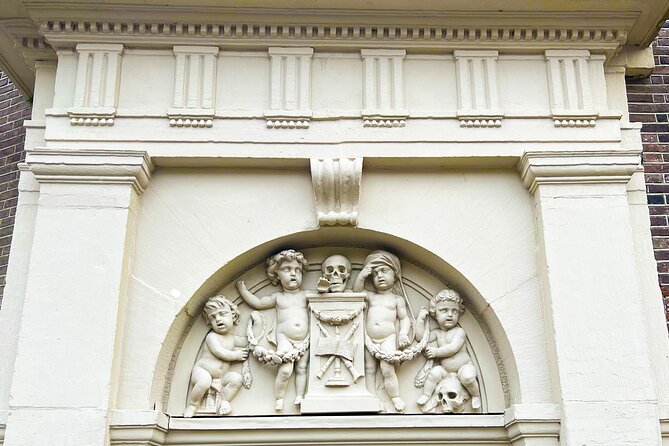
- Golden Age building details, from canal-belt facades to small carved plaque stones
- Engineering stories you can actually picture, including building on tricky clay and marshy ground
- Canal belt architecture in quick sequence, so you see more in 90 minutes than most hit in half a day
- Westerkerk and its spire, including Rembrandt’s connection and the tower details
Why Golden Age Architecture Feels Like a Time Machine
Amsterdam’s Dutch Golden Age was not only about wealth. It was about logistics, risk, and smart construction. When you walk this route, you are reading the city as a working system: trade money turning into buildings, buildings requiring real engineering fixes, and that mix showing up in stonework, brick, and even the angles of streets and facades.
What makes this tour worth your time is how the story stays anchored to visible details. You are not stuck with vague descriptions like pretty buildings. You learn what materials were used, what styles were common, and what those choices meant for the people who paid for the architecture.
If you like architecture, this style of tour is especially satisfying because it trains your eye. After a couple of stops, you start noticing patterns. For example, how merchants expressed status in facade design, how utilitarian warehouse needs shaped the look of the canal houses, and how Calvinist church design signals what worship spaces wanted to emphasize.
And because this is private, it stays flexible. You can ask the kinds of questions that pop up when you are standing right in front of a facade, not a museum wall.
More Walking Tours in Amsterdam
- Amsterdam Anne Frank: Small-Group Walking Tour & Local Guide
★ 4.8 · 12,789 reviews - Anne Frank’s Story – Guided Walking Tour through Amsterdam
★ 5.0 · 11,619 reviews - Absolutely Amsterdam – the Essential Introductory Walking Tour
★ 5.0 · 3,629 reviews
Dam Square, Where Amsterdam’s Power Showed Up First
Your walk begins at Dam Square, which is the city’s big historic stage. It is a smart opener because you get context before you start scanning buildings for clues. You learn about Dam Square’s role and how Amsterdam rose in the 17th century as a global trade hub, driving the prosperity that shaped the architecture you will see right along the canal belt.
Why start here? Because Golden Age architecture makes more sense when you know what fueled it. These buildings were financed by trade networks. They were built to signal credibility to partners, clients, and rivals. Even when the details look like pure style, they connect back to economics and civic pride.
Practical note: Dam Square is open space, so it is a good way to get oriented. From there, the tour shifts into more specific architectural storytelling as you move toward landmark buildings and canal houses.
Royal Palace Amsterdam: Town Hall Muscle, Neoclassical Style, Clay and Bricks
Next up is the Royal Palace Amsterdam. The big idea here is that this famous building was originally constructed as the city’s town hall during the Dutch Golden Age. That single fact changes how you look at it. You are not just seeing a royal residence. You are seeing how Amsterdam’s leaders tried to broadcast power when the city was at its peak.
You also get a style lesson: Dutch Neoclassical, plus the building materials and techniques tied to the palace’s grand presence. And then the tour gets refreshingly practical by focusing on the engineering challenge, how it was constructed on clay and marshy ground. That is the kind of detail that makes you stop and think, because Amsterdam is not built on solid bedrock like many cities.
The drawback is simple: this is one of the more notable landmarks, so expect it to feel busy around the entrance areas even if the guide keeps things moving smoothly. Still, the value is high because you get the palace story paired with the reason it looks the way it does.
Huis Bartolotti: Red Brick, Sandstone Sculpture, And Italy-Linked Wealth
House Bartolotti is one of the canal-side stops where you can feel how status traveled along trade routes. The tour frames it as a 17th-century Dutch baroque example, with an elegant facade in striking red brick. What matters for your eye is what sits on top of that brick: large windows and ornate sculptural details made from sandstone.
The story connection is also specific. The tour explains that the ornate look reflected the wealth and status of the original owner, plus the owner’s trading ties with Italy. That matters because it gives the architecture a human motive. People were not just showing off for fun. They were signaling connections, success, and influence.
This stop is short, but it is one of the better places to pause and scan the facade. Look for how the decoration changes the impression from brick-and-glass to something more monumental, then connect that to the owner’s international business links.
More modern architecture walks in Rotterdam:
- Amsterdam: Architecture Museum Het Schip Entry Ticket & Tour
★ 3.7 · 8 reviews - Rotterdam: Highlights, Gems, Architecture & History Walk
★ 5.0 · 191 reviews - Rotterdam Walk: Hilights, Gems, Architecture & WWII | 2 or 3hrs
★ 5.0 · 149 reviews - Rotterdam: De Rotterdam, Cube Houses, Watertaxi and Markthal
★ 4.7 · 112 reviews
Torensluis and the World of Mercantile Facades, Including Crooked Houses
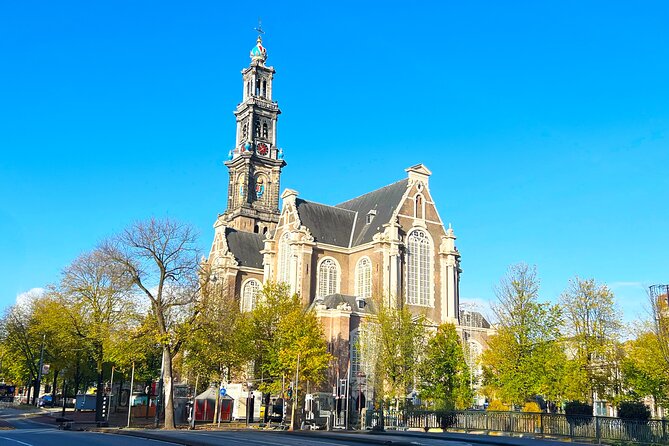
Torensluis is where the tour rewards your attention to multiple facades at once. You get a wide bridge view of four unique facade designs that were popular with Amsterdam’s mercantile class during the Golden Age.
The guide focuses on how Baroque style got adapted in the Netherlands, with intricate details and dramatic contrasts. That is the key takeaway: these were not cookie-cutter copies of one style. The city translated European tastes into local materials, local building traditions, and local constraints.
Then comes a fun Amsterdam reality check: crooked houses. You will learn why they lean in whimsical, uneven ways due to the city’s soft, marshy ground. This is more than a quirky fact. It is a reminder that the city’s geology shaped not only what got built, but also how the buildings ended up over time.
Potential consideration: bridges can feel a bit exposed for photos. If it is windy or raining, keep your camera protected and trust the guide to tell you exactly which angles matter most.
De Dolphijn: The Dolphin Symbol, Frans Banning Cocq, And Rembrandt’s Night Watch
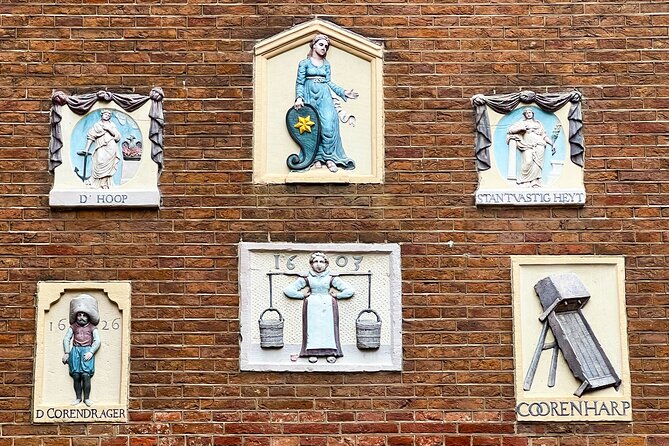
At De Dolphijn, you learn that the building’s name points to the dolphin symbol of wealth, tied to Amsterdam’s maritime trade during the Golden Age. That single detail turns the facade into a kind of signboard. You are looking at architecture that carries meaning beyond style.
The tour also connects this house to a famous character: the original owner was Frans Banning Cocq, the captain immortalized in Rembrandt’s The Night Watch. Even if you have seen the painting before, the canal-belt setting adds a sharper dimension. You realize how much of Amsterdam’s artistic legacy and wealth legacy were linked to the same merchant world.
This stop is short, but it is strong because it gives you a clear way to read symbolism. After this, you will likely start noticing name references, emblems, and building features that feel like they are telling you who mattered and why.
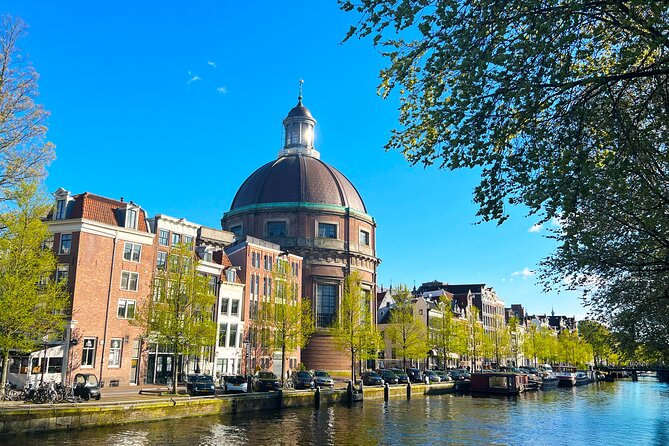
Ronde Lutherse Kerk: Domes and the Renaissance Peak
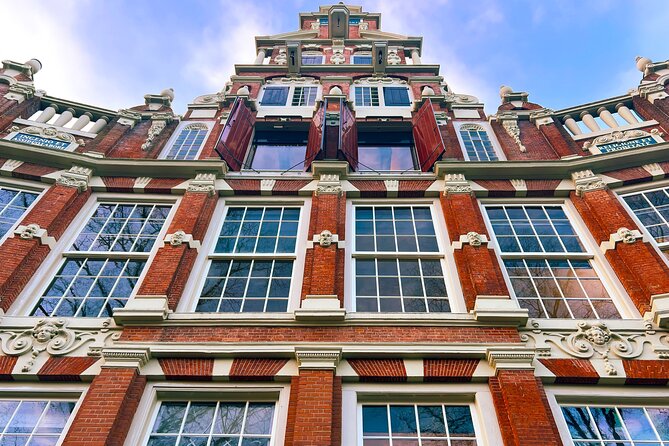
The Ronde Lutherse Kerk stop is a quick one, but it fills an important gap in the broader story. The tour frames domes as the height of architectural achievement during the Renaissance period.
Even with limited time here, this stop helps you keep your architectural timeline straight. Amsterdam’s Golden Age included influences from earlier European design waves. So while you are mainly focused on 17th-century mercantile architecture and canal-belt styles, you also get a nod to the larger architecture evolution that informed what people wanted to build.
If you are the type who likes to connect dots between eras, this moment is a helpful mental anchor.
Prinsengracht Warehouses: When Function Shaped the Look
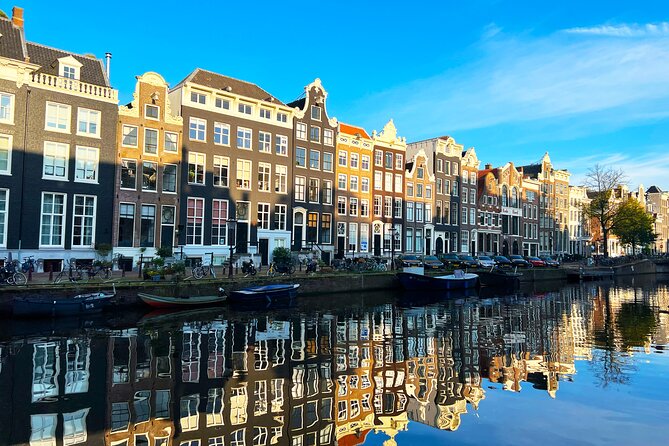
Prinsengracht is where you see the Golden Age in practical form: warehouses built for trade. The tour explains that the canal warehouses were designed with functionality in mind, with tall, steeply pitched gables and large windows.
You also hear about the hoisting beams on the roof, used to lift heavy cargo from ships docked along the canal. That detail is a big deal because it changes the way you interpret rooflines. They are not just decorative silhouettes. They are tools.
What I find especially useful here is the balance between simple exteriors and large commercial scale. The tour highlights a kind of merchant logic: clean lines and minimal ornamentation on the outside because the buildings had a working job, while the size reflects wealth and power.
This is one of the best segments for photos, but also one of the easiest places to get bored if you only want landmarks. If you are willing to look at shapes and practical features, you will leave Prinsengracht with a much better sense of how a trading city functioned.
Jordaan and Gevelstenen: Learning to Read Facade Stones Like a Local
You spend a longer stretch in the Jordaan, and it is one of the most rewarding parts of the tour if you enjoy street-level details. The tour explains that in the 17th century the Jordaan was a mix of residential and commercial life. It started as a district for craftsmen and laborers and became active with narrow canals and tight rows of houses, many with small shops or workshops on the ground floors.
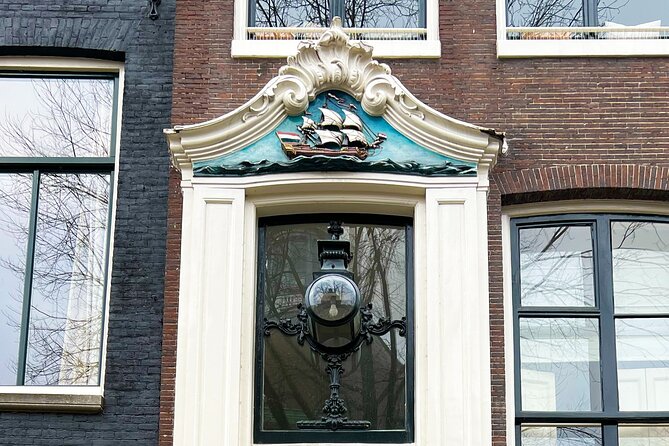
Then comes the specialty lesson: the tour focuses on gevelstenen, facade stones. These are small decorative plaques embedded in building facades that communicate how the building was used and often identify the owner’s profession or other facts about the people living and working there. The stones can be carved with intricate details, so you get storytelling right on the street.
This is where the private guide pays off. Once you know what to look for, the facades stop being background. They become a map of trades, owners, and everyday life in a Golden Age neighborhood.
If you struggle to walk for long stretches, this part may feel like the most time-intensive. But it is also the segment where the payoff tends to feel highest because you are learning a skill, not just absorbing facts.
Westerkerk: Calvinist Simplicity, Rembrandt’s Final Rest, and the Spire
The final major stop is the Westerkerk, and it is a strong wrap-up because it shifts from houses and merchants to a bigger city symbol. You learn it was built as a Calvinist church to serve a growing population.
The tour points out the church’s large, airy interior and simple, elegant design typical of Calvinist worship spaces. This is an important contrast to the ornate details you saw earlier. Golden Age architecture does not all mean decoration. It also means values expressed through design.
You also get the Rembrandt connection: the Westerkerk is historically significant as the final resting place of Rembrandt van Rijn. That detail matters because it makes the building feel personally tied to Dutch cultural identity, not only architectural style.
Then you get the spire story: completed in 1638, rising 85 meters above the Jordaan district, crowned with the imperial crown symbol of Amsterdam’s status since the 15th century. The clock and chimes are also mentioned, including how Anne Frank referenced them in her diary. Even if you have never heard those chimes in person, you now know why locals care about the tower.
The tour ends near Westerkerk, next to the area associated with the Anne Frank House. This gives you an easy follow-on if you want to keep exploring nearby.
Price and Time: Is This 90-Minute Private Tour Worth $73.59?
At $73.59 per person for about 1 hour 30 minutes, the value comes from three places.
First, it is private. That means the guide can slow down when you ask questions or speed up if you are ready to move. For architecture tours, that kind of customization is often the difference between snapping photos and actually learning what you are looking at.
Second, the stop selection is efficient. You are moving through a tight set of Golden Age buildings and city nodes, from Dam Square to the Royal Palace to canal belt houses and warehouses, then into Jordaan facade stones and finishing at Westerkerk. Most self-guided walks in Amsterdam take much longer to connect the same dots.
Third, the tour includes an English-speaking guide plus mobile ticket support, and the stops are marked as free entry. That reduces surprise costs. Bottled water is not included, so you should handle that yourself.
One more practical thing: it is commonly booked around 43 days in advance. That usually means you should reserve ahead if you are traveling in a peak period or have a short window in the city.
What You Will Actually Learn on This Walk (Beyond Photos)
This tour is built to help you spot patterns, and that is a skill you can use after you leave.
You learn how to connect facade choices to wealth and profession, whether it is the symbol-driven identity at De Dolphijn or the job-oriented logic behind the Prinsengracht warehouses. You also learn how to interpret construction pressures, like building on clay and marshy ground, which explains both historic engineering choices and later quirks like crooked houses.
And you learn how Amsterdam expressed different values in different building types. Canal houses and merchant structures talk about trade and status. Calvinist church design points to a different social worldview, tied to worship and community needs.
If you pay attention to the facade stones in Jordaan, you also get a way to read the city like a document. You see that buildings were not only shelter. They were also identification, advertisement, and record.
Who Should Book This Private Golden Age Architecture Walk
This is a great fit if you:
- Want an English private guide and a focused route that hits multiple standout Golden Age sites
- Love architecture details like materials, facade composition, and why roofs and windows look the way they do
- Like stories that connect design to real trade life, including maritime symbolism and warehouse cargo handling
- Prefer to ask questions while you stand at the building, not only after you get home
You might want to skip or at least think carefully if you:
- Use a walker or have trouble walking and standing for about 1.5 hours
- Need mobility aids on tours, since mobility aids are not available
Should You Book This Golden Age Architecture Walk?
Yes, if you want a high-signal architecture experience without spending half a day sprinting across Amsterdam. The route is tight, the story is specific, and the guide style described through the name Anna sounds like exactly what you want for a one-on-one walk: friendly, patient, and ready to answer the extra questions that come from seeing ornate facades up close.
It is also a smart choice if you feel unsure about what you are looking at. Once someone points out the clues, Amsterdam becomes much easier to read.
If you are mobility-limited or hate standing/walking outdoors for 90 minutes, then this is not the best match. But for most visitors who can handle a steady walk, this is a solid way to understand Amsterdam’s Golden Age in a single, organized excursion.
FAQ
How long is the Golden Age architecture walking tour?
The tour is about 1 hour 30 minutes.
Is this tour private or shared with other groups?
It is private. Only your group participates.
What language is the tour offered in?
The tour is offered in English.
Where does the tour start and where does it end?
It starts at Royal Palace Amsterdam, Nieuwezijds Voorburgwal 147, 1012 RJ Amsterdam. It ends near Westerkerk at Prinsengracht 279, 1016 DL Amsterdam.
Are there admission tickets included for the stops?
The stops are marked as Admission Ticket Free in the itinerary.
Is bottled water included?
No, bottled water is not included.
Is this tour suitable if I use a walker or have mobility challenges?
It is not recommended for participants who use a walker or have trouble walking and standing for 1.5 hours. Mobility aids are not available.
Are service animals allowed?
Yes, service animals are allowed.
What is the cancellation policy?
You can cancel for a full refund up to 24 hours in advance of the experience start time.
Latest Amsterdam reviews
- Small Group Tulip and Spring Flower Fields Bike Tour★ 4.5 · 14 reviews
- Amsterdam Van Gogh Museum Private Tour for Kids & Families★ 4.0 · 14 reviews
- Zaanse Schans Windmills Private Tour from Amsterdam Airport★ 5.0 · 14 reviews
- Bruges Day Trip from Amsterdam★ 4.5 · 14 reviews
- Volendam: Volendams Museum Entry Ticket★ 4.4 · 14 reviews
- Zaanse Schans Windmills, cheese and clogs and Volendam tour from Amsterdam★ 5.0 · 14 reviews
- Departure from Amsterdam City to Amsterdam Airport AMS by Minivan★ 5.0 · 14 reviews
- Amsterdam: Barbie The Dream Experience Ticket★ 5.0 · 15 reviews
Rotterdam Architecture, compared.
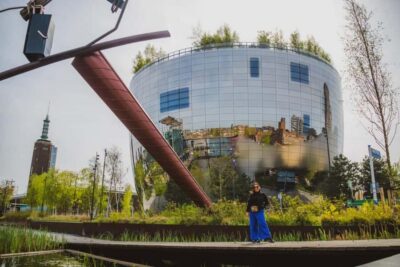
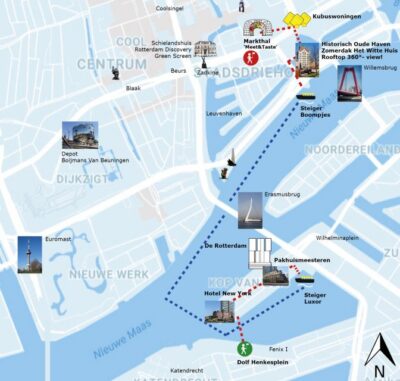
De Rotterdam, Cube Houses, Watertaxi and Markthal
Read our review →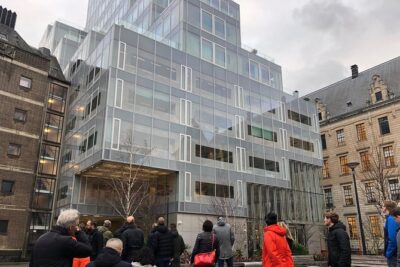
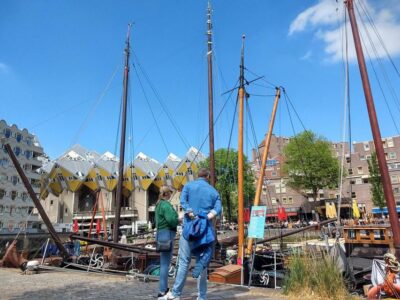
Markthal Tour, Meet & Taste, and Het Witte Huis
Read our review →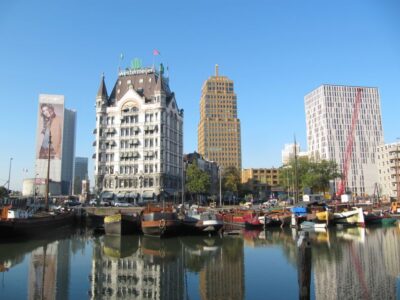

Rotterdam Must Do Tour: Highlights, History, WW2 and Architecture
Read our review →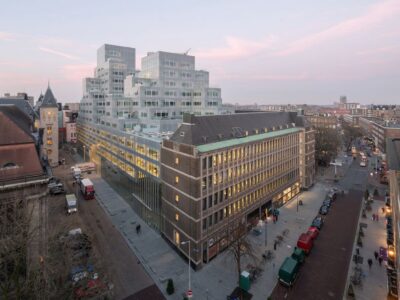
Architecture Highlights Tour including the Depot
Read our review →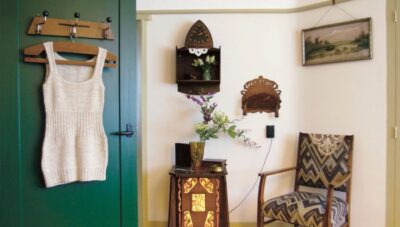
Architecture Museum Het Schip Entry Ticket & Tour
Read our review →Browse the lists this tour appears in