

Reviewed · ANNE FRANK HOUSE
Anne Frank’s Story – Guided Walking Tour through Amsterdam
Amsterdam’s Jewish Quarter can feel like a maze of canals, brick facades, and busy streets. What makes this tour interesting is that it stitches those everyday sights to the story of Anne Frank and the years of Nazi occupation, so the neighborhood stops being just pretty scenery.
I love the small-group feel and the fact that you are not rushed from place to place. I also love that the guide brings real context, including events like the Winter of Hunger and the February Strike, so you understand how the occupation changed daily life, not just the headlines. One drawback to plan for: the Anne Frank House entrance is not included, so you will be viewing the site from outside unless you book the museum ticket separately.
Key things to know before you go
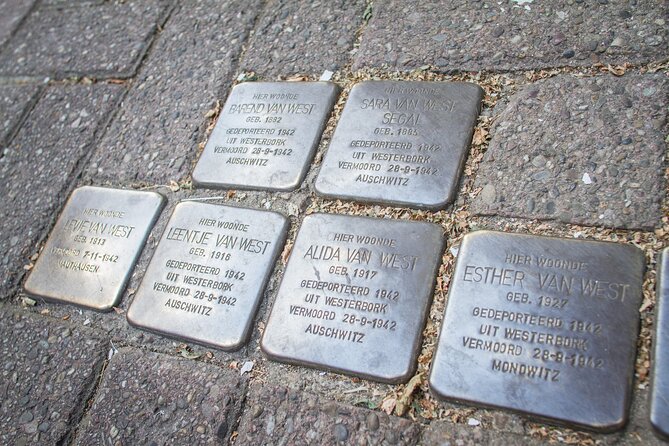
- Maximum 15 travelers means more personal attention and better questions.
- No museum entry included for the Anne Frank House, Joods Museum, or the Portuguese Synagogue.
- Outdoor stops focused on meaning, including the Auschwitz Monument and a statue of Anne Frank.
- A clear WWII story thread connects the Jewish council, monuments, and resistance efforts.
- Guides often use photos from the occupation era, which helps make past events feel specific to these streets.
Why This 2-Hour Anne Frank Walk Feels Purposeful
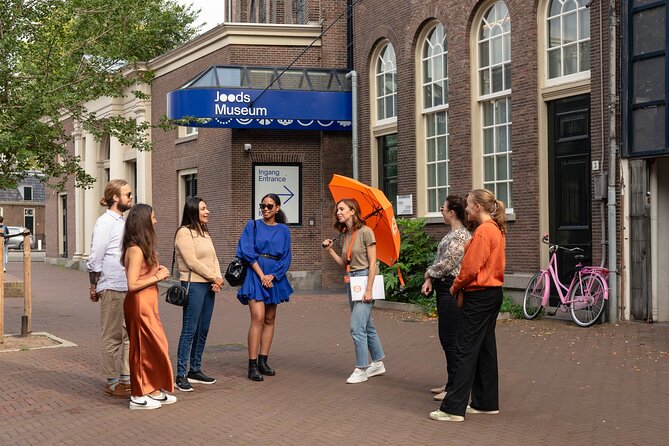
This is the kind of tour that helps you get your bearings fast, because the guide turns a handful of recognizable stops into a timeline you can actually follow. In about two hours, you move through the Jewish Quarter and the memorial sites most visitors see, but you do it with explanations that tell you what to look for and why it matters.
The tour also has a good pace. You get short, humane time blocks at each stop, so you are not stuck standing in one place for ages. And because the group is capped at 15, you are less likely to lose the guide in the crowd.
You should also know this is a walking tour with a moderate fit level and good shoes. It is not a marathon, but Amsterdam sidewalks can be uneven, and you do want to be comfortable for the full route.
More Walking Tours in Amsterdam
- Amsterdam Anne Frank: Small-Group Walking Tour & Local Guide
★ 4.8 · 12,789 reviews - Absolutely Amsterdam – the Essential Introductory Walking Tour
★ 5.0 · 3,629 reviews - Amsterdam: Anne Frank Guided Walking Tour in DE/EN/IT/ES
★ 4.9 · 3,107 reviews
The Jewish Quarter Sights You’ll See From the Outside
A big selling point here is that you cover a wide swath of landmarks without spending your time buying multiple entries on the spot. You are not going into the buildings like the Jewish Historical Museum or the Portuguese Synagogue, but you still get orientation and context from the curb.
Here is how the outside-only format plays out, stop by stop.
Stop 1: Joods Museum (Jewish Historical Museum), from the gate
You start with the Joods Museum, with the guide talking from outside the entrance. Even without entering, this stop works because it anchors the broader Jewish presence in Amsterdam. You are not just hearing about Anne Frank in isolation. You are being placed inside a larger neighborhood story.
Practical note: since admission is not included here, bring a mindset of “this tour is the storyline, not the museum visit.” If you later want to go in, you can.
Stop 2: Portuguese Synagogue, explained without the ticket
Next comes the Portuguese Synagogue, also viewed from outside. This is a smart pairing with the Jewish Historical Museum stop, because the guide can connect community identity, history, and what changed during occupation, without you needing to switch contexts inside a museum.
Drawback: if your main goal is architecture or an interior visit, you may feel slightly teased by the outside-only approach.
Not the right fit? Amsterdam also runs these:
- Amsterdam: Van Gogh Museum Ticket
★ 4.7 · 52,054 reviews - Amsterdam: Heineken Experience Ticket including 2 Drinks
★ 4.6 · 36,014 reviews - Amsterdam Classic Saloon Boat Cruise with Drinks and Cheese
★ 5.0 · 31,825 reviews - Amsterdam Luxury Canal Cruise + Unlimited Drinks & Bites option
★ 5.0 · 30,518 reviews
Stop 3: Dokwerker Statue, a quiet but loaded marker
You spend time at the Dokwerker statue. This one is easy to overlook on your own, but on the tour it becomes a point of reflection for the working life and the way the city functioned and suffered under occupation. It is one of those outdoor landmarks that feels “small” until the guide gives it weight.
The plus: you get a short window to look around and absorb. The minus: you will not go inside anywhere, so this is all about interpretation.
Stop 4: Auschwitz Monument, where the emotions land
This is one of the most moving stops on the route. The guide frames it in the context of the Holocaust and the reality of deportation and loss. You get time here, not just a quick photo moment.
I especially like that memorial sites get real attention. You are not treated as if you will just breeze by. The guide’s tone is aimed at respect, and that matters in places like this.
Stop 5: Dam Square, a famous hub with historical context
Dam Square is a recognizable landmark, but the value here is the way it connects the occupation period and Amsterdam’s wartime atmosphere to a central public space. Ten minutes is enough to take in the square and continue the story, as long as you are not expecting a long free-roam break.
If you get distracted by the energy of the area, focus on what the guide is pointing out, because that is where the tour “locks in” meaning.
Stop 6: The Statue of Anne Frank, a pause in the walk
You also stop at a statue of Anne Frank. This is where the story turns more personal. For many people, it is the moment the tour shifts from broader community history to a direct emotional connection to Anne herself.
This stop is short, but it gives your brain time to re-center.
Stop 7: Anne Frank House (outside), the finish line
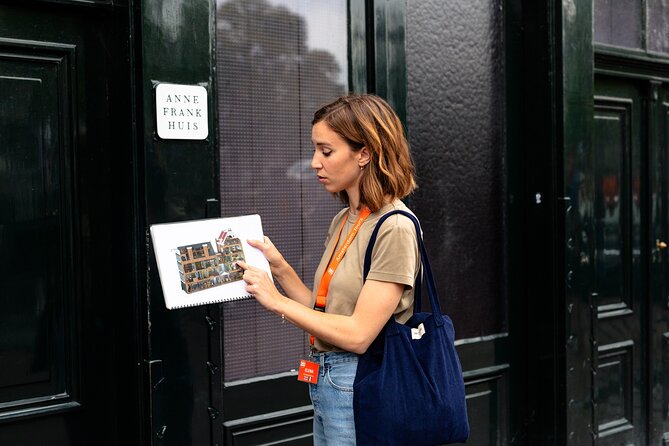
The tour ends outside the Anne Frank House. You do not enter, but you do get time next to the building and you hear how her diary became known, including the role of her father, Otto Frank, in the diaries’ publication.
This ending is a practical victory if you could not get tickets, because at least you can stand in the right place and understand what you are looking at. Just don’t count on slipping in at the last minute.
How the Guide Turns Monuments Into a Timeline
The strongest part of this experience is that it does not feel like disconnected facts. The guide builds a storyline you can track through the neighborhood.
You hear about the Nazi occupation of the Netherlands between 1940 and 1945, and how the regime affected Jewish residents and everyday life for everyone in Amsterdam. The tour also includes the head office of the Jewish council and key events such as the Winter of Hunger and the February Strike.
That matters because it adds context. Instead of thinking of occupation as one moment, you see it as a grinding process with pressure, disruption, and resistance.
And the best guides use extra tools to make it stick. Some guides, including names you may encounter on this tour such as Yoshi, Manuel, Giovanni, Ollie, Patrick, or Edwin, have been described as using photos tied to the occupation era, and explaining small details that make memorials feel human instead of abstract. For example, one guide approach can include explaining why people place rocks at Jewish graves or memorial sites. Those small teachings help you participate in a respectful way.
You will also hear about Dutch resistance and the idea of secret hiding places for families like the Franks. That part is important because it shifts the story from only persecution to also courage and action.
Price and Value: What You Pay For (and What You Don’t)
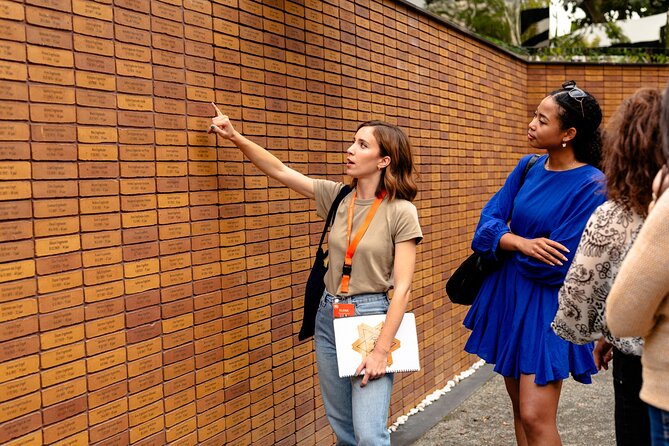
At about $39.30 per person for roughly two hours, you are paying for guided storytelling by a local guide in your chosen language (English is listed). You are also paying for a small-group format, capped at 15.
You are not paying for entry into the Anne Frank House, the Jewish Historical Museum, or the Portuguese Synagogue. Admission is explicitly excluded for those parts. So the value depends on what you want most:
- If you want context and direction, this is a strong use of your time.
- If your top priority is seeing inside the Anne Frank House, you will likely feel like you are missing the centerpiece unless you already have timed tickets.
One more practical angle: this tour is often booked around a month in advance. That’s usually a sign of demand, so if you want a specific day, planning ahead is smart.
The Practical Stops That Matter for Your Day
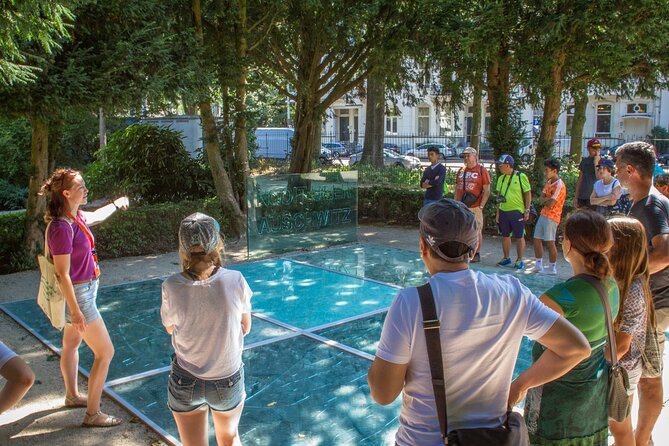
This tour works well because it is designed for a time-efficient hit of the Jewish Quarter plus the key memorial landmarks tied to Anne Frank. You are not zig-zagging all over the city for each separate item. You are walking a compact route with purposeful pacing.
A few practical tips that will make it feel better:
- Wear comfortable shoes. You are walking the whole time, and Amsterdam sidewalks can be slick or uneven after weather changes.
- Bring your patience for emotionally heavy themes. This is WWII focused, and the Auschwitz Monument stop can be intense.
- If you care about photos and hearing every word, pick a spot where you can see the guide. Some guides have been praised for making sure everyone can hear and see their photos, but you still want your own angle.
Also, service animals are welcome, and children must be accompanied by an adult. If you are traveling with a family, this tour can be a meaningful introduction, as long as your group is prepared for the seriousness.
Who Should Book This Anne Frank Story Tour

This tour is a good match if you want:
- A focused WWII and Jewish Quarter orientation in a short time.
- A guide to explain the “why” behind memorial sites, not just their location.
- A small group experience with time to ask questions.
- A respectful walk that ends where the Anne Frank House story is most visible, even if you cannot enter.
It may not be the best fit if:
- You specifically want to go inside museums or the Anne Frank House during this time slot.
- You strongly prefer self-guided browsing and quiet time only.
If you are deciding where to put your effort, I’d think of this tour as the best setup. It teaches you what to look for outside. Then, if you can get tickets later, the museum visit becomes sharper and more personal.
FAQ
Is entrance to the Anne Frank House included?
No. This walking tour ends next to the Anne Frank House, but it does not include entrance tickets or allow you to go inside.
Do I get tickets to the Jewish Historical Museum or the Portuguese Synagogue?
No. The tour does not include admission for the Jewish Historical Museum or the Portuguese Synagogue, and you will not enter those buildings.
How long is the Anne Frank walking tour?
The tour is approximately 2 hours.
How large is the group?
The tour has a maximum of 15 travelers.
Is the tour offered in English?
Yes, it is offered in English.
Is it okay to bring a service animal or children?
Service animals are allowed. Children must be accompanied by an adult.
Should You Book This Tour or Plan Something Else?
If you want an efficient, respectful, small-group way to understand Anne Frank’s story in its Amsterdam setting, I think this is a great booking. The value comes from the guide’s ability to connect landmarks to a real timeline: occupation, hunger and strikes, the Jewish council, resistance, and the memorial sites that still hold the weight of those years.
Just be honest about your goals. If you need inside access to the Anne Frank House, book that separately. Then do this walk as your context builder, so when you arrive at the House, you are not just looking, you are understanding.
Latest Amsterdam reviews
- Small Group Tulip and Spring Flower Fields Bike Tour★ 4.5 · 14 reviews
- Amsterdam Van Gogh Museum Private Tour for Kids & Families★ 4.0 · 14 reviews
- Zaanse Schans Windmills Private Tour from Amsterdam Airport★ 5.0 · 14 reviews
- Bruges Day Trip from Amsterdam★ 4.5 · 14 reviews
- Volendam: Volendams Museum Entry Ticket★ 4.4 · 14 reviews
- Zaanse Schans Windmills, cheese and clogs and Volendam tour from Amsterdam★ 5.0 · 14 reviews
- Departure from Amsterdam City to Amsterdam Airport AMS by Minivan★ 5.0 · 14 reviews
- Walking Tour about Golden Age Architecture, private local guide★ 5.0 · 15 reviews