
Reviewed · WORKSHOPS
The Hague: Beginner’s Surf Lesson Adults
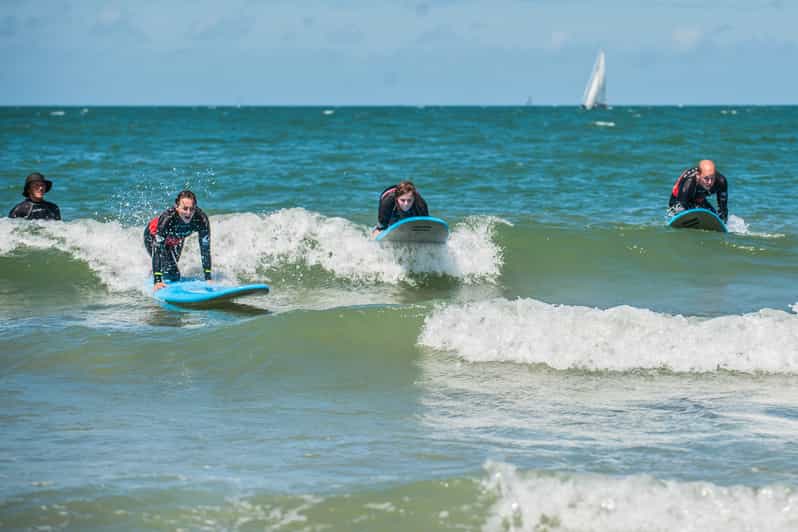
Learning to surf in The Hague sounds like a joke until you see Scheveningen’s instructors make it practical for real adults. What I like most is the small group setup (6 students or fewer) and the hands-on coaching in Dutch and English so you understand what to do before you hit the water. The main thing to consider is that this is a true beginner lesson, so your first goal is controlled basics, not long, stylish rides.
I also appreciate how the lesson is built around comfort and safety, not bravado. You start on the beach, get clear guidance on staying safe, then you work on board control, timing, and catching your first wave with the help of a certified team. If you are expecting a free-for-all fun session with zero instruction, this one is not that, but if you want a smooth on-ramp to surfing, it fits.
Key takeaways before you go
- Scheveningen beach start, where you learn first and paddle second
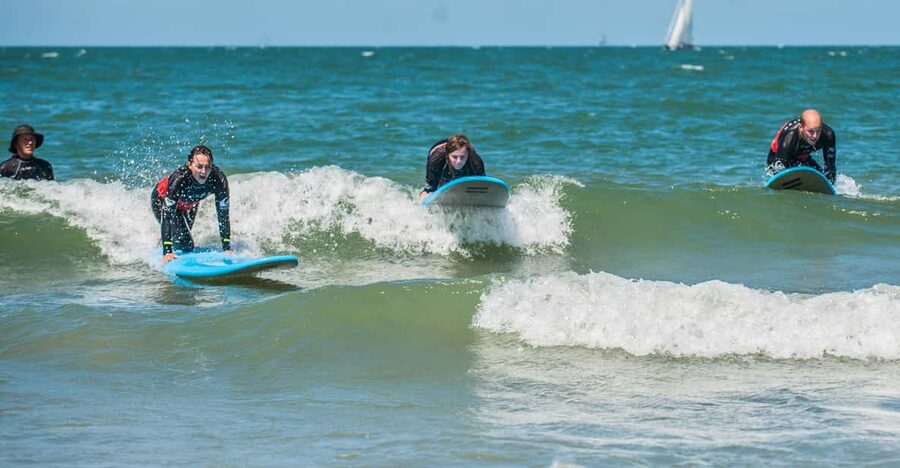
- Up to 6 people means coaching stays personal
- Dutch and English instruction for clear, stress-free directions
- Soft-top board and warm wetsuit included for an easier first session
- Your first wave is the goal, guided step-by-step
Why Scheveningen is a great place to learn your first wave
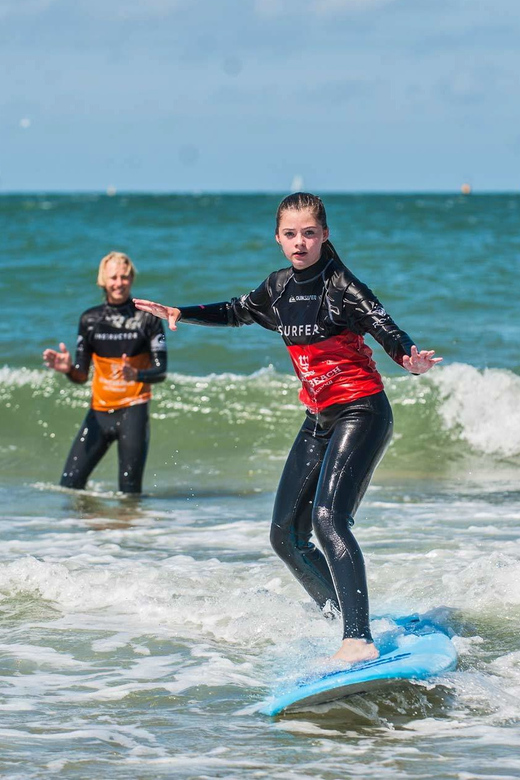
Scheveningen is one of those places where the ocean vibe is real, and that matters when you are trying something new. The setting helps you feel the water, the wind, and the rhythm of waves, without it turning into an intimidating surf contest. You are in South Holland, on a popular coastal stretch in The Hague, so the whole experience feels organized and tourist-friendly while still being outdoors and authentic.
For beginners, the location is not just scenery. The lesson format is designed around what you can manage in a 2-hour block. You will start on the beach, practice the basics in a small group, then work toward the moment most people come for: standing up and riding your first wave. That arc from instructions to action is what makes this kind of lesson worth it, especially for adults who might otherwise feel out of place.
One more smart point is the coaching language. Dutch and English instruction means you can actually follow the safety talk and the technique cues, not just nod politely. That small detail is often the difference between a confusing start and a session where you get better quickly. In one highly rated booking, Kerstin from Denmark praised the team for making beginner surfing accessible and non-intimidating, and that matches the whole teaching approach here.
More hands-on workshops in The Hague:
- Amsterdam: Traditional Dutch Syrup Waffle Making Workshop
★ 4.8 · 4,093 reviews - Amsterdam Traditional Dutch Syrup Waffle Making Workshop
★ 5.0 · 960 reviews - Amsterdam: Bols Cocktail Experience and Cocktail Workshop
★ 4.8 · 666 reviews
Getting started at Strandweg 3, what your first 15 minutes feel like
Your meeting point is Strandweg 3, 2586JK Scheveningen, The Hague. Plan to arrive with enough time to check in calmly. This is one of those activities where being rushed makes everything harder, because you need to listen, watch, and then move.
Right away, you will be placed in a small group of up to 6 students. That matters more than it sounds. With fewer people, the instructor can correct body position and timing in a way that actually sticks. You are not lost in a crowd. Instead, you get the kind of attention that helps you avoid common beginner mistakes like paddling too late or turning the board when you should be keeping it stable.
Then the lesson starts where it should: on the beach. You will get safety guidance from your instructor, who speaks Dutch and English. Expect explanations that focus on practical water sense, not just surf theory. The early goal is simple: feel confident enough to go out and try, even if you are nervous. That is why the pacing feels beginner-friendly.
If you are the kind of person who needs clarity before you move, you will probably love this part. You get a real plan, and your instructor walks you through what is coming next.
Safety and technique, the part that keeps you having fun
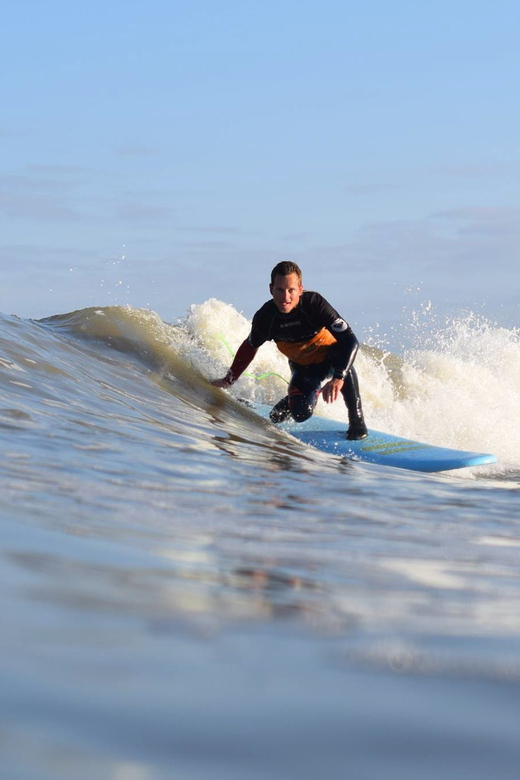
A good beginner lesson is mostly safety plus fundamentals. Here, you will get clear rules on how to stay safe in the water. You will also learn how to safely go out into the water, which is a key skill that many first-timers overlook.
The instructor also covers multiple surf techniques, including how to handle the board and how to read what the ocean is doing. Reading waves is not mystical. It is observation and timing. You learn what to look for so you can choose the right moment to paddle, set up, and then take off.
This is also where the coaching style shows. In a feedback from the UK, a participant highlighted that the coach was patient and friendly, and that made the activity easy to understand. That is exactly what you want when your muscles are cold, your attention is split, and you are trying to coordinate paddle, pop-up, and balance all at once.
One practical thing I would take seriously: safety talk is not filler. If the instructor tells you how to move and when to act, follow it. You will feel more in control and less likely to waste energy. Surfing gets easier fast once you stop fighting the ocean and start working with it.
From board control to first wave, how the lesson builds momentum
After the safety and technique briefing, you grab your surfboard and get into the fun part. The lesson is structured around getting your board under control first, then using that control to time your takeoff.
Here is what you will work on:
- Keeping your surfboard stable and facing the right way
- Reading the waves so you can anticipate the moment they stand up
- Timing your takeoff so you are not popping up too early or too late
Catching your first wave is the payoff. For most beginners, that moment happens when your paddling lines up with the wave and your pop-up is decisive. If you miss the timing, you learn quickly, but you also get more practice because the lesson keeps moving toward the next attempt.
The board used for beginners is a soft-top surfboard, which helps a lot. It is more forgiving while you figure out balance and movement. Even if you wobble, the setup is safer and less intimidating than harder boards.
If you have ever tried a new sport and felt awkward because you did not know the basics, this lesson directly solves that. You are not just told to go out. You are taught how to go out, how to handle the equipment, and how to try the one thing you came for, your first ride.
And yes, it can feel like you are walking on water when everything clicks. The lesson is built to get you there step by step, not after you already gave up.
A few other ways to fill a day in The Hague
- The Hague: Mauritshuis Entrance Ticket
★ 4.7 · 2,706 reviews - The Hague: Madurodam Miniature Park Entry Ticket
★ 4.6 · 1,559 reviews - The Hague: The Pier SkyView Ticket with Drink and Snack
★ 4.4 · 1,398 reviews - The Hague: Hop-on Hop-off Heritage Tram Tour
★ 4.5 · 1,311 reviews
Gear included, plus what you must bring
One of the smartest ways to judge a surf lesson is not just the instruction. It is the kit. This one includes the heavy hitters so you can show up ready.
Included gear:
- Soft-top surf board
- Warm wetsuits and cap
- Separate changing rooms
- Hot showers
- Lockers for your belongings
- Gloves and boots if needed, only in the winter months
Not included:
- Swimwear
- Towel
The wetsuit and cap being included is a big deal for adults. Cold water makes everything harder, and you should not have to shop for gear before your first lesson. You will also have a clean way to change and warm up after, since hot showers are part of the package.
What to bring is simple. Bring swimwear and a towel. I would also suggest arriving with your swimwear on underneath your clothes if you want the easiest transition, since you will be changing on-site.
Also think about comfort. If you get sweaty or sandy, you want the showers and changing rooms to do their job. The setup here is designed so you can leave feeling human again.
Price and time, does $47 for 2 hours make sense?
The price is $47 per person for a 2-hour beginner surf lesson. On paper, that is a straightforward cost. The better question is value: are you paying for time on the water, coaching that actually helps, and the gear to make it work?
From a value standpoint, you are getting several key components in that price:
- A small group session with limited participants
- Certified instruction in Dutch and English
- The board plus warm wetsuit and cap
- Hot showers, lockers, and separate changing rooms
That means you are not paying extra for the stuff that usually adds up. For first-timers, gear costs are often the hidden tax. Here, that tax is handled for you. You show up with swimwear and a towel, and you are ready.
Two hours is also a realistic window. Surfing involves time for briefing, getting suited up, and practicing. If a lesson is too short, you spend the whole time waiting. If it is too long, you might get tired and lose focus right when you are improving. This format balances both. You get instruction up front, practice, and a genuine attempt at catching waves before the session ends.
If you want to learn fast without turning your day into a long production, this timing is a good fit.
Who this beginner surf lesson suits best
This lesson is clearly built for adult beginners. You must be at least 16 years old. If you are comfortable following directions, moving in cold water, and trying again after a wipeout or two, you will probably enjoy it.
It is especially good for you if:
- You want a structured introduction instead of guesswork
- You prefer small-group attention
- You want instruction in Dutch and English
- You care about safety and not just having fun
It is not a great match if you already surf confidently and want advanced training. The focus here is the start: basics, safety, wave reading, timing, and your first wave.
I also think it is a solid choice for couples or solo travelers who want a group lesson that does not feel crowded. With 6 participants or fewer, you still get social energy, but you do not get swallowed by a crowd.
One final note from the experiences shared: people consistently highlight how non-intimidating the lesson feels. If you have anxiety about looking silly, that is exactly where this kind of guided, patient setup shines.
What to do after your lesson
After your 2 hours, you will have hot showers and lockers. Use that time to dry off and reset before heading back into the city. Scheveningen has the kind of atmosphere where you can turn your surf lesson into a mini outing.
If you are planning food afterward, keep it simple. You just used energy and cold water muscles. Eat something warm and don’t plan a long, physically demanding activity next. You will probably feel pleasantly tired, not wrecked.
If you want to keep improving, the best next step is to come back for another beginner session. You will retain more and feel more confident the second time because you remember what the waves felt like and how the timing worked.
Should you book this The Hague beginner surf lesson?
If you want your first surfing experience to feel organized, safe, and genuinely guided, I would book it. The biggest reasons are the small group limit and the Dutch and English coaching, plus the practical included gear and post-lesson comfort with hot showers.
Book it if:
- You are new to surfing and want a clear path to your first wave
- You value patience and straightforward instruction
- You would rather pay for a complete package than assemble gear on your own
Skip it if:
- You already surf and want higher-level progression
- You dislike group activities or timed lessons
- You are not willing to bring swimwear and a towel
For most first-time adults in The Hague, this hits a sweet spot: beginner-friendly coaching, real ocean time, and a good chance of standing up and riding at least once before the lesson ends.
FAQ
Where is the meeting point for the lesson?
Meet at Strandweg 3, 2586JK Scheveningen, The Hague.
How long is the beginner surf lesson?
The lesson lasts 2 hours.
What language will the instructor use?
The instructor speaks Dutch and English.
What is included in the price?
It includes a soft-top surfboard, warm wetsuit and cap, separate changing rooms, hot showers, and lockers for your belongings. Gloves and boots may be provided if needed in the winter months.
What should I bring?
Bring swimwear and a towel.
Is there an age requirement?
Yes, you must be at least 16 years old to take part.
Latest The Hague reviews
- Get the best out of Delft by creating memories during our private walking tour!★ 5.0 · 15 reviews
- The Hague Walking Tour★ 4.5 · 16 reviews
- Discover The Hague’s scenic courtyards in an Outside Escape game!★ 4.0 · 16 reviews
- Royal The Hague Private Guided Walking Tour★ 4.5 · 21 reviews
- e-Scavenger hunt Delft: Explore the city at your own pace★ 4.5 · 26 reviews
- The Hague Private Walking Tour with a Local★ 4.0 · 29 reviews
- Private Walking Tour of Delft: Dive into the Dutch Golden Age★ 5.0 · 33 reviews
- The Hague: Private Boattour up to 10 persons★ 4.9 · 37 reviews
Workshops, compared.

Traditional Dutch Syrup Waffle Making Workshop
Read our review →Amsterdam Traditional Dutch Syrup Waffle Making Workshop
Read our review →

Amsterdam Bols Cocktail Experience and Cocktail Workshop
Read our review →Amsterdam Traditional Dutch Blue Tile Painting Workshop
Read our review →
Amsterdam Light Festival Winter Walk with Stroopwafel Workshop
Read our review →Browse the lists this tour appears in