
Reviewed · WALKING TOURS
Small Group Walking Tour – Hello Amsterdam
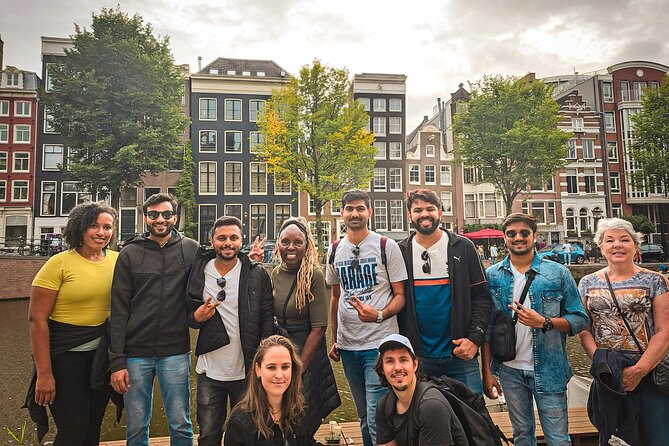
This tour is a smart, low-effort way to get your bearings in Amsterdam without burning a whole day on logistics. You’ll cover the center on foot, stop at major landmarks, and learn how the city actually works. My favorite part is that it feels social but still practical, not a lecture in disguise.
I also like the game-style learning, because it turns Amsterdam facts into something you remember later when you are wandering on your own. The one drawback to consider is that walking time is real, and the best experience depends on having good weather and arriving early enough to spot your guide.
Key highlights worth making time for
- Small group cap (up to 15 people) so you get more interaction than big bus tours.
- Fast, fun true-or-false game near Damrak that covers Dutch culture topics.
- Canal-belt views at Singel, Torensluis, and Keizersgracht, with several photo-friendly angles.
- Bike-culture stop at Haarlemmersluis, where Amsterdam’s cycling obsession makes sense quickly.
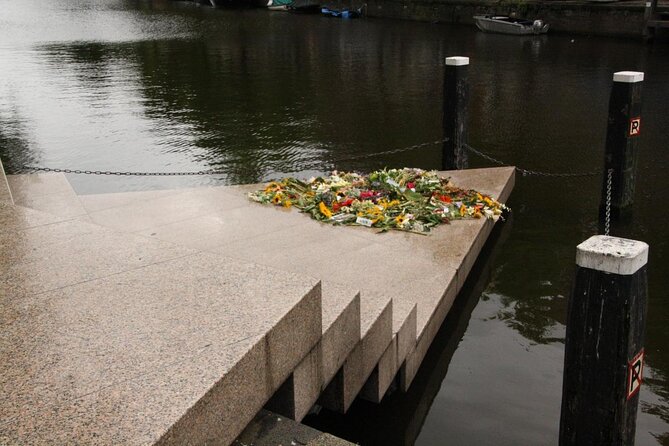
- Historical contrasts, including a stop that mentions Amsterdam’s slavery past alongside UNESCO canal-belt storytelling.
- Final walkout near major sights, ending at Homomonument by Westerkerk and close to the Anne Frank House area.
Amsterdam on foot in 2 hours, why this tour clicks
If you only have a short window and you want Amsterdam to feel navigable instead of random, this kind of walk is the answer. You get the center in manageable chunks, plus just enough explanation to help you read the city as you go.
The pricing is also refreshingly straightforward for what you get: about $35.07 for a 2-hour small-group guide experience in English. That price makes sense because the guide does the heavy lifting, from pointing out landmarks to sharing practical recommendations on food and shopping.
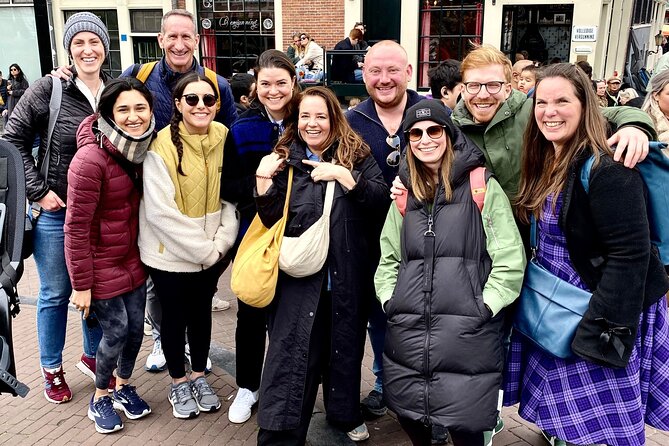
And the guides seem to lean into personality. In real life, guides like Dani, Jonas, or Adam are known for making the walk feel lively through stories and short games, not just names and dates. You should expect more interaction than a silent march, even though it is still a walking tour.
More Walking Tours in Amsterdam
- Amsterdam Anne Frank: Small-Group Walking Tour & Local Guide
★ 4.8 · 12,789 reviews - Anne Frank’s Story – Guided Walking Tour through Amsterdam
★ 5.0 · 11,619 reviews - Absolutely Amsterdam – the Essential Introductory Walking Tour
★ 5.0 · 3,629 reviews
The pace, the walking, and how to not lose your group
This is a walking tour of about 2 hours in Amsterdam’s central areas. Expect a moderate amount of walking, with stops spaced so you can keep up. If you prefer ultra-slow travel, you might feel the time pressure, but it still covers the key sights efficiently.
The tour starts at the National Monument on Dam Square and ends at the Homomonument at Westermarkt, near the Westerkerk and close to the Anne Frank House area. That ending location is a big deal if you plan to continue your day on foot, especially since you are right in the city center.
One small practical note: meeting point confusion can happen. There was at least one case where a ticket label was not specific enough to clearly identify the operator, so do yourself a favor and check your ticket details before you arrive. Arriving a little early helps, because guides are easier to spot when you have a minute to look around.
Dam Square and Damstraat: starting at Amsterdam’s public living room
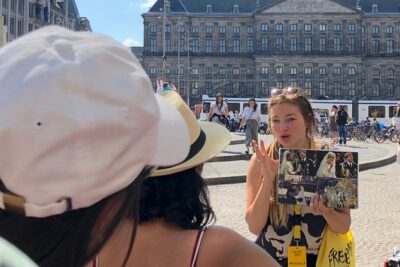
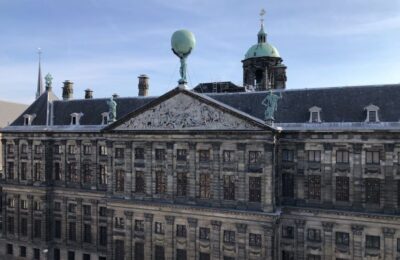
You begin at Dam Square, right by the National Monument. This is the kind of place where Amsterdam feels like Amsterdam, with major landmarks packed into one area.
At this stop, you’ll get oriented to what you are seeing: the Royal Palace area, the New Church, and the larger significance of Dam Square as a civic center. It is a good first stop because it sets the tone. After this, you start recognizing neighborhoods and streets as parts of a bigger story instead of isolated sights.
Damstraat comes into play early too, which matters for first-timers. It is a reminder that Amsterdam is not only canals and museums. It is streets, movement, and daily life, even when you are standing in front of monuments.
Beurs van Berlage: why Amsterdam’s finance shows up in architecture
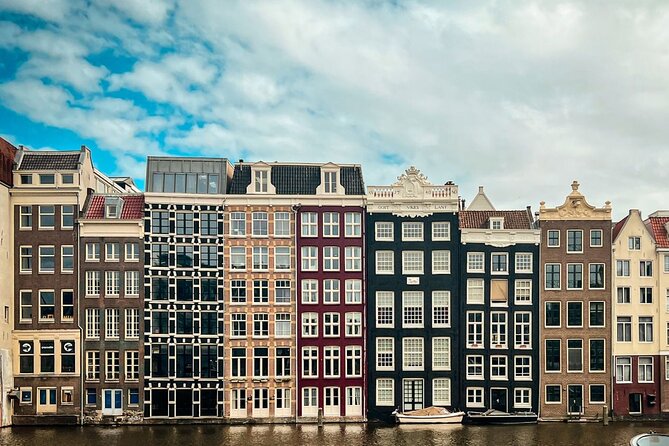
Next is Beurs van Berlage, a building tied to Amsterdam’s financial history. You’ll hear how the city pioneered the stock exchange and how that helped shape Amsterdam’s rise.
This stop works well because it is not just a history marker. The building itself signals power and ambition through its design, so you get a visual link between economy and city identity. Even if finance is not your favorite topic, the guide’s storytelling style tends to keep it moving.
Also, admission is listed as free for the stop, so you can focus on the explanation and the architecture without feeling like you missed an extra ticketed attraction.
Not the right fit? Amsterdam also runs these:
- Amsterdam: Van Gogh Museum Ticket
★ 4.7 · 52,054 reviews - Amsterdam: Heineken Experience Ticket including 2 Drinks
★ 4.6 · 36,014 reviews - Amsterdam Classic Saloon Boat Cruise with Drinks and Cheese
★ 5.0 · 31,825 reviews - Amsterdam Luxury Canal Cruise + Unlimited Drinks & Bites option
★ 5.0 · 30,518 reviews
Damrak near the Red Light District: learning through a true-or-false game
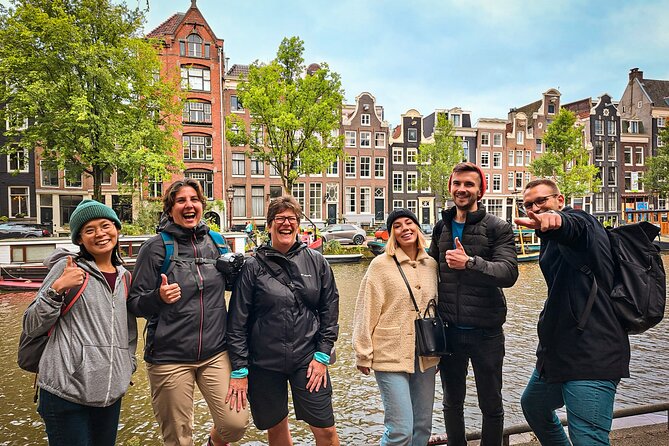
Then comes Damrak, just steps from the Red Light District. The guide builds a quick true-or-false game around what you think you know about Dutch culture.
The topics include tolerance and coffeeshop culture, plus other big, stereotyped ideas that deserve better context. What I like about this kind of stop is that it makes you switch on your critical thinking without killing the fun. You do not need any special background. The game format keeps it light while still teaching you.
You’ll also notice the street energy here, and the guide points out visual cues like the Dancing Houses you can spot from this area. It is one of those stops where the city looks playful, but the facts behind it are serious.
Haarlemmersluis and Amsterdam’s bike obsession
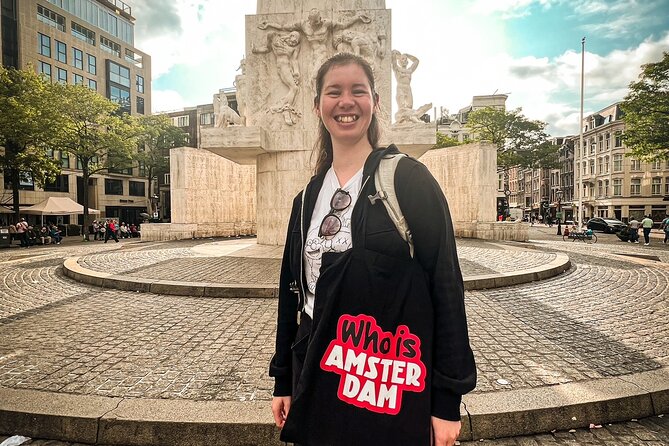
Haarlemmersluis is your gateway into the canal-belt area and a chance to talk about bicycles as culture, not transportation trivia. You’ll get a clear explanation of why cycling is so central here, including the simple punchline that there are more bikes than people.
This is a great stop for travelers who want to understand what you will see later. Once you learn the rhythm of bikes and canals together, your photos and street observations get better fast. You stop judging Amsterdam from a distance, and you start reading it like a local would.
You’ll also get a canal view, and the guide uses it to connect infrastructure with daily habits. That connection is the difference between seeing a canal and understanding why the city is shaped the way it is.
Singel and the Dancing Houses: a canal view that feels like a trick
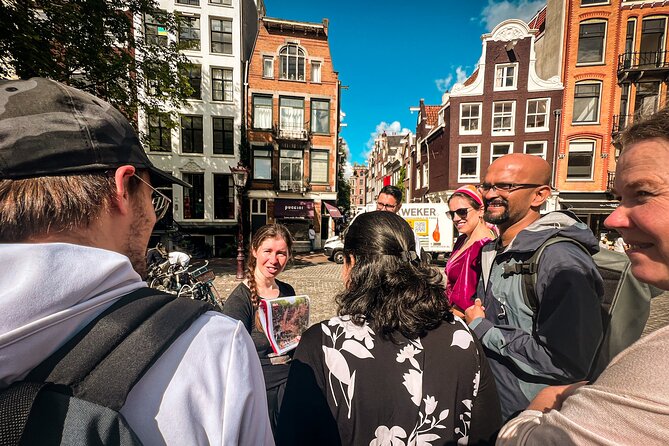
At Singel, you shift fully into postcard territory, alongside a canal and the famous tilted Dancing Houses. The guide explains the whimsy and the mechanics behind the famous look, mixing humor with structure.
This is one of the best stops for photos because you are right on the canal edge where the buildings visually interact with the water. If you like architecture, this is your moment to slow down for a minute and really look.
The guide also keeps you engaged with story details, so it does not become a static viewing session. You leave understanding why these houses are remembered and how they fit into the wider canal-belt character.
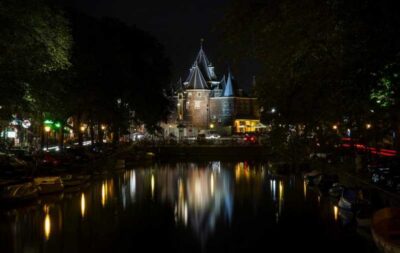
Torensluis and the UNESCO canal-belt, beauty plus uncomfortable truth
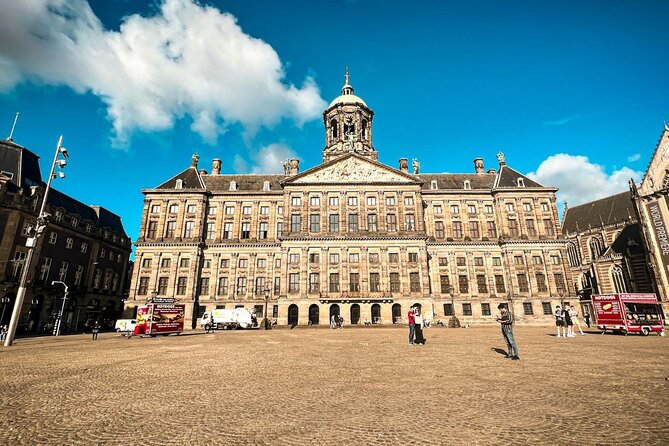
Torensluis brings you back to UNESCO canal-belt storytelling, with a stronger emotional tone. The guide talks about the canal-belt’s creation and the kinds of secrets you can find when you look past the scenery.
At the same time, this stop includes Amsterdam’s shadowed past of slavery. That pairing matters. Amsterdam can look pure and elegant from the outside, but the city’s wealth and growth had real human costs. It is good that the tour does not avoid the difficult chapter.
If you are the kind of traveler who likes honest framing, this is where the tour earns trust. You are not only taking in views. You are learning how to hold two truths at once: beauty and consequence.
Keizersgracht and Dutch family life: the culture lesson behind the canal
Then you move to Keizersgracht, where the canal-belt atmosphere continues, but the story shifts toward everyday Dutch life. The guide covers family dynamics and shares why Dutch kids were labeled among the happiest in the world by UNICEF in 2017.
This stop is useful because it connects culture to the city you are walking through. It is easier to understand Amsterdam’s social tone when you hear how daily life is framed, not just what monuments exist.
After this, you will likely watch how people interact on the streets with a different lens. That is the real value of this part of the tour: it gives you a way to interpret what you see in the next hours after the walk ends.
Westerkerk, Anne Frank House area, and the Gay Monument message
The final stop is Westerkerk, where the tour ties together diversity and the idea of live and let live. The guide references the Anne Frank House area and the Gay Monument, turning the last moments into a reflection on acceptance.
You also get a mental model you can carry with you: Amsterdam’s monumentality is linked to its people and mindset, not only its buildings. That is a deeper message than you might expect from a short walking tour.
When you finish at Homomonument near Westermarkt, you end in a very practical location. You are close to major sights, and the walkout feels natural rather than abrupt. This is the kind of ending that helps your day flow, especially if you plan to keep exploring right after.
Guides, games, and local recommendations that make the tour usable later
The most praised aspect across guide styles is how they keep learning active. Dani and Danni are mentioned for story-telling and games that get everyone involved. Jonas is highlighted for facts with energy and helpful personal asides. Adam is also credited for delivering facts with verve and practical context.
That matters because Amsterdam is full of overlapping attractions. Without a guide who can connect dots quickly, it is easy to waste time picking random options. The tour’s approach helps you decide what to do next.
You’ll also get recommendations for where to eat and shop from the local guide. Even if you still end up choosing based on your own taste, having a shortlist from someone who knows the area saves time. It is especially helpful if you feel overwhelmed by tourist-trap instinct.
Who this tour is best for, and who should think twice
This is ideal for first-time visitors who want to get their bearings fast. It also suits travelers who enjoy a mix of big landmarks and smaller cultural details, plus anyone who likes canal scenes and architecture without needing museum-level time.
It is also a good fit if you are traveling solo or as a couple and want a friendly small-group format. With up to 15 people, the vibe is more personal than the typical crowd-heavy tours.
You might want to choose something else if you are looking for deep museum entry or long sit-down history. This is a walking tour, and it stays moving. Also, since good weather is required, you may feel the impact of a cold, rainy day.
If you go, go prepared: comfortable shoes help. Bring water. Amsterdam can be windy near canals, and the tour is outdoors for long stretches.
Final call: should you book Hello Amsterdam?
I think this is a strong booking for most people doing Amsterdam for the first time, especially if you want a guided route that ends in the middle of things. The value is in the efficiency, the small-group size, and the way the guide uses games and local context to make the city stick in your brain.
Book it if you like:
- A 2-hour orientation walk with major center-city stops
- Canal-belt views, Dancing Houses, and bike-culture context
- A guide who mixes facts with short, fun activities
Skip or swap it if:
- You hate walking and need long indoor breaks
- You want museum time, not street-level interpretation
- Your day is built around heavy rain and you do not have flexibility
FAQ
How long is the Small Group Walking Tour – Hello Amsterdam?
It lasts about 2 hours.
Where do I meet the tour guide, and where does the tour end?
The tour starts at the National Monument on Dam Square and ends at the Homomonument on Westermarkt, near the Anne Frank House area and the Westerkerk.
What time does the tour start?
The start time is 10:00 am.
Is the tour offered in English?
Yes, it is offered in English.
How many people are in the group?
The group size is limited to a maximum of 15 travelers.
Do I need a paper ticket?
No, you can use a mobile ticket.
What happens if the weather is poor?
The tour requires good weather. If it is canceled due to poor weather, you will be offered a different date or a full refund.
Latest Amsterdam reviews
- Small Group Tulip and Spring Flower Fields Bike Tour★ 4.5 · 14 reviews
- Zaanse Schans Windmills Private Tour from Amsterdam Airport★ 5.0 · 14 reviews
- Amsterdam Van Gogh Museum Private Tour for Kids & Families★ 4.0 · 14 reviews
- Bruges Day Trip from Amsterdam★ 4.5 · 14 reviews
- Volendam: Volendams Museum Entry Ticket★ 4.4 · 14 reviews
- Zaanse Schans Windmills, cheese and clogs and Volendam tour from Amsterdam★ 5.0 · 14 reviews
- Departure from Amsterdam City to Amsterdam Airport AMS by Minivan★ 5.0 · 14 reviews
- Walking Tour about Golden Age Architecture, private local guide★ 5.0 · 15 reviews
Walking Tours, compared.
Absolutely Amsterdam – the Essential Introductory Walking Tour
Read our review →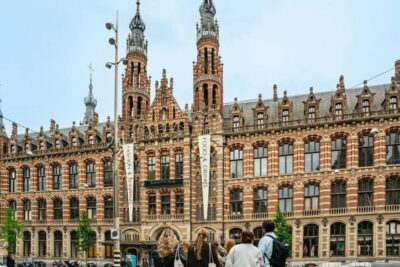
Amsterdam Highlights Walking Tour: Small Group Experience
Read our review →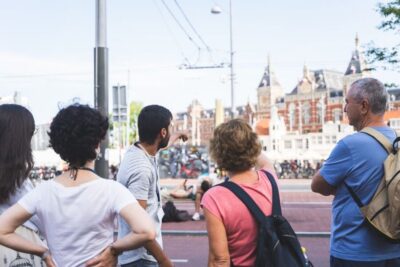

Browse the lists this tour appears in