
Reviewed · WALKING TOURS
Amsterdam: Small-group Guided Walking Tour (French/English)
This Amsterdam walk is interesting because it strings together the big landmarks and the side streets in a tight 2 to 3 hours, so you leave with your bearings and a clear mental map of the city. It’s small-group and guided by local storyteller Chris.
I love how you start right at the waterfront by Pancakes Amsterdam at the IJ, then move through the historic center on foot. I also love the way Chris uses stories to connect what you see, like Dam Square and the UNESCO canal belt, to how locals actually live, eat, and explore, then sends you useful links after the walk.
One possible drawback: the pace is efficient, with lots of short photo stops. If you want long museum time or slow wandering, you may feel a little rushed.
Key things I’d watch for on this Amsterdam walking tour
- Chris keeps it interactive, answering questions as you go and using visuals to make landmarks easier to understand
- You cover the center in one loop, from Amsterdam Centraal area to the Jordaan, so you don’t waste your first day guessing
- UNESCO canal belt is actually explained, not just photographed, including what makes the 400-year-old canal belt special
- Hidden details show up in the form of side streets, courtyards, and surprising architecture you’d likely skip on your own
- You get practical follow-up links, including food, drinks, boats, and sightseeing ideas for after the tour
Why a small-group Amsterdam walk beats piecing it together yourself
Amsterdam is easy to admire and a little hard to plan. Streets bend, canals split, and “one more turn” turns into 30 minutes you didn’t plan. This walking tour solves that. It gives you a structured loop through the most important parts of the historical city center, including Dam Square, the Jordaan area, and the canal belt UNESCO site, plus a bunch of in-between stops that give you context.
The other advantage is the guide. Chris is the kind of person who makes you want to ask questions, because he answers with both history and everyday life. Multiple times on the walk, you’ll get those small explanations that turn a photo spot into something you understand, and that makes the rest of your day easier.
Finally, this is a walking tour, not a lecture marathon. You’ll be outside, moving, stopping for photos, and learning as you go. It’s the kind of experience that helps you enjoy Amsterdam more, because you know what you’re looking at.
More Walking Tours in Amsterdam
- Amsterdam Anne Frank: Small-Group Walking Tour & Local Guide
★ 4.8 · 12,789 reviews - Anne Frank’s Story – Guided Walking Tour through Amsterdam
★ 5.0 · 11,619 reviews - Absolutely Amsterdam – the Essential Introductory Walking Tour
★ 5.0 · 3,629 reviews
Meeting behind Amsterdam Centraal, finding the guide fast
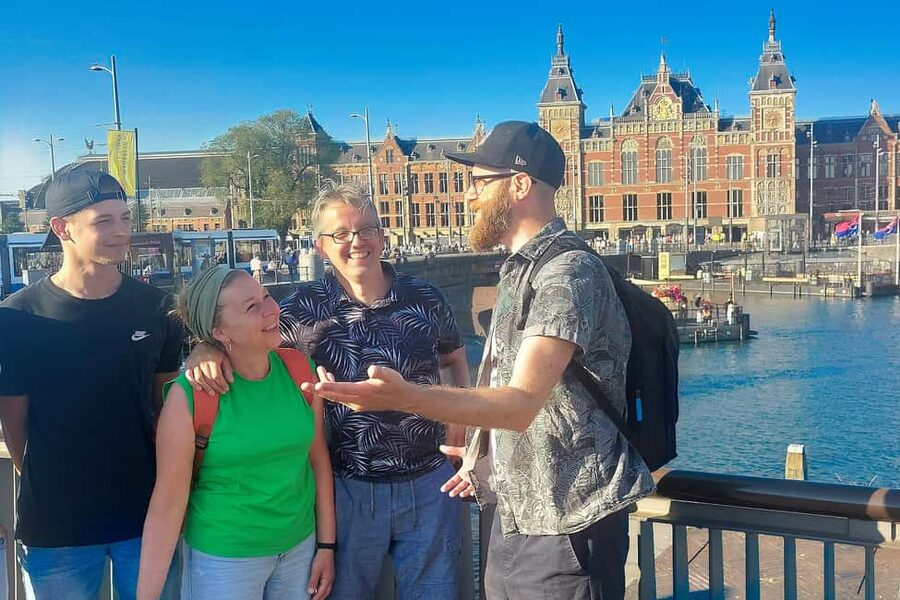
You meet behind Amsterdam Centraal, near the white and blue ferries going to Amsterdam North. The easiest landmark is the area by Pancakes Amsterdam at the IJ, right by the water. There’s also a big “D” ferry halte sign near the bike lane.
Look for the guide: Chris wears glasses, a beard, and a baseball hat. That detail matters, because it keeps your start stress-free. If you’ve ever arrived at a European station and played “Where is the group?” for 10 minutes, you’ll appreciate how clear the meeting point is here.
Before you go, plan your timing like you mean it. This tour takes 2 to 3 hours, and in that window you’ll walk enough to feel the day, but not so much that you’re wrecked afterward. Good shoes are the smart move.
From Amsterdam Centraal to the canal-facing street moments
Amsterdam Centraal Station (quick photo start)
You begin at the Amsterdam Centraal station area with a short orientation and photo stop. The goal here isn’t to “tour” the station. It’s to anchor your location. Once you’ve stood in the right spot, you understand which direction the city is heading and where the historic core begins.
Not the right fit? Amsterdam also runs these:
- Amsterdam: Van Gogh Museum Ticket
★ 4.7 · 52,054 reviews - Amsterdam: Heineken Experience Ticket including 2 Drinks
★ 4.6 · 36,014 reviews - Amsterdam Classic Saloon Boat Cruise with Drinks and Cheese
★ 5.0 · 31,825 reviews - Amsterdam Luxury Canal Cruise + Unlimited Drinks & Bites option
★ 5.0 · 30,518 reviews
Dancing Houses (facade stop with a story)
Next are the Dancing Houses, known for their distinctive, unusual appearance. The practical benefit of this stop is that it trains your eye. Amsterdam has plenty of buildings that look quirky at first glance, and after this, you’ll notice patterns rather than just collecting pictures.
Basilica of Saint Nicholas (a landmark pause)
At the Basilica of Saint Nicholas, you’ll get another quick photo stop. Churches in Amsterdam are often more than religious buildings. They’re reference points for the city’s evolution, and Chris ties the architecture to what Amsterdam looked like at different moments in time.
Zeedijk Street (street-level Amsterdam)
Then you shift to Zeedijk Street, where the city feels lived-in. This is one of those places where you sense the mix of neighborhoods and cultures without needing a museum ticket. It’s also a good area to ask questions about daily life, because this part of Amsterdam shows change over time in a very visible way.
Major Alida Bosshardt statue (a name that adds meaning)
At the Major Alida Bosshardt statue, you get a brief pause that works like a mini history lesson. Statues can feel like background noise while you’re walking. Chris makes them matter, by connecting them to the people and stories behind the city’s public spaces.
The “hidden Amsterdam” stops you’ll be glad you didn’t skip
Ons’ Lieve Heer op Solder (Our Lord in the Attic)
One of the best surprises on the walk is Ons’ Lieve Heer op Solder, often called Our Lord in the Attic. This isn’t the kind of place you stumble into just by luck. It’s the definition of Amsterdam’s layered history, where a belief system and a building style can be literally tucked into unexpected space.
Oude Kerk (the feeling of old Amsterdam)
You continue to Oude Kerk, which helps you understand why Amsterdam’s “old” isn’t one era. It’s stacked. The short stop still pays off because Chris frames the church in the broader story of the city’s growth and identity.
Burgwallen Oude Zijde (street texture and canal-city structure)
At Burgwallen Oude Zijde, you’re in a section of the city where the street layout and canal-adjacent vibe make more sense after a bit of explanation. This stop is less about one single building and more about learning how the canal-city works as a whole.
Amsterdam Chinatown (the city’s modern layers)
Then you hit Amsterdam Chinatown. This is where the walk becomes a bridge between “classic Amsterdam” and the city’s multicultural present. Even if you only get photos here, the context matters, because Chris links the neighborhood vibe to Amsterdam’s longer history as a trading hub and a place where different communities take root.
Trading, weighing, and architecture clues in the center
De Waag Restaurant (historic trade connection)
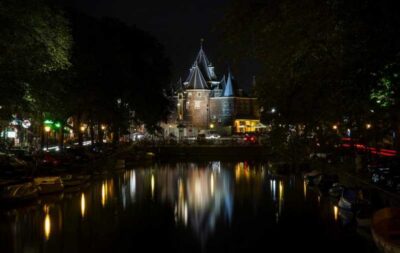
At De Waag, the story turns toward trade and the way commerce shaped the city. A building like this can be hard to interpret if you’re just looking at it from the sidewalk. With a guide, you start to see why Amsterdam’s center developed the way it did.
VOC and Dutch East India Company stop
You then focus on the VOC, the Dutch East India Company. Chris uses this section to explain the larger arc of Amsterdam’s growth. This is where you’ll hear how the city evolved over time, from a smaller fishing area along the Amstel River into a major European trading hub.
You’ll also get fun facts tied to Dutch heritage, including the sort of economic boom-and-bust stories that help explain why people obsessed over things like tulip mania in the first place.
Narrowest House in Europe (a “how is that even possible” moment)
Next is the Narrowest House in Europe. Even with a short photo stop, this is the kind of place that sticks in your memory because it’s so out of proportion. It’s not just a quirky photo. It’s a clue about how space, wealth, and building rules shaped canal-side Amsterdam.
Dam Square and the Royal Palace, where the city’s power shows
Dam Square (the center of attention)
You arrive at Dam Square, one of the most iconic places in Amsterdam. Expect another photo stop plus a guided explanation of why this square matters. Chris helps you place it in the bigger city story, not just as a tourist magnet.
Royal Palace of Amsterdam (power, dates, and atmosphere)
At the Royal Palace, you’ll see the seat-of-power feel that sits behind the square. The best part here is understanding what “palace” means in the Dutch context, because Chris connects it to the city’s historical role and how architecture signals authority.
Magna Plaza (how Amsterdam handles modern needs)
Then you get Magna Plaza, a more modern stop. It’s a smart reset in the walking rhythm, because it shows you that Amsterdam isn’t frozen in time. The city blends eras, and you’ll feel that even in the choice of stops.
Torensluis Bridge (small bridge, big canal-city meaning)
At Torensluis Bridge, you’re starting to transition toward the canal belt views. Bridges in Amsterdam are practical vantage points. Even with a short stop, the guide makes you look the right way, so you understand the relationship between street, water, and neighborhood layout.
Grachtengordel and the UNESCO canal belt you can actually picture
Grachtengordel (canal belt, explained)
You reach Grachtengordel, the UNESCO World Heritage canal belt. This part is a highlight for a reason. Chris doesn’t just point. He explains what you’re looking at, including the canal belt’s roughly 400-year-old significance and how the “Golden Age” canal houses relate to Amsterdam’s trading wealth.
If you’ve ever seen canal photos online and wondered why people get emotional about them, this is the stop that makes it click. After the explanation, you stop thinking only in terms of postcard angles. You start noticing structure, design, and why these waterways mattered.
Anne Frank area, Westerkerk, and the Jordaan neighborhood shift
Anne Frank House (brief, but context-heavy)
At Anne Frank House, you’ll have a photo stop and a guided story connection. This tour includes the story of Anne Frank as part of the broader city narrative, so you’re not just standing near a famous landmark with no context.
Practical note: this is one area where lines and crowding can happen in Amsterdam. The tour keeps the stop short, but the explanation helps you understand what the neighborhood represents.
Westerkerk (the skyline anchor)
Next is Westerkerk. This is a skyline anchor that helps you understand Amsterdam’s city view lines. Even if you’re not going inside, the positioning makes it easier to visualize where you are within the city.
The Jordaan (the walk ends where the atmosphere lives)
Finally, you reach The Jordaan. If Amsterdam is a book, Jordaan is where the “everyday life” pages feel most readable. The walk ends with a neighborhood atmosphere that invites you to keep exploring on your own after the tour.
Chris wraps up by helping you turn the day into plans, so you can choose what to do next based on what you liked most during the walk.
What Chris does that makes the tour feel personal
A lot of walking tours tell you what you’re seeing. This one does that too. The big difference is how Chris makes it interactive and question-friendly. You’ll have plenty of chances to ask things, and he answers in a way that ties history to daily routines.
Several stand-out patterns show up in his style:
- He uses visuals, which makes landmarks easier to place in your head later
- He gives quick, practical context, so even short stops feel meaningful
- He shares follow-up links, so you can build your next 24 to 48 hours around good recommendations instead of random guesswork
- He keeps it at an easy walking pace, balancing info with time to look around and absorb
And yes, you’ll likely hear fun Dutch heritage stories too, including facts that connect culture to what people buy, eat, and talk about.
Timing and pace, what the 5-minute photo stops really mean
Most stops are short, around five minutes for photos plus guided commentary. That structure is the tradeoff for covering a lot of ground.
You’re not going to linger at every building. The tour is designed to help you understand the map fast, then let you slow down afterward. If you love Amsterdam for wandering, this approach works well because it sets you up to wander in the right direction later.
If you’re the type who wants to sit and read every plaque or spend extra time inside major museums, you might find some stops feel brief. The smart move is to plan your “deep time” for after the walk, when you already know what matters most to you.
What you should bring, and how to avoid the usual Amsterdam walking-day problems
This is a straightforward walking tour, so comfort matters. Bring:
- Comfortable shoes you can walk in for hours
- Umbrella (Amsterdam weather loves surprises)
- Water
- Weather-appropriate clothing for the day
Also, bring a mindset that you’re learning while moving. The route is wheelchair accessible, but you still want to be physically comfortable enough to keep a steady walking rhythm through the center.
If construction or circumstances affect the route, Chris may adjust stops to match the situation and your interests. That flexibility is usually a net positive, because it keeps the experience moving.
Price and value: $33 for orientation, context, and good next steps
At $33 per person for a 2 to 3 hour small-group guided walk, this is good value if you treat it like a foundation. You’re paying for:
- A local guide who explains what you see, not just where to stand for a photo
- Efficient coverage of key Amsterdam highlights like Dam Square, the Royal Palace, and the UNESCO canal belt
- Practical recommendations for dining, shopping, boats, and sightseeing
- Helpful links you can use after the tour to plan with less stress
Food and drinks are not included, so you’ll want a plan for later. But the guide’s restaurant and cafe suggestions can make that decision faster and better.
If you’re on a first visit, this kind of orientation often saves you time the rest of the trip. You stop second-guessing your route and start choosing activities based on what you already learned to look for.
Who this Amsterdam tour suits best
This tour fits especially well if you:
- Want a first-time Amsterdam orientation that covers major sights without tons of museum time
- Like walking tours that include real stories and room for questions
- Want a guide to point you toward practical next stops for food and sightseeing
- Prefer small groups for a more conversational pace
If you already know Amsterdam well and you want only niche deep details, you might feel some stops are too photo-focused. But for most people, the mix of famous landmarks and quick cultural explanations hits a sweet spot.
Should you book this Amsterdam small-group guided walking tour?
If you want to understand Amsterdam in a short window, yes, I think you should book it. The biggest reason is Chris. He turns landmarks into something you can remember and use while you plan the rest of your trip, and the follow-up links make your next decisions easier.
Book it if you like walking, you can wear comfortable shoes, and you want a clear route through the center, including the canal belt UNESCO area and the Jordaan neighborhood feel. Skip it only if you know you need long museum stays or very slow, unstructured wandering time.
FAQ
How long is the walking tour?
It runs for about 2 to 3 hours.
What languages are available?
The guide offers the tour in English or French.
Where do I meet for the tour?
Meet behind Amsterdam Centraal near the white and blue ferries to Amsterdam North, by the restaurant Pancakes Amsterdam at the IJ. Look for the big D ferry halte sign next to the bike lane.
Is the tour wheelchair accessible?
Yes, the tour is listed as wheelchair accessible.
What should I bring with me?
Bring comfortable shoes, an umbrella, water, and weather-appropriate clothing.
Are food and drinks included?
No. Drinks and food are not included.
Can the route change during the tour?
Yes. The itinerary might be adjusted for construction work, your interests, or other unforeseen circumstances.
Can I cancel for a refund?
Yes. You can cancel up to 24 hours in advance for a full refund.
Latest Amsterdam reviews
- Small Group Tulip and Spring Flower Fields Bike Tour★ 4.5 · 14 reviews
- Amsterdam Van Gogh Museum Private Tour for Kids & Families★ 4.0 · 14 reviews
- Zaanse Schans Windmills Private Tour from Amsterdam Airport★ 5.0 · 14 reviews
- Bruges Day Trip from Amsterdam★ 4.5 · 14 reviews
- Volendam: Volendams Museum Entry Ticket★ 4.4 · 14 reviews
- Zaanse Schans Windmills, cheese and clogs and Volendam tour from Amsterdam★ 5.0 · 14 reviews
- Departure from Amsterdam City to Amsterdam Airport AMS by Minivan★ 5.0 · 14 reviews
- Walking Tour about Golden Age Architecture, private local guide★ 5.0 · 15 reviews
Walking Tours, compared.
Absolutely Amsterdam – the Essential Introductory Walking Tour
Read our review →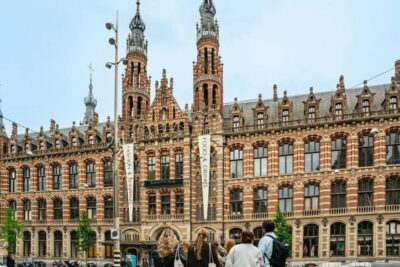
Amsterdam Highlights Walking Tour: Small Group Experience
Read our review →

Browse the lists this tour appears in