
Reviewed · RED LIGHT DISTRICT
Private Amsterdam Red Light District tour with food tastings
What makes this tour interesting is that it treats the Amsterdam Red Light District like a real neighborhood, not a tabloid headline. You get to walk the streets with an expert guide and learn how the area fits into the city’s older layers, from early building history to modern attitudes. I especially like the food tastings mixed into the route, and I also like that you’re not stuck with generic facts, the guides are praised for strong explanations and answering questions (I’ve seen names like Aaron, Sander, and Tony pop up in feedback). One possible drawback to consider is that the topic matter includes prostitution and coffeeshop culture, so you’ll want a respectful mindset and some tolerance for adult subject discussions.
The 2-hour format keeps it focused. You pass notable sights like the Old Church and Chinatown area, then you spend time at specific Old Town landmarks that explain why Amsterdam looks the way it does, including the city’s famous wooden-pile building technique. I also like the private setup, since it can be customized to your interests and your group pace. If you’re looking for a totally sanitized, purely scenic walking tour, this one might feel too candid for your tastes.
Finally, the payoff is more than sightseeing. You get historical context at each stop, plus the practical comfort of a guide who can pace the walk to your needs and keep the conversation going with a sense of humor.
Key highlights to look for
- Expert commentary beyond guidebooks, with plenty of time for questions.
- Food tastings during the walk, so you experience the area with more than your eyes.
- Old Town landmarks tied to real stories, like wooden buildings and city-gate architecture.
- Amsterdam’s building history explained clearly, including the city’s wooden pile foundation method.
- A modern stop at the condom shop, introduced as a specific, long-running local business.
- A private tour you can tailor, not a one-size-fits-all group shuffle.
Entering the Red Light District the smart way, with context
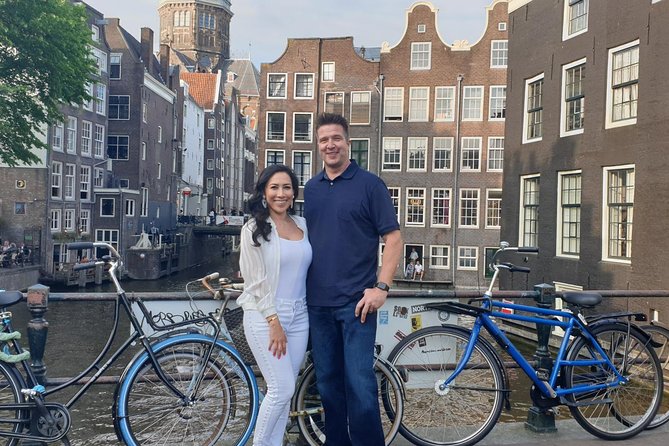
The best part of this type of Red Light District tour is what it prevents. It prevents you from treating the neighborhood like one big photo spot. Instead, you get the area’s place in Amsterdam’s wider story, including how the city handled housing, guild life, and later commercial culture.
Your guide is the difference-maker here. Feedback emphasizes guides who give clear explanations and answer questions, with enough humor to keep the tone human. That matters, because the subject is adult, and a casual guide can turn awkward fast. A guide who can frame it in history and culture keeps the walk from feeling confrontational.
You’ll also want to think about pacing. This tour runs about 2 hours, so it is not trying to cover the entire city. It focuses on key spots and uses short stays to connect the dots. That’s a plus if you have limited time, or if you want something more meaningful than a quick pass through the nightlife zone.
More Food & Drink in Amsterdam
- Amsterdam Food and Cultural Tour with Tastings
★ 5.0 · 4,315 reviews - 10 Tastes of Amsterdam: Food Tour by UNESCO Canals and Jordaan
★ 5.0 · 3,020 reviews - Amsterdam Jordaan Food & Drinks Tour with Eating Europe
★ 5.0 · 2,425 reviews
How the private setup changes the experience for your group
A private tour means you’re not competing with strangers for attention at each corner. You can move at your speed, and the route can be customized to match your interests and needs. That’s useful because people show up for different reasons. Some want the historical building facts. Some want cultural context on how the neighborhood functions. Some just want a first-time visitor-friendly orientation.
There’s also a practical benefit: your guide can adjust explanations to what you actually care about. If you ask questions, you’re not likely to get shut down with a quick, scripted answer. The feedback specifically highlights guides who respond well and pace the walk to match the group.
If you’re traveling as a couple or a small group, this kind of private experience can feel like good value. You’re paying for guided time plus food tastings, and you’re not paying for a long, overcrowded group tour where you barely hear yourself think.
Food tastings as part of the story, not just a snack stop
This tour builds in food tastings along the way. That sounds simple, but it changes the feel of the walk. Food gives you a break from constant street scanning and helps you slow down enough to notice details.
One thing to note: you should treat these as tastings, not a full meal. Expect small bites at different places, timed so you can keep walking. If you’re arriving hungry, eat beforehand or plan to pace yourself, since adult-themed neighborhoods can be mentally intense even when the guide keeps things light.
I like this approach because it turns the Red Light District visit into a more normal Amsterdam experience. You’re not only looking at nightlife. You’re sampling the everyday side of the area, while your guide places each stop into context.
Dam and Amsterdam’s wooden-pile foundation, explained where it matters
Your route starts in the Red Light District area and quickly connects to older Amsterdam geography. One key concept you’ll hear about is the city’s building method, often summed up by the idea of the City built on trees.
Amsterdam sits on soil with thick layers of fen and clay. Because that ground is soft, many buildings were built on wooden foundation piles driven down until they reach a stable sandy layer. The description you’ll get includes depth details, like piles fixed down to a solid sand layer roughly 11 meters below. The point is practical: this is why Amsterdam has a distinct look and why so many older buildings survived where they shouldn’t have.
This part helps you understand something important for first-timers. The city doesn’t just look romantic, it is engineered. When you see older facades, you’re also seeing a long-term solution to difficult soil. Your guide’s explanation makes the whole neighborhood feel less random.
If you’re curious about architecture or city planning, this stop is a strong anchor. If you don’t care about foundations, you might find it a little technical, but the guide should translate it into something you can picture as you walk.
More Red Light District walking tours:
- Amsterdam: Red Light District Tour in DE/EN/IT/ES/FR
★ 4.9 · 7,136 reviews - Amsterdam: Red Light Secrets Museum Entry Ticket
★ 4.2 · 5,722 reviews - Amsterdam Red Light District & Coffee Shop Tour
★ 4.6 · 4,134 reviews - Amsterdam: Red Light District Pub Crawl with Unlimited Shots
★ 4.1 · 2,130 reviews
Old Town history in the Red Light District area, not just street-level drama
The tour also highlights that you’re in an area connected to the oldest parts of the city. That matters, because it reframes the Red Light District from a modern entertainment zone into a district with long roots in Old Town planning.
As you move through the oldest streets, you’ll be seeing layers of Amsterdam, including areas associated with early city life. Even when the adult businesses are the most visible feature, the bones of the neighborhood come from much older urban development.
This is where a good guide earns their fee. They keep the conversation from getting stuck on stereotypes. Instead of treating the neighborhood as a single story, they show it as a mix of commerce, housing, and culture.
Pub The Ape and the wooden buildings that survived after the 1452 fire
One of the most compelling stops is Pub The Ape (Int Aepjen). You’re told it was built around 1540, and it’s described as one of only two remaining wooden buildings in Amsterdam. That single detail is wild when you think about how fragile old structures are.
The reason it’s rare comes down to the big fire in 1452. After that event, the government pushed for brick facades. So when you visit a surviving wooden building, it’s not just a pub, it’s a physical record of a past building rule that changed.
This stop works on two levels. First, it gives you something visual and memorable. Second, it helps you understand why Amsterdam’s older street scenes look the way they do today. When you know about building materials and post-fire regulations, you start reading the city like a set of clues.
If you’re the type who likes history you can point to, this is one of your best moments on the tour.
Waag, the old city gate, and Amsterdam’s guild life
Next up is the Waag, which used to be one of the city gates and part of the defensive wall. The Waag is described as being built around the 1400s, and it’s noted as the second oldest building of Amsterdam. That is a big claim, but even as you hear it, you’ll feel how anchor-like this kind of structure is in a city’s layout.
Later, the Waag shifted roles. Instead of defending the city, it became a place for guild and craftsman organizations. The tour’s explanation connects it to the way trade and skilled work shaped Amsterdam’s social structure.
This stop adds balance to the Red Light District focus. You’re not only hearing about adult culture. You’re also seeing how Amsterdam organized work, crafts, and commerce in earlier centuries.
One consideration: if you’re mainly after nightlife context, you may need to pay attention here to get full value. But if you’re the kind of traveler who likes how cities function, Waag is exactly the kind of stop that turns a quick walk into a real learning experience.
The smallest house and the VOC storage to long-term living story
You’ll also see the smallest house of Amsterdam, described as built around the 1700s. The story doesn’t end at the size gimmick. It’s tied to the VOC trading company, first used as storage, then later lived in for a very long time.
That sequence is telling. It shows how Amsterdam’s economy and trading reach influenced everyday housing patterns. Small space gets used first for business logistics, then gets absorbed into human life. In other words, the city repurposes, and it does it over and over.
If you like unusual architecture details, you’ll appreciate this stop. If you don’t, the lesson is still useful: even the weirdest building in a neighborhood often has a practical economic reason behind it.
The condom shop stop since 1987, and how Amsterdam talks about sex
A standout modern stop is the world’s first condom shop dedicated to condoms, in place since 1987. Your guide explains it as a specialized business, including the idea that you can get size customized condoms and other special condom types.
It might sound like a random stop, but it’s not. It’s included because it signals something about Amsterdam’s approach to adult topics. The neighborhood doesn’t just exist for adults, it exists as part of a broader local conversation about sexuality, commerce, and public norms.
This is also where a private guide helps you keep the tone comfortable. If you’re curious, you can ask questions. If you’d rather not discuss it beyond the basic fact, you can keep it brief and move on with the walk.
The walking rhythm: short stays, good pacing, and humor
This tour is built for a comfortable walk within about 2 hours. The stops are timed so you don’t feel rushed, but you also don’t get stuck in one place forever. The feedback I’ve seen emphasizes pacing that works for different group needs, and guides with a sense of humor.
So what should you do on the day? Show up with curiosity, and bring a few questions. The most rewarding tours are the ones where you ask the guide to explain what you’re seeing right in front of you.
Also, remember this is still an Amsterdam neighborhood you’ll be walking through. Wear comfy shoes. Keep your phone handy for quick photos, but don’t let the camera replace your brain. The best moments come from listening to the stories as you look at the buildings and street corners.
Price and value at about $121.52 per person for a 2-hour private tour
At $121.52 per person for an approx 2-hour private experience, you’re not paying for a long bus tour. You’re paying for something that costs time and attention: a private guide plus food tastings plus multiple specific landmark stops.
Whether it feels like a deal depends on your group. If you’re booking alone, you may feel the price more strongly, since you don’t have the natural cost-sharing that comes with a couple or small group. If you’re traveling with someone else, the private angle plus tastings often makes the cost feel more reasonable.
You’re also buying something intangible: clarity. A guide who can connect Red Light District streets to Old Town architecture and city-building history saves you from sorting it out yourself. In my experience, that kind of guided context is where these tours earn their money.
Who should book this private Red Light District tour
This is a good fit if you:
- Want a first-time friendly orientation with serious context
- Like city history tied to visible buildings, like wooden structures and the Waag
- Prefer a private guide who can answer questions and adjust pacing
- Enjoy food tastings as part of cultural understanding
- Are comfortable with adult subject matter discussed in a factual, historical way
It may not be your best match if you want a purely scenic, family-friendly walk with no adult topics. And if you’re sensitive to the subject, you’ll need to mentally prepare, since the guide covers prostitution and coffeeshop culture as part of explaining the neighborhood.
Should you book? My practical take
If your goal is to understand Amsterdam’s Red Light District beyond photos, I’d book it. The strongest reasons are the combination of expert guide explanations, multiple historic stops that teach you how Amsterdam got built, and the inclusion of food tastings that make the walk feel like living city culture.
I’d skip it only if you want a quiet, sanitized tour or you dislike adult topics altogether. Otherwise, go in with curiosity and respect, wear comfy shoes, and plan to ask questions. With that mindset, this turns a confusing neighborhood into something you can actually place on the map, and that is the real win.
FAQ
How long is the private Amsterdam Red Light District tour with food tastings?
The tour is listed as about 2 hours.
Is this tour private or shared?
It is a private tour/activity, and only your group participates.
Is the tour offered in English?
Yes, it is offered in English.
What is included besides walking and history?
You will have stops for food tastings during the walk.
What sights and landmark areas are included?
You explore the Red Light District and pass by places such as the Old Church and the Chinatown area. You also include stops such as Dam, Pub The Ape, the Waag, the smallest house, and a condom shop that has been in place since 1987.
Where does the tour start and where does it end?
The meeting point is ParkBee Parking NH Collection Amsterdam Barbizon Palace, Prins Hendrikkade 59, 1012 AD Amsterdam. The tour ends back at the meeting point.
Is free cancellation available?
Yes. You can cancel up to 24 hours in advance for a full refund.
Latest Amsterdam reviews
- Amsterdam Private Prosecco Bike with Music Sound System★ 5.0 · 3 reviews
- Private Day Trip From Amsterdam to Rotterdam and Zaanse Schans★ 3.5 · 3 reviews
- The Best of Amsterdam: Private Full-Day Tour with a Canal Cruise★ 2.5 · 3 reviews
- 1 hour Amsterdam City Tour in Pedicab★ 4.5 · 3 reviews
- Amsterdam Walking Tour with Audioguide on Your Smartphone★ 3.5 · 3 reviews
- Bike Tour with Guide in Amsterdam★ 4.5 · 3 reviews
- Private tour (max 3 per) to Giethoorn & Canal ride from Amsterdam★ 3.5 · 3 reviews
- Concert at The Royal Concertgebouw – Amsterdam★ 5.0 · 3 reviews
Red Light District, compared.
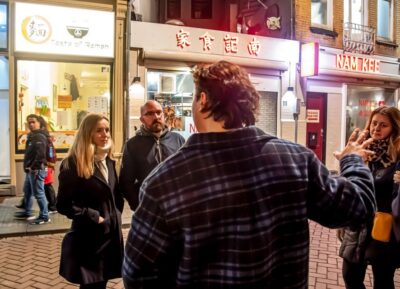
Amsterdam Red Light District & Coffee Shop Tour
Read our review →
Red Light District Pub Crawl with Unlimited Shots
Read our review →
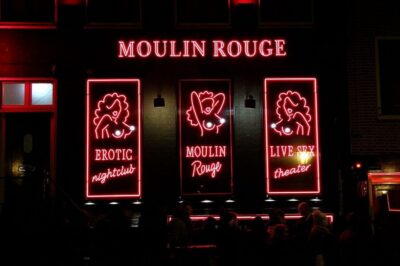
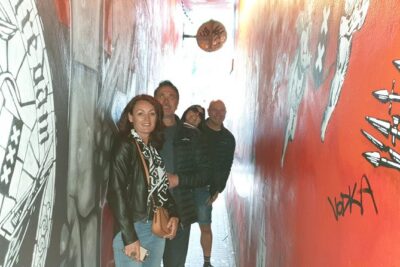
Private Amsterdam Red Light District and Coffee Shop Tour
Read our review →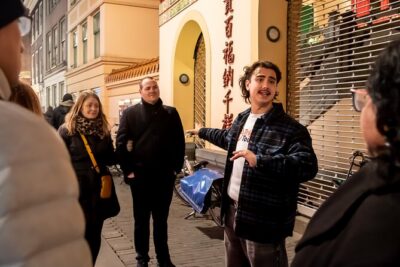
Browse the lists this tour appears in