
Reviewed · WALKING TOURS
Amsterdam: Queer City Walking Tour With Local Guide
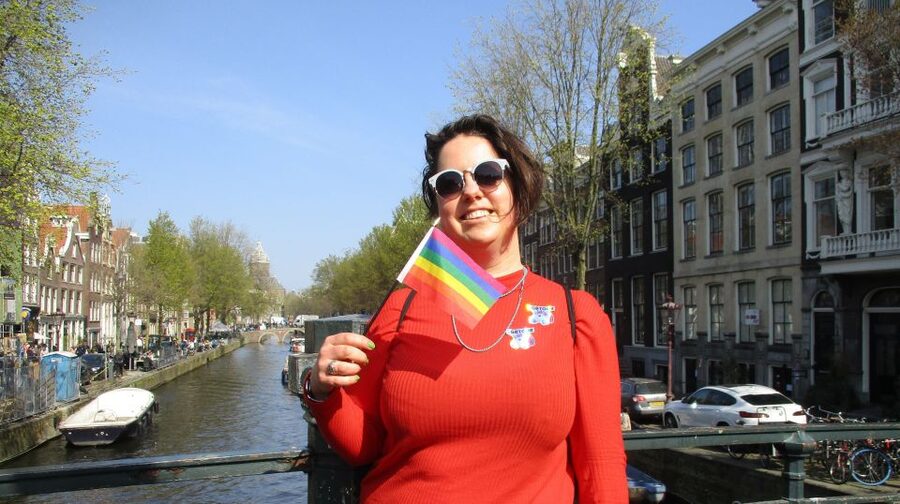
This is an interesting Amsterdam experience because it slows the city down and gives you a queer lens on places you already walk past. It is a small-group 2-hour walk through the oldest parts of town, anchored around the stories behind major landmarks and everyday street corners.
Two things I really like are how personal the guide’s storytelling is, and how the tour turns famous sights into meaningful stops. You get queer life stories in Amsterdam, plus pride and protest context, not just dates and architecture.
One possible drawback: this tour is built around emotional, lived-in LGBTQI+ stories. If you want only light, surface-level sightseeing, the content can feel more direct than you expected, and you will be on your feet for the full walk.
Key Things You Should Know Before You Go
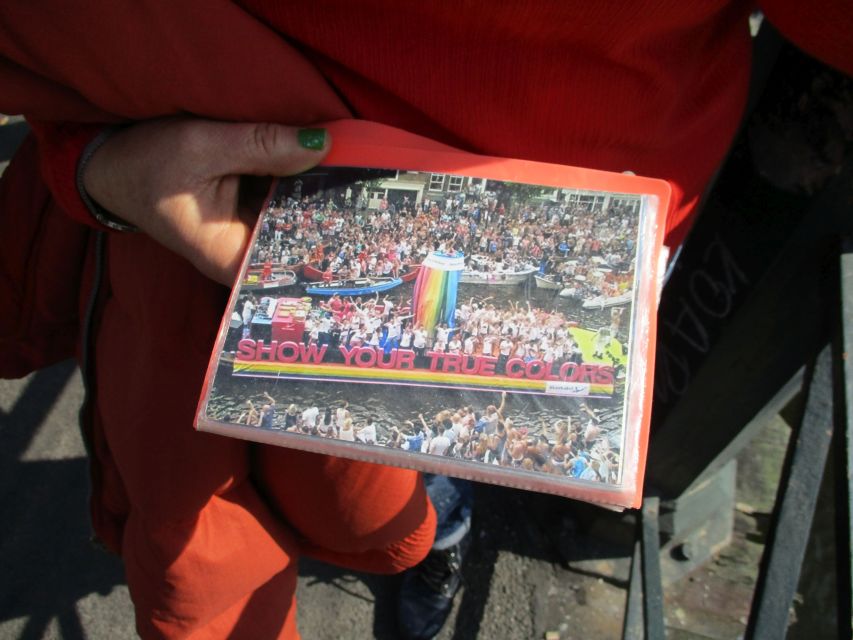
- Start at Nationaal Monument, Dam Square, with the tone set by controversial public-memory stories
- Homomonument for 20 minutes, a longer stop where the guide frames it with queer meaning
- Condomerie for 10 minutes, tied to necessity during the AIDS crisis and the idea of practical queer innovation
- Red Light District visit for 15 minutes, seen through a queer perspective, not a tourist checklist
- Finish at Café ’t Mandje, noted as an older queer bar, so you can keep the evening going
A Queer City Walk That Feels Like a Conversation, Not a Lecture
If you think Amsterdam is just canals, bikes, and coffee, this tour nudges you toward the other side of the postcard. You walk through real neighborhoods and landmarks while Sanne connects them to queer life, love, and public protest. It helps when the city is busy and you want something focused, human, and local.
Sanne’s approach matters. She is sharing her own queer and personal experiences, including falling in love and the reality of being gay and single in Amsterdam. That personal angle is what makes the stops land. You are not only learning what happened, you are seeing how it felt, how it shaped choices, and how people carried identity in public.
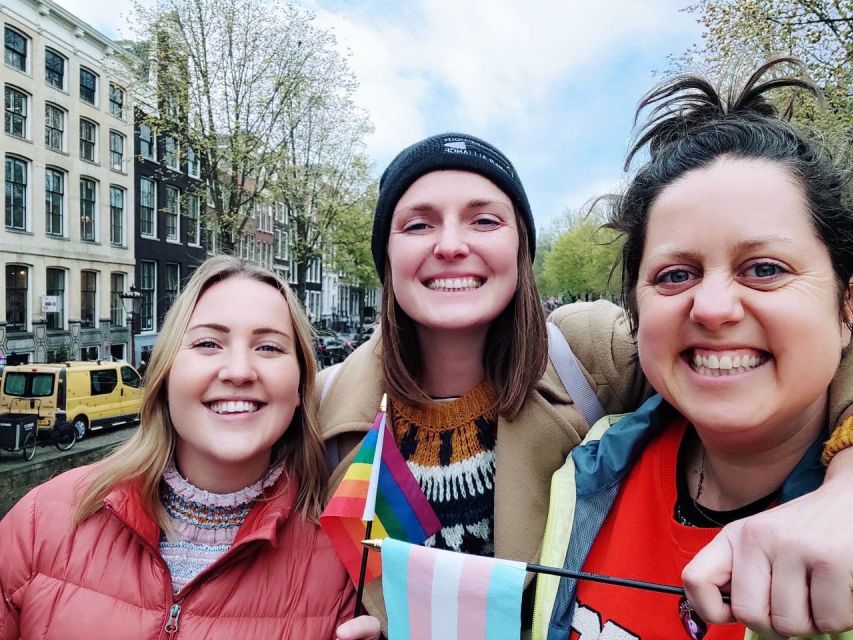
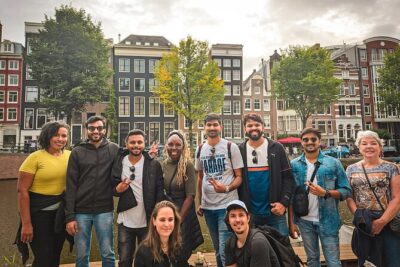
And it is not only for queer visitors. The tour explicitly welcomes allies too. The premise is simple, the rainbow is for everyone, and the group includes people who come to listen and people who come to share.
More Walking Tours in Amsterdam
- Amsterdam Anne Frank: Small-Group Walking Tour & Local Guide
★ 4.8 · 12,789 reviews - Anne Frank’s Story – Guided Walking Tour through Amsterdam
★ 5.0 · 11,619 reviews - Absolutely Amsterdam – the Essential Introductory Walking Tour
★ 5.0 · 3,629 reviews
Price and Value: Is $59 for Two Hours Worth It?
At $59 per person for a 2-hour walk, you are paying for three things: a live guide, storytelling that stays personal, and access to stops with guided context. This is not a self-guided loop where you read plaques on your own time.
You are also paying for the way Sanne turns key locations into a coherent theme: how Amsterdam’s queer life is connected in ways you might not expect. That narrative thread is hard to replicate on your own without spending time assembling your own route and research.
If you enjoy meeting locals and having a guided conversation, it is good value. If you are looking for a purely architectural tour with minimal emotion, you may feel the price is higher than the payoff.
Where You Begin at Dam Square, and What You Should Expect Right Away
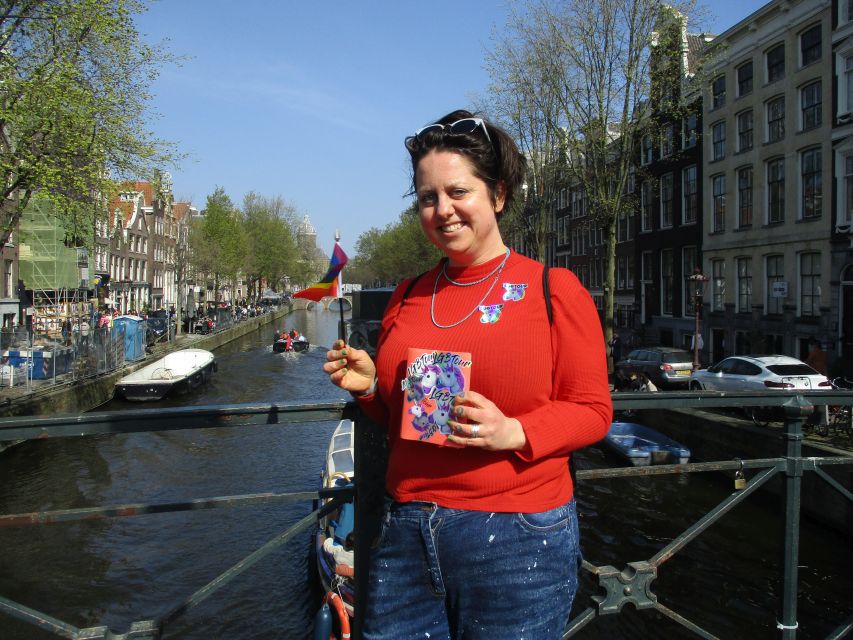
You meet at the National Monument at Dam Square. Sanne is easy to spot by her tiny rainbow flag. The first minutes matter here because the tour sets expectations quickly: this is about LGBTQI+ stories, pride and protests, and the links between places that look unrelated.
The walk stays in the older part of Amsterdam, and the route is designed to move you between major queer landmarks and street-level locations. It is a straightforward walking format, but the goal is not to sprint through. It is to pause long enough that you can absorb why each spot matters.
Also, plan for the weather. The tour runs rain or shine, so you will be glad you packed the basics like a cap, sunscreen, and rain gear.
Nationaal Monument: Controversial Origins and Public Memory
You start at Nationaal Monument, where you hear controversial stories about how it came to be. This is a smart opener because it reminds you that public monuments are not neutral. They reflect power, disagreement, and how societies choose to remember.
Why this matters for you: once you accept that monuments can be political, the rest of the tour becomes easier to follow. The guide keeps showing how queer life in Amsterdam is shaped by visibility, resistance, and the public stories people decide to tell.
If you prefer monuments to be treated as purely historical objects, you might find this part more intense than expected. But if you like context, it gives you a strong foundation.
Not the right fit? Amsterdam also runs these:
- Amsterdam: Van Gogh Museum Ticket
★ 4.7 · 52,054 reviews - Amsterdam: Heineken Experience Ticket including 2 Drinks
★ 4.6 · 36,014 reviews - Amsterdam Classic Saloon Boat Cruise with Drinks and Cheese
★ 5.0 · 31,825 reviews - Amsterdam Luxury Canal Cruise + Unlimited Drinks & Bites option
★ 5.0 · 30,518 reviews
Homomonument: The 20-Minute Stop That Gives the Walk Its Gravity
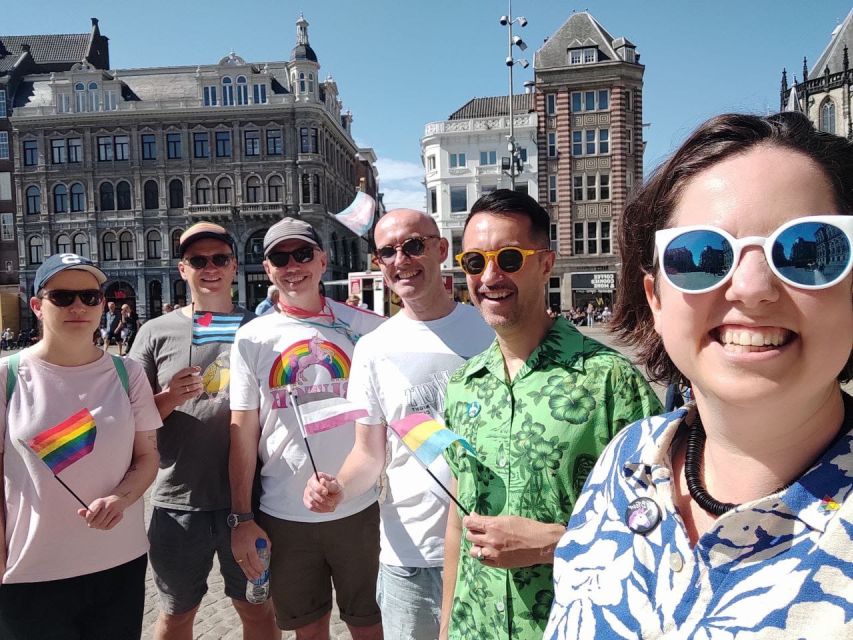
Next is the Homomonument, with a guided tour lasting about 20 minutes. This is one of those stops where the guide has time to connect meaning, protest, and memory. You get a longer pause rather than a quick photo.
This is also where I think the tour does its best work for most people. It gives you a chance to slow down and reflect before moving into more everyday streets and smaller landmarks. You leave feeling oriented, like you understand why the route is built the way it is.
Belle: A Short Guided Moment With Big Symbolic Fun
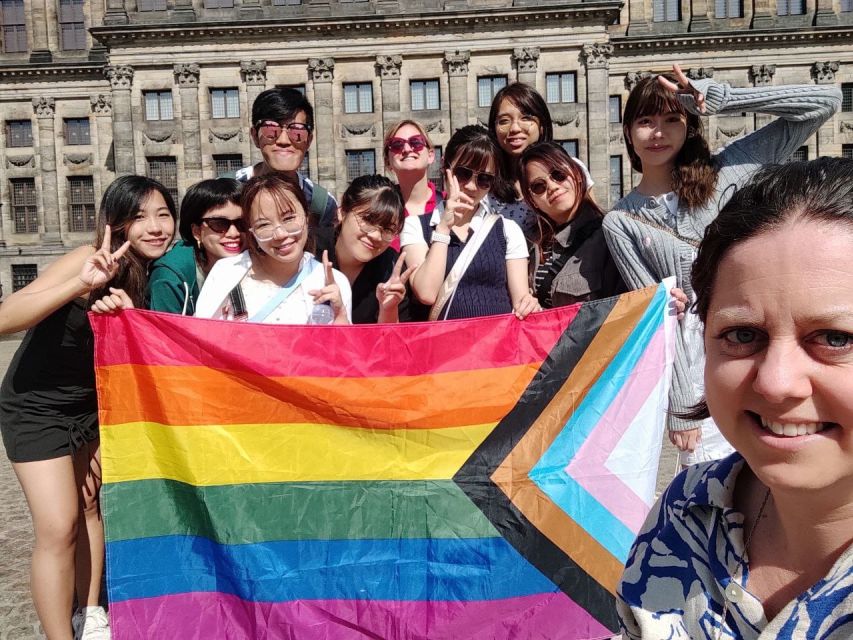
Then you have a 10-minute guided tour at Belle. The stops are paced so you are not stuck in one place too long, but you still get an explanation.
One of the included highlights is the playful theme of unicorns connected to a royal-looking building. That kind of detail is exactly why this tour can be more memorable than a traditional walking route. You notice something you might otherwise skip, and the guide gives it meaning.
For some people, these short stops are the sweet spot. If you hate quick transitions, you may feel the pace is brisk. Still, 2 hours is long enough to cover a lot without exhausting you completely.
Condomerie: The First Condom Shop Story, Tied to the AIDS Crisis
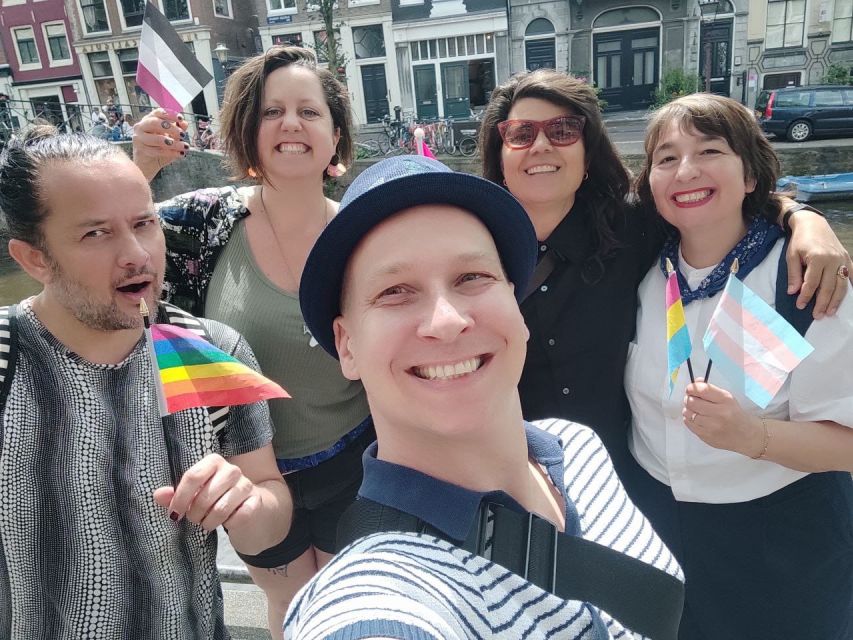
At Condomerie, you get another 10-minute guided tour. This stop is one of the most practical and moving parts of the whole walk because it is about necessity during the AIDS crisis and the idea of queer community creating solutions.
Why you will care: public queer history is often framed as marches and laws, but Condomerie brings in the real-life side of survival and prevention. It helps you understand that queer history includes health, innovation, and community action, not only protest signs.
If you are sensitive about health-era history, expect this to be direct but also grounded. It is not graphic, it is about the context behind a place.
Red Light District: Seeing Amsterdam’s Oldest Area Through a Queer Lens
Then comes the Amsterdam Red Light District visit for about 15 minutes. The tour frames this as the historic heart of the city from a queer perspective, and it stays within that lens.
What I like about this approach is that it challenges the typical way people think about the area. Instead of treating it as purely entertainment district, you are encouraged to connect it to queer life and the community that has existed there.
Potential drawback: if you hoped for a strictly historical lecture in quiet spaces, this is the moment when the streets and atmosphere can feel more touristy and public. Still, the guided context helps keep it meaningful.
Eagle Amsterdam and Zeedijk Street: Longer Street Walking With Meaningful Pass-By Stops
After the district, you pass Eagle Amsterdam for about 5 minutes. Then you walk along Zeedijk Street for roughly 15 minutes. You also pass by Pride Clothing along the way.
These pass-by stops are not just filler. They are there to show you how queer identity shows up in day-to-day places, storefronts, and neighborhood signals. If you pay attention, you start noticing the city’s queer presence outside the headline landmarks.
The Zeedijk Street segment is a good time to let the tour connect dots in your head. You have heard enough stories by then that the streets start feeling like part of the narrative, not just routes between stops.
If you prefer sitting and listening more, this part might feel like a change in rhythm. But it is also where the walk starts to feel more like being with a local friend who knows where to point.
Kokopelli: A Queer Identity Story With Real Consequences
Next is Kokopelli, with a guided stop of around 10 minutes. This is where an included highlight comes in: the story of a woman who was the first to change her gender on her passport.
That matters because passports are not a metaphor. They are the paperwork of everyday life, the document that affects how people move through the world. Hearing this inside a walking tour is powerful because it ties personal identity to public systems.
It is also a reminder that progress comes with both personal courage and institutional friction. You are not just learning about someone’s life, you are learning about the systems around identity.
Dancing Houses: The Photo Stop That Helps You See the City Differently
You then reach Dancing Houses, Amsterdam, with a 10-minute photo stop. This is your chance to switch gears from stories to visuals.
I like photo stops like this because they give your brain a break. You can frame the buildings, take a few photos, and then mentally reattach what you learned to what you see. The point is not the picture itself, it is the reset that helps the tour stick.
If you are traveling with a phone camera that needs time to adjust, this part helps because it is planned time. Just be ready for the fact that it is a photo stop, not a long explanation.
Café ’t Mandje Finish: Where the Walk Lets You Continue the Night
The tour ends at Café ’t Mandje. The included details describe it as an older queer bar, and finishing there makes sense. You get a transition from guided history to social atmosphere.
Why I think this matters: after a story-heavy walk, many people want a place to decompress and talk. Ending at a queer-friendly venue gives you options, grab a drink, reflect on what you heard, or keep chatting with the group.
If bars are not your thing, you can still use the finish as a landmark for getting your bearings and planning your next move.
Who This Tour Is Best For
This is a great fit if you:
- Want queer perspective on Amsterdam’s landmarks and streets
- Enjoy stories that connect history to real life, including love, single life, pride, and protest
- Like small group tours where you can connect with people from different places and share your own story
It is also a good option for allies who want more than generic statements. Sanne’s guiding approach is built around welcome.
If you are only interested in sightseeing and prefer zero emotion or controversy, you might find it heavy. This tour includes controversial story angles and protest context, and that is intentional.
Practical Tips So You Get the Most Out of the Walk
- Wear comfortable shoes. The tour is only 2 hours, but you are walking in a city built for strolling.
- Bring a sun hat and sunscreen. Amsterdam weather can surprise you, even on calm days.
- Pack rain gear. The tour runs in all weather.
- Keep your expectations flexible. Some stops are brief, some are longer, and the guide uses that pacing for story rhythm.
Should You Book This Queer City Walking Tour?
I would book it if you want a focused 2-hour experience that turns Amsterdam into a story you can feel. You get personal queer life experiences from Sanne, plus structured stops at major sites like Homomonument, Condomerie, and the Red Light District, with pride and protest framing throughout.
I would skip it if you are after a neutral, purely scenic walk with minimal discussion of identity and controversy. This tour is not trying to be neutral. It is trying to be honest, human, and connected.
If you are open to listening, and you want to walk away with a new way to read the city, it is a strong choice at $59 for the mix of guided stops, personal storytelling, and the chance to connect with other people along the route.
FAQ
How long is the Amsterdam Queer City Walking Tour?
The tour lasts 2 hours.
How much does it cost?
It costs $59 per person.
Where do I meet the guide?
You meet at the National Monument at Dam Square.
What languages is the tour guide speaking?
The live tour guide speaks English and Dutch.
Is the tour wheelchair accessible?
Yes, the tour is listed as wheelchair accessible.
What should I bring for the tour?
Bring comfortable shoes, a sun hat, sunscreen, and rain gear, plus comfortable clothes.
Does it run rain or shine, and is there free cancellation?
It runs rain or shine. Cancellation is free up to 24 hours in advance for a full refund.
Latest Amsterdam reviews
- Small Group Tulip and Spring Flower Fields Bike Tour★ 4.5 · 14 reviews
- Zaanse Schans Windmills Private Tour from Amsterdam Airport★ 5.0 · 14 reviews
- Amsterdam Van Gogh Museum Private Tour for Kids & Families★ 4.0 · 14 reviews
- Bruges Day Trip from Amsterdam★ 4.5 · 14 reviews
- Volendam: Volendams Museum Entry Ticket★ 4.4 · 14 reviews
- Zaanse Schans Windmills, cheese and clogs and Volendam tour from Amsterdam★ 5.0 · 14 reviews
- Departure from Amsterdam City to Amsterdam Airport AMS by Minivan★ 5.0 · 14 reviews
- Walking Tour about Golden Age Architecture, private local guide★ 5.0 · 15 reviews
Walking Tours, compared.
Absolutely Amsterdam – the Essential Introductory Walking Tour
Read our review →
Amsterdam Highlights Walking Tour: Small Group Experience
Read our review →

Browse the lists this tour appears in