
Reviewed · MUSEUMS
Amsterdam: Our Lord in the Attic Museum Entry Ticket
Ons’ Lieve Heer op Solder is interesting because Amsterdam has a full church tucked above normal rooms, inside a 17th-century canal house. I love the well-preserved canal-house setting and the way the museum shows a house church hiding in the attic, not some grand building on a main square. One consideration: the experience is physically tight, with narrow corridors and stairs, so it may not be the easiest stop if you hate cramped spaces.
You’ll walk through decorated living quarters, kitchens, and even period bedstead details, then climb to the attic where the “wow” moment is a complete church. Expect it to feel intimate and a little surprising, especially once you understand the rules that forced Catholics to worship discreetly in private spaces in the 1600s.
Key Things to Know Before You Go
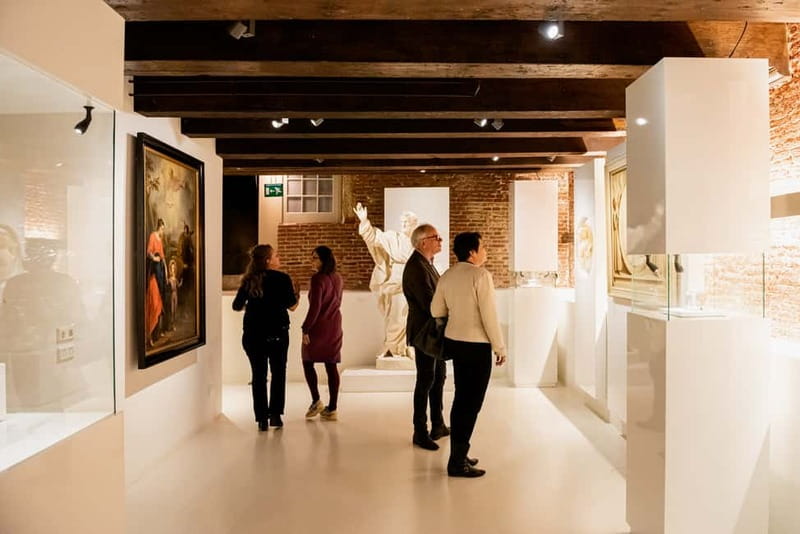
- A full church inside an attic: the main worship space is literally up top.
- 1663 canal-house architecture: you’re touring a space that was built when public mass was forbidden.
- Catholic worship in secret: the museum explains how clandestine churches worked in the city centre.
- Dutch tolerance policy context: you get the broader social backdrop, not just the building.
- Included audio guide: multiple languages, plus interactive options.
- Tight interior layout: narrow corridors and stairs are part of the authenticity.
Why a Canal House Church in the Attic Feels Different Than a Normal Museum
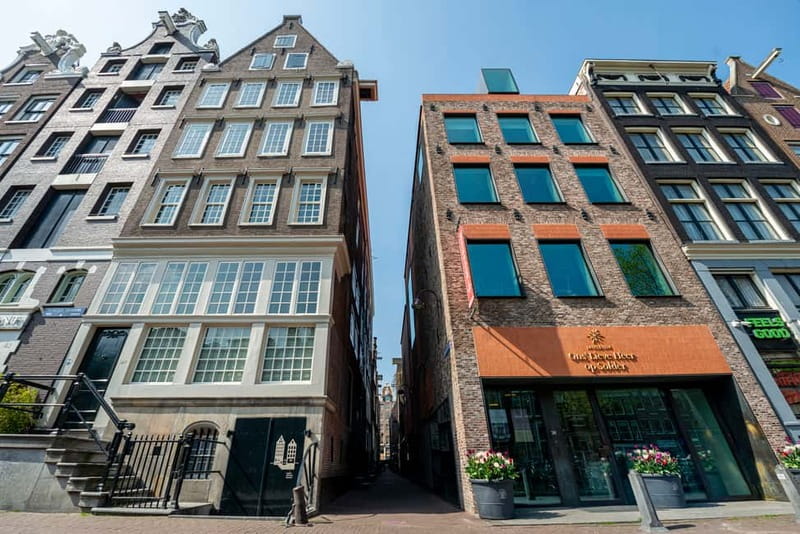
This is not a museum you zip through for quick photos. The whole point is that the building itself does the storytelling. You start with a façade that looks like a typical Amsterdam canal house, then you move through the floors and discover that the space above regular life was set up for worship.
What makes it special is the contrast. On the street, the building reads like everyday architecture. Inside, the layout forces you to slow down and pay attention, because moving upward is part of the narrative. The stairs are narrow, the corridors feel close, and the rooms give you that lived-in sense you rarely get from bigger, more polished attractions.
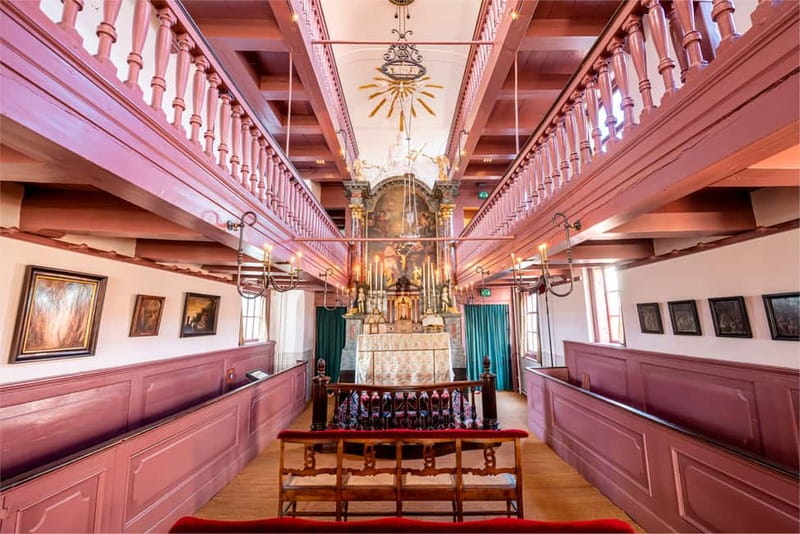
And then the attic church lands like a plot twist. It’s not a theatrical recreation in a modern hall. It’s presented as an actual church space inside the original structure, which is exactly why people talk about this stop with such energy.
More Museums in Amsterdam
- Amsterdam: Van Gogh Museum Ticket
★ 4.7 · 52,054 reviews - Moco Museum Amsterdam Entrance Tickets with Banksy & More
★ 4.4 · 10,088 reviews - Amsterdam: Red Light Secrets Museum Entry Ticket
★ 4.2 · 5,722 reviews
From Oudezijds Voorburgwal to a 1663 Home With Forbidden Mass in the Public Eye
Your visit starts at Oudezijds Voorburgwal 38, right in the heart of Amsterdam. The museum sits behind the characteristic canal-house frontage, and the building is largely original from the 17th century. The house itself dates to 1663, when Catholics faced restrictions on public worship.
That background matters, because it explains why nothing “church-like” could show from the outside. The museum frames the building as a place designed to be plausible as a home. The religious function was hidden in the upper levels, so the house could operate without advertising what was going on behind ordinary doors.
You also learn how the story changed over time. The attic church and the house function eventually fell out of use when the Church of St Nicholas opened on Prins Hendrikkade. After that shift, private collectors stepped in and bought the building to preserve its Catholic heritage. That detail is one of the reasons the museum feels grounded rather than generic, because it’s about preservation, not just display.
If you like museum visits where the building is the main character, this is for you. If you prefer wide open spaces and effortless movement, you might find the layout a bit intense.
Climbing Floors: Living Quarters, Kitchens, and the Intimate Scale of Day-to-Day Life
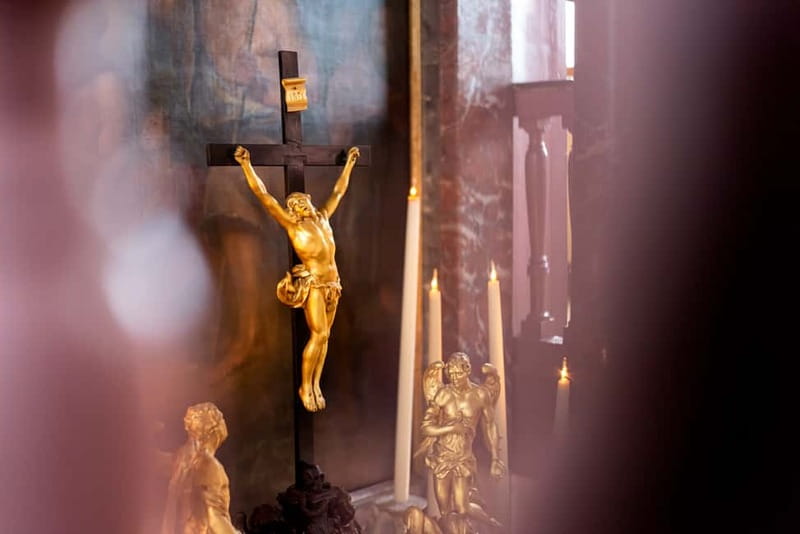
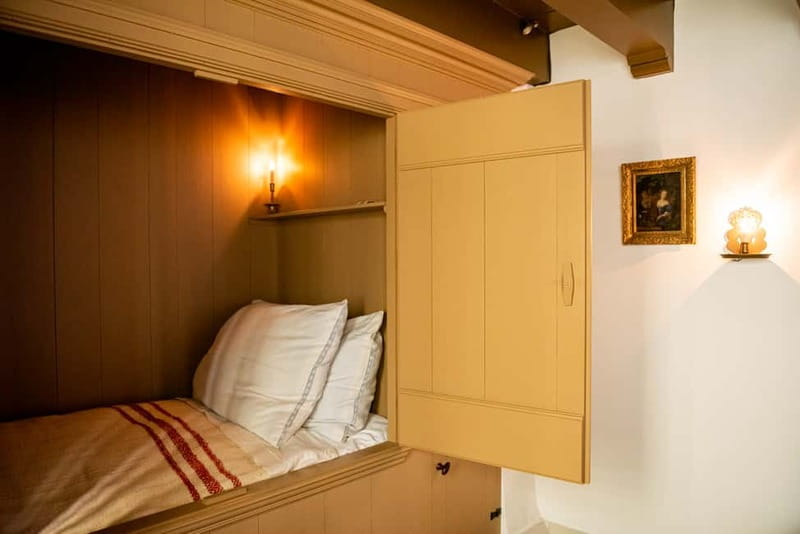
The museum is designed as a journey through the canal house, not a single-room exhibit. As you move floor by floor, you’ll pass through areas that represent everyday domestic life: decorated living quarters, kitchen spaces, and period-like furnishings such as a bedstead. The experience is staged in the way older homes actually work, where private life and functional rooms are stacked, connected by stairs, and squeezed into narrow proportions.
This is also where you start to feel why the attic church works so well in this building. The upper level isn’t disconnected from the lower ones. Instead, it’s part of the same vertical home system: narrow passageways lead you upward, and the house’s constraints become a clue to how clandestine worship fit into ordinary life.
I like that the museum doesn’t just point at “the secret church.” It shows the whole house context first. It’s a reminder that worship happened alongside normal routines. The museum’s narrow stairs and corridors aren’t only architecture, they’re part of the explanation for how people adapted when rules tightened.
The Highlight: A Complete House Church Hidden in the Attic
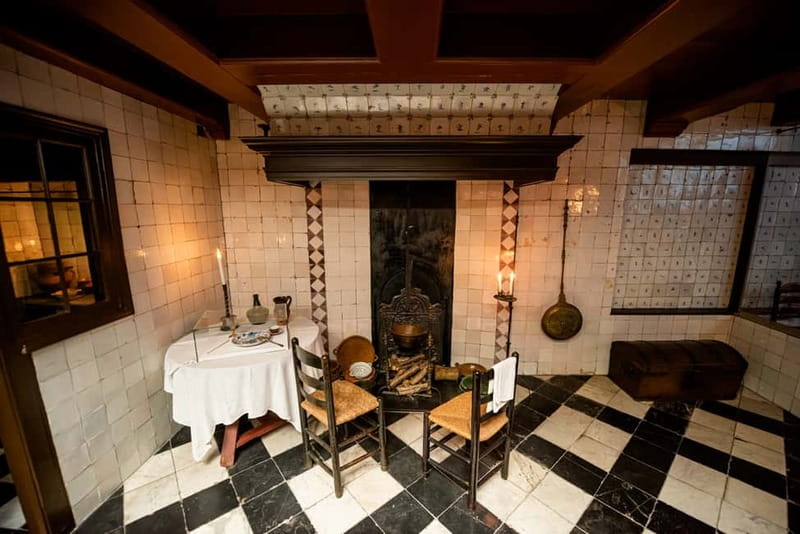
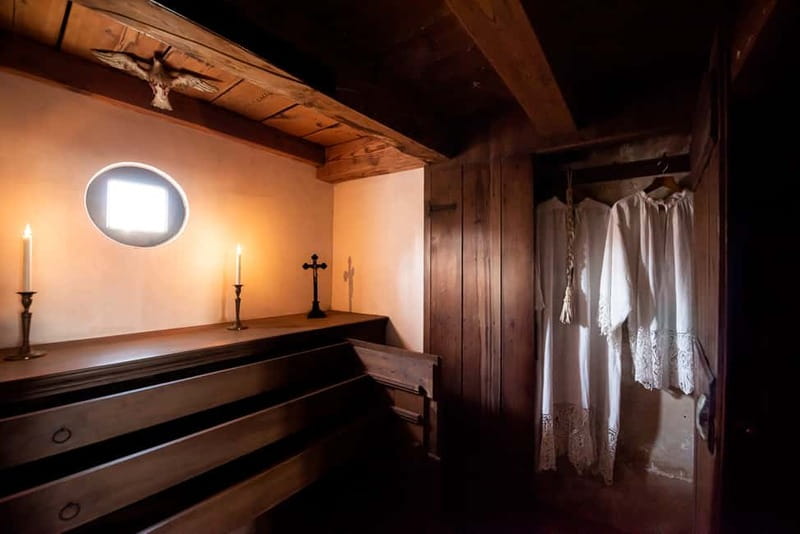
The attic church is the reason many people make a special trip here. It’s literally described as a complete church in the attic, and once you’re there, the whole concept clicks.
The museum’s big idea is simple but powerful. In a time when it was forbidden to celebrate mass in public, a Catholic community needed a place to gather that didn’t announce itself as a church. By building the religious space inside an existing canal-house structure, the worship space could exist without a dramatic exterior.
That’s where the museum’s messaging about Dutch tolerance becomes useful. You’re seeing tolerance not as an abstract concept, but as a shift that allowed real life to continue while worshipers navigated restrictions. The attic church is the visible result of all those social pressures, translated into architecture.
Also, the church space itself is presented as beautifully made and historically specific. The reviews back this up with comments that the attic church is stunning and that you can truly see the effort that went into shaping it within an awkward, confined upper space. One of the most repeated compliments is that it’s impossible to believe until you see it.
Not the right fit? Amsterdam also runs these:
- Amsterdam: Heineken Experience Ticket including 2 Drinks
★ 4.6 · 36,014 reviews - Amsterdam Classic Saloon Boat Cruise with Drinks and Cheese
★ 5.0 · 31,825 reviews - Amsterdam Luxury Canal Cruise + Unlimited Drinks & Bites option
★ 5.0 · 30,518 reviews - Amsterdam: Rijksmuseum Entry Ticket
★ 4.7 · 29,512 reviews
Make the Most of the Included Audio Guide (Languages and the A/B Tip)
The ticket includes an audio guide, and it’s not just one generic track. The museum offers languages including Dutch, English, French, German, Italian, Russian, Spanish, Chinese, and Portuguese. If you’re traveling with someone who wants a different language, the options make it easier to keep things together.
I also like the practical way the audio guide supports attention. In one tip from a review, there’s mention of using keyboard prompts like pressing A or B to get extra information. That kind of interactive option matters because it lets you choose your pace. If you’re the type who wants deeper context, you can pull it in. If you want to keep moving, you can stick to the basic narration.
Even if you understand the broad story already, the audio guide helps you connect what you’re seeing to why it exists. It turns the rooms from “interesting old stuff” into a coherent explanation of how clandestine churches worked in the city centre.
Timing Your Visit: Hours, Closing Times, and Avoiding a Rushed Tour
This museum runs a schedule that changes by day, so timing is real. It’s open 10:00 to 17:00 Monday to Friday, 10:00 to 18:00 on Saturdays, and 13:00 to 17:00 on Sundays. It also closes on some public holidays, including Koningsdag (Kings Day).
Why should you care? Because the experience is short on paper (about 1 day, and most people spend closer to a couple of hours), but long in how much you notice. If you arrive late or feel pushed toward the end of the operating window, the attic church can become a quick stop instead of your main moment.
One review example mentioned arriving just before a late time worked out, while another person arriving after was not allowed in. I can’t predict how a given day will be handled, but the lesson is clear: show up early enough that you’re not sprinting up the stairs when you reach the best part.
Price and Value: Is About $21 Worth It?

At around $21 per person, this museum is priced like a focused, ticketed attraction. You’re not paying for a long guided bus trip. You’re paying for access to a very specific structure and a self-paced journey through it, with an audio guide included.
So the value depends on what you want from Amsterdam. If you like museums that feel like a story told through architecture, this is strong value. You’re getting the canal house, the living-room details, and the attic church, all tied to one clear theme: faith practiced under constraint.
If you only want broad highlights, and you’re trying to see 20 things in one day, you might find it hard to justify the time you’ll spend reading and climbing. But for the people who like places you can actually stand inside and understand, the price feels fair for what you gain.
Who Should Go to Ons’ Lieve Heer op Solder, and Who Might Not Love It
This museum is a great fit if you:
- like small, unusual museums that rely on a specific building
- enjoy history that shows up in everyday spaces, not just big landmarks
- want a quieter, more thoughtful Amsterdam stop in the middle of the city centre
It may be less ideal if you:
- struggle with stairs and narrow corridors
- want a very spacious, easy-walk experience
- hate feeling time-limited by closing hours
For families, it can work if everyone tolerates the tight layout. For couples and solo travelers, it’s especially satisfying because you can take your time with the rooms and then focus on the attic church.
Should You Book It or Skip It?
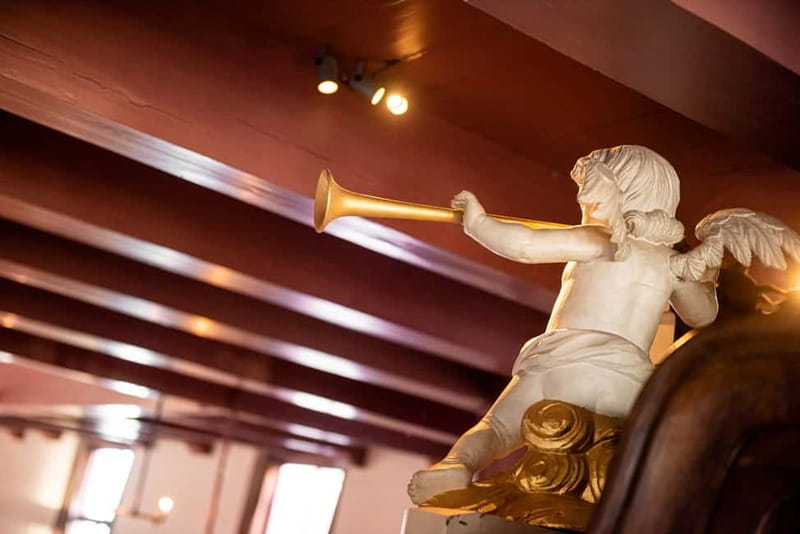
If you’re in Amsterdam and you enjoy unusual places tied to how people actually lived, I think you should book. The museum’s core promise is rare: a church hidden in a canal-house attic, presented in a preserved setting built in 1663 and opened as a museum in 1888. You’re not just learning about a secret; you’re walking through the rooms that made secrecy possible.
Skip it only if you’re mainly chasing big, famous sights and you don’t want to navigate a tight interior. Otherwise, plan for enough time to reach the attic calmly, use the audio guide, and let the story make sense as you climb.
FAQ
What is the Our Lord in the Attic Museum, and where is it?
Our Lord in the Attic Museum (Ons’ Lieve Heer op Solder) is a museum in Amsterdam focused on a preserved 17th-century canal house with a church hidden in the attic. The meeting point is Oudezijds Voorburgwal 38, Amsterdam.
How long should I plan for this experience?
The experience is listed as 1 day. The museum visit is self-paced, so how long you spend can vary.
What is included with the ticket?
Your ticket includes entrance to the Our Lord in the Attic Museum and an audio guide.
What languages are available for the audio guide?
The audio guide is available in Dutch, English, French, German, Italian, Russian, Spanish, Chinese, and Portuguese.
What are the museum opening hours?
The museum hours are 10:00-17:00 Monday to Friday, 10:00-18:00 on Saturday, and 13:00-17:00 on Sunday.
Is there anything I cannot bring?
The museum notes that oversize luggage is not allowed.
When can I cancel for a refund, and do I need to pay immediately?
The experience offers free cancellation up to 24 hours in advance for a full refund and includes a reserve now and pay later option.
Latest Amsterdam reviews
- Small Group Tulip and Spring Flower Fields Bike Tour★ 4.5 · 14 reviews
- Amsterdam Van Gogh Museum Private Tour for Kids & Families★ 4.0 · 14 reviews
- Zaanse Schans Windmills Private Tour from Amsterdam Airport★ 5.0 · 14 reviews
- Bruges Day Trip from Amsterdam★ 4.5 · 14 reviews
- Volendam: Volendams Museum Entry Ticket★ 4.4 · 14 reviews
- Zaanse Schans Windmills, cheese and clogs and Volendam tour from Amsterdam★ 5.0 · 14 reviews
- Departure from Amsterdam City to Amsterdam Airport AMS by Minivan★ 5.0 · 14 reviews
- Walking Tour about Golden Age Architecture, private local guide★ 5.0 · 15 reviews
Museums, compared.

Moco Museum Amsterdam Entrance Tickets with Banksy & More
Read our review →

Amsterdam’s Weirdest Museum: Ripley’s Believe It or Not!
Read our review →



Browse the lists this tour appears in