
Reviewed · WALKING TOURS
Amsterdam: History, Culture & Hidden Gems Walking Tour
This is the kind of Amsterdam walk that makes the city feel like one continuous story, not a list of photo stops. I especially like how it starts at Beursplein, where Amsterdam’s trading power gets explained in plain language, and then moves into real neighborhoods like the Red Light District and Nieuwmarkt with context. One possible drawback to plan for: it’s a 3 hour on-your-feet tour, so it may not work if your fitness level is low.
The guide angle is a big part of the value. You’re with a live English speaker, and the tone tends to be practical, respectful, and human, like you’re getting a friend’s explanation of how the city turned out the way it did. I’d wear comfortable shoes and expect lots of street-level stories, not museum time.
Key Things I Think You’ll Notice on This Tour
- Beursplein sets the theme fast: from the world’s early stock exchange to Amsterdam’s merchant mindset
- Less cliché, more context: the Red Light District gets history and nuance, not just shock value
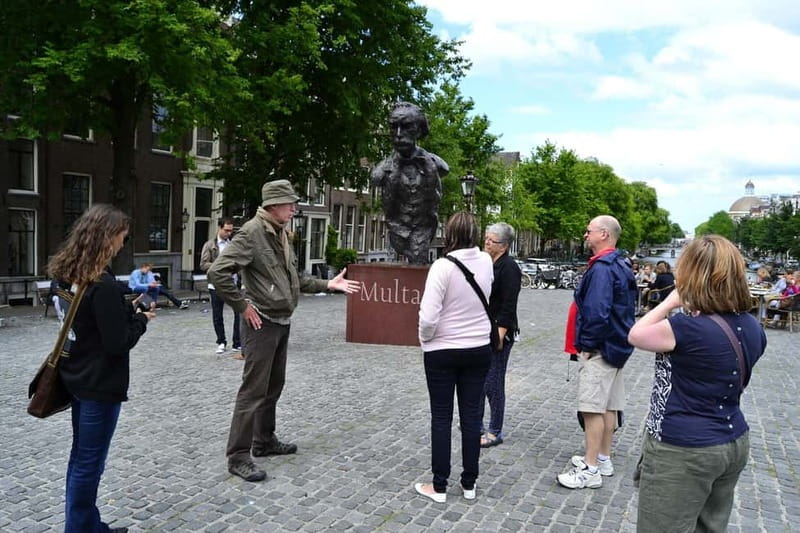
- Nieuwmarkt and Chinatown connect to trade and migration through walls, landmarks, and craft stories
- Rembrandt’s guild link: you learn why art organizations formed right where commerce happened
- Jewish Quarter stops feel carefully framed around refuge, resilience, and community influence
- Dutch East India Company fortunes still show up in canal-area grand houses you can read like clues
Why This Amsterdam Walk Feels Like a Real City, Not a Checklist
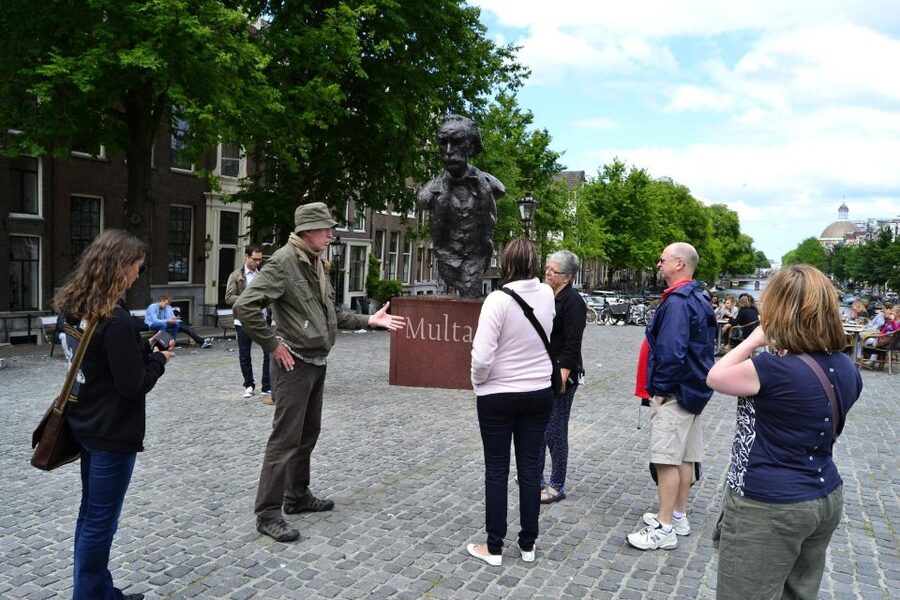
Amsterdam can be chaotic. One minute you’re in a postcard canal scene, the next you’re near a busy square with ceremonies you did not know were ever there. This tour helps you make sense of that mix by walking through several districts and tying them to one long timeline.
You’ll start with trade and finance, then move through religion, tolerance, immigration, and colonial-era ambition. That structure matters because it turns scattered sights into one cause-and-effect story, like why certain streets, buildings, and communities ended up where they did.
The tour is also refreshingly direct about what it is and what it isn’t. You are not paying for museum entry. You are paying for perspective, street-level context, and a guide who can connect centuries without turning it into a lecture.
More Historical Tours in Amsterdam
- Amsterdam Food and Cultural Tour with Tastings
★ 5.0 · 4,315 reviews - Amsterdam: Historic City Centre Canal Cruise
★ 4.3 · 659 reviews - Amsterdam: Haunted History and Ghost Walking Tour
★ 4.5 · 488 reviews
Beursplein, the Trading Heart That Shaped Amsterdam’s Attitude
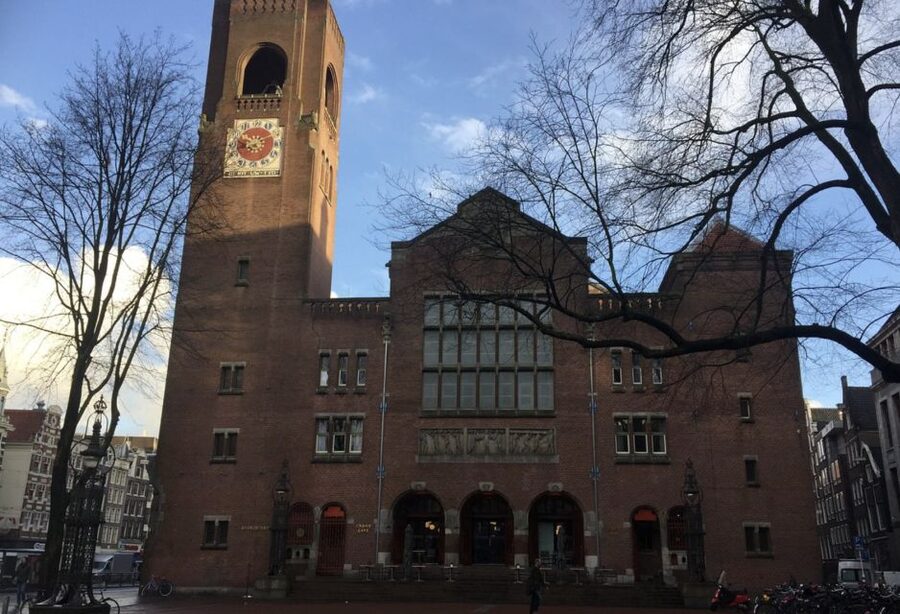
Your tour begins at Beursplein, a small square with a big clock tower and a stock-exchange presence. It’s a great first stop because it forces you to see Amsterdam differently right away. This wasn’t just canals and culture. It was commerce, risk, and money moving at speed.
You’ll hear how Beursplein grew from Amsterdam’s merchant life into the home of the world’s first stock exchange, which is an eye-opener if you usually associate the city only with art and bicycles. Even if you’re not into finance, the key idea is easy: when a city builds systems for trade, it also builds systems for who gets power, who gets protected, and what kinds of ideas spread.
Beursplein is also practical for you as a starting point. It’s located between Dam and Central Station, so you’re not stuck hunting a far-out meeting area after a long train ride. If you use landmarks, Body Worlds and Primark are directly across from the meeting point, which makes it easier to arrive without stress.
From the Red Light District to Dam Square, History With a Steady Hand

Next comes one of Amsterdam’s most talked-about areas, the Red Light District. Here’s what I like about this tour’s approach: you don’t get a tour of clichés. You get a layered look at how medieval and modern life sit side by side, including the way churches and history share space with contemporary street scenes.
That matters because the Red Light District can be reduced to stereotypes if you only read headlines. With the right guide, it becomes a window into Amsterdam’s social change and its long-running debate around tolerance and moral rules. You also pick up the idea that tolerance in Amsterdam isn’t just a slogan. It evolved through conflict, negotiation, and shifting laws.
After that, you continue toward Dam Square, the symbolic center of the city. When you stand there by the Royal Palace, you get a stronger sense of why this square feels like the stage for national life. The palace area connects to the former city hall role of the square, and you’ll hear it has witnessed everything from royal ceremonies to political protests and even public executions.
If you’ve ever felt overwhelmed in big squares, this timing helps. By the time you reach Dam Square, you’re primed to see it as more than a crowd magnet.
Chinatown and Nieuwmarkt: Where Trade, Walls, and Art Collide
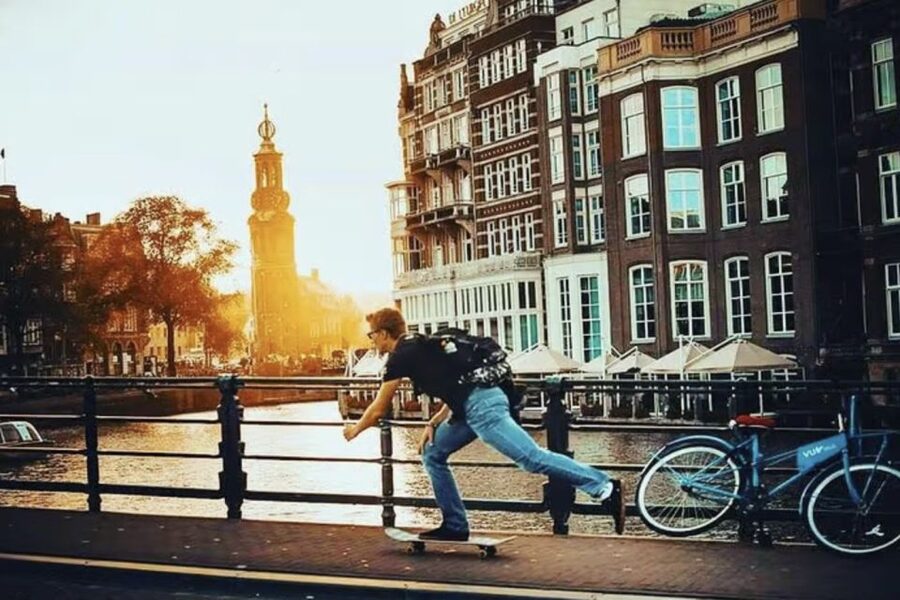
Chinatown is a pocket with its own energy, and the tour uses it as a bridge rather than a standalone attraction. You don’t just walk through to tick a box. You connect it to Amsterdam’s broader pattern of bringing in people through trade routes and jobs, then letting communities shape local culture.
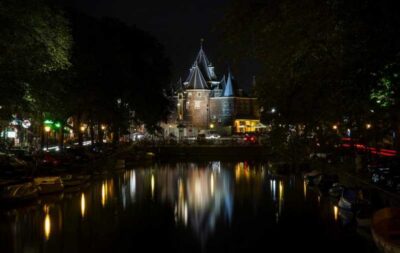
Then you hit Nieuwmarkt, which is where the story gets extra visual. You’ll see remains of Amsterdam’s medieval walls and the iconic Waag building, and you’ll understand why this area mattered when the city was still building itself around markets and gateways.
Nieuwmarkt also ties directly to migration and diversity. The tour explains how immigration and cultural change turned a former trade center into a crossroads where different influences show up in daily life and in the arts. That connection is more satisfying than just naming buildings, because it gives you a reason to look up and notice details.
One standout moment here is the Rembrandt connection. You’ll learn about the painter’s guild gathering spot linked to the area. It’s a reminder that art wasn’t isolated from economics. Artists organized, negotiated reputation, and relied on the same urban systems that merchants used.
More Walking Tours in Amsterdam
- Amsterdam Anne Frank: Small-Group Walking Tour & Local Guide
★ 4.8 · 12,789 reviews - Anne Frank’s Story – Guided Walking Tour through Amsterdam
★ 5.0 · 11,619 reviews - Absolutely Amsterdam – the Essential Introductory Walking Tour
★ 5.0 · 3,629 reviews - Amsterdam: Anne Frank Guided Walking Tour in DE/EN/IT/ES
★ 4.9 · 3,107 reviews
The Jewish Quarter: Portuguese Synagogue and a Chapter of Refuge
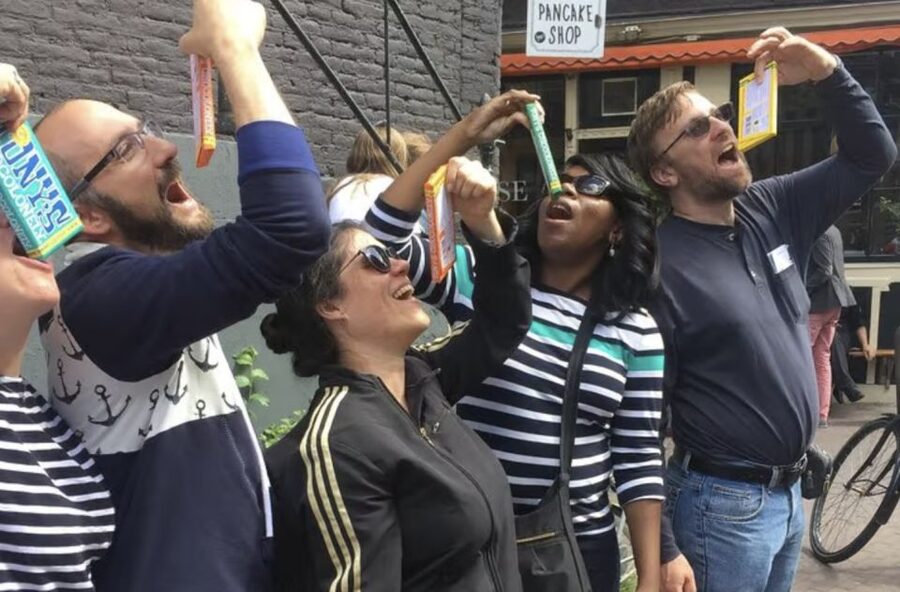
After Nieuwmarkt, you get near the Jewish Quarter, and the guide focuses on one of its best-known silhouettes, the Portuguese Synagogue. Even if you only see it from outside, it helps you understand the emotional weight of the area.
The story you hear is about refuge and resilience, not just architecture. Amsterdam’s Jewish community is framed as part of the city’s wider identity, shaped over centuries through cultural contribution and survival through change. That tone is important because it avoids turning the synagogue into a simple landmark.
As you stroll, you also move along canal-side areas where the city’s wealth and ambition show up in the grand homes tied to major trading power. Seeing that mix in walking order helps you process the city’s contradictions. Amsterdam can be tolerant, yes, but it’s also built by systems that benefited some families and eras more than others.
Dutch East India Company Homes Along the Canals
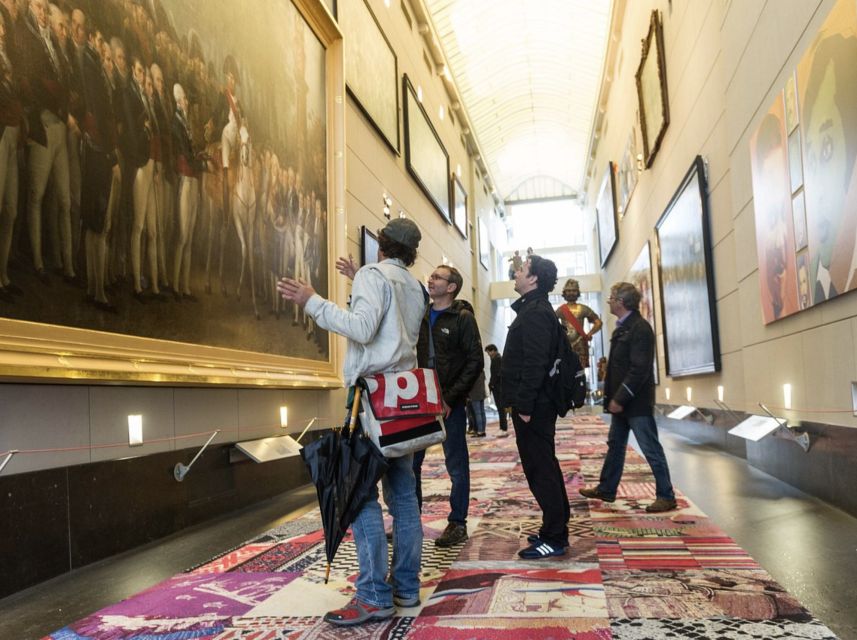
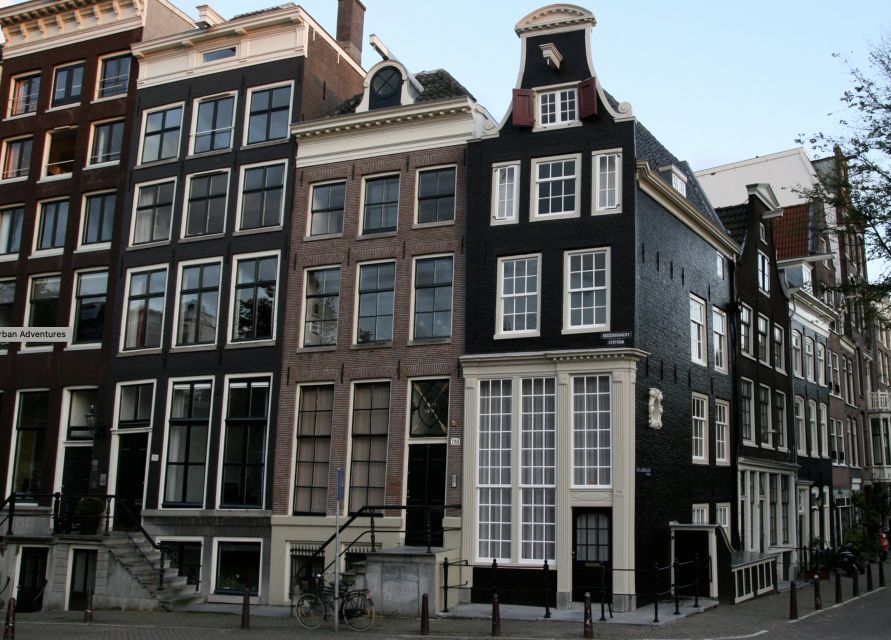
One of the most effective parts of this tour is how it uses the canal streets to tell a financial story. You’ll pass by grand homes once owned by families connected to the Dutch East India Company, and the façades act like visual evidence of the Golden Age.
This is not the kind of history that stays abstract. You’re taught to look at what wealth looked like in real buildings: ambition translated into stone and symmetry, power translated into addresses and influence. You’ll hear how colonial-era fortunes left long echoes in Amsterdam’s bricks and bridges.
Why this is valuable for you is simple. If you wander on your own, you might admire canal homes as pretty. With this tour, you learn to read them like documents. Even without entering anything, you come away understanding why certain neighborhoods and streets have that particular feel.
Pacing, Comfort, and Who Should Book
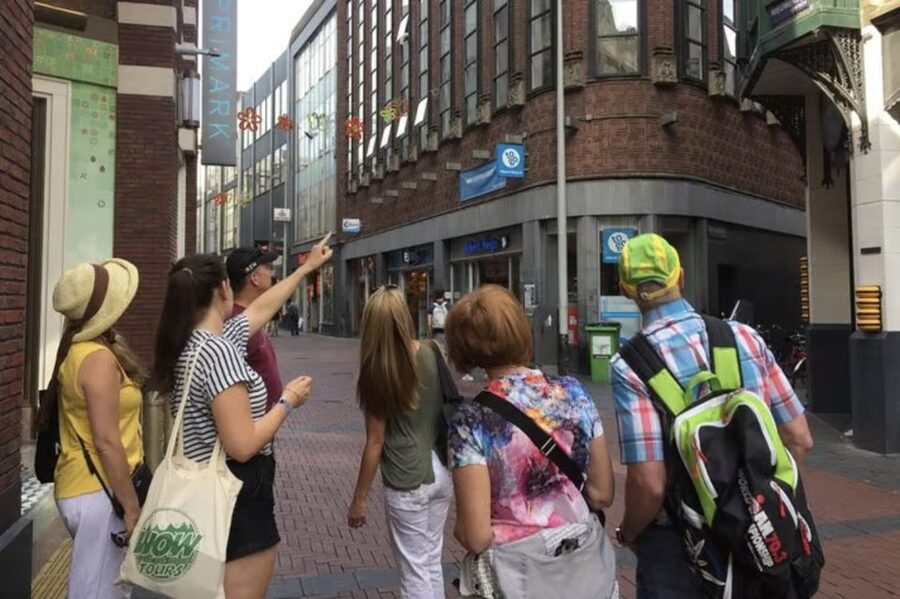
This tour is 3 hours of walking, and the info is clear that it is not suitable for people with low level fitness. That means you should plan for steady time on foot, plus the standing moments where the guide is pointing things out and explaining context.
You’ll also move through districts where crowds can happen, especially around central squares. The good news is that a walking format is ideal for Amsterdam. You see how neighborhoods connect rather than isolating each place like separate museum rooms.
If you’re traveling with kids or someone who needs frequent long breaks, this may be a stretch. If you’re a couple or solo traveler who likes history explanations while moving, this format is a strong match.
Weather matters too. In Amsterdam, a light rain can turn cobblestones into a slip risk. Bring shoes that you trust.
Price and Value: What $38 Really Buys You
The price is $38 per person for a 3 hour small-group walking tour. On paper, that can look like a lot if you’re comparing it to free street wandering. But you’re not just paying for steps and street views.
You’re paying for:
- a live English speaking guide
- a carefully structured route across multiple centuries
- no-entry time, which keeps you moving and spending more time learning outdoors
- context that helps you understand what you would otherwise miss
The included tourist city tax of 1.50 EUR per person is also part of the value math. And the tour notes that you may have a dog companion at certain times, which is a small, fun detail you might see without planning for it.
The biggest value driver for me is the guide’s ability to connect themes. Trade links to religion and tolerance. Neighborhoods link to migration and art. Colonial-era wealth links to the canal streets you can actually see. That connection is what makes the price feel reasonable.
Practical Details That Make the Walk Easier
If you hate being late, set up your meeting point plan the night before. The tour meets at Beursplein, a small square between Dam and Central Station, with a large clock tower. There’s also a small stock exchange presence there. If you’re orienting using common references, Body Worlds and Primark are directly across.
Plan for no attraction entry. That’s not a minus if you want flexibility and pace. But it does mean your experience is about street observation and explanations, not stepping into museums or paying for timed tickets.
Food and drinks are not included, unless the group makes a stop. If you arrive hungry, you’ll want a snack plan before the tour starts, especially if you’re trying to finish the afternoon with more exploring.
Should You Book This Amsterdam History and Culture Tour?
If you want an Amsterdam overview that feels grounded, this is a strong choice. You get a clear arc, from trade origins at Beursplein to neighborhood stories across Chinatown, Nieuwmarkt, and the Jewish Quarter, then ending at Dam Square with its heavyweight political and ceremonial meaning.
I’d book it if you like history that you can see on the street, and if you want a respectful, contextual take on sensitive places like the Red Light District. I’d skip it or think twice if your fitness level is limited, because 3 hours of walking is built into the format.
Also, if you’re arriving in Amsterdam and want to get your bearings fast, this kind of route can help you navigate the rest of your trip with more confidence. You won’t just know where things are. You’ll understand why Amsterdam looks the way it does.
FAQ
How long is the Amsterdam walking tour?
The tour lasts 3 hours.
Where is the meeting point?
The meeting point is Beursplein, a small square with a large clock tower. It is between Dam and Central Station, and Body Worlds and Primark are directly across from it.
Is the tour guided, and what language is it in?
Yes, it has a live English speaking guide.
What is the tour price?
The price is $38 per person.
Does the tour include entry into attractions or sites?
No. There is no entry into attractions or sites.
Are food and drinks included?
Food and drinks are not included, unless the group makes a stop.
Is a city tax included in the tour?
Yes. The tourist city tax of 1,50 EUR per person is included.
Is the tour suitable for people with low fitness?
No, it is not suitable for people with low level of fitness.
Can I cancel and get a full refund?
Yes. You can cancel up to 24 hours in advance for a full refund.
Latest Amsterdam reviews
- Small Group Tulip and Spring Flower Fields Bike Tour★ 4.5 · 14 reviews
- Amsterdam Van Gogh Museum Private Tour for Kids & Families★ 4.0 · 14 reviews
- Zaanse Schans Windmills Private Tour from Amsterdam Airport★ 5.0 · 14 reviews
- Bruges Day Trip from Amsterdam★ 4.5 · 14 reviews
- Volendam: Volendams Museum Entry Ticket★ 4.4 · 14 reviews
- Zaanse Schans Windmills, cheese and clogs and Volendam tour from Amsterdam★ 5.0 · 14 reviews
- Departure from Amsterdam City to Amsterdam Airport AMS by Minivan★ 5.0 · 14 reviews
- Walking Tour about Golden Age Architecture, private local guide★ 5.0 · 15 reviews
Walking Tours, compared.
Absolutely Amsterdam – the Essential Introductory Walking Tour
Read our review →
Amsterdam Highlights Walking Tour: Small Group Experience
Read our review →

Browse the lists this tour appears in