

Reviewed · MUSEUMS
Entry ticket to Museum of Illusions Amsterdam
Seeing is the fun part of this museum, and questioning is the real part. Museum of Illusions Amsterdam is in a historic church on Keizersgracht, and every room is built to mess with your sense of space, depth, and balance. It is playful, but it is also real psychology.
I love how hands-on the exhibits are, so you are not just watching illusions, you are making them happen. I also love the fact that you get explanations with the fun, so it feels like science you can test with your own eyes. One possible drawback: if you go at the wrong time or the venue has an issue, you might find it closed, so double-check same-day opening status.
Key highlights
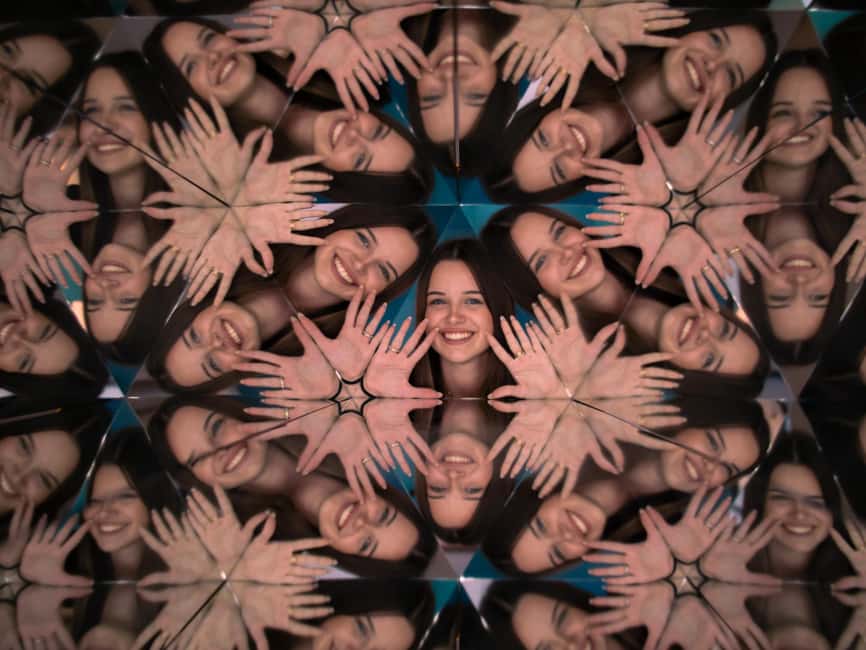
- Interactive illusion rooms that challenge space, depth, and balance fast
- Hands-on lessons on how your brain reads contrast, motion, and perspective
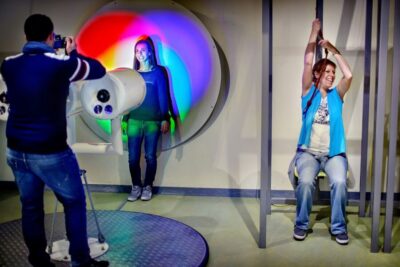
- Photo spots built for trick results, including forced-perspective style moments
- Small group size with staff on hand for guidance and help during the visit
- Education without the lecture vibe, explanations at each exhibit along the way
Museum of Illusions Amsterdam in one look: what makes it worth your time
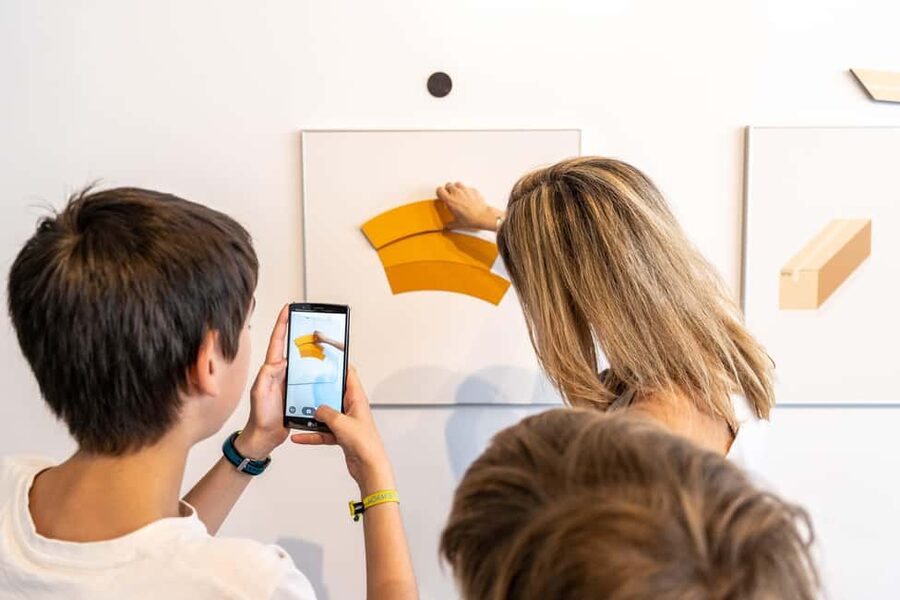
If you like travel stops where you do something instead of just looking, this is a strong pick. The Museum of Illusions Amsterdam is designed as an interactive walk through how perception works. You can still treat it like a photo mission, but the best part is noticing what your brain does automatically, without asking your permission.
The setting helps too. You are in the former Nieuwe Waalse Kerk on Keizersgracht, one of Amsterdam’s iconic canal streets. That means the museum feels like part of the city, not a random attraction dropped into it. It is also easy to spot with clear museum signage.
The visit runs about 1.5 hours, which is perfect for a quick afternoon plan. You will get enough time to try the major illusion installations and still have energy for the canal area afterward.
More Museums in Amsterdam
- Amsterdam: Van Gogh Museum Ticket
★ 4.7 · 52,054 reviews - Moco Museum Amsterdam Entrance Tickets with Banksy & More
★ 4.4 · 10,088 reviews - Amsterdam: Red Light Secrets Museum Entry Ticket
★ 4.2 · 5,722 reviews
Value check: price, time, and what’s included for $23
At about $23 per person for roughly 1.5 hours, you are paying for access to all interactive exhibits and installations. That matters because illusion museums can be hit-or-miss if you only get a few rooms. Here, the entry ticket includes access throughout, plus educational information and explanations at each exhibit.
You also get practical extras that add real value:
- Staff assistance and guidance throughout your visit
- Opportunities to take unique, mind-bending photos
- Access to the museum shop
I think the fair way to judge the price is this: you are not just buying tickets, you are buying time with the exhibits and support to get the most out of them. If you enjoy hands-on activities, that is a good trade. If you mainly want quiet sightseeing, you might find it a bit loud or busy, since the whole point is doing and reacting.
Also note the group size. The experience is limited to a small group (up to 5 participants). That tends to make it easier to get personal help when you want photo guidance or quick clarification about what you are seeing.
Finding the place: Nieuwe Waalse Kerk on Keizersgracht

The meeting point is the Museum of Illusions Amsterdam in the former Nieuwe Waalse Kerk on Keizersgracht. This is one of those Amsterdam locations that is easy to navigate because the canal is a landmark, and the museum signage is clear.
Before you go, I suggest planning your arrival like this:
- Give yourself a little extra time to enjoy the canal walk.
- Aim to arrive close to your start time so you do not feel rushed moving through the rooms.
- If you are pairing this with other canal sights, pick nearby stops. Keizersgracht is central for that.
If you are the kind of person who likes calm before a timed activity, treat this as a reason to do a short canal stroll first. Then step into the museum and switch your brain into test-mode.
What the experience feels like: science delivered through play
The museum concept is simple: your eyes and brain are not perfect cameras. They are fast pattern-makers. That is why the illusions work. You can learn something without reading a textbook.
Expect rooms and installations that mess with:
- Space (where you think you are)
- Depth (what seems close vs far)
- Balance (how steady or stable things look)
- Visual processing, like contrast, motion, and perspective
The educational part is built into the experience. Each exhibit comes with educational information and explanations, so you are not left guessing why the illusion happened. The goal is to help you connect the experience to how your mind fills in missing details. It is the kind of knowledge that actually sticks because you just tested it with your own body.
In my view, the best moments are the ones where you walk in confident, then the room proves you wrong in a friendly way. One review highlighted that the illusions trigger different emotions. That tracks. Some exhibits feel funny, some feel surprising, and a few can make you second-guess your instincts.
Not the right fit? Amsterdam also runs these:
- Amsterdam: Heineken Experience Ticket including 2 Drinks
★ 4.6 · 36,014 reviews - Amsterdam Classic Saloon Boat Cruise with Drinks and Cheese
★ 5.0 · 31,825 reviews - Amsterdam Luxury Canal Cruise + Unlimited Drinks & Bites option
★ 5.0 · 30,518 reviews - Amsterdam: Rijksmuseum Entry Ticket
★ 4.7 · 29,512 reviews
Walking through the rooms: how the illusions are set up to trick you
There is no long bus ride or formal tour script. You move through a sequence of illusion rooms and installations. The structure you should expect is more like: try, react, learn, then try the next setup.
Here’s how to think about it as you go:
- You get an immediate visual cue.
The room gives you a strong sense of what should be true.
- Your brain completes the picture.
Even if information is missing, your mind fills in gaps.
- The installation breaks your expectation.
That mismatch is the “illusion moment.”
- The explanation helps you reframe it.
You connect the effect to perception and cognition.
You will find installations aimed at making you question things you usually ignore, like how your brain interprets angles and distance, or how moving patterns can create depth effects.
A highlight many people look for is the photo results. Expect moments where your pose and the environment create forced perspective or scale tricks, like making friends look smaller. The museum is clearly set up for this kind of interaction, and the staff guidance helps you get the shot right.
Photo time strategy: get the shots without slowing everyone down
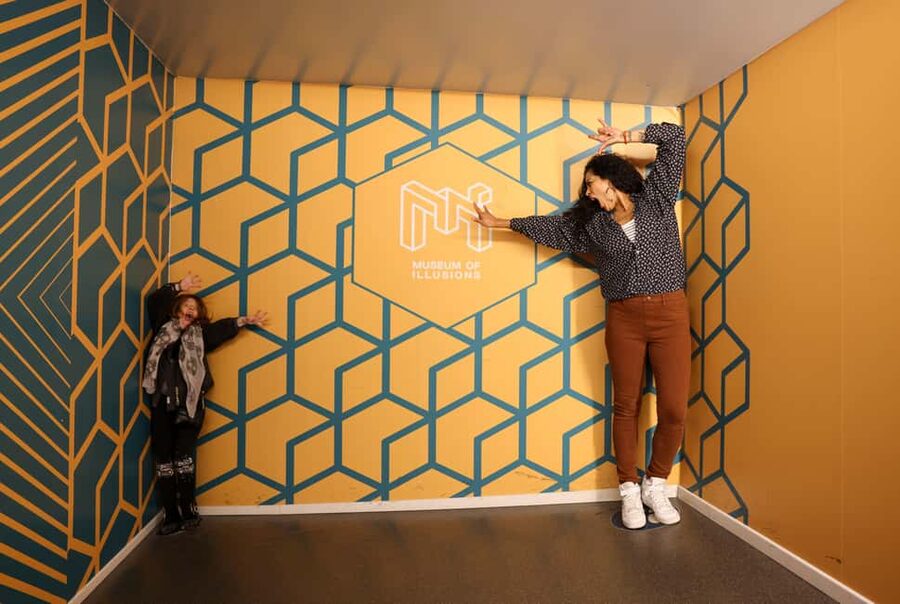
Illusion museums are built for cameras. But you do not have to treat it like a stressful photoshoot. With a small group size (up to 5 participants), you can take your time without feeling like you are holding up a huge crowd.
A few practical ways to make your photo time better:
- Choose one or two “serious” photo moments first, then do quick shots around them.
- Follow staff guidance when offered, especially if they help you with positioning.
- Keep moving. Many illusions work best when you are not lingering too long in the same pose.
One strong theme in the available feedback is that staff explain what is happening, then help with photos that come out genuinely great. That combination is rare. You do not just get a camera-friendly room, you get help producing the result the room is designed for.
Also, remember that food and drinks are not allowed. So plan to finish snacks outside the museum so your hands are free for photo interactions.
Staff help and explanations: why it makes the visit better
Even if you are there mainly for fun, the explanations are part of what makes this experience feel worth it. The museum includes educational information and explanations at each exhibit, plus staff assistance and guidance throughout the visit.
What I think this means for you:
- You will understand the illusion faster, so you spend less time guessing.
- You will learn the “why,” not just the “wow.”
- You can ask questions if something feels confusing.
The small group format helps too. When you are not lost in a crowd, staff can spend time with you. That matters if you want help recreating a setup for a good photo.
One review called the experience enriching because the illusions create different emotions. That is exactly what happens when you understand what your brain expects, then it gets proven wrong. The staff explanations turn that surprise into something you can carry home.
Time management: how to fit 1.5 hours into your Amsterdam day
At about 1.5 hours, you can treat this as a standalone activity or a short pause between bigger museum stops.
Here’s a simple plan that works for most people:
- 10 minutes to settle in and do your first couple of illusions
- 45 to 60 minutes to hit most of the interactive rooms and photo moments
- 10 to 20 minutes to slow down, repeat favorites, and shop
Repeating is useful because some illusions can look different once you understand the trick. It also helps if you miss a setup the first time because you were focused on getting the first great shot.
After the museum, you are right in the canal area. That is a big advantage. You can turn the whole outing into a short walk with photos, then head to a nearby café or dinner plan.
Weather and mood: who this museum suits best
This is a smart option when the weather is uncertain or when you want something indoors that still feels active.
It works well for:
- Families, because it is interactive and built for hands-on play
- Couples, because the photo moments are fun and the explanations keep it interesting
- Solo travelers who like activities you can do at your own pace inside a defined time window
There is also a practical note for families: children up to 4 years old enter free. That can make the museum easier to budget if you are traveling with little kids.
If you are someone who hates crowds and loud spaces, you might want to pick a time when you expect fewer people. The small group setup helps once you are inside, but the museum is still an attraction, so peak hours can feel busier.
A balanced caution: the only real risk is access on the day
Most of the experience is straightforward: entry ticket, access to interactive exhibits, explanations, and photo opportunities. But one verified booking noted that the place was closed.
You cannot control that, but you can reduce the risk:
- Check same-day hours close to when you plan to arrive.
- Keep a flexible plan. If you are stacking multiple activities, leave room for a reroute.
Also, double-check your plan around food. Food and drinks are not allowed inside, so if you need to bring anything, plan to eat before or after.
Museum shop add-on: a small way to extend the fun
You also get access to the museum shop. This can be a nice wrap-up for two reasons:
- You may find illusion-related items that match what you just experienced.
- It gives you a place to browse after you finish the main exhibits.
It is not a replacement for other Amsterdam shopping, but it is a convenient finish if you want one last souvenir that feels connected to the experience.
Should you book Museum of Illusions Amsterdam?
I would book it if you want an activity that mixes hands-on fun, photo-ready setups, and quick explanations about how your brain works. The 1.5-hour length is a sweet spot, and the small group size (limited to 5) gives you a better chance of getting guidance when you want it.
I would skip it or reconsider if:
- You are mainly looking for quiet, traditional museum viewing and do not care about interactive rooms.
- Your schedule is so tight that a closed-day risk would ruin the rest of your plan. (I do not want you surprised. Check opening status.)
For most people, this is a smart Amsterdam stop because it feels local to your senses. You leave with funny photos and a new habit of questioning what you see, even outside the museum.
FAQ
How long is the Museum of Illusions Amsterdam experience?
The duration is about 1.5 hours.
What is the price for entry?
The price is listed as $23 per person.
Where is the museum located?
It is located in the former Nieuwe Waalse Kerk on Keizersgracht in Amsterdam.
Is the museum visit interactive?
Yes. Your ticket includes access to interactive exhibits and installations.
Do I get explanations with the exhibits?
Yes. Educational information and explanations are provided at each exhibit, with staff assistance and guidance during the visit.
How big is the group?
It is a small group limited to 5 participants.
Are food and drinks allowed inside?
No. Food and drinks are not allowed.
Can children enter for free?
Children up to 4 years old do not require a ticket and can enter for free.
What languages are available?
Dutch and English are available.
Are there any booking or cancellation options?
There is free cancellation up to 24 hours in advance for a full refund. There is also a reserve now & pay later option, where you can book your spot and pay nothing today.
Latest Amsterdam reviews
- Small Group Tulip and Spring Flower Fields Bike Tour★ 4.5 · 14 reviews
- Amsterdam Van Gogh Museum Private Tour for Kids & Families★ 4.0 · 14 reviews
- Zaanse Schans Windmills Private Tour from Amsterdam Airport★ 5.0 · 14 reviews
- Bruges Day Trip from Amsterdam★ 4.5 · 14 reviews
- Volendam: Volendams Museum Entry Ticket★ 4.4 · 14 reviews
- Zaanse Schans Windmills, cheese and clogs and Volendam tour from Amsterdam★ 5.0 · 14 reviews
- Departure from Amsterdam City to Amsterdam Airport AMS by Minivan★ 5.0 · 14 reviews
- Walking Tour about Golden Age Architecture, private local guide★ 5.0 · 15 reviews
Museums, compared.
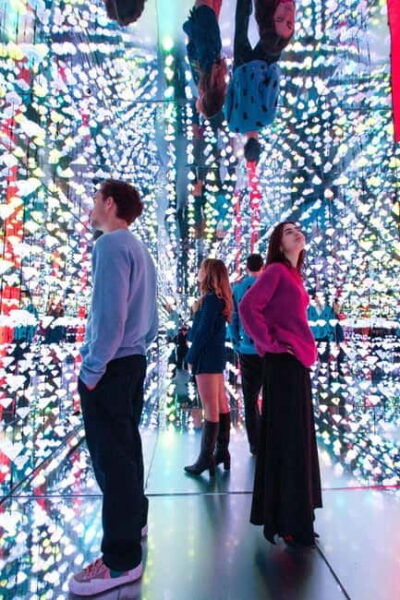
Moco Museum Amsterdam Entrance Tickets with Banksy & More
Read our review →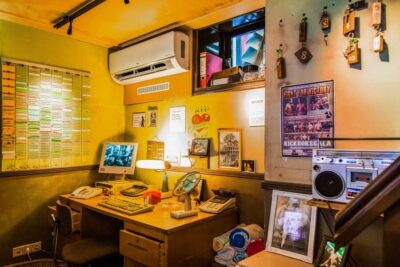
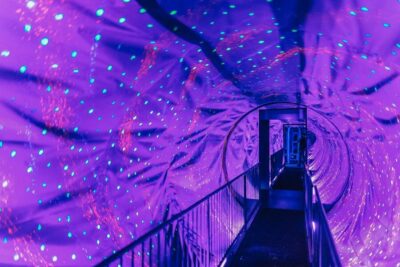
Amsterdam’s Weirdest Museum: Ripley’s Believe It or Not!
Read our review →


Browse the lists this tour appears in