
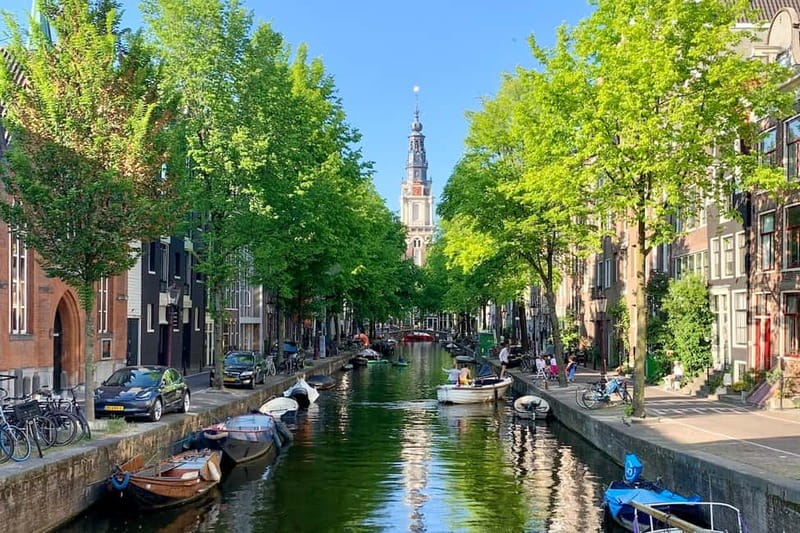
Reviewed · ANNE FRANK HOUSE
Amsterdam: Anne Frank Guided Walking Tour in DE/EN/IT/ES
Amsterdam’s Jewish Quarter can feel like a normal neighborhood at first glance, which is exactly why this walking tour is so effective. You start seeing how the streets, synagogues, and memorials carry the weight of World War II and Anne Frank’s story, with diary excerpts read in your chosen language. I especially like how the tour pairs places you can actually see in daylight with Anne Frank’s diary passages, so history lands in your body, not just your brain. One drawback to note: it does not visit the Anne Frank House.
My other big favorite is the emphasis on everyday Jewish life before the Nazis, then the discrimination, the hiding, and the resistance by Jews and non-Jews. You’ll also walk past key markers such as Stolpersteine and several Holocaust-related memorials, so you leave with a clear sense of Amsterdam’s timeline, not just a mood.
Key things I’d watch for on this Anne Frank Jewish Quarter walk

- Right start at Waag (De Waag), smack in the middle of Nieuwmarkt, so you get oriented fast.
- Diary excerpts are part of the route, not saved for one dramatic stop.
- Sephardic history and the Jodenbuurt connection, tied to the Spanish Inquisition and how Amsterdam grew.
- Streets as evidence, including Stolpersteine and memorials you can’t really “ignore” once you know what they mean.
- February Strike and resistance stories, with the important point that help came from both Jewish and non-Jewish neighbors.
- Finish at the National Holocaust Names Monument, which gives the walk a powerful, structured ending.
Entering the Jewish Quarter with WWII context in plain sight

Amsterdam does not hide its past well. That sounds heavy, but it’s useful. In the Jewish Quarter, many buildings still stand, and that makes it easier for you to understand what changed and what was taken away. This tour is designed for exactly that moment when you realize, oh, the Holocaust happened here too, not far away.
What makes the experience work is the structure. You’re not doing a museum sprint. You’re moving through a neighborhood that still looks like Amsterdam, while your guide builds a story along the route: the neighborhood’s origins, the Nazi occupation, the hiding and deportations, and the resistance that risked everything.
And yes, the diary element matters. Anne Frank’s writing is used as a thread to help you connect emotion to place. The tour runs in one language option only (English, German, Italian, or Spanish), so picking the right one really pays off. You want your mind fully on the story, not translating under stress.
More Walking Tours in Amsterdam
- Amsterdam Anne Frank: Small-Group Walking Tour & Local Guide
★ 4.8 · 12,789 reviews - Anne Frank’s Story – Guided Walking Tour through Amsterdam
★ 5.0 · 11,619 reviews - Absolutely Amsterdam – the Essential Introductory Walking Tour
★ 5.0 · 3,629 reviews
De Waag to Nieuwmarkt Square, where the walk starts with orientation
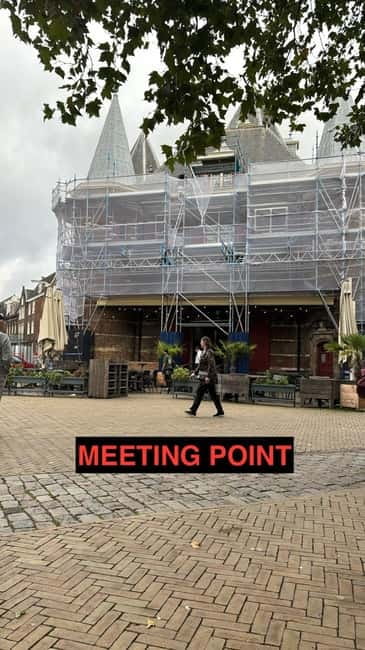
You meet at the entrance of the restaurant De Waag, a historic building that looks a bit like a small castle, right in Nieuwmarkt. If you’re the type who likes to understand where you are before you learn why it matters, this start is great. The guide wears a red name tag, so you’re not wandering around trying to identify the group.
From there, the first stop is Nieuwmarkt Square. The short guided moment here is about setting the frame. You’re not yet at the darkest parts of the timeline. Instead, the guide helps you understand how this area became the Jewish Quarter and why it attracted families looking for community and livelihood.
Zuiderkerk and the “still-standing” buildings that make the story real

Next up is Zuiderkerk. This is one of those stops where the guide’s job is to turn a church building into a historical anchor. You’ll hear how the Jewish Triangle and the broader Jodenbuurt fit into the city, and how the area was shaped over time.
Then you’ll move toward Huis de Pinto. The point of this brief stop is less about architecture as a trophy and more about how specific properties reflect who lived where, and how wealth and community formed in the city. The tour links this area to the Sephardic Jews who were expelled by the Spanish Inquisition. That historical cause is not just a footnote. It helps explain why Amsterdam became a major commercial center and why this neighborhood’s character grew so distinct.
Huis de Pinto to Rembrandt House, a neighborhood shared by Jews and non-Jews
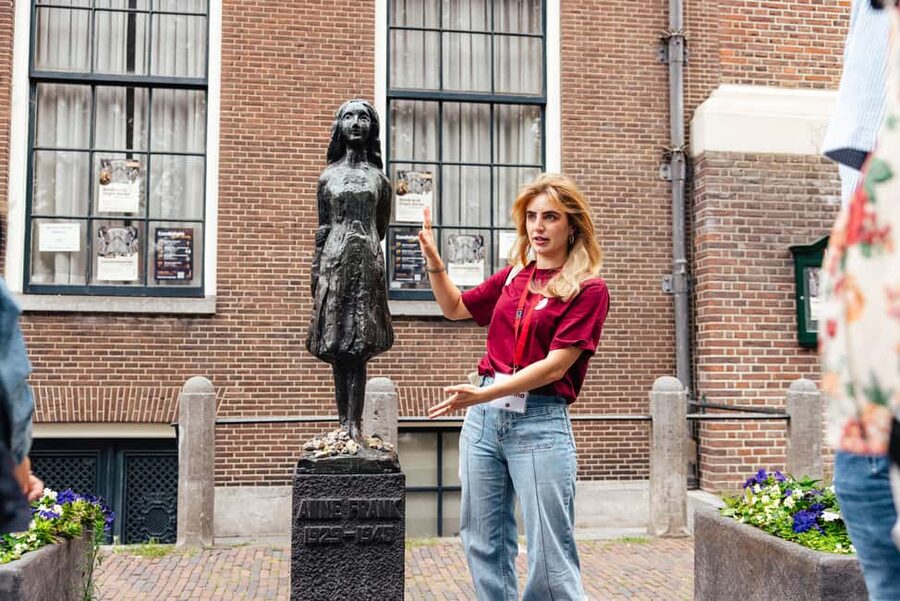
The walk continues to Rembrandt House. This stop helps you avoid a common trap: thinking of the Jewish Quarter as only one story. The guide makes the point that non-Jews also had homes nearby, including painter Rembrandt van Rijn. This does not dilute the later horror. It clarifies the normal life that existed before it was destroyed.
One reason this part is so effective is that it changes how you picture the timeline. When you hear about a neighborhood that mixed communities, then later you hear about Nazi discrimination and persecution, your brain understands the rupture more clearly. You see that the “before” was real. It wasn’t fictional comfort. It was daily life.
Not the right fit? Amsterdam also runs these:
- Amsterdam: Van Gogh Museum Ticket
★ 4.7 · 52,054 reviews - Amsterdam: Heineken Experience Ticket including 2 Drinks
★ 4.6 · 36,014 reviews - Amsterdam Classic Saloon Boat Cruise with Drinks and Cheese
★ 5.0 · 31,825 reviews - Amsterdam Luxury Canal Cruise + Unlimited Drinks & Bites option
★ 5.0 · 30,518 reviews
Sint Antoniesluis, the Portuguese Synagogue area, and the feeling of “markers everywhere”
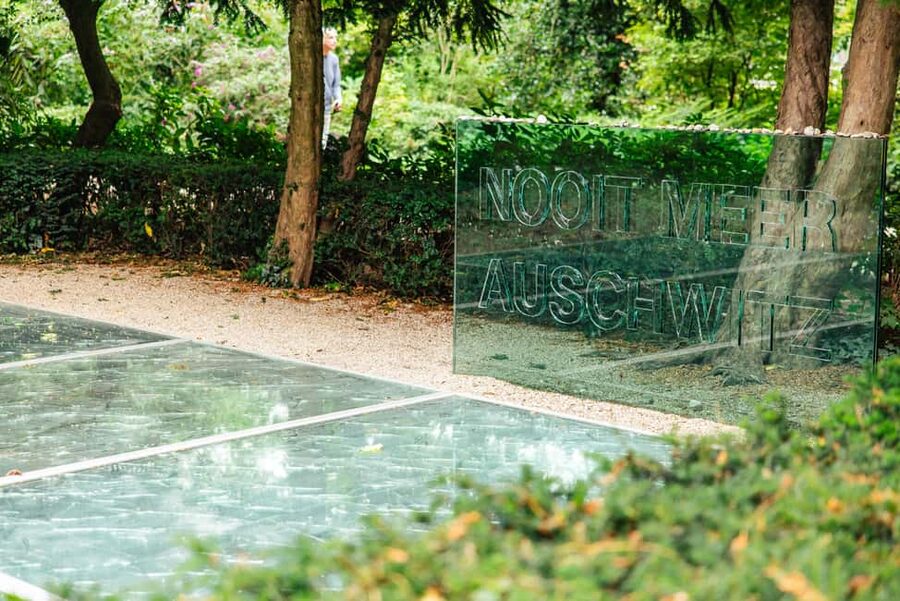
At Sint Antoniesluis, the guide keeps linking streets to the bigger narrative of the occupation and its impact. This stop is part of building your map of Amsterdam as it was experienced during the war, not just as it looks now.
Then comes one of the most important landmarks on the route: the Portuguese Synagogue. You’ll have a photo stop plus a guided moment. Expect the guide to connect the synagogue to the broader Sephardic presence in Amsterdam and to the long arc of Jewish community in this city.
This is also where the tour starts leaning harder into material reminders of loss and memory. The highlights mention Stolpersteine, and you should be ready to see them as you walk. These small brass or stone markers can feel almost too quiet at first, until your guide explains what they represent.
Jewish Historical Museum, then Auschwitz Monument Amsterdam: moving from community to catastrophe
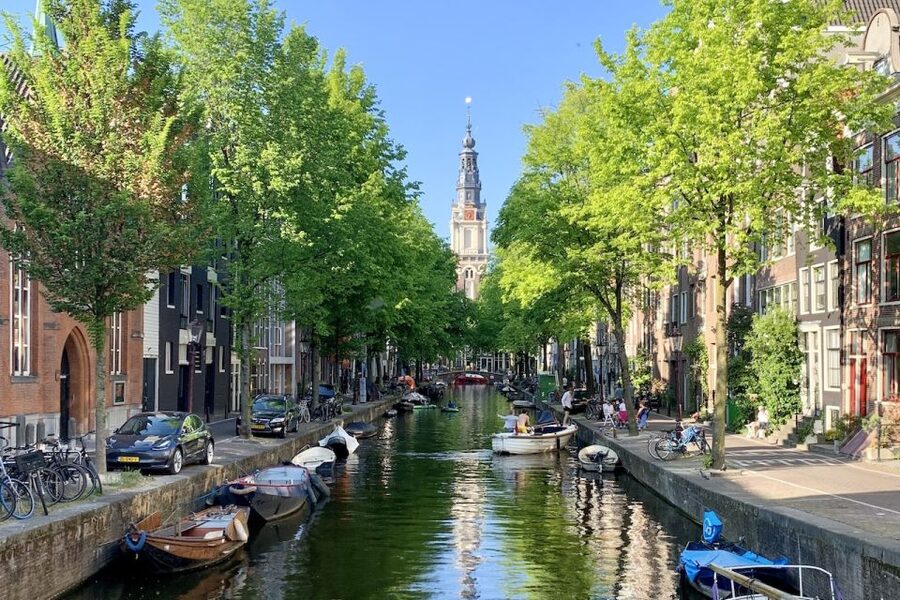
You’ll pass by the Jewish Historical Museum with a short guided stop. The tour does not require you to buy an admission ticket, and it does not turn into a long indoor detour. This is more of a “you’re here, and here’s why it matters” moment.
After that you reach Auschwitz Monument Amsterdam. This is one of the stops where you should expect the emotional tone to shift. Auschwitz is named directly, and your guide’s job is to keep the topic clear and respectful. You’ll also hear how discrimination by Nazi Germany led to the Holocaust in Amsterdam, and how deportations tore the community apart.
A key story that the tour includes is the February Strike in 1941, plus the resistance by Jews and non-Jews. This matters because it corrects a simplistic narrative of only victims. In Amsterdam’s history, resistance took real shapes, often carried out by people who knew exactly what the consequences could be.
The Dokwerker and the National Holocaust Names Monument, the end that stays with you
The walk continues to The Dokwerker, another guided stop. The tour uses stops like this to keep the story human. The guide ties the memorial setting to the broader theme of what was taken and what people tried to protect.
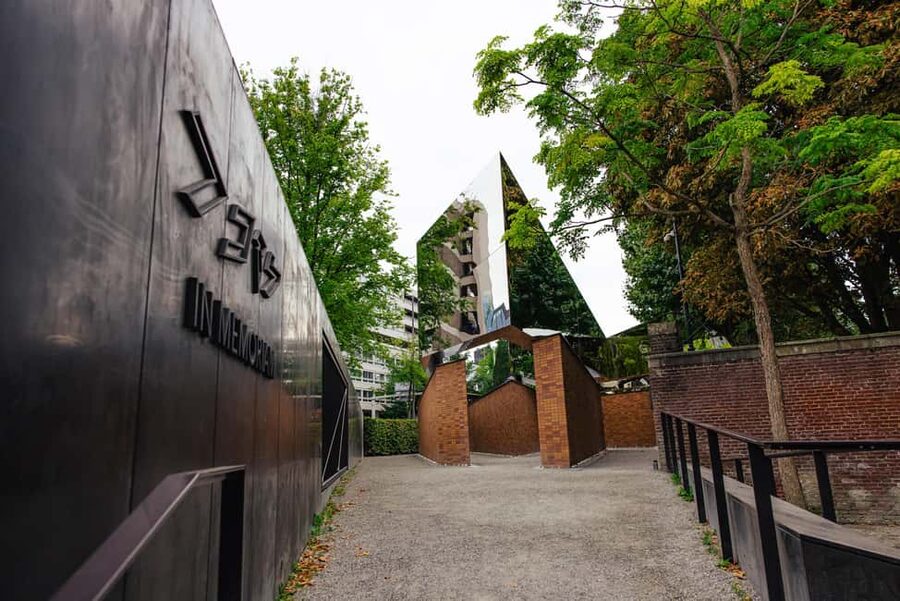
Then you finish at the National Holocaust Names Monument, with a photo stop and a longer guided moment at the end. This closing location is powerful because it shifts from broad events to names and individual remembrance. If you’ve been holding back emotion because the subject felt too large, this is where the tour helps you make it personal without turning it into theater.
What the guide presence and language choice really affect
The tour is led by a German or English-speaking guide, with options in English, German, Italian, or Spanish. Just one language, so pick carefully. I’d rather you choose the language you feel strongest in than settle for something you can half-follow.
The best part is how sensitive the guides tend to be with tone. Past guides on this route have been described as thoughtful and moving, and many include diary excerpts as they walk. Names that show up in the guide experiences you provided include Lilly, Zoe, Francesco, Simone, Alex, Rafael, Linn, Josh, Valentina, Julie, and others. Even when the names differ, the pattern is similar: storytelling that is respectful, paced for listening, and built around specific places.
If you’re sensitive to emotional content, take comfort in the fact that this tour explicitly frames the day as remembrance and context, not shock value. The reading of diary passages is often mentioned as a key highlight, and that’s usually where the tour becomes unforgettable.
Practical details that change how much you enjoy it
This is a 2-hour walking tour covering about 2 to 3 kilometers. That’s not far on paper, but Amsterdam streets add up fast, and you’ll have multiple short guided segments. Comfortable shoes are a must.
The tour runs in all weather. That means rain or shine, you’re still walking. Bring water and weather-appropriate clothing. If it’s raining, an umbrella helps a lot.
There are no admission fees included because the tour does not require entry tickets for the sights on the route. You’ll see buildings and memorials from outside, and you’ll have short guided moments at stops like the Jewish Historical Museum area, without turning the day into a museum bill.
Price and value: why $28 can be a steal if you want context
At about $28 per person for roughly two hours, the value depends on what you’re trying to get out of Amsterdam. If you already know the basics of Anne Frank, you might wonder what you’ll gain. But if you want the neighborhood timeline, this is efficient.
Here’s the value equation I’d use:
- You get a live guide for the full walk.
- You get emotional and historical context tied to specific sites.
- You get diary excerpts read aloud, which is hard to replicate on your own.
- You avoid the cost and logistics of multiple paid admissions, since the major sites are accessible during the walk.
For me, the biggest value is not the price. It’s the way the guide helps you connect “where” with “why.” When you understand that this area was shaped by expulsion history, community building, and later Nazi persecution, you stop seeing landmarks as random stops. They become checkpoints in one coherent story.
Who this tour suits, and who might not love it
This is a strong fit if you:
- want a short, focused overview of Jewish life in the Jodenbuurt and what happened during WWII
- like learning through walking and stopping at meaningful points
- want Anne Frank context without visiting the house
It might be less ideal if you:
- want a heavily indoor experience with lots of museum time
- only want an Anne Frank House visit on this trip (this one ends elsewhere)
Should you book this Amsterdam Anne Frank Jewish Quarter walk?
Yes, if you want a clear, guided route through Amsterdam’s Jewish Quarter that connects WWII history to places you can actually stand next to. The diary excerpts, the memorial stops, and the stories about resistance are exactly what make this more than a sightseeing stroll.
If you’re trying to choose between random wandering and guided sense-making, book the tour. You’ll leave with a better map of the neighborhood and a much firmer grasp of how everyday life, persecution, hiding, and resistance intersected in this part of Amsterdam.
FAQ
Where do I meet the guide for this Amsterdam tour?
You meet your guide at the entrance to De Waag, a historical building in the middle of Nieuwmarkt.
How long is the walking tour?
The tour runs for about 2 hours.
Which languages are available?
The tour is offered in English, German, Italian, or Spanish. It is not bilingual.
Does this tour include a visit to the Anne Frank House?
No. The Anne Frank House is not visited or seen during this tour.
How much walking is involved?
It is a walking tour of about 2 to 3 kilometers total.
Are tickets or admission fees required during the tour?
No. You will not have to pay admission fees during the tour, since all sights can be visited for free.
What should I bring with me?
Bring comfortable shoes, water, and weather-appropriate clothing. If rain is likely, bring an umbrella.
Is the tour wheelchair accessible?
Yes, the tour is wheelchair accessible.
Can I book a private group?
Yes, a private group is available.
Latest Amsterdam reviews
- Small Group Tulip and Spring Flower Fields Bike Tour★ 4.5 · 14 reviews
- Amsterdam Van Gogh Museum Private Tour for Kids & Families★ 4.0 · 14 reviews
- Zaanse Schans Windmills Private Tour from Amsterdam Airport★ 5.0 · 14 reviews
- Bruges Day Trip from Amsterdam★ 4.5 · 14 reviews
- Volendam: Volendams Museum Entry Ticket★ 4.4 · 14 reviews
- Zaanse Schans Windmills, cheese and clogs and Volendam tour from Amsterdam★ 5.0 · 14 reviews
- Departure from Amsterdam City to Amsterdam Airport AMS by Minivan★ 5.0 · 14 reviews
- Walking Tour about Golden Age Architecture, private local guide★ 5.0 · 15 reviews