
Reviewed · WALKING TOURS
5 hrs Golden Age Amsterdam Private Walking Tour With Local Guide
This private 5-hour Golden Age walk is interesting because it stitches together Amsterdam’s big sights and quieter corners in one sensible loop, from Centraal Station to the Begijnhof. I especially like the small private group feel and the way a local guide makes the city’s buildings feel connected, not random photo stops.
The main thing to plan for is budget, since several standout places are listed as not included (including Anne Frank House and the Royal Palace). If you want those inside visits, start thinking tickets early so the day stays smooth.
Key highlights if you want a guided first look
- A tight private group (max 4), so you can ask questions and pace your stops
- A full-scope route that ranges from Centraal Station to the Begijnhof, with the Red Light District handled respectfully and in context
- Lots of quick stops with free viewing (several are listed as ticket-free), so you spend more time looking and less time figuring out what costs extra
- Golden Age details you miss alone, like why Amsterdam’s wooden-pole foundations matter
- Off the main route stops tied to local life themes, such as canal maintenance stories and a former guild area
- Guides named Aleksand ar/Aleks/Aca in the feedback, praised for adjusting explanations for different ages and being flexible
Where This Walk Shines for First Timers
Amsterdam can feel like one long postcard. This tour helps you make sense of it fast. In about 5 hours, you move through several eras and neighborhoods, and you learn how Amsterdam’s power and culture were built on water, trade, religion, and tight city walls.
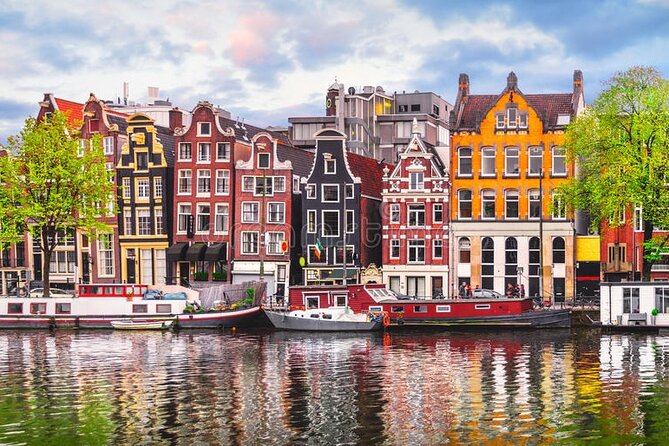
What I like most is the mix of scale. You get major landmarks like Centraal Station and Dam Square, but you also get smaller, oddly specific places like the city’s smallest house on the Singel canal, and the Begijnhof’s hidden courtyard feel. It’s not just what you see, it’s why that spot matters.
There’s also a very practical bonus. Most stops are listed as free, so your day is not instantly hijacked by lineups and extra ticket math.
More Walking Tours in Amsterdam
- Amsterdam Anne Frank: Small-Group Walking Tour & Local Guide
★ 4.8 · 12,789 reviews - Anne Frank’s Story – Guided Walking Tour through Amsterdam
★ 5.0 · 11,619 reviews - Absolutely Amsterdam – the Essential Introductory Walking Tour
★ 5.0 · 3,629 reviews
Starting at Centraal Station, the “wooden poles” story
You begin at Amsterdam Centraal. Plan on about 10 minutes here. The station building is described in a Dutch neoclassical style and, importantly, it sits on thousands of wooden poles. That detail is more than trivia. It’s Amsterdam’s signature solution for building on soft, watery ground.
Why this matters on day one: once you hear the wooden-pole foundation explanation at the start, the city’s look starts to connect. You start noticing how Amsterdam builds, repairs, and keeps itself standing.
It’s a great first “anchor stop” because it puts you in the right mental frame before you head into older streets and canal-side neighborhoods.
St. Nicholas Basilica and the Weeping Tower connection
Next, you head to St. Nicholas Basilica for around 15 minutes. It’s noted as the biggest Catholic temple in the Netherlands, dating from the second half of the 19th century. If your Amsterdam is mostly Reformed Protestant churches and canal houses, this is a helpful reminder that the city’s religious story did not stay one-note.
Then you move to the Weeping Tower for about 10 minutes. The location ties back to a medieval wall and, more strikingly, to Henry Hudson’s sailing journey toward Northern America. That link turns a simple city structure into a crossroads of commerce and exploration.
Tip for your own pacing: if you love history that links places to big events, keep your questions ready here. This tour is built for that style of curiosity.
The smallest house on the Singel canal, and why canals need maintenance
One of the stops that feels the most “Amsterdam” is Het Kleinste Huis van Amsterdam, about 20 minutes. You’re at the Singel canal, and it’s framed as the smallest house in Amsterdam, plus a chance to learn what the word grachten means and how canals served the city’s needs over time.
This is where the guide’s job becomes clear. You can stand in front of a tiny house and take a photo. But you’d likely miss the practical canal angle, like why canals require upkeep and how that shaped the city’s daily life.
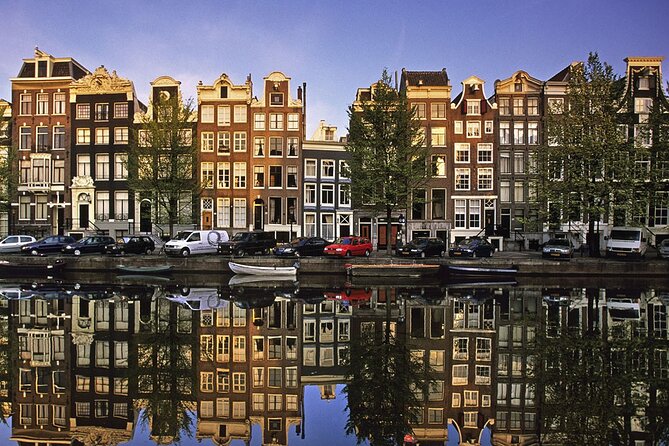
You also get practical curiosities about bridges and the look of narrow, tall, leaning houses. Those details help you read the city visually, even when you’re not with a guide.
Not the right fit? Amsterdam also runs these:
- Amsterdam: Van Gogh Museum Ticket
★ 4.7 · 52,054 reviews - Amsterdam: Heineken Experience Ticket including 2 Drinks
★ 4.6 · 36,014 reviews - Amsterdam Classic Saloon Boat Cruise with Drinks and Cheese
★ 5.0 · 31,825 reviews - Amsterdam Luxury Canal Cruise + Unlimited Drinks & Bites option
★ 5.0 · 30,518 reviews
De Waag: the weigh-building and guild headquarters vibe
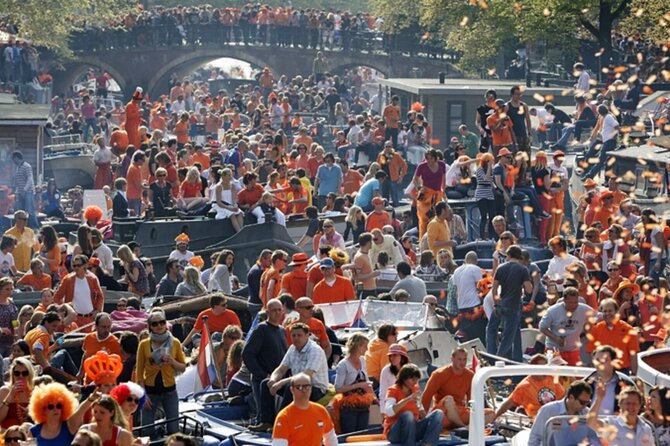
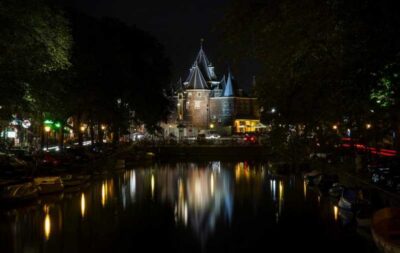
After the canal stop, you’ll spend about 15 minutes at De Waag. It’s described as the city’s weigh-building, formerly a customs house, and it also served as headquarters for several guilds. Dating is given as the beginning of the 15th century, and it’s also tied to the city’s earlier gated layout.
If you like trade and the way cities controlled goods, this stop is a good payoff. It’s not just a pretty façade. It explains how Amsterdam’s wealth worked, literally in the act of weighing and regulating what entered and left the city.
Secret churches and Chinatown: Ons’ Lieve Heer op Solder and Fo Guang Shan
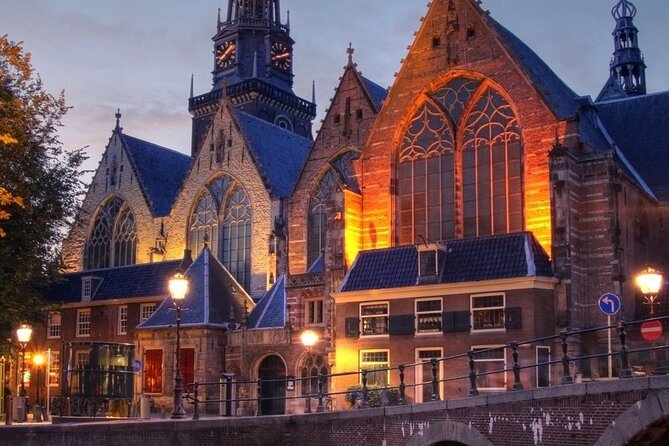
You then reach Our Lord in the Attic Museum, Ons’ Lieve Heer op Solder, for about 5 minutes. This one is short, but it’s iconic. It’s presented as Amsterdam’s famous secret church, restored and now serving as a museum. The ticket is listed as not included, so you’ll want to decide in advance if you want the inside visit during your tour time window.
Right after that, you visit Fo Guang Shan, a traditional Buddhist (Chinese) temple in the heart of Amsterdam’s Chinatown. You’ll spend about 10 minutes and the tour notes it as the second biggest temple of its kind in Europe. Again, it’s a quick stop, but it broadens the religious and cultural map beyond the churches most first-timers expect.
If you’re traveling with kids or teens, this is often a strong pairing because it gives variety without forcing a long museum commitment right away.
De Wallen with context, not just shock
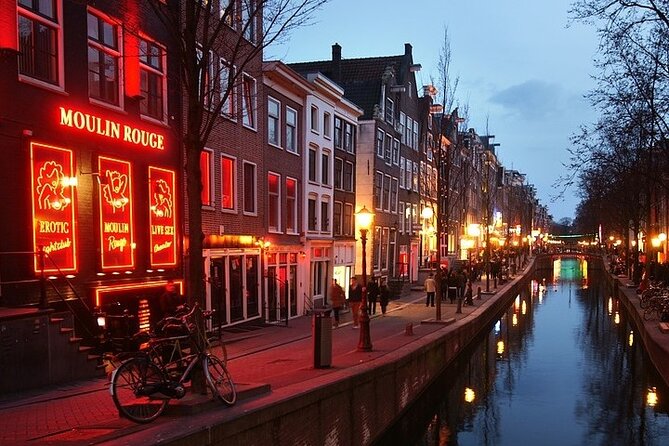
Then comes the Red Light District, De Wallen, for about 30 minutes. The tour includes a short break style moment, and it focuses on moderation and context around prostitution and Dutch drug policy.
This is handled with a specific approach: history of prostitution, how it looks today, and a practical yes-and-no discussion about light drugs, with the reminder to not break the law. It’s the kind of framing that can be awkward to tackle alone, especially if you don’t want to sensationalize anything.
My advice: keep your questions respectful and keep your boundaries clear. This is one of those districts where the most useful thing a guide can offer is perspective, plus guidance on where to stand and what to watch for while staying safe and considerate.
Dam Square, the Royal Palace exterior logic, and the National Monument
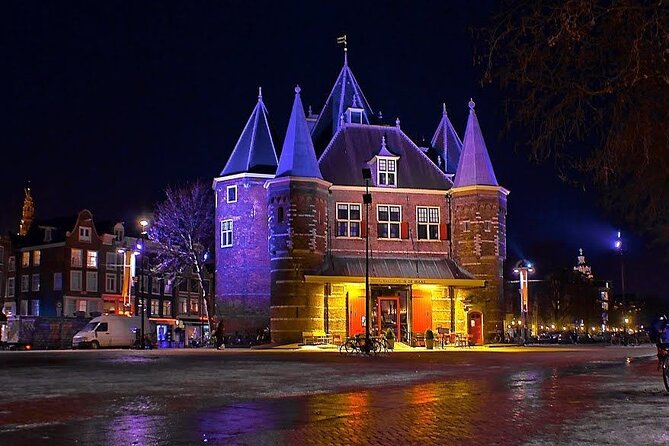
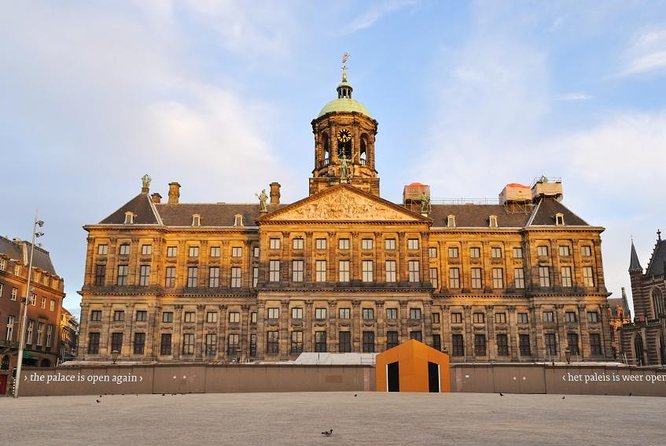
You’ll move on to Dam Square for about 10 minutes. It’s described as the central and oldest Amsterdam square, tied to the city’s birthplace, and surrounded by key sites such as the Royal Palace, New Church, and the National Monument.
From there, you visit the Royal Palace Amsterdam for about 15 minutes. It’s noted as a former City Hall from the middle of the 17th century, and one of the official residences of the Dutch Royal Family. The ticket for the palace is listed as not included, so if you want to go inside, you’ll need to budget an entry fee.
You’ll also spend about 15 minutes at the National Monument, a 22-meter stand built in 1956 to remember casualties of World War II and subsequent armed conflicts.
This pair matters because it shows how Amsterdam handles identity. One square signals civic power and nationhood. The monument gives it a more solemn anchor.
Nieuwe Kerk and the Begijnhof: hidden courtyards and a secret Catholic past
At Nieuwe Kerk, plan for about 15 minutes. It began as a 15th-century worship church tied to the Dutch Reformed Church and it’s still used for royal ceremonies like weddings and crowning moments. The entry is not included.
Then you step into the Begijnhof for about 20 minutes. This is where the tour’s calm side shows up. The Begijnhof is described as a hidden place and memorial area dedicated to the Beguines, a semi-closed order with similarities to nuns. It also includes mention of another secret Catholic church, plus the oldest wooden house in Amsterdam, the English Church, and legends such as Sister Cornelia Arens and a miracle story from 1345.
Why I think this stop is worth the effort: Amsterdam’s main streets can feel relentless. The Begijnhof feels like a pause button. Even if you only catch parts of the story on the walk in, you leave with a sense of how private religious communities shaped urban life.
Munttoren, Rembrandt’s Night Watch connection, and the flower market stop
After the Begijnhof, you head to Munt Tower (Munttoren) for about 5 minutes. It’s described as a gate point at the meeting of the Amstel and the canal Singel, and it also served as a main gate into the medieval city. The tour notes coin minting during the 17th century.
Next is the Rembrandt Monument for about 15 minutes. It’s framed around Rembrandt van Rijn and includes a 3D exposure of The Night Watch, plus facts and trivia about the masterpiece and Rembrandt’s private life.
After that, there’s time for the flower market area, described as the biggest and most famous flower and garden accessories market in the city. This is practical time for flower lovers and for picking up tulip bulbs or other bulbs if you’re traveling with a plan for transport.
Note: this is a good moment to take a breath. You’re not just sightseeing, you’re also doing the Amsterdam shopping that feels like part of the culture, not a side task.
Sint Luciënsteeg and the City Orphanage lane details
You then walk to Sint Luciënsteeg, about 15 minutes. It’s connected to the Burgerweeshuis, a city orphanage from 1580, and you’ll also see a lot of stone gables and stone tablets that refer to house identities through medieval ages.
This stop is a nice reality check. Amsterdam’s grand buildings are famous, but this street-level architecture tells you how ordinary life worked in stone.
If you like photo angles, this is also one of those places where the tight street proportions make the images look more “Amsterdam” than a wide canal view.
Anne Frank House: the big-ticket decision and why timing matters
The route then reaches the Anne Frank House area for about 15 minutes. The ticket is not included, and the tour specifically says tickets can be booked only online, with at least 6 weeks advance planning.
This is one of your biggest decision points. If you want the inside visit, you need to treat it like a core plan, not an afterthought. That means reserving time slots early so the day you walk with the guide does not turn into a wait-and-guess situation.
The stop is framed around life in the secret shelter, suffering during Nazi occupation, human solidarity, and the diary translated into 57 world languages. Even if you do not go inside, the walk-by context is powerful, and it helps you understand the surrounding streets in a new way.
Westerkerk and a possible Rembrandt story near Anne Frank
Next is Westerkerk, about 10 minutes. It’s described as the third oldest church after South and North, dating from 1631, with a leaning tower. The tour notes it was intentionally built for Protestant believers, and it’s listed as a wedding place of former Dutch queen Beatrix.
There’s also a note that Rembrandt van Rijn burial nearby is never precisely proven. So you’re not being asked to accept a rumor as fact, which is a nice touch when history gets messy.
The Westerkerk stop works well here because it gives you another lens on Protestant architecture right next to the Jewish Quarter context you’ll reach soon.
The Amstel view and the Jewish Quarter, Plantage, Jodenbuurt
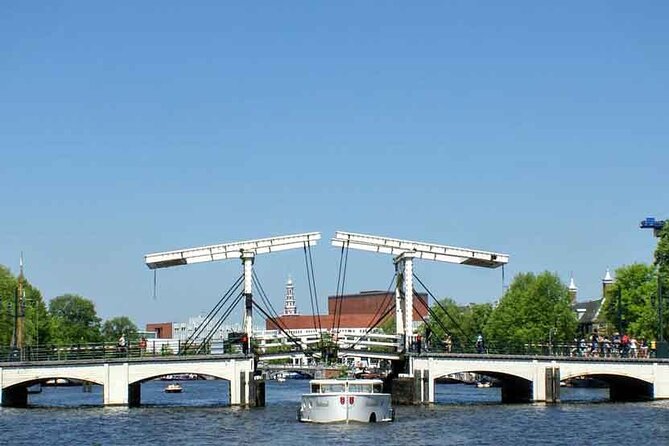
You finish with views toward the Amstel for about 10 minutes. The tour points out famous bridges, including the Blue Bridge and Skinny Bridge, plus the idea that the river and the buildings around it connect to higher social and cultural meaning.
Then you move into Jodenbuurt, also called Plantage, for about 30 minutes. It’s described as the Jewish Quarter where many Jews lived from the end of the 16th century until World War II. The area includes Holocaust monuments and memorials, and the tour suggests extra information may be provided about specific sites.
This ending is effective because it shifts your focus from architecture to people and community. By the time you leave, you have a clearer sense that Amsterdam’s story is not only art, trade, and buildings. It’s also memory and survival.
Price and value: what $540.69 per group really buys
This tour costs $540.69 per group for up to 4 people. That’s about $135 per person if you fill all four spots, or $270 per person if you go as a pair.
Where the value lands: a guided loop with a small group does two things. First, it saves time deciding what to see and where to stand. Second, it adds context to stops that are otherwise easy to misunderstand or under-appreciate.
Also, many stops on this route are listed as free, including Centraal Station, St. Nicholas Basilica, Weeping Tower, the smallest house, De Waag, Fo Guang Shan, Red Light District, Dam Square, National Monument, Begijnhof, Munt Tower, Rembrandt Monument, and the Amstel view. So you are not paying admission for most of the core structure of your walk.
What can raise the total: tickets listed as not included include:
- Royal Palace Amsterdam: €10.00 per person
- Westerkerk: €7.00 per person
- Old Center: €13.50 per person
- Our Lord in the Attic Museum Ons’ Lieve Heer op Solder: €16.50 per person
- Anne Frank House: €16.00 per person
- Nieuwe Kerk: €10.00 per person
Even without converting currencies, you can see how the add-ons stack. If you go for all of them, you’re looking at a significant extra line item beyond the tour cost.
My practical take: treat this tour as the framework and decide your inside visits deliberately. Anne Frank House is the one that requires early planning because tickets are online and at least 6 weeks ahead.
What Your Guide Does With This Route (and why the feedback is strong)
A big reason this tour gets consistently high ratings is how the guide handles the day, not just how they describe monuments.
If your guide is Aleksandar, often listed as Aleks or Aca, the feedback emphasizes that he adapts explanations for different ages, and can keep both adults and kids engaged. People also mention that he speaks excellent English and other languages, and that he answers questions clearly.
There’s also a theme of flexibility: the guide is described as patient, accommodating requests, and helpful when timing or group needs shift. That matters on a walking tour, where one slow moment can throw off a whole plan.
I’d also watch for the way the route balances well-known icons with smaller, more local storytelling spots. The day is built so you’re not just checking boxes. You’re learning how Amsterdam works.
Should You Book This Private Golden Age Walk?
Book it if you want a guided first pass that covers a lot of Amsterdam’s key themes in one morning to early afternoon, with a private group size that makes questions feel easy. It’s also a good choice if you care about context, like why Amsterdam’s canals and buildings exist the way they do.
Skip or adjust your expectations if your priority is purely inside-the-building museums and you do not want to deal with ticket decisions. Several major stops are listed as not included, and the Anne Frank House option requires early online booking.
If you do want those inside visits, plan the tickets early, then let the guide handle the storytelling. This tour is at its best when you use it as your backbone for the rest of your trip.
FAQ
How long is the Golden Age Amsterdam Private Walking Tour?
The tour runs for about 5 hours.
How much does the tour cost?
It is priced at $540.69 per group for up to 4 people.
What is the maximum group size?
The maximum group size is 4 travelers.
Where does the tour start?
The meeting point is Amsterdam Centraal railway station, Stationsplein, 1012 AB Amsterdam, Netherlands.
Is pickup offered?
Yes, pickup is offered.
Are entrance fees included?
No. Entrance fees are not included for several stops, including Royal Palace Amsterdam, Our Lord in the Attic Museum, Anne Frank House, Westerkerk, and Nieuwe Kerk (and there is also an Old Center fee listed).
How early do I need to book Anne Frank House?
Anne Frank House tickets must be booked online and at least 6 weeks in advance.
What is the cancellation policy?
You can cancel for a full refund up to 24 hours in advance of the experience start time.
Latest Amsterdam reviews
- Small Group Tulip and Spring Flower Fields Bike Tour★ 4.5 · 14 reviews
- Amsterdam Van Gogh Museum Private Tour for Kids & Families★ 4.0 · 14 reviews
- Zaanse Schans Windmills Private Tour from Amsterdam Airport★ 5.0 · 14 reviews
- Bruges Day Trip from Amsterdam★ 4.5 · 14 reviews
- Volendam: Volendams Museum Entry Ticket★ 4.4 · 14 reviews
- Zaanse Schans Windmills, cheese and clogs and Volendam tour from Amsterdam★ 5.0 · 14 reviews
- Departure from Amsterdam City to Amsterdam Airport AMS by Minivan★ 5.0 · 14 reviews
- Walking Tour about Golden Age Architecture, private local guide★ 5.0 · 15 reviews
Walking Tours, compared.
Absolutely Amsterdam – the Essential Introductory Walking Tour
Read our review →
Amsterdam Highlights Walking Tour: Small Group Experience
Read our review →

Browse the lists this tour appears in